
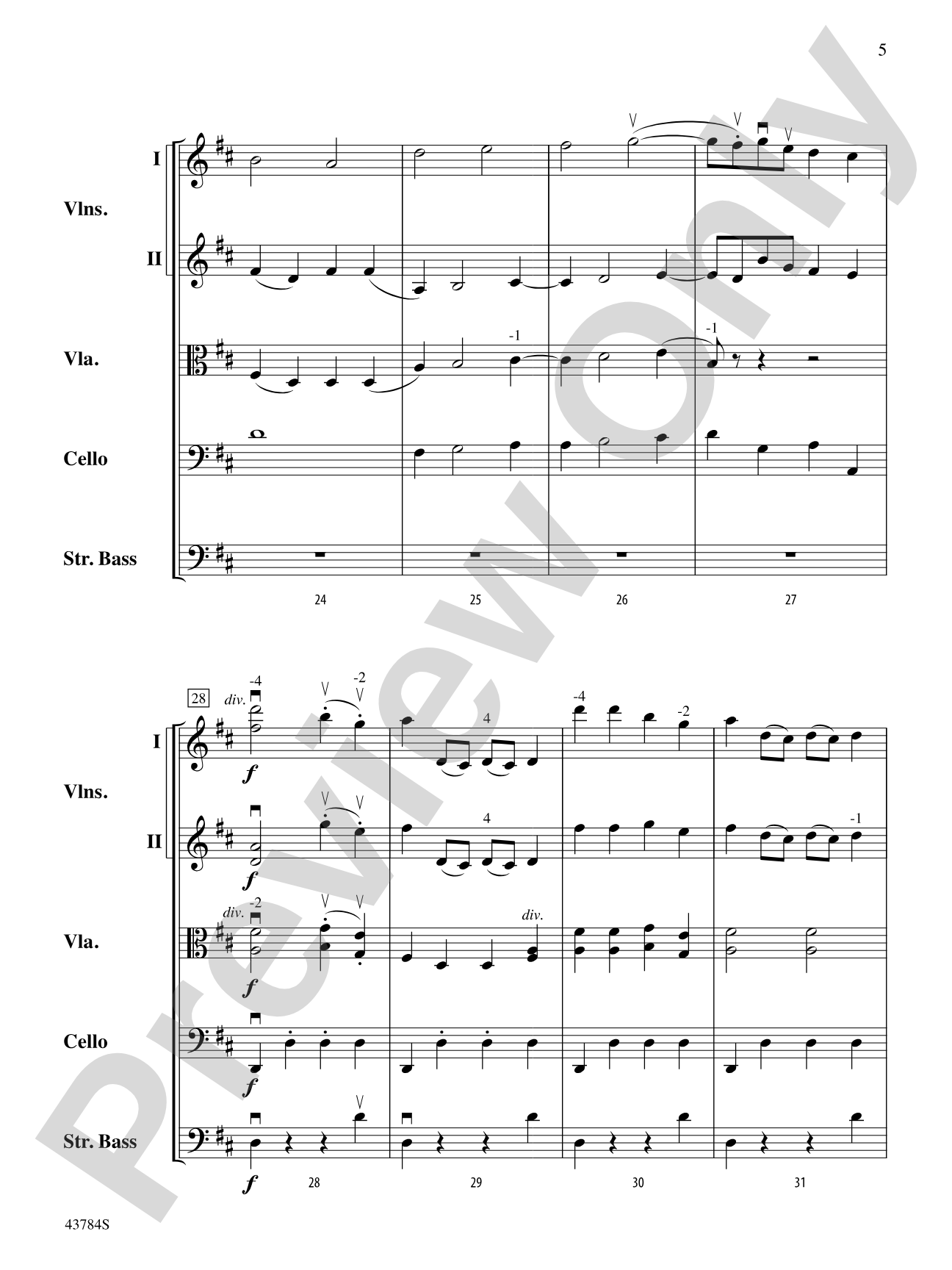
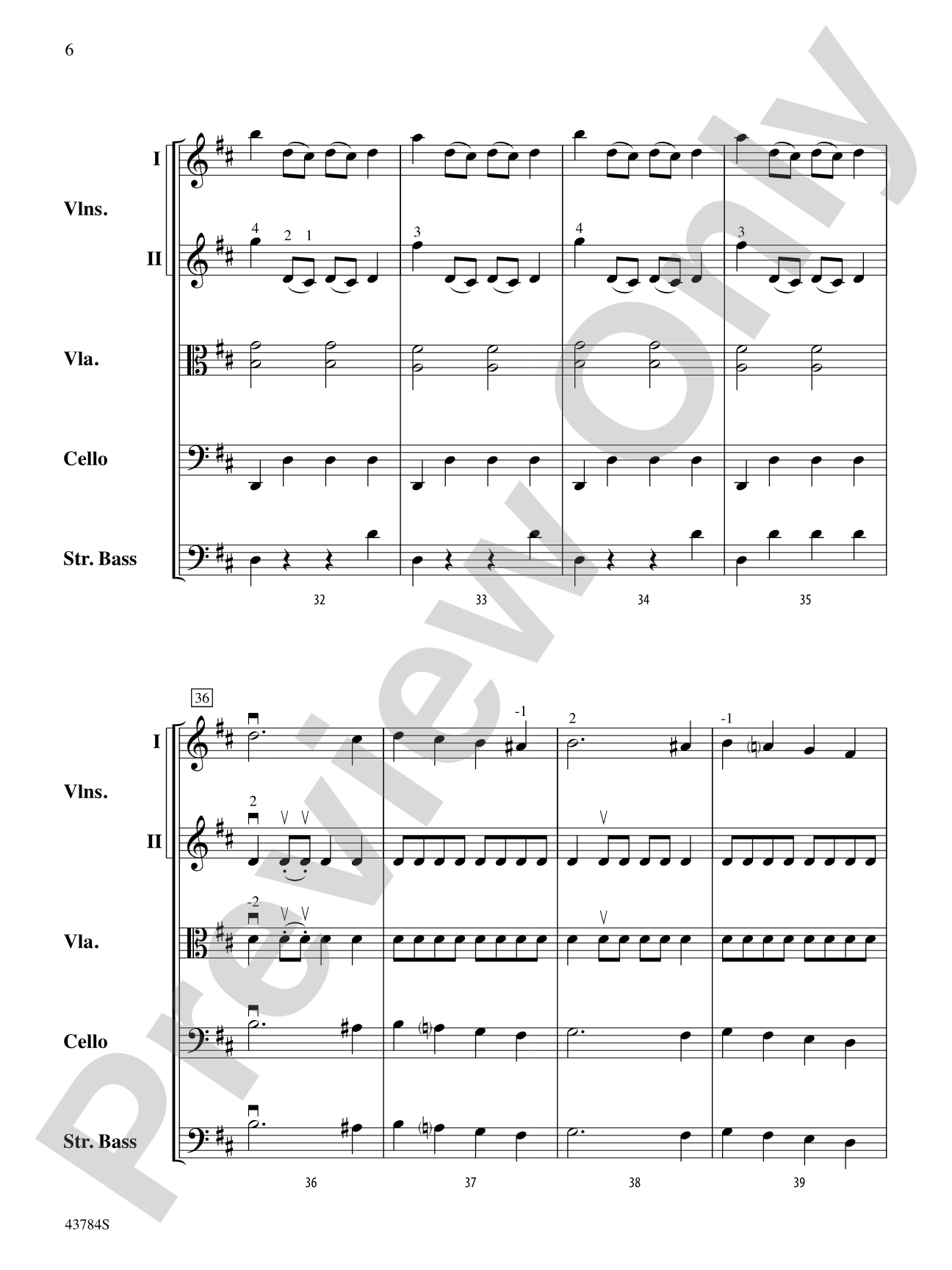
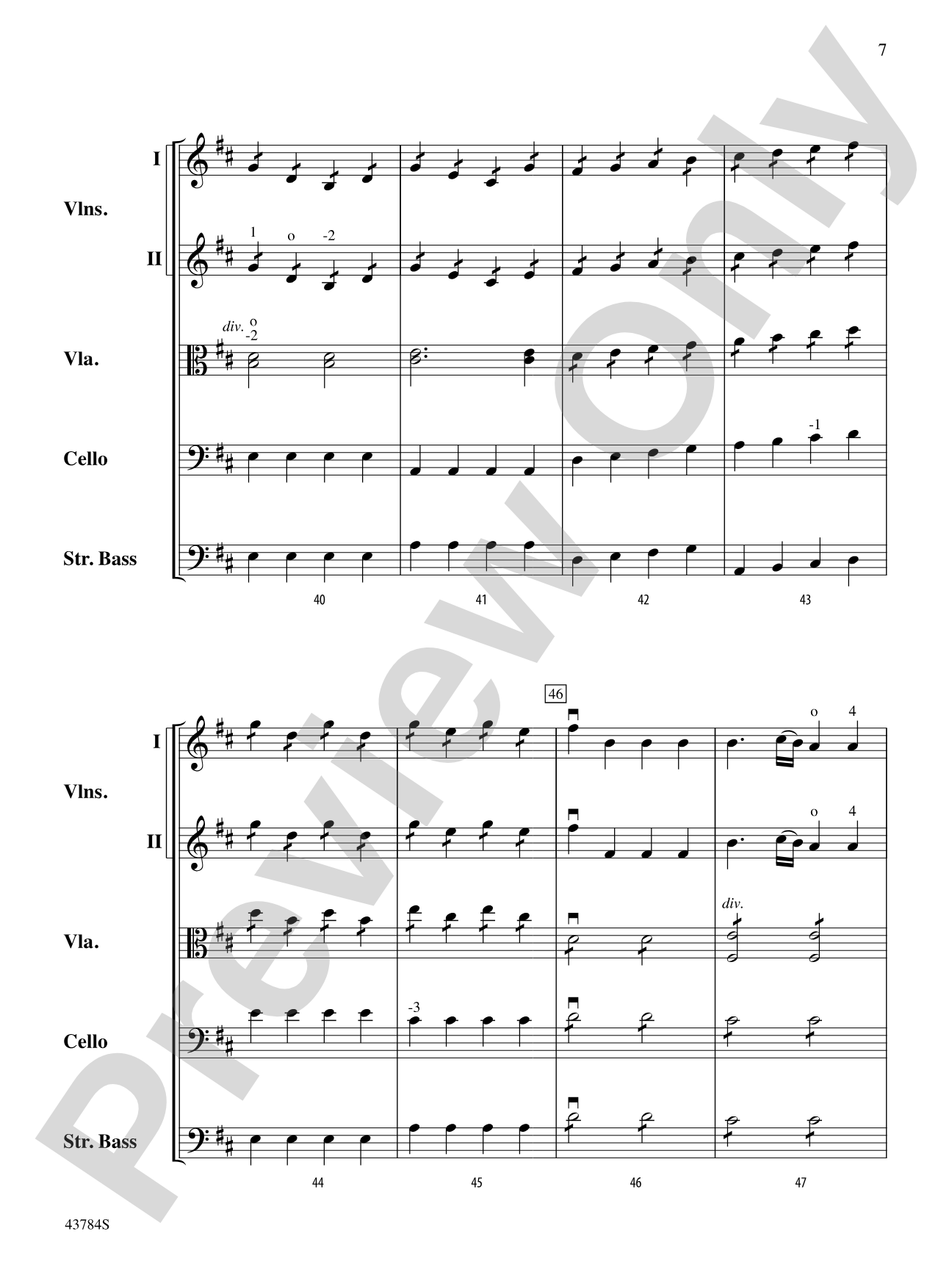
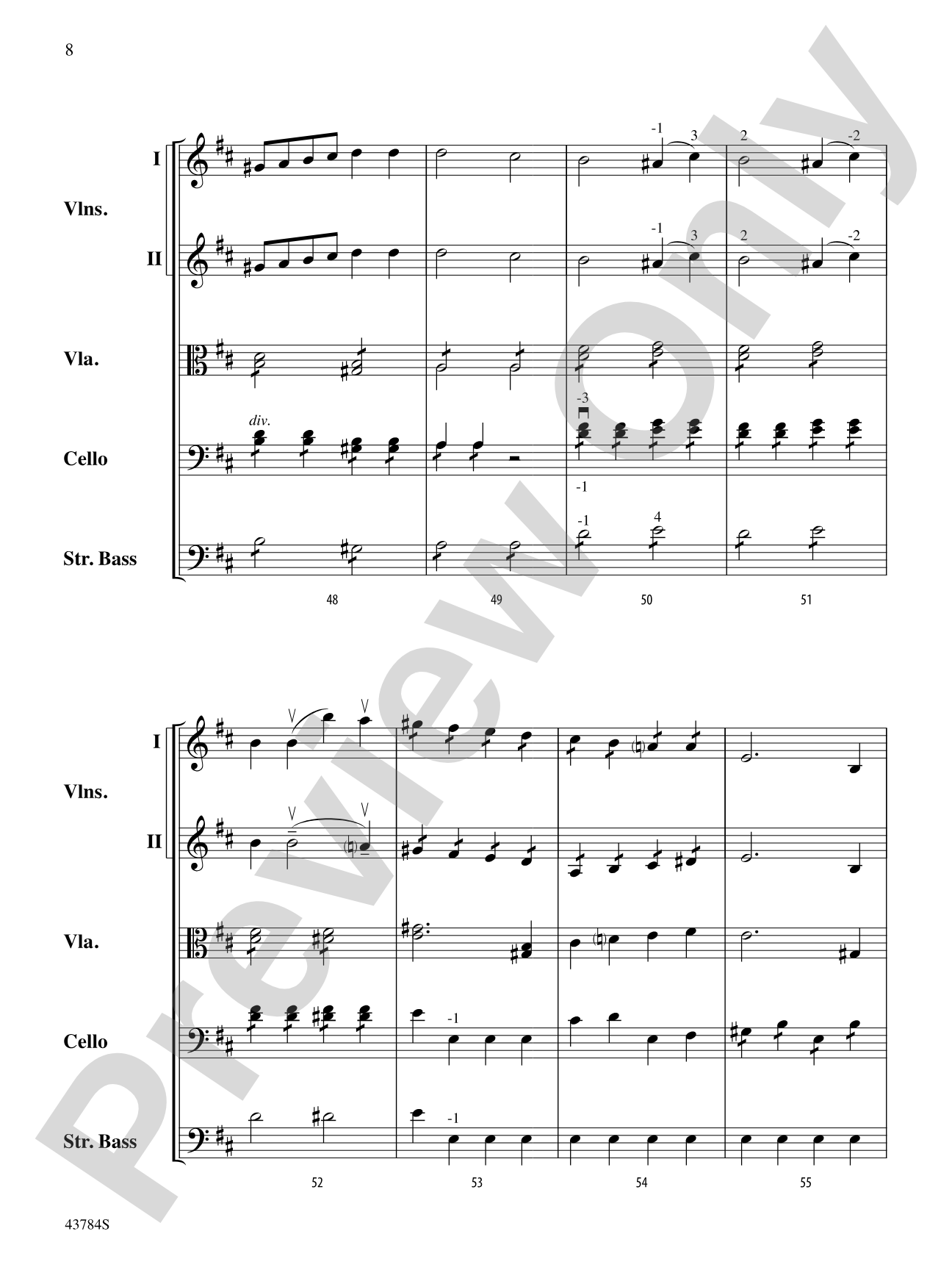
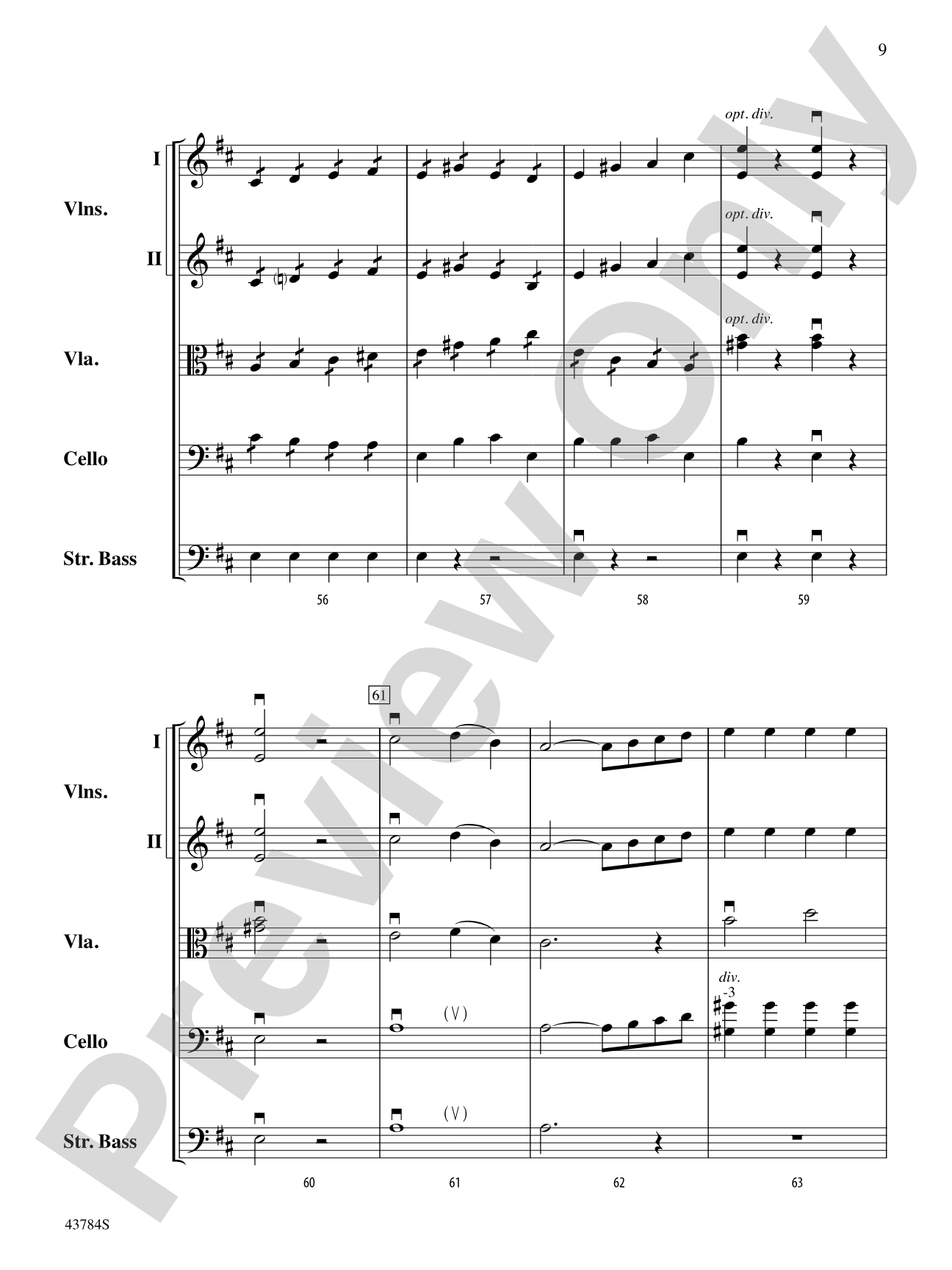
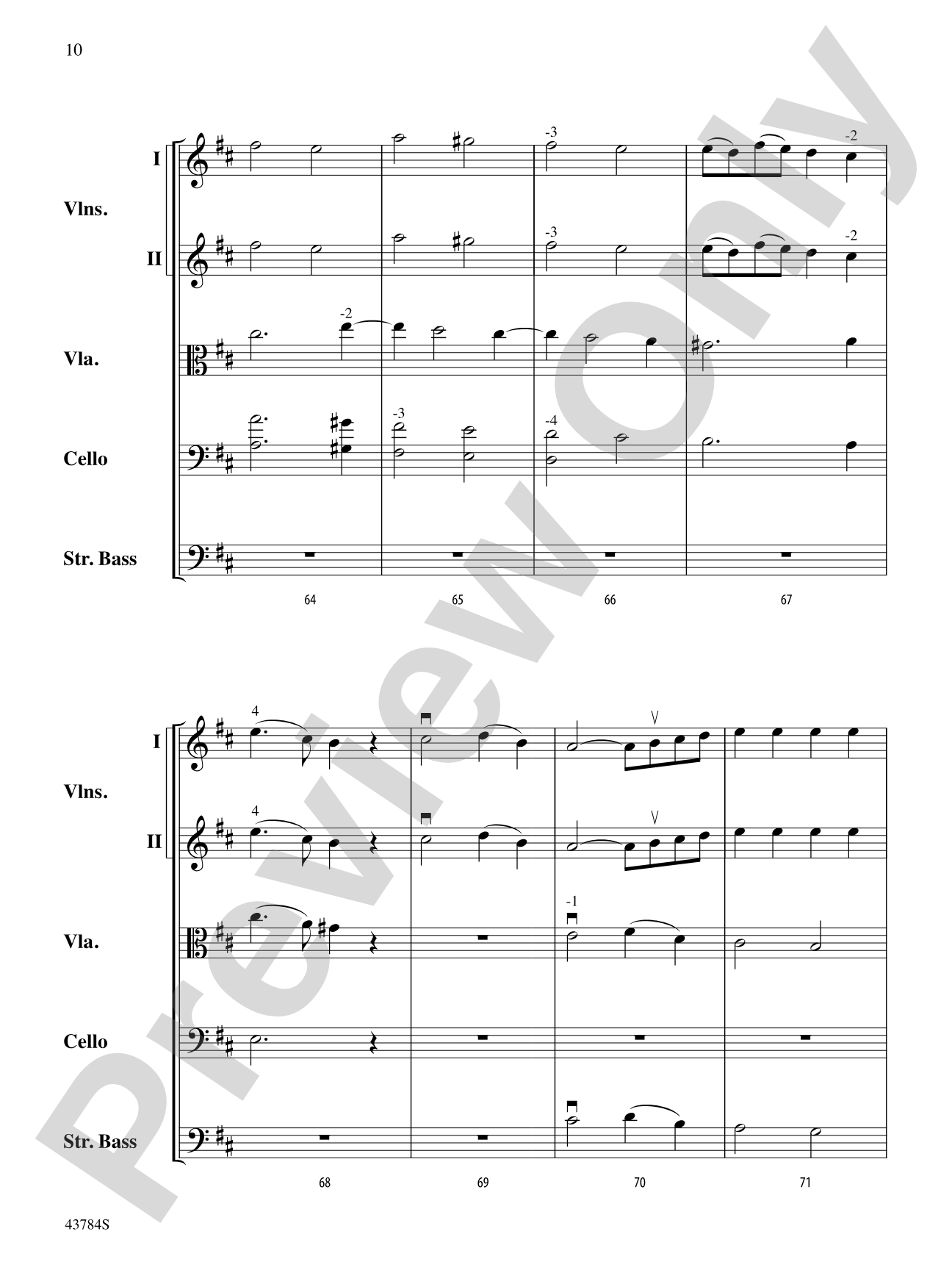
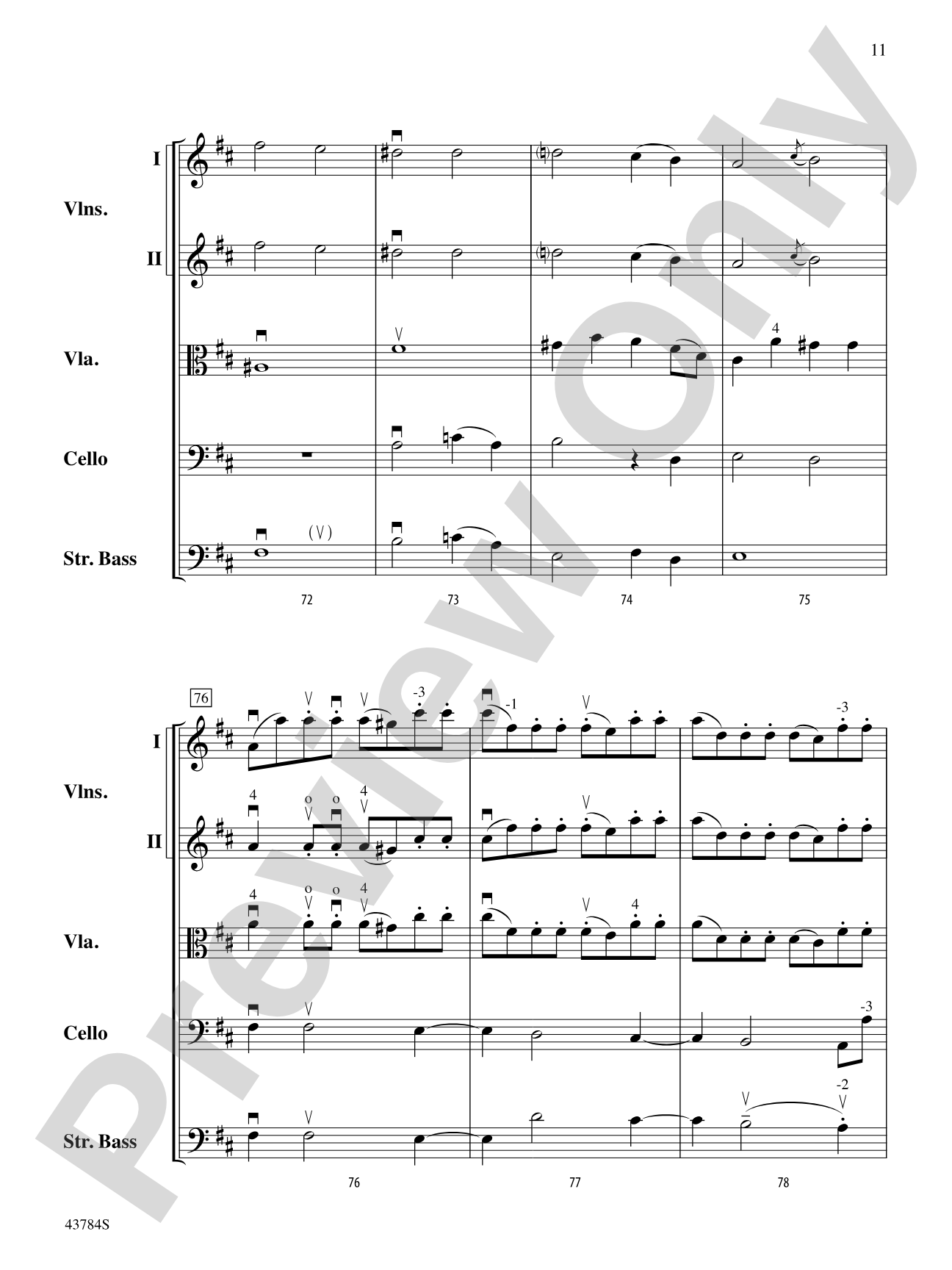
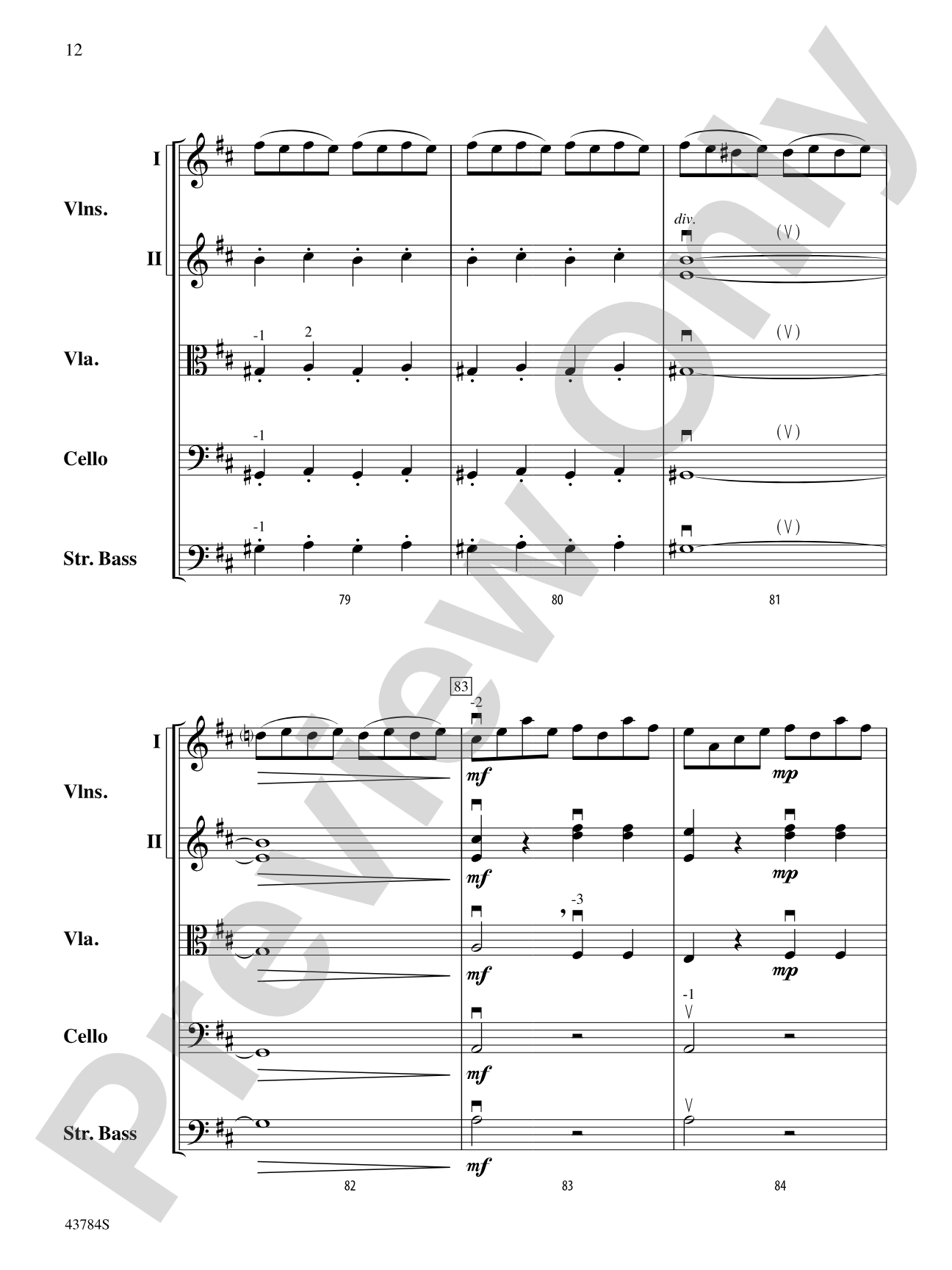
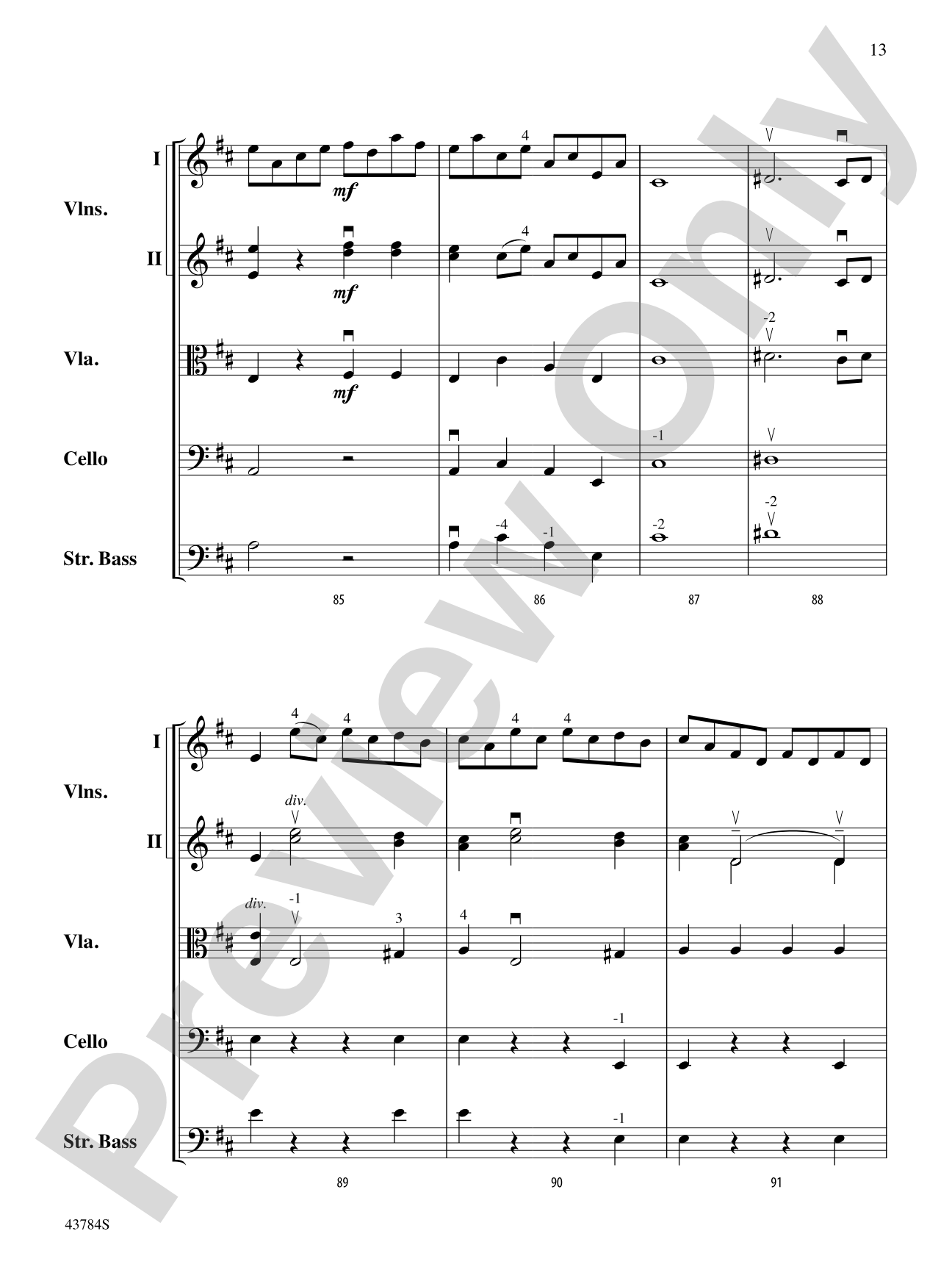
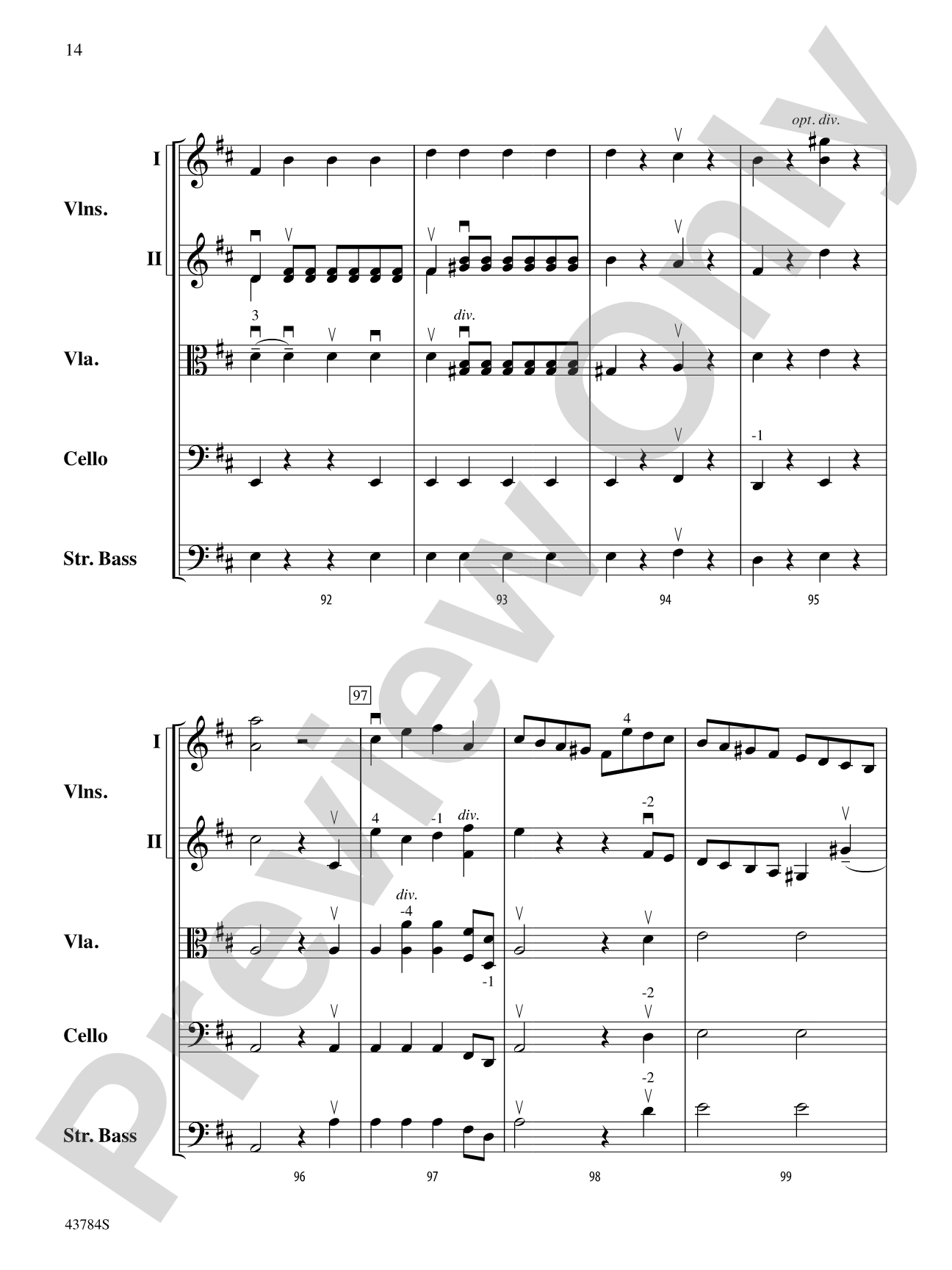
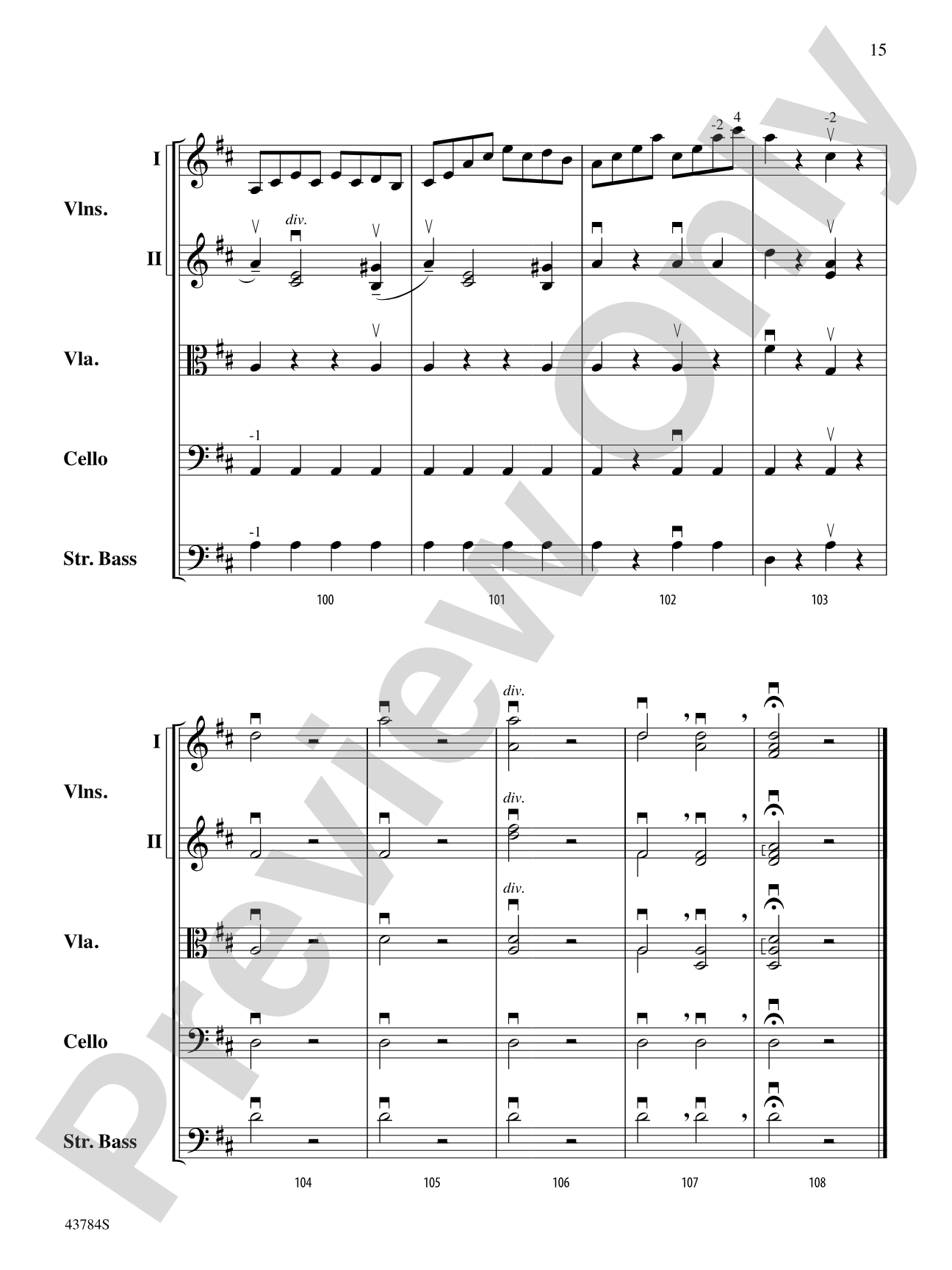

Symphony No. 104: String Orchestra Conductor Score & Parts
First Movement, London Symphony
By Franz Joseph Haydn / arr. Jan Farrar-Royce
Grade: 3.5
Item: 00-PK-0006638

$58.00
Pickup currently not available
Buy Extra Parts (Digital PDF Download)
| Product | Price | Quantity |
|---|---|---|
| Symphony No. 104: Score | $10.00 | |
| Symphony No. 104: 1st Violin | $7.99 | |
| Symphony No. 104: 2nd Violin | $7.99 | |
| Symphony No. 104: Viola | $7.99 | |
| Symphony No. 104: Cello | $7.99 | |
| Symphony No. 104: String Bass | $7.99 |
Parts Added to Cart!
Description
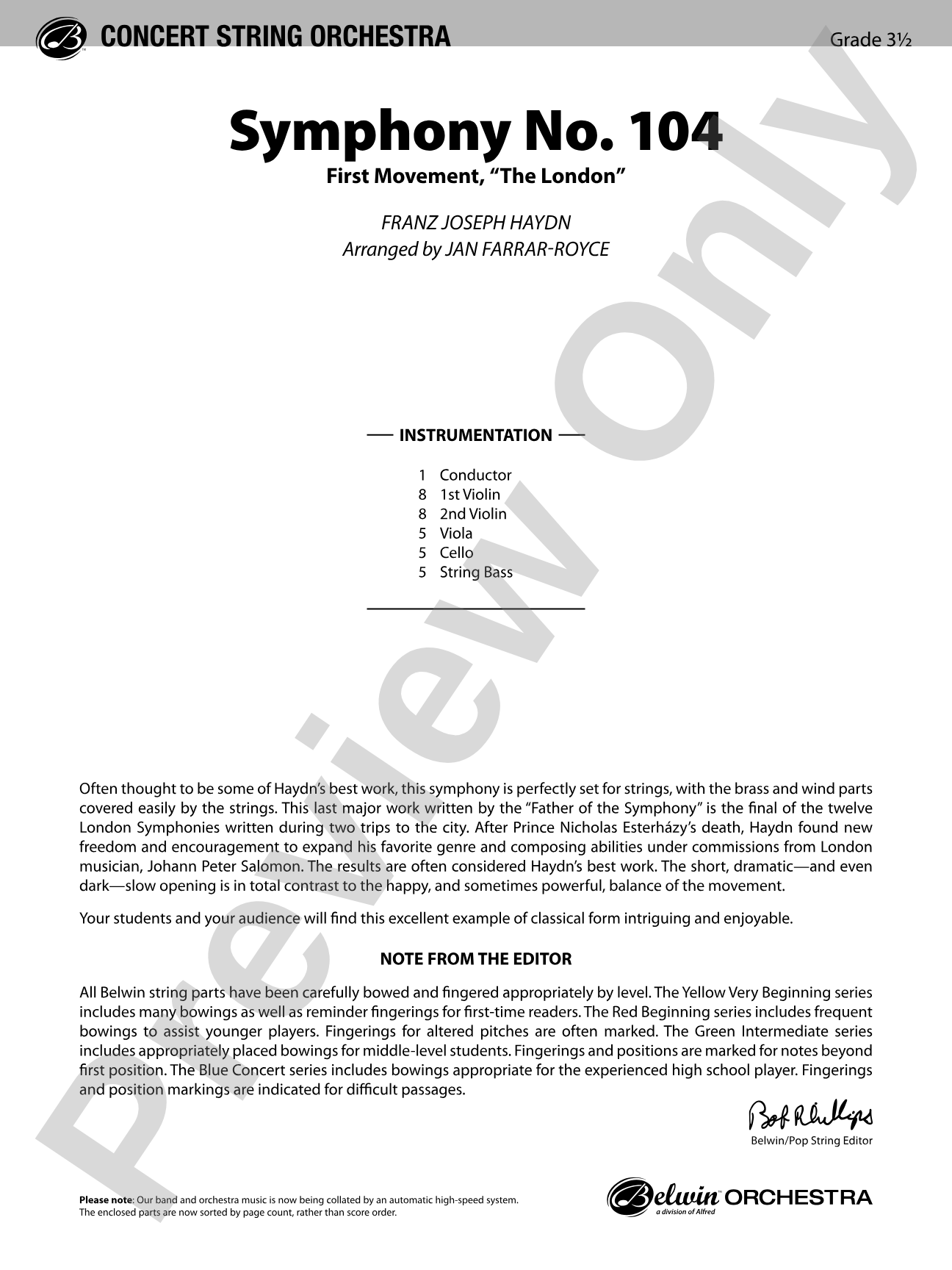
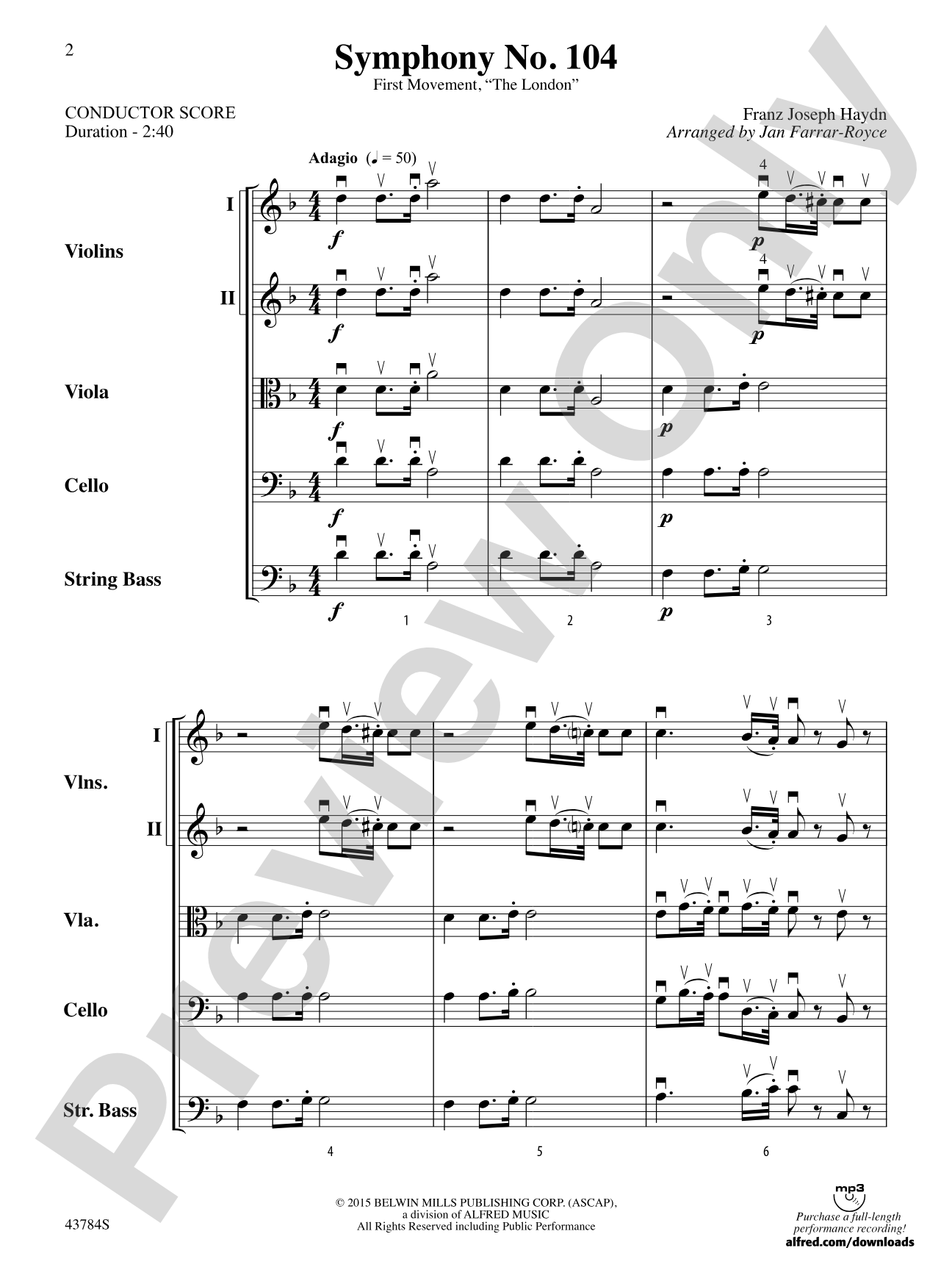
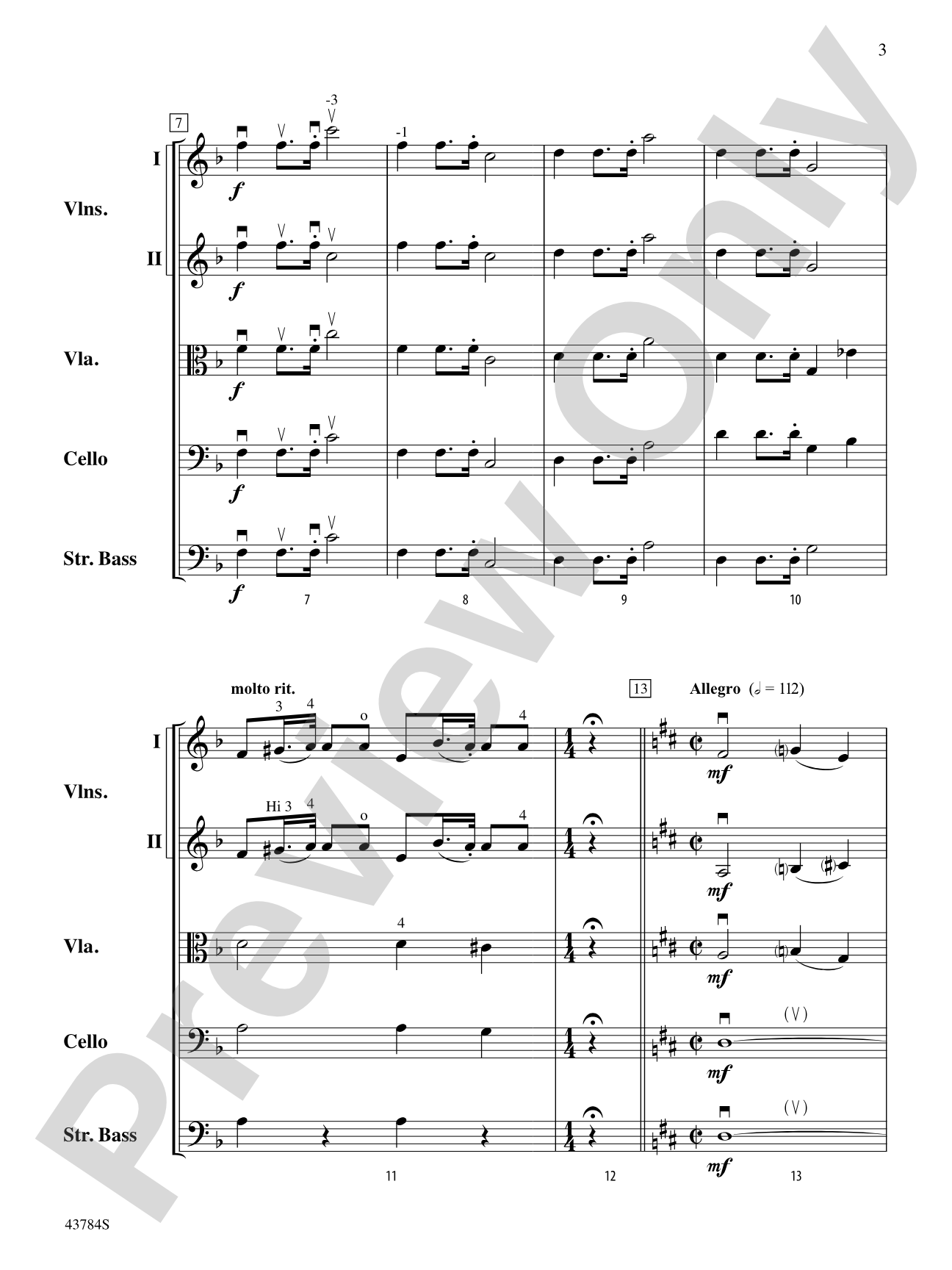
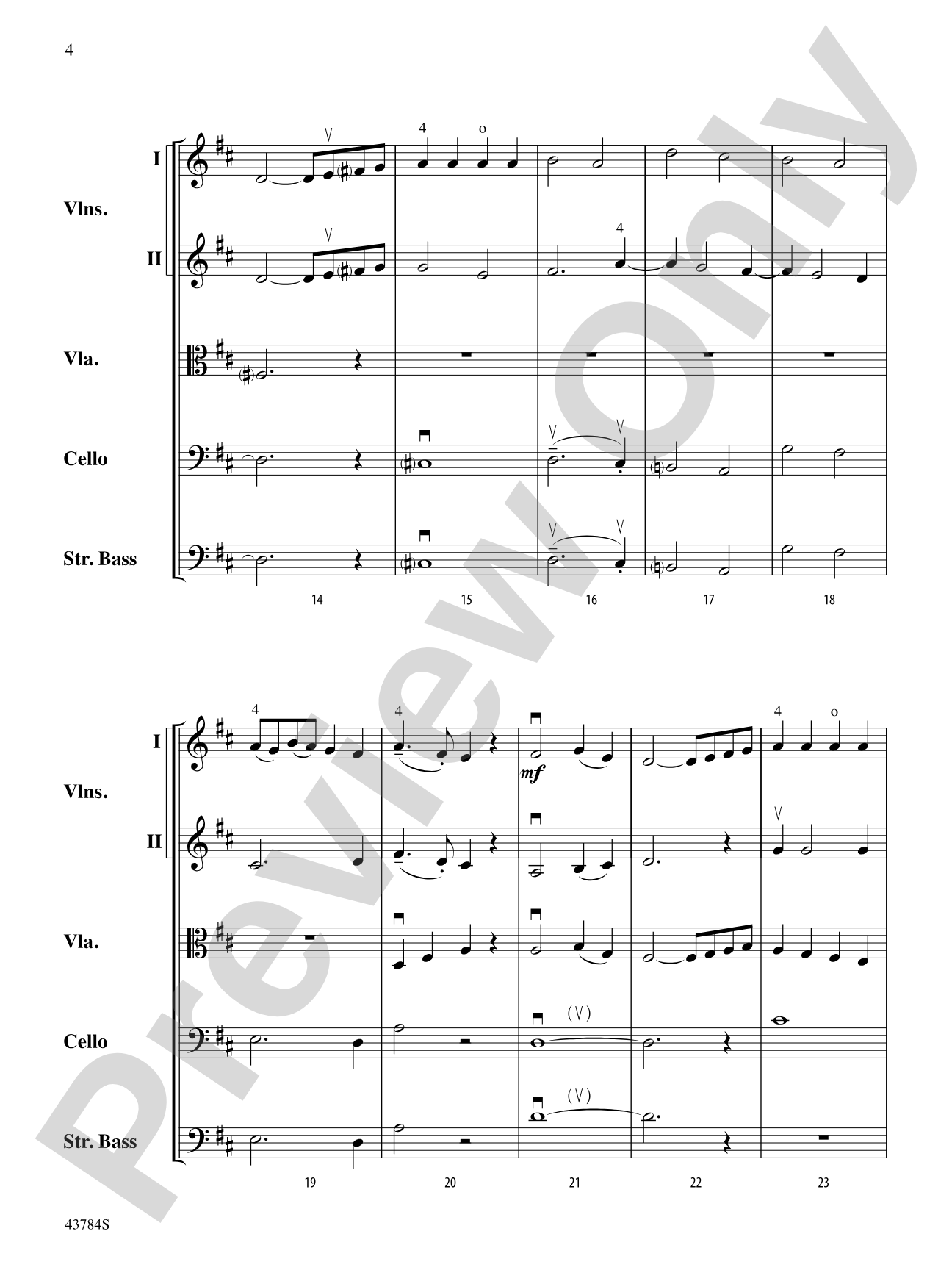
Often thought to be some of Haydn's best work, this symphony is perfectly set for strings with the brass and wind parts easily covered. Your students and your audience will find this excellent example of classical form intriguing and enjoyable. (2:40)


Don't just read it, hear it, play along with it, and watch your students grow with it. In MakeMusic Cloud, Symphony No. 104: String Orchestra Conductor Score & Parts comes alive with professional accompaniment, adjustable tempo, and built-in practice tools that turn solo practice into real progress.
Open in the Player
Jump straight in and assign it today.
Start Your Free Trial
Open this title and explore the full library in minutes.
Sample Audio
1
Audio File
--:--
0:00
0:00
Sample Video
No sample videos found.
Additional Details
Series:
Belwin Concert String Orchestra
Publisher:
Alfred Music
Page Count:
124
SKU:
00-PK-0006638
More about this title
About the Composer: Franz Joseph Haydn
Franz Joseph Haydn (1732–1809) shaped the symphony from a lightweight divertissement into a sophisticated four-movement form that would define the Classical era. Working for decades at the Esterházy court in Hungary, he composed 104 symphonies that chart his evolving mastery of orchestration, harmonic invention, and structural clarity. His late symphonies reveal a composer at peak creative power, balancing wit and depth with an ear for what makes music both intellectually satisfying and immediately engaging.
Haydn's influence on young composers like Mozart and Beethoven cannot be overstated. He demonstrated that symphonic form could accommodate humor, surprise, and genuine emotion without sacrificing craftsmanship. For music educators, Haydn remains an invaluable resource: his symphonies teach clear phrase construction, logical development, and the architecture of Classical form in language that students can actually hear.
Why we love this
This symphony gives string orchestras access to what many consider one of Haydn's finest achievements without requiring a full orchestra pit. The arranger has made smart choices that preserve the symphonic weight and character while staying within the abilities of a developing ensemble. It reads cleanly, sounds complete, and offers genuine musical rewards for players who engage with the Classical vocabulary Haydn perfected.
What to expect
Bright and purposeful. The symphony moves with the clarity and good humor Haydn brought to his best work, balancing moments of genuine lyrical warmth with energetic dance rhythms. There's architecture here that asks students to listen as well as play, to follow how a simple theme becomes the engine for an entire movement.
Who it's for
String orchestras at the Grade 3.5 level who are ready for four-movement symphonic form and want to play an authenticated masterwork rather than a simplified arrangement. Directors programming a concert or festival will find this substantial enough to anchor a program and accessible enough that rehearsal time stays productive.
How to get the most out of it
- Shape each phrase with a clear arc. Haydn's melodies breathe in four-bar or eight-bar units; let them expand and contract naturally rather than pressing through them evenly.
- Balance the violas and cellos carefully in the inner parts. They carry harmonic weight that easily disappears in rehearsal but anchors the entire sound in performance.
- Approach the contrasting sections with genuine character change. Haydn uses major/minor shifts and textural variety to create drama without loudness; let these moments feel like real discoveries.
- Lock the ensemble on downbeats and the ends of phrases, but move freely within the line. Classical music tolerates and rewards flexibility when it serves the musical architecture.
How to use it
Program this as a concert centerpiece or festival entry when you want to demonstrate that your orchestra can handle serious repertoire with style. It pairs naturally with lighter contemporary works or shorter Baroque pieces, and it stands on its own as proof that Classical form translates directly to student achievement.
Skills your students will build
- Four-movement symphonic form (exposition, development, recapitulation structure)
- Phrase shaping and articulation in Classical style
- Inner voice independence and harmonic awareness
- Reading and sustaining longer works (2:40 duration)
- Stylistic contrast between fast and slow movements