
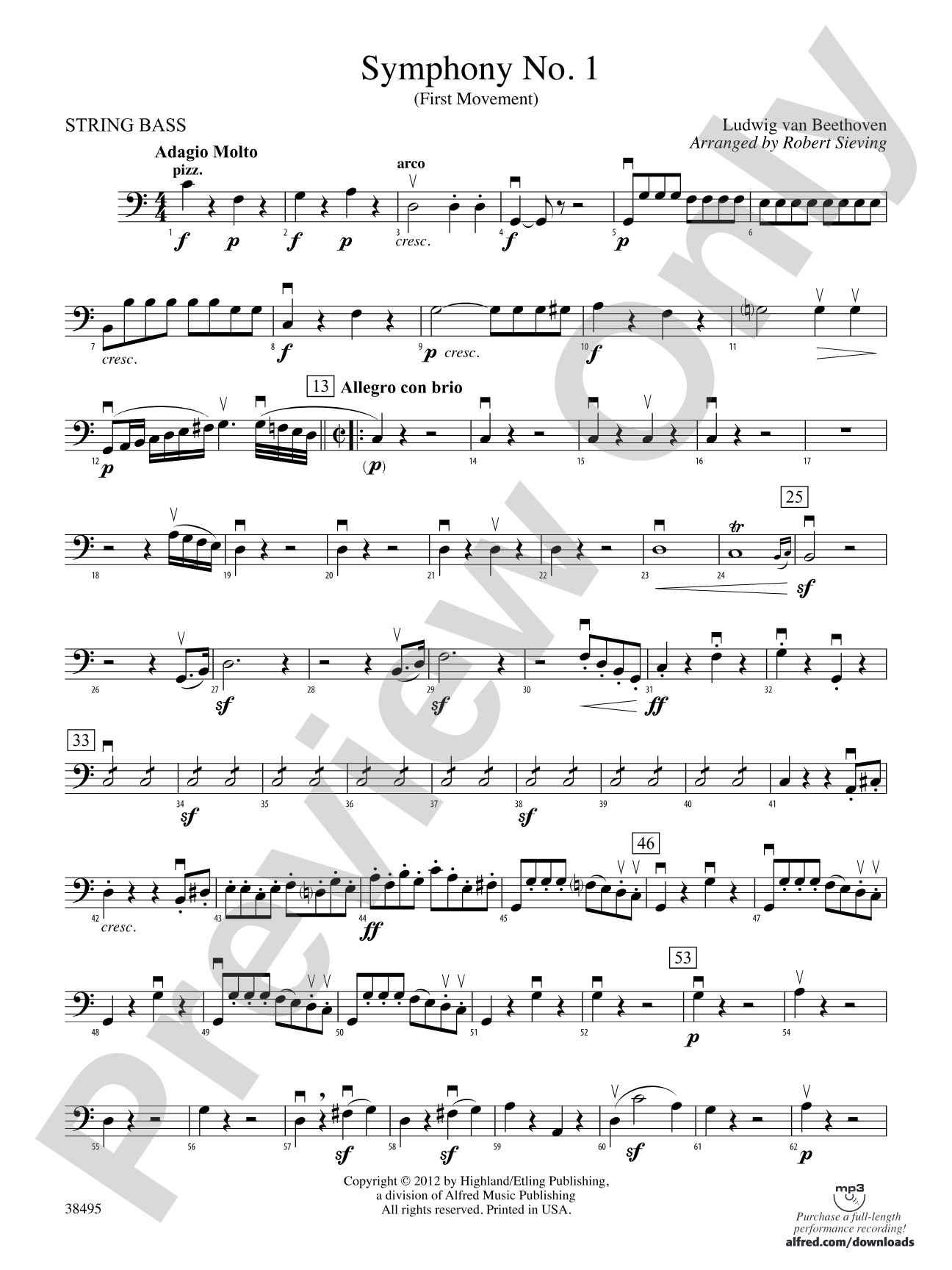

Symphony No. 1: String Bass
First Movement
By Ludwig van Beethoven / arr. Robert Sieving
Grade: 4
Item: 00-PC-0015543_SB
$5.99
Pickup currently not available
Description
A bold string adaptation of this revolutionary work, this piece includes the original string parts with the essential material from the wind parts added in. Eminently playable, the second violin and viola parts remain in first position throughout. The first violin part includes some fifth position notes, usually doubled at the octave. Cellos go to fourth position and basses to sixth. Perfect for contest or festival performance!


Don't just read it, hear it, play along with it, and watch your students grow with it. In MakeMusic Cloud, Symphony No. 1: String Bass comes alive with professional accompaniment, adjustable tempo, and built-in practice tools that turn solo practice into real progress.
Open in the Player
Jump straight in and assign it today.
Start Your Free Trial
Open this title and explore the full library in minutes.
Sample Audio
1
Audio File
--:--
0:00
0:00
Sample Video
No sample videos found.
Additional Details
Series:
Highland/Etling String Orchestra
Publisher:
Alfred Music
Page Count:
124
SKU:
00-PC-0015543_SB
More about this title
About the Composer: Ludwig van Beethoven
Ludwig van Beethoven (1770–1827) stands as the bridge between Classical and Romantic music, a composer whose symphonies redefined what orchestral writing could express. His First Symphony, premiered in 1801, already demonstrated the structural innovation and emotional depth that would characterize his later works, establishing him as a revolutionary voice in Western music.
For string orchestra directors, Beethoven's symphonic language offers students encounters with sophisticated harmonic progressions, dynamic contrasts, and melodic sweep that feel both historically significant and immediately engaging. His works remain central to the canon because they demand genuine musical maturity from performers while remaining accessible to developing ensembles.
Why we love this
This arrangement preserves the symphonic weight and structural clarity of Beethoven's original while making it genuinely performable for Grade 4 string orchestras. The careful positioning of reduced wind material into the string texture maintains the work's character without overwhelming young players, and the conservative approach to upper positions (first position throughout for second violin and viola) respects the developmental stage of most high school orchestras.
What to expect
Heroic and purposeful, with the rhythmic drive and melodic confidence that made Beethoven's First Symphony a watershed moment in music history. The string voicing carries both the lyrical grace of Classical writing and the emotional directness that points toward Romanticism, creating a performance that feels dignified rather than merely competent.
Who it's for
String orchestra directors programming Grade 4 ensembles who want their students to engage with Beethoven's symphonic mastery without the challenges of a full orchestration. This arrangement works especially well for orchestras with solid technique in mixed positions but limited experience with five-part string writing or advanced position work.
How to get the most out of it
- Balance the melodic material carefully between first and second violins; Beethoven's orchestration relies on clear dialogue between these voices, so avoid letting firsts dominate in passages marked for both parts.
- Shape the famous opening phrase with subtle dynamic shaping rather than extreme contrasts. The power of this movement comes from structural clarity, not volume.
- Ensure cellos and basses lock together rhythmically in the faster passages, particularly in development sections where they carry harmonic weight that younger players sometimes underestimate.
- Rehearse transitionsbetween sections methodically. The structural design is one of this work's greatest teaching tools; let students hear how each section grows from what came before.
How to use it
This work serves as an excellent centerpiece for a concert exploring Classical form or as a confident opener that establishes your orchestra's musicality early in a festival performance. Programming it alongside lighter fare or contemporary works highlights the emotional range your ensemble can achieve, while using it as a contest piece demonstrates serious musical preparation.
Skills your students will build
- Reading and executing multiple position work (first through sixth position across all string parts)
- Balancing homophonic and polyphonic texture within a single movement
- Interpreting Classical phrase structure and understanding formal development
- Maintaining ensemble cohesion across longer developmental passages with changing instrumental roles
- Understanding orchestral color through string voicing and the integration of wind material into string texture