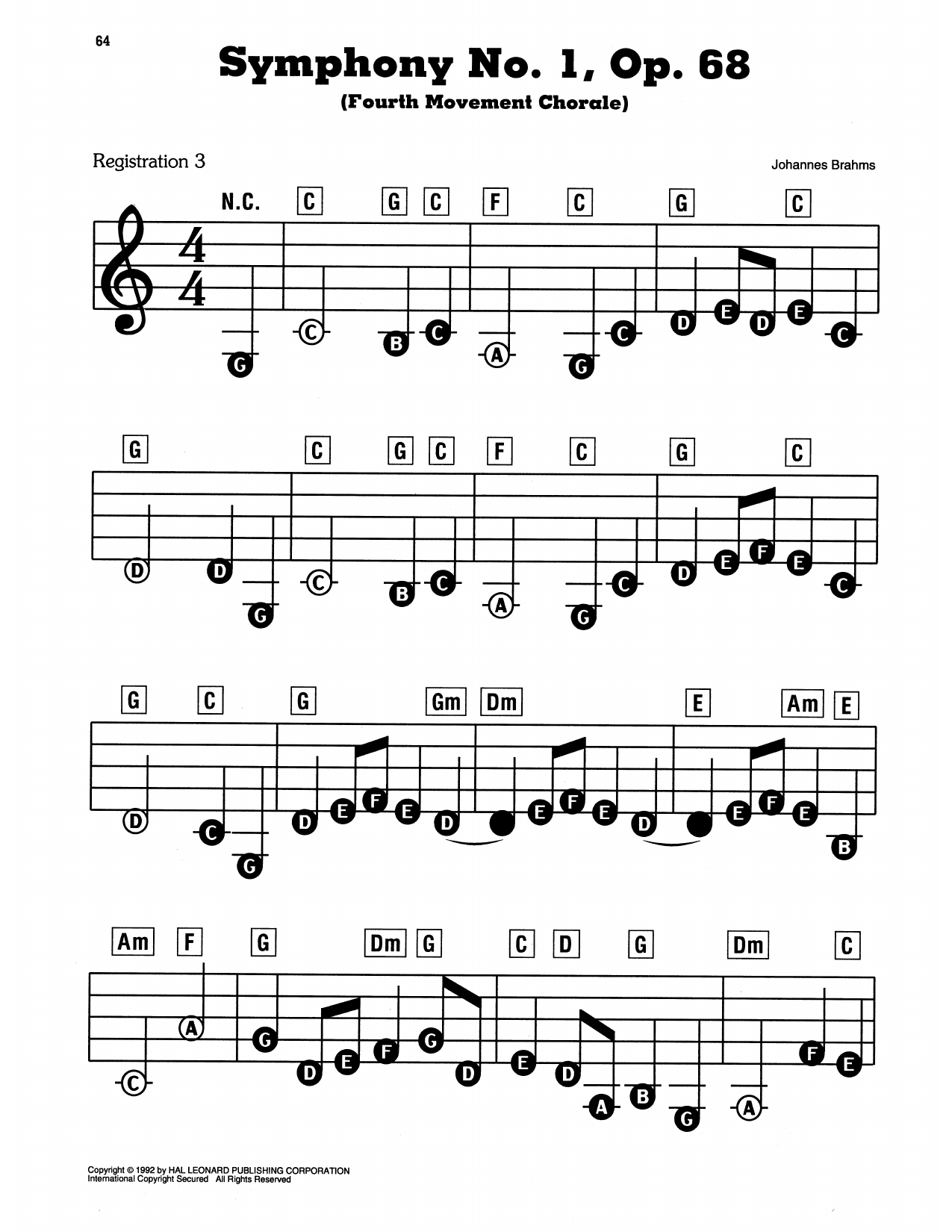
Symphony No. 1 In C Minor, Fourth Movement Excerpt Sheet Music Preview

Symphony No. 1 In C Minor, Fourth Movement Excerpt: E-Z Play Today

By Johannes Brahms

Item: 35-DS01874721

Digital Download
$4.99
Description

Symphony No. 1 In C Minor, Fourth Movement Excerpt: E-Z Play Today isn't in MakeMusic Cloud just yet...but it could be. Let us know you'd like to see it, and you'll help shape what comes next. In the meantime, start a free trial and dive into thousands of interactive titles your students can play along with today.

Sample Audio
No sample audio found.
Sample Video
Additional Details
Publisher: Hal Leonard
Page Count: 2
SKU: 35-DS01874721

More about this title

About the Composer: Johannes Brahms

Johannes Brahms (1833-1897) stands as one of the Romantic era's most rigorous architects of large-scale form. His four symphonies represent decades of compositional refinement, each one a meditation on the relationship between classical structure and 19th-century harmonic language. Brahms resisted pressure to become merely a lyricist; instead, he forged his own path by synthesizing the symphonic traditions of Beethoven with the expressive possibilities of his time.

For music educators, Brahms offers an invaluable pedagogical gift: his work shows students how intellectual rigor and emotional depth coexist. The Fourth Movement of the First Symphony exemplifies this balance, combining propulsive rhythmic energy with harmonic sophistication that rewards careful listening and analysis.

Why we love this

This excerpt captures one of Brahms's most distinctive achievements: a finale that builds momentum through sheer structural inevitability rather than bombast. Students benefit from encountering a composer who prizes craftsmanship and organic development, and this movement demonstrates both in concentrated form. The E-Z Play Today edition opens the piece to pianists who might find the complete score intimidating.

What to expect

Relentless forward momentum builds throughout this movement, driven by incisive rhythmic patterns that feel both inevitable and propulsive. The texture grows denser and more complex as the excerpt unfolds, creating a sense of inevitable arrival rather than sudden climax.

Who it's for

This arrangement suits intermediate to advanced pianists exploring the symphonic tradition through keyboard reduction. It works particularly well for students preparing for concert repertoire or those studying Brahms's formal structures in theory courses.

How to get the most out of it

  • Identify the primary rhythmic motive and let it drive your phrasing; this excerpt relies on relentless forward motion rather than lyrical breathing.
  • Pay attention to voice leading in both hands. Brahms frequently hides countermelodic material that deserves audibility without disrupting the main line.
  • Shape the dynamics with intent. Even passages marked similarly should vary subtly based on harmonic tension and textural density.

How to use it

Include this as part of a piano recital exploring 19th-century symphonic arrangements, or pair it with chamber works to illustrate how Brahms adapts symphonic thinking to smaller ensembles. It also serves well as a bridge in programming between Classical and Romantic-era keyboard literature.

Skills your students will build

  • Maintaining consistent rhythmic momentum across tempo
  • Balancing multiple voices within a dense texture
  • Recognizing and developing motivic material
  • Understanding harmonic function in extended tonality

You May Also Like