
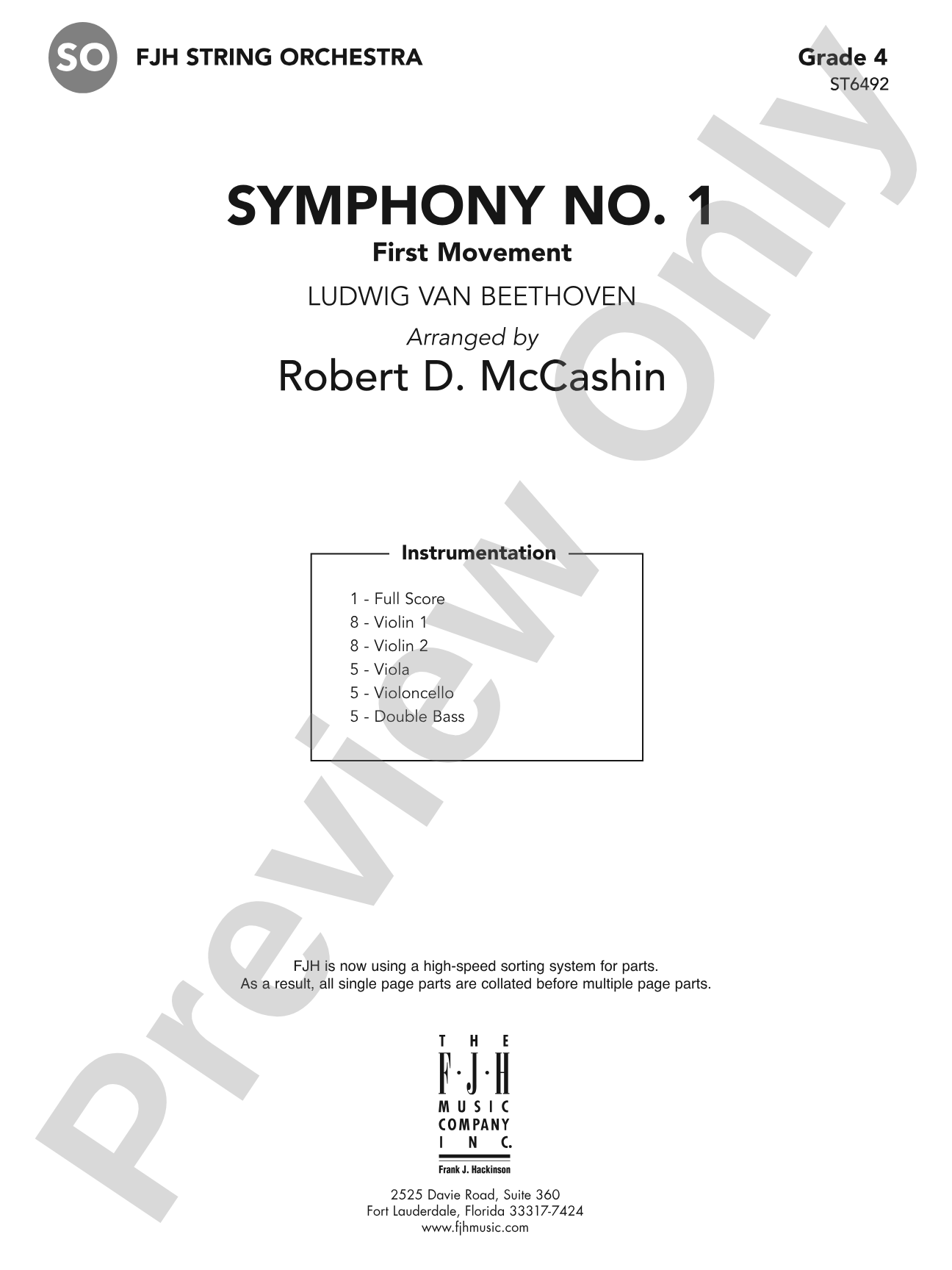
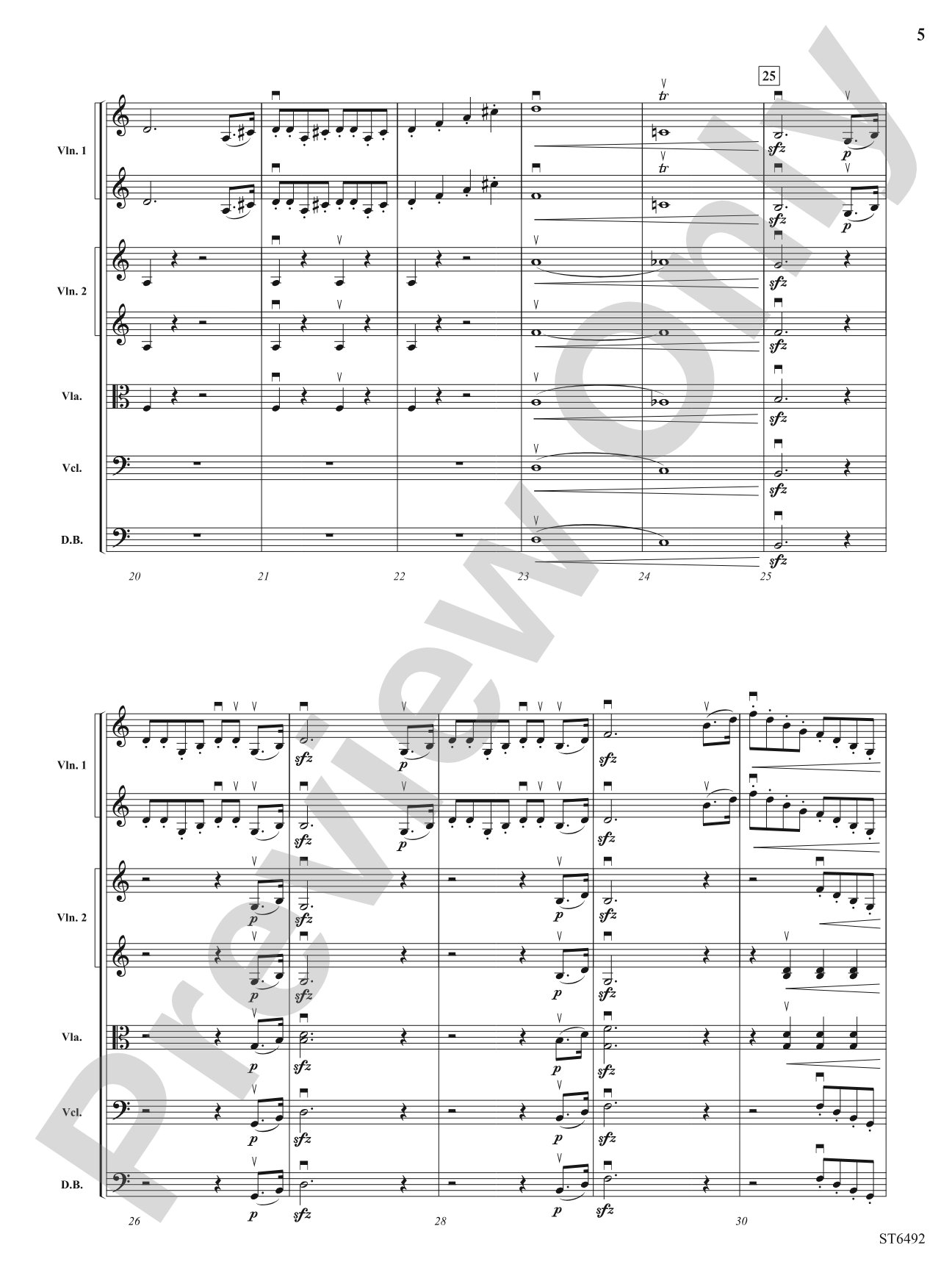
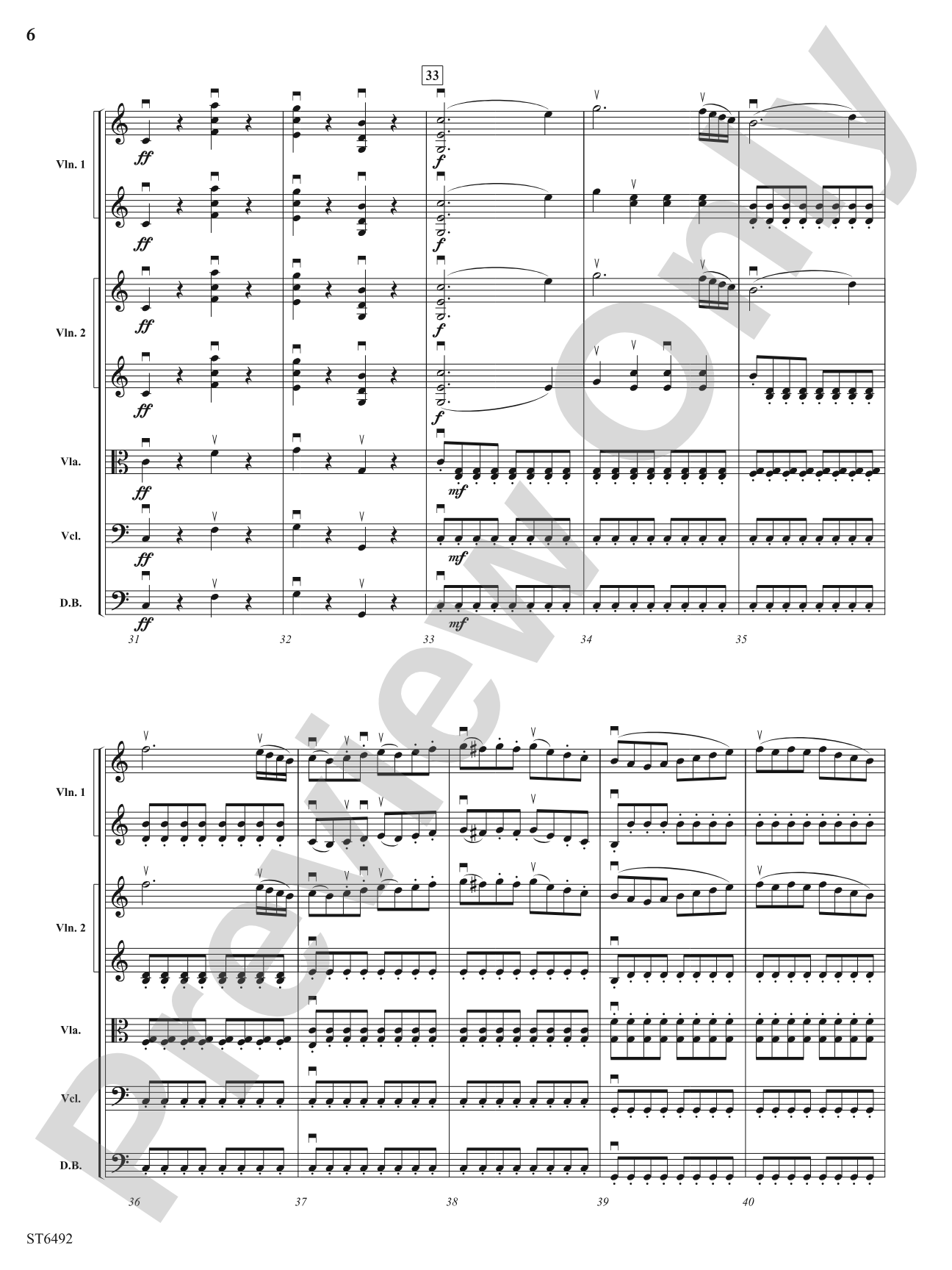
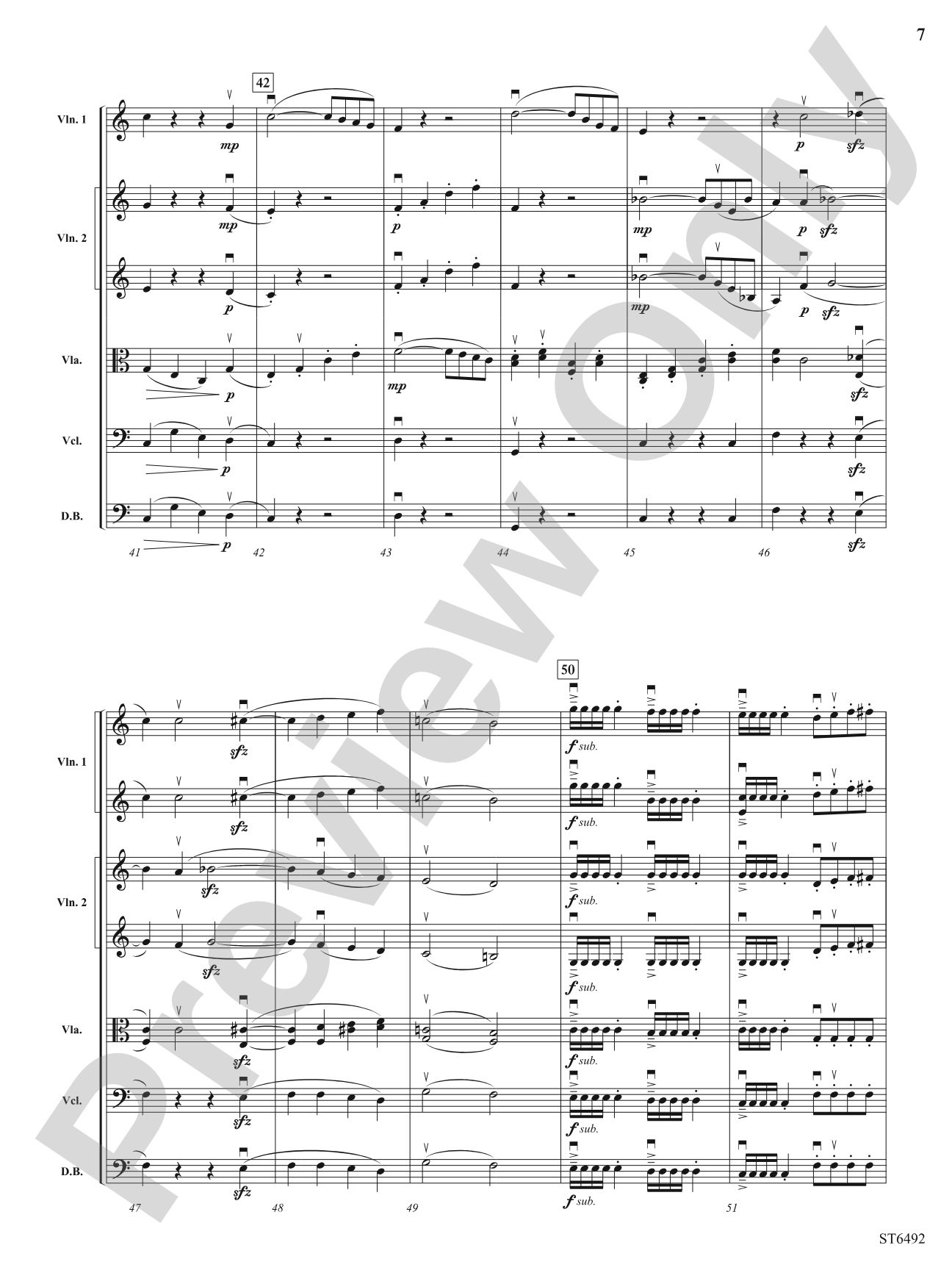
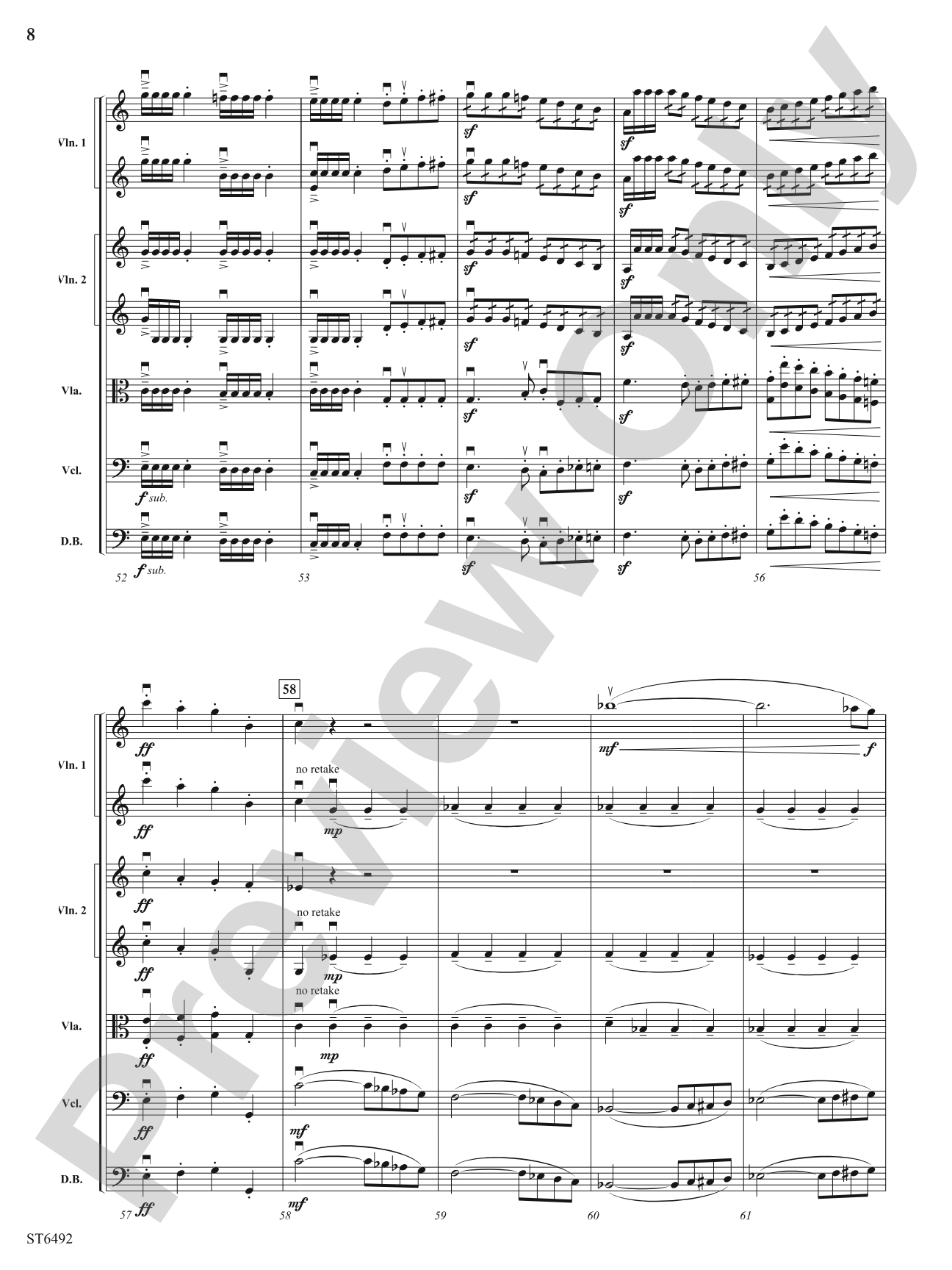
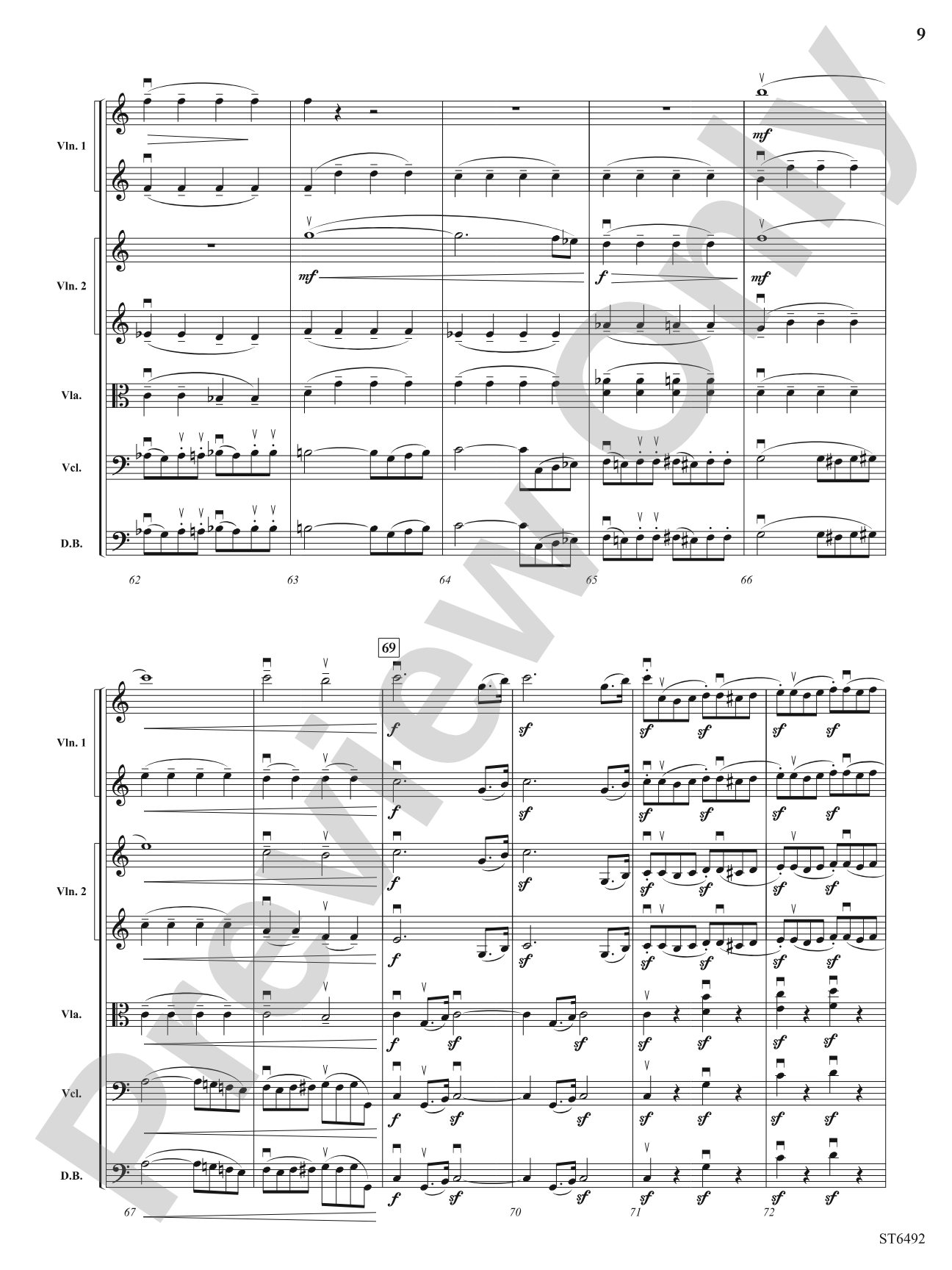
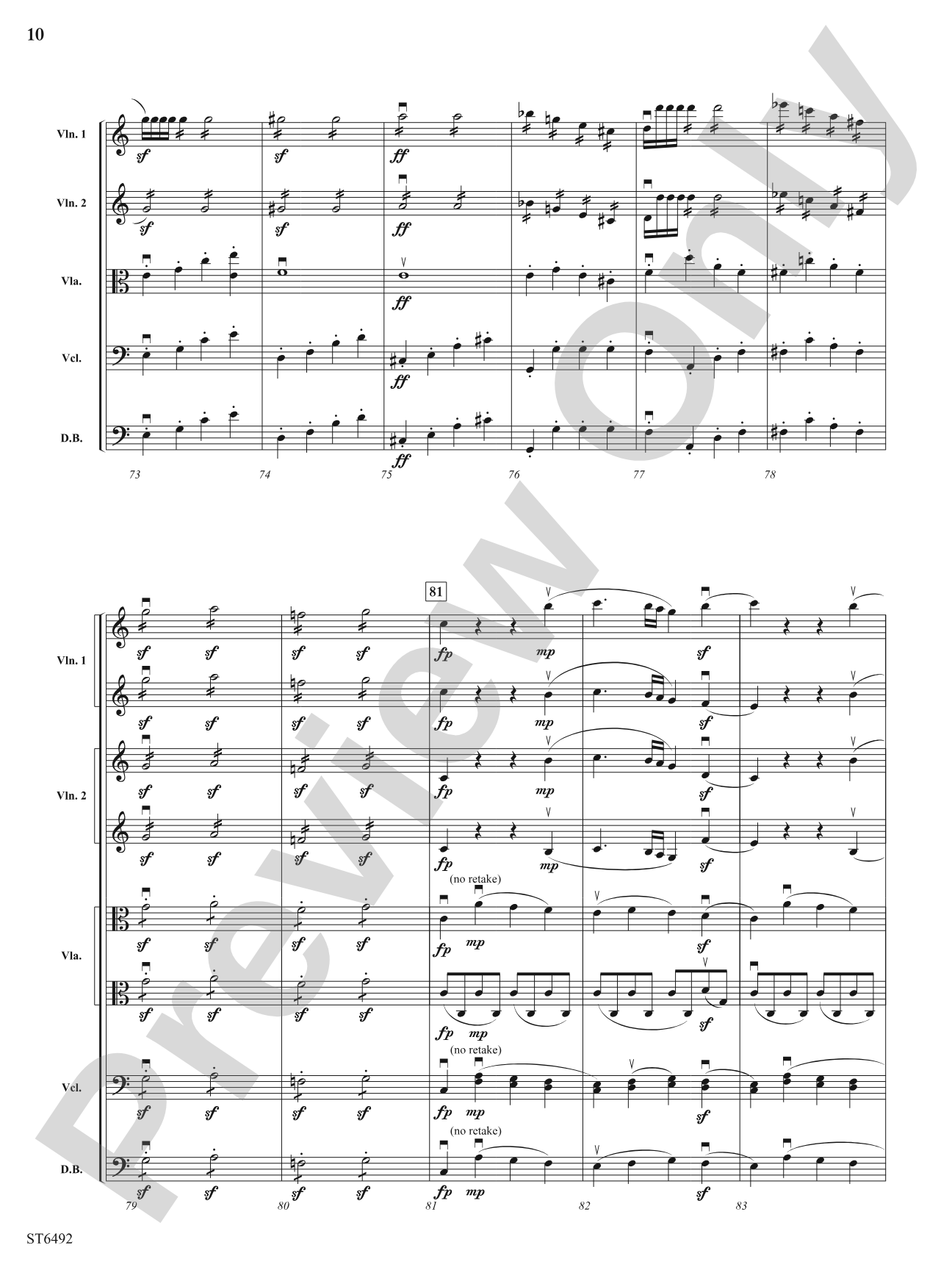
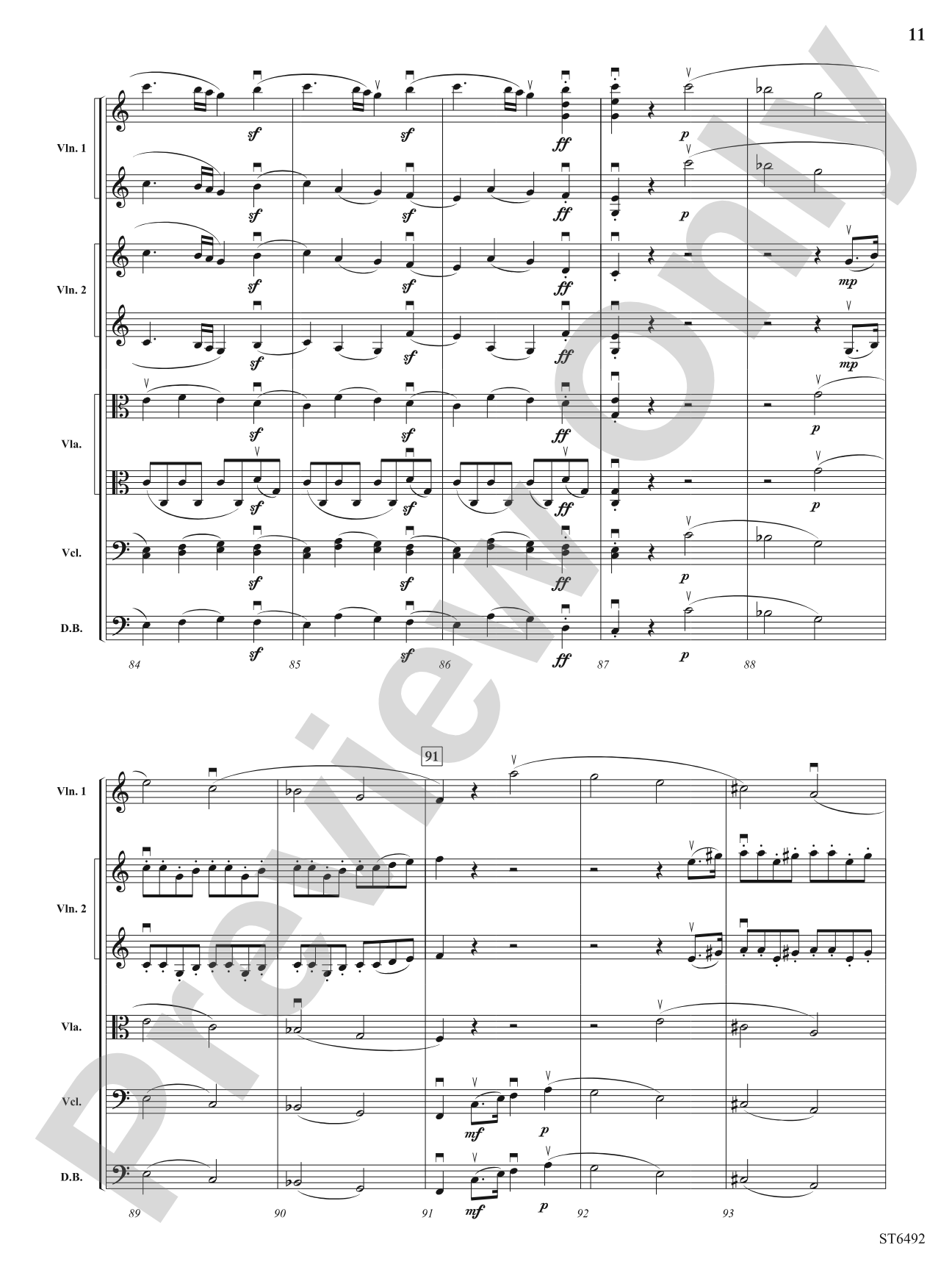
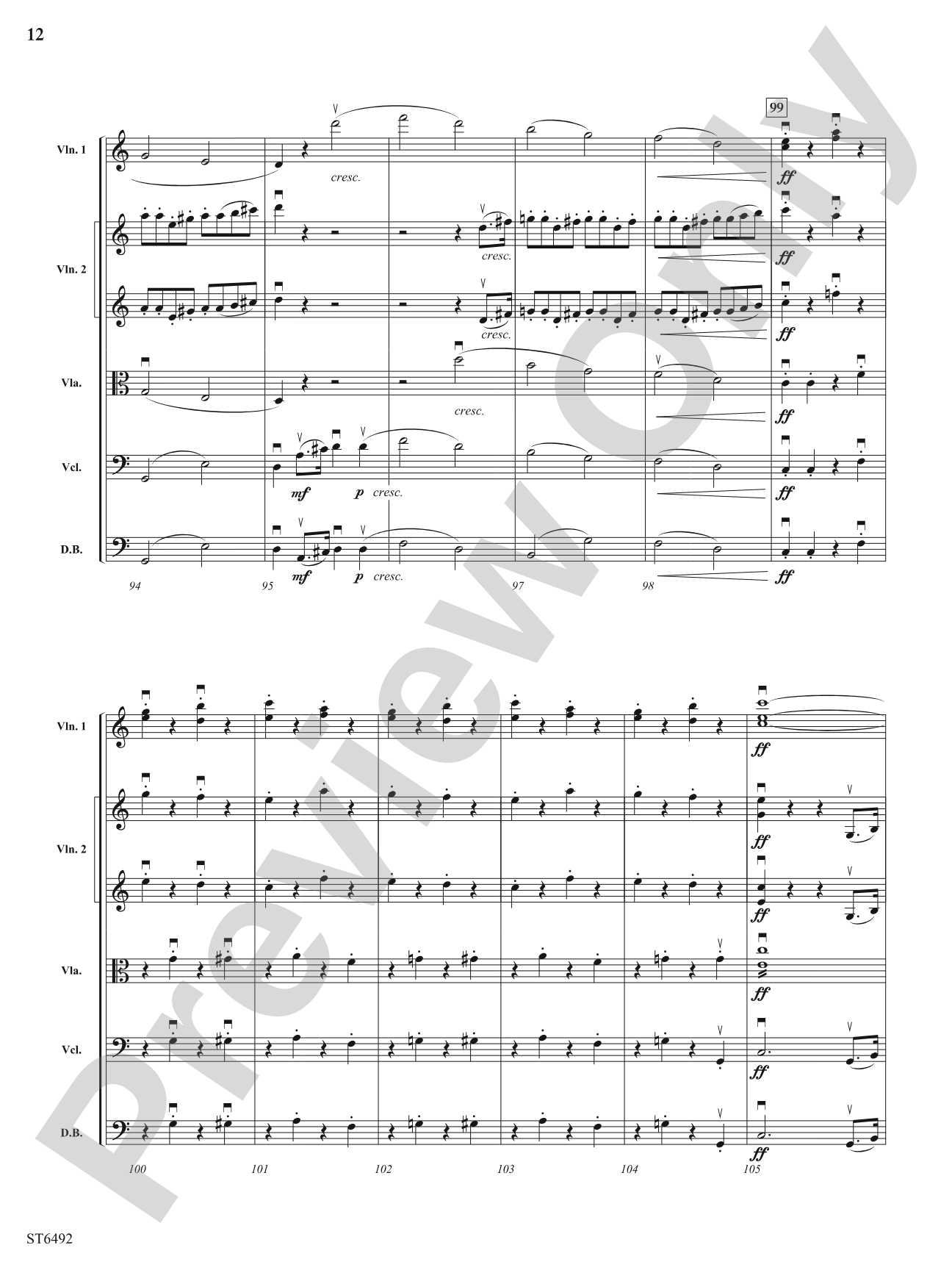
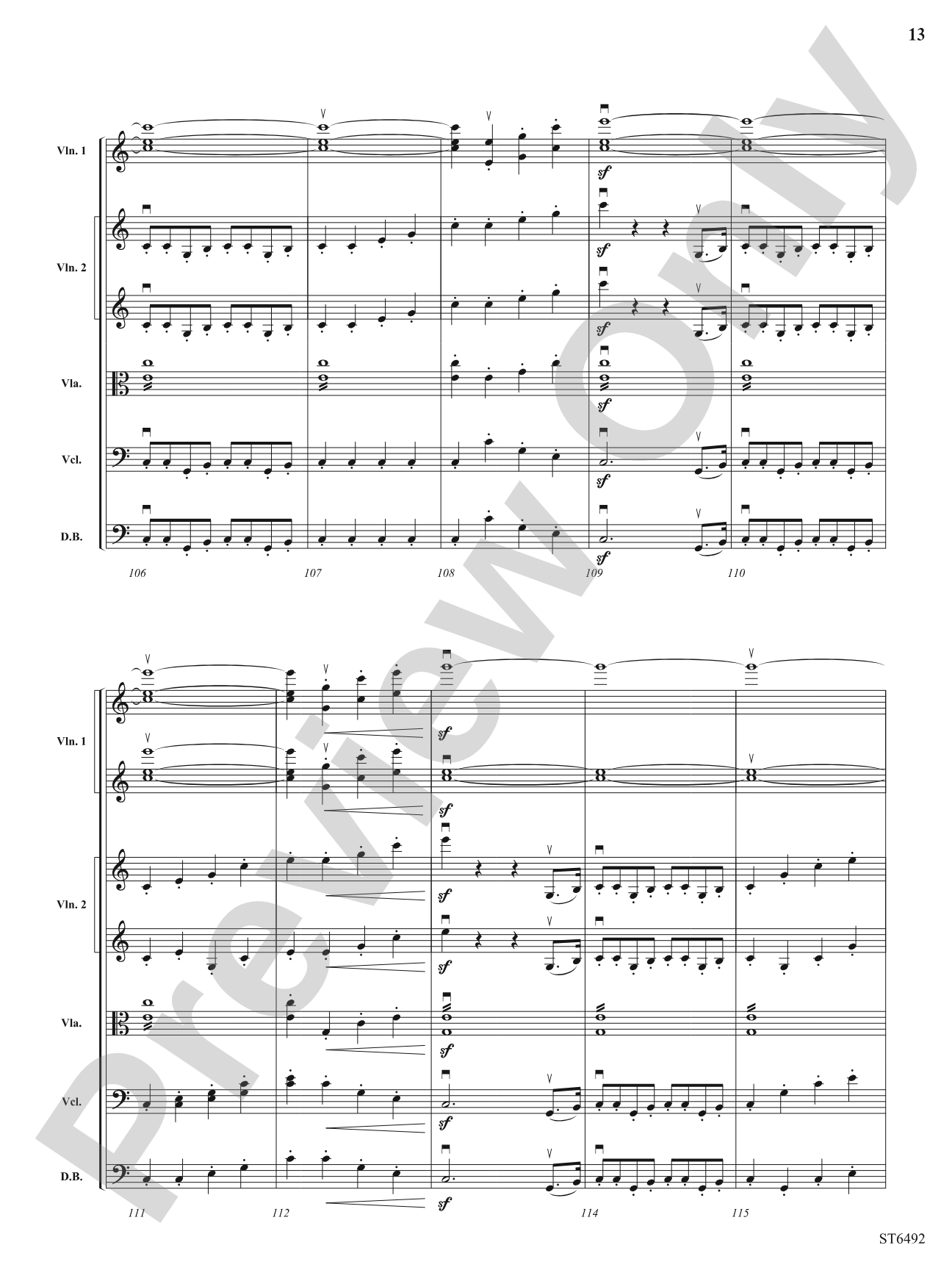
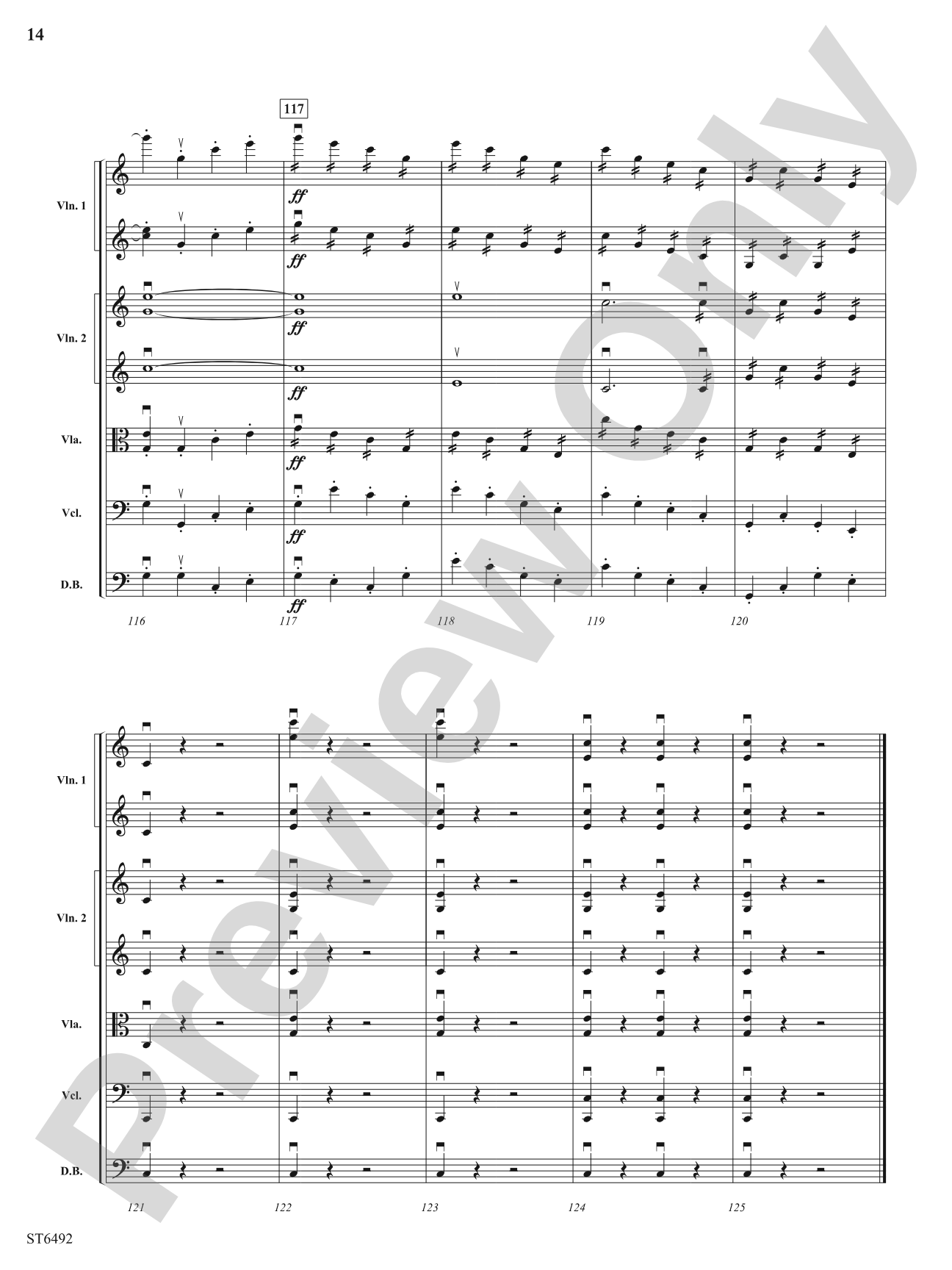

Symphony No. 1 (First Movement): String Orchestra Conductor Score & Parts
First Movement
By Ludwig van Beethoven / arr. Robert D. McCashin
Grade: 4
Item: 98-DST6492
$65.00
Pickup currently not available
Buy Extra Parts (Digital PDF Download)
| Product | Price | Quantity |
|---|---|---|
| Symphony No. 1 (First Movement): Score | $6.00 | |
| Symphony No. 1 (First Movement): Violin 1 | $7.00 | |
| Symphony No. 1 (First Movement): Violin 2 | $7.00 | |
| Symphony No. 1 (First Movement): Viola | $7.00 | |
| Symphony No. 1 (First Movement): Violoncello | $7.00 | |
| Symphony No. 1 (First Movement): Double Bass | $7.00 |
Parts Added to Cart!
Description
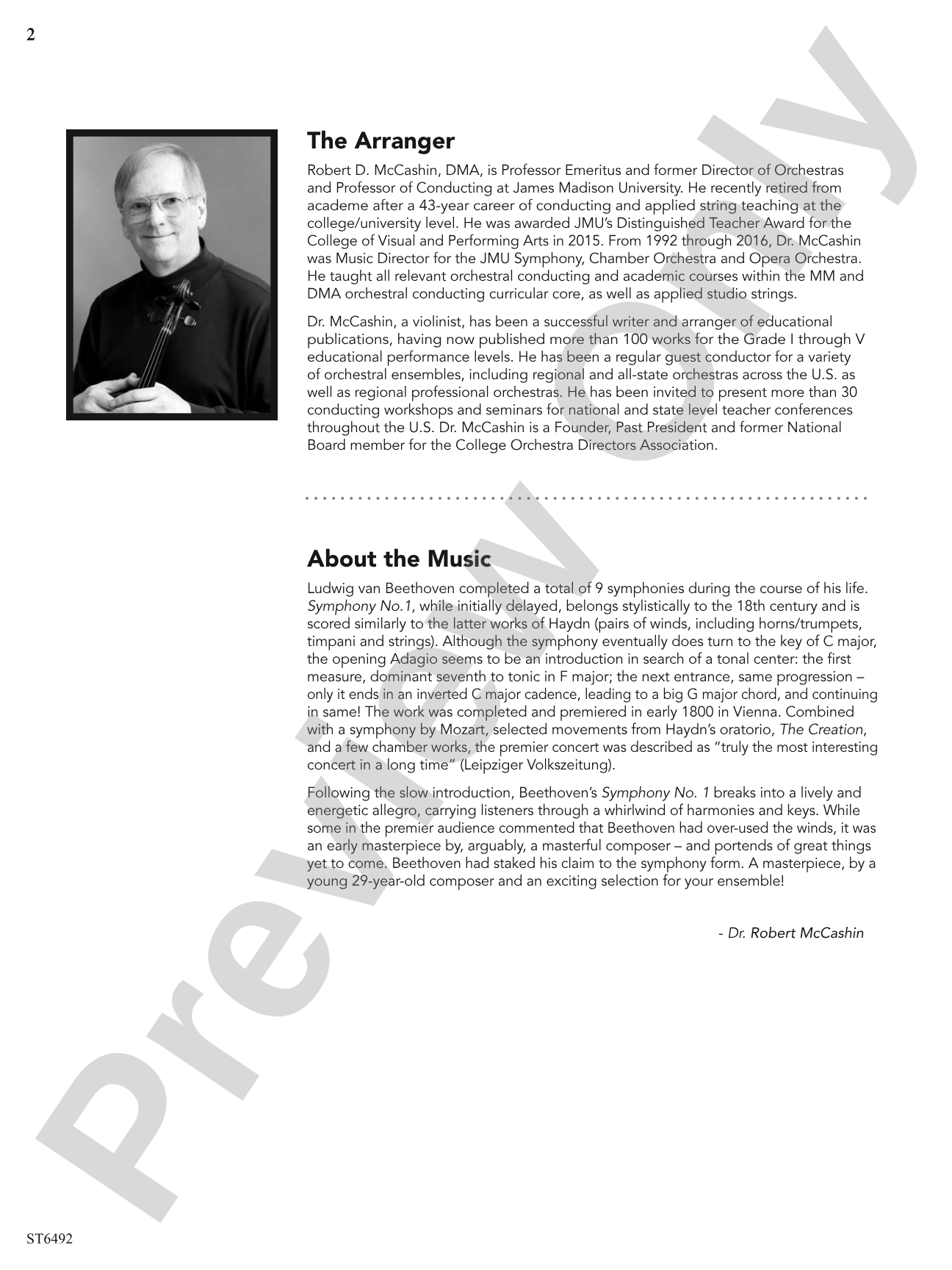
Following the slow introduction, Beethoven's first symphony breaks into a lively and energetic Allegro, carrying listeners through a whirlwind of harmonies and keys. This arrangement authentically captures the lyricism and raw power of a masterpiece written by a young 29-year-old Beethoven.


Symphony No. 1 (First Movement): String Orchestra Conductor Score & Parts isn't in MakeMusic Cloud just yet...but it could be. Let us know you'd like to see it, and you'll help shape what comes next. In the meantime, start a free trial and dive into thousands of interactive titles your students can play along with today.
Request This Title
Tell us you want it.
Start Your Free Trial
Explore everything that's ready to play right now.
Sample Audio
1
Audio File
--:--
0:00
0:00
Sample Video
Additional Details
Series:
FJH String Orchestra
Publisher:
The FJH Music Company, Inc.
SKU:
98-DST6492
More about this title
About the Composer: Ludwig van Beethoven
Ludwig van Beethoven (1770-1827) stands as one of history's most consequential composers, a figure who bridged the Classical and Romantic eras while fundamentally reshaping what symphonic music could express. Trained in Bonn and Vienna, he arrived at his First Symphony at 29 with a distinctive voice already formed: respect for Classical structure paired with an irrepressible urge to expand harmonic boundaries and explore emotional depth. His symphonies remain central to the orchestral canon, studied and performed by musicians of every level, and his influence on every subsequent composer is immeasurable.
Why we love this
This arrangement distills the sheer vitality of Beethoven's First without sacrificing the architectural thinking that makes it endure. String orchestras at Grade 4 rarely get access to this caliber of musical substance, and McCashin's scoring gives every section—violins, violas, cellos, basses—genuinely rewarding material. Young musicians play authentic Beethoven here, not a simplified facsimile.
What to expect
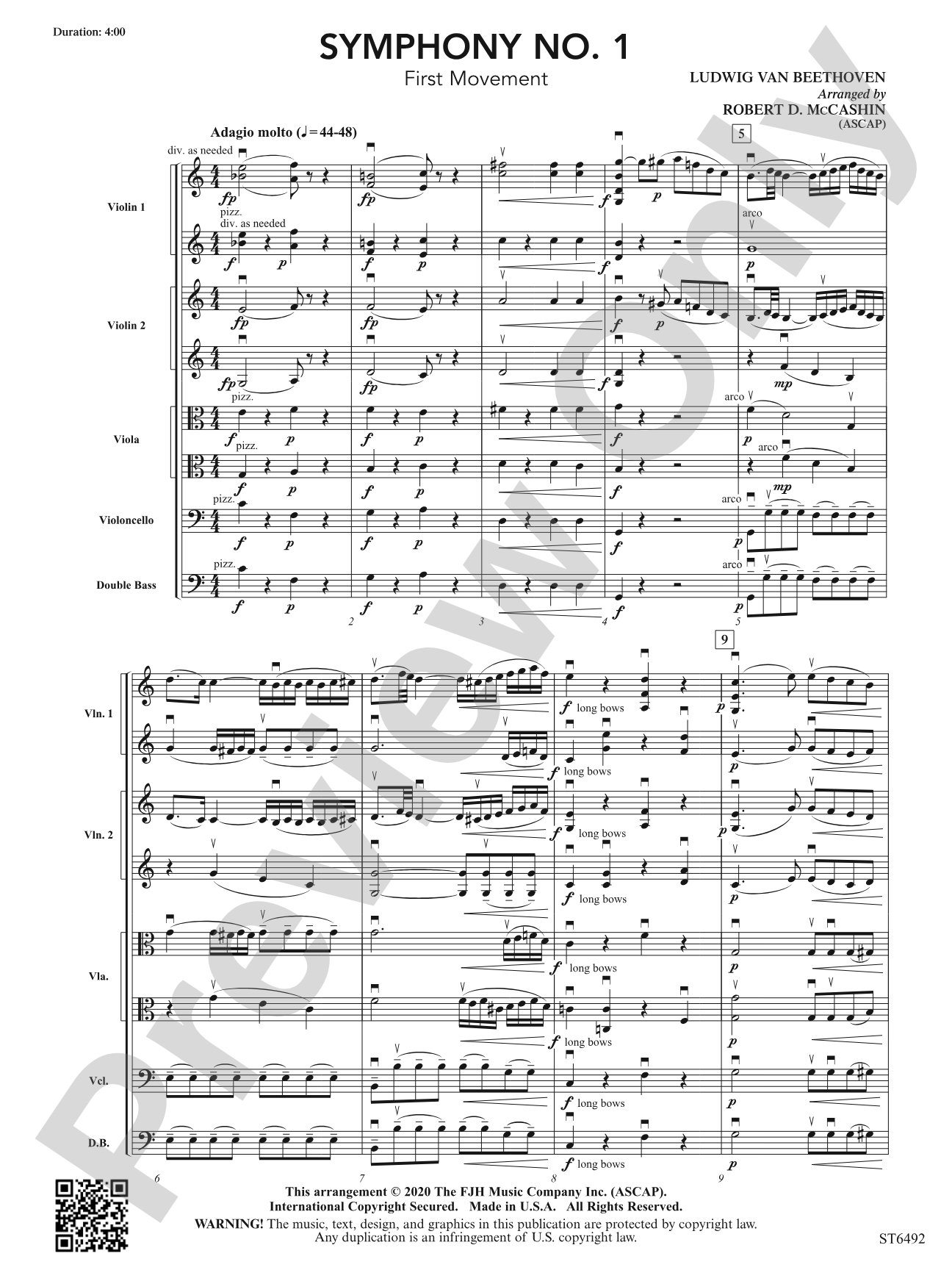
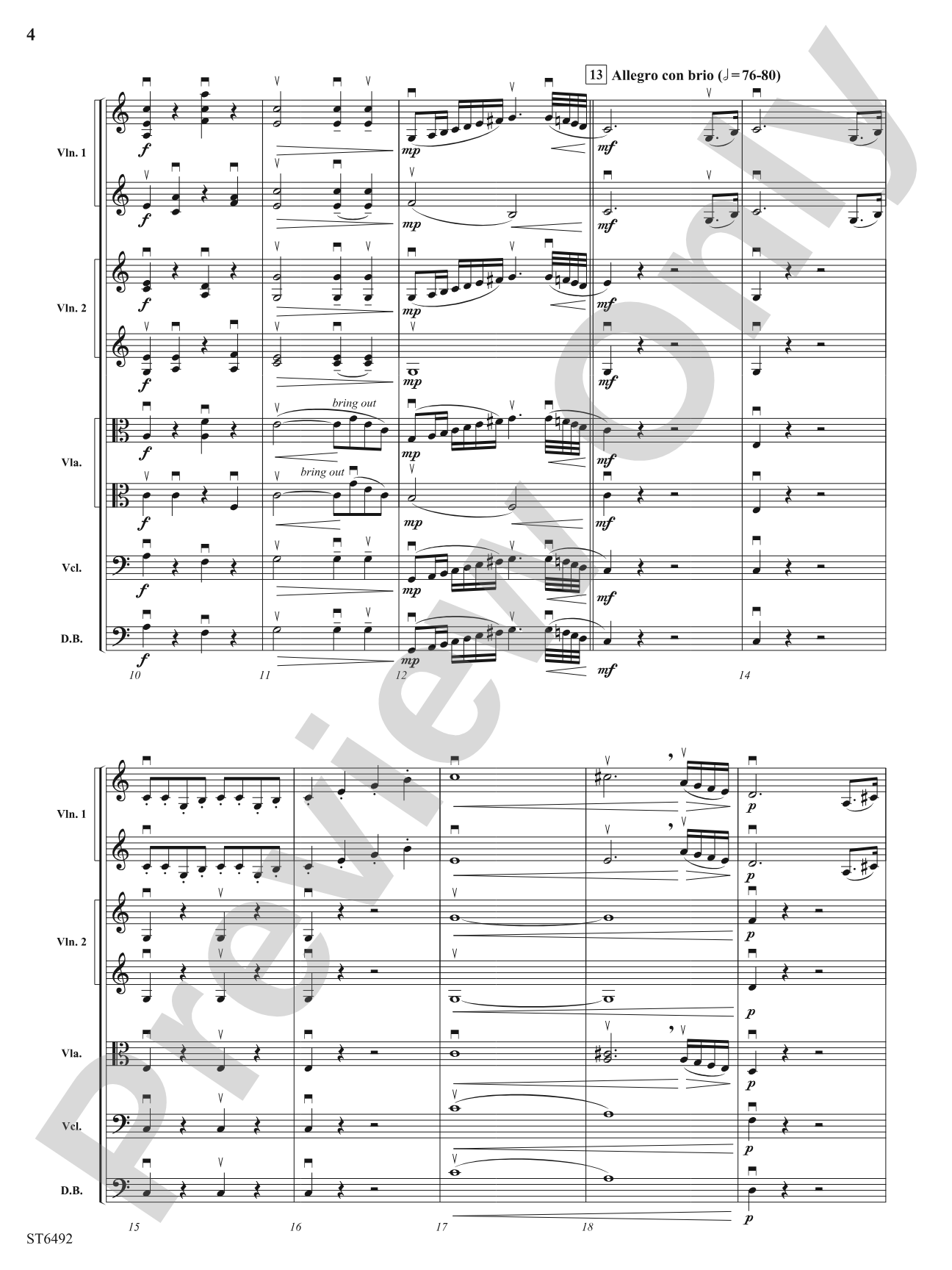
The slow introduction unfolds with ceremonial weight, establishing harmonic ground that feels both searching and inevitable. Once the Allegro breaks free, energy floods the ensemble: spiraling scalar passages, insistent rhythmic figures, and a forward momentum that carries the first movement to its conclusion with breathless urgency and joy.
Who it's for
String orchestras at the Grade 4 level with secure intonation and rhythmic cohesion will thrive with this score. Conductors seeking repertoire that teaches ensemble musicianship through engagement with genuine masterworks will find McCashin's arrangement strikes an ideal balance between fidelity to Beethoven's voice and practical demands of developing orchestras.
How to get the most out of it
- Attend closely to the slow introduction. Its deliberate pacing and harmonic ambiguity set up the Allegro's explosive energy; resist the urge to rush, and let the contrast land.
- Balance the melodic line across first and second violins through the main theme. Both parts carry essential material, and clarity matters more than weight.
- Track the key modulations carefully during the development section. Beethoven pivots through unexpected harmonic territory; mark key changes in parts so the ensemble stays anchored.
- Shape the closing material with attention to dynamics. The final cadence works only if the orchestra has built genuine momentum and control by the end.
How to use it
This works beautifully as a concert opener or as the centerpiece of a program built around orchestral masterworks. Pair it with shorter contemporary or Baroque selections to create context for how symphonic writing evolved, or program it alone to give it the attention it deserves. Early-to-mid season allows rehearsal time to balance the interpretive demands.
Skills your students will build
- Sustaining melodic lines across phrase boundaries in ensemble context
- Reading and executing rapid scalar passages with rhythmic precision
- Responding to harmonic modulation and maintaining intonation through key changes
- Coordinating articulation across the full string section
- Understanding Classical sonata form through active performance