
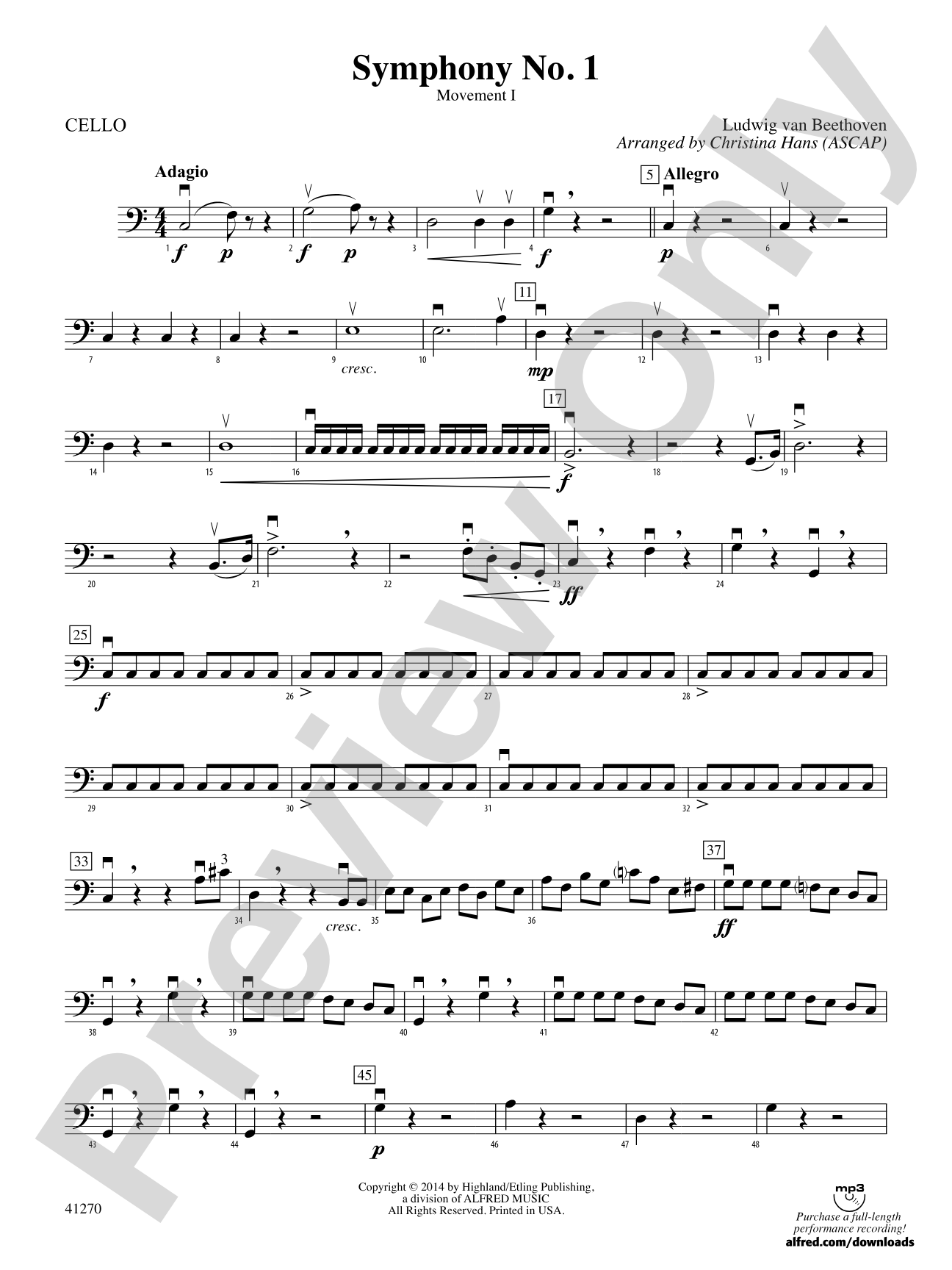

Symphony No. 1: Cello
Movement I
By Ludwig van Beethoven / arr. Christina Hans
Grade: 2
Item: 00-PC-0016387_VC1
$5.99
Pickup currently not available
Description
Add the thrill and energy of Beethoven to your next concert without having to shift! This simplified setting offers many learning opportunities, including dynamics, bow style, dotted notes, accents, and sixteenth notes. This is a great concert or contest selection that packs a powerful ending for your audience. (2:38) This title is available in MakeMusic Cloud.


Don't just read it, hear it, play along with it, and watch your students grow with it. In MakeMusic Cloud, Symphony No. 1: Cello comes alive with professional accompaniment, adjustable tempo, and built-in practice tools that turn solo practice into real progress.
Open in the Player
Jump straight in and assign it today.
Start Your Free Trial
Open this title and explore the full library in minutes.
Sample Audio
1
Audio File
--:--
0:00
0:00
Sample Video
No sample videos found.
Additional Details
Series:
Highland/Etling String Orchestra
Publisher:
Alfred Music
Page Count:
124
SKU:
00-PC-0016387_VC1
More about this title
About the Composer: Ludwig van Beethoven
Ludwig van Beethoven (1770-1827) stands as a pivotal figure in Western music history, a composer whose work bridged the Classical and Romantic eras while fundamentally reshaping what orchestral music could express. His symphonies revolutionized the genre through expanded forms, daring harmonic choices, and an uncompromising commitment to emotional depth and dramatic power. For music educators, Beethoven's catalog offers an unmatched resource: works that challenge students' technical abilities while introducing them to sophisticated compositional thinking and the expressive possibilities of their instruments.
Beethoven's First Symphony, composed in 1801, retains the elegant structures of the Classical tradition while introducing innovations that point toward his later, more radical works. This arrangement makes that groundbreaking score accessible to young string orchestras, allowing them to experience the force and sophistication of a masterwork without technical barriers that would otherwise remain insurmountable.
Why we love this
This arrangement captures the urgency and brilliance of Beethoven's First without requiring the technical prowess of a professional ensemble. The writing maintains the essential character and structure of the original while introducing Grade 2 players to articulation, dynamic control, and rhythmic precision that feel genuinely musical rather than merely pedagogical. A powerful finale that commands attention makes this an exceptional concert closer.
What to expect
Beethoven's characteristic drive and optimism pour through from the very first notes. This arrangement preserves the classical elegance of his opening theme and the rhythmic energy of the development while delivering a finale that builds inexorably toward a triumphant conclusion. Young players experience the satisfaction of playing music that sounds and feels genuinely important.
Who it's for
String orchestras at the Grade 2 level, whether working toward a spring concert or festival competition. Directors seeking substantial repertoire that avoids key signature complexity while building musicianship through exposure to a genuine masterwork will find this especially valuable.
How to get the most out of it
- Shape the opening theme with clear dynamic direction; avoid playing it timidly despite the moderate tempo. Young string players often underestimate how much energy this music demands.
- Isolate the dotted note passages in sectional rehearsals, particularly where sixteenth notes follow. Precision here elevates the entire performance and prevents rhythmic muddy spots.
- Balance bow style markings carefully: sudden transitions between legato and marcato require rehearsal discipline but create the dramatic contrast Beethoven intended.
- Lock the ending firmly with your ensemble. The final chords need unanimous, committed attacks to land the powerful conclusion this arrangement provides.
How to use it
Program this as a concert anchor, particularly in the second half of a recital where its energy can elevate the audience's attention. The 2:38 duration fits naturally alongside lighter contemporary pieces or as a contrasting centerpiece between shorter works. For festivals, it offers judges a clear demonstration of ensemble discipline, intonation awareness, and stylistic maturity.
Skills your students will build
- Dynamic control across a wide range (ppp to ff)
- Bow style articulation (legato, marcato, accents)
- Reading dotted note rhythms paired with sixteenth notes
- Ensemble balance and blend in multi-part textures
- Concert-level rhythmic precision and synchronization