
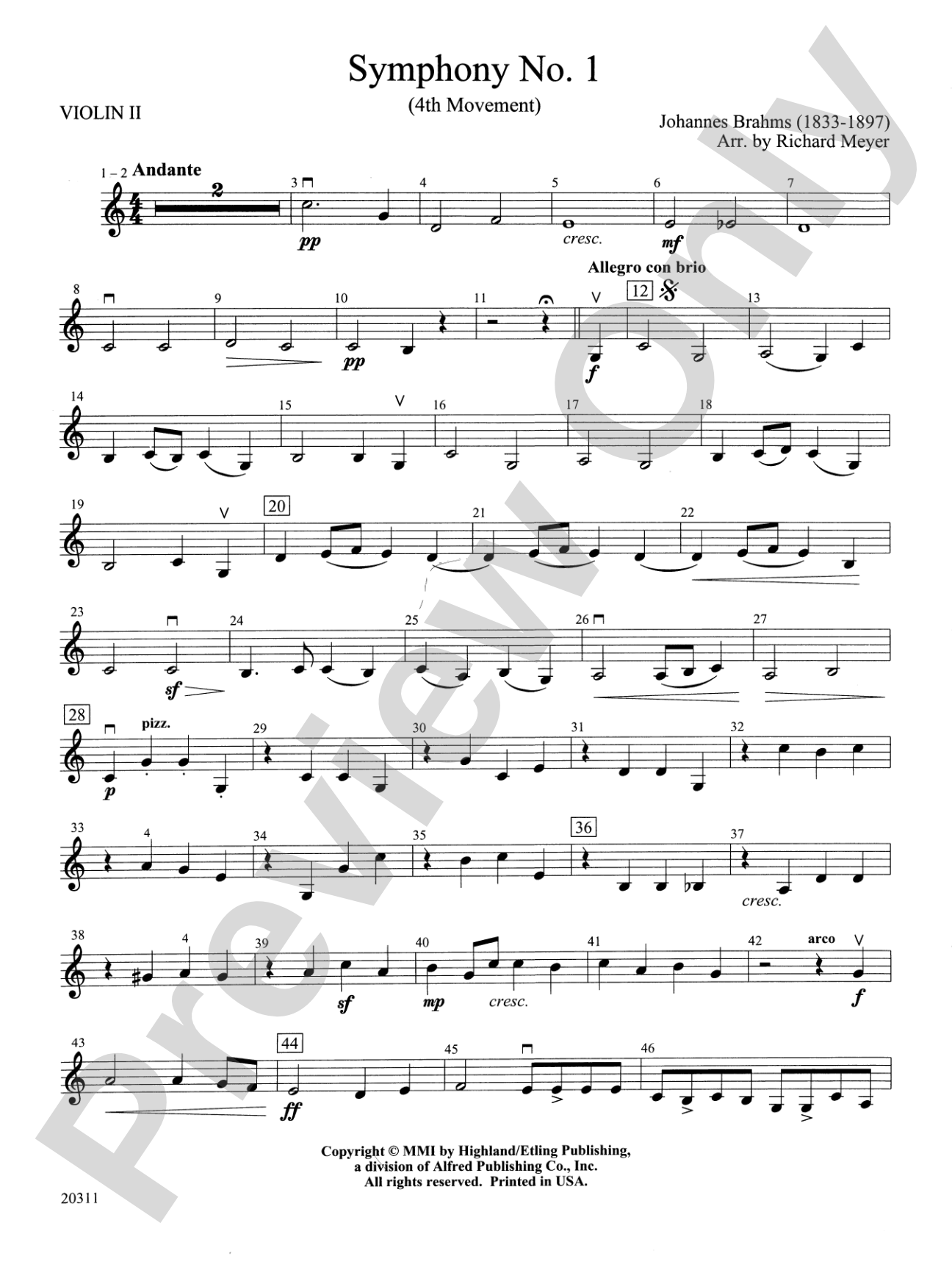

Symphony No. 1 (4th Movement ): 2nd Violin
By Johannes Brahms / arr. Richard Meyer
Grade: 2
Item: 00-PC-0000388_VN2
$3.00
Pickup currently not available
Description
Now your students can experience all the excitement of the heroic last movement of Brahms's Symphony No. 1. This tastefully abridged arrangement retains all the color and textures of the original. Careful doublings, student-friendly ranges and practical editing are sure to make your young orchestra sound great and your audience cheer! A Federation Festivals 2020-2024 selection.


Don't just read it, hear it, play along with it, and watch your students grow with it. In MakeMusic Cloud, Symphony No. 1 (4th Movement ): 2nd Violin comes alive with professional accompaniment, adjustable tempo, and built-in practice tools that turn solo practice into real progress.
Open in the Player
Jump straight in and assign it today.
Start Your Free Trial
Open this title and explore the full library in minutes.
Sample Audio
1
Audio File
--:--
0:00
0:00
Sample Video
No sample videos found.
Additional Details
Series:
Highland/Etling First Philharmonic
Publisher:
Alfred Music
Page Count:
200
SKU:
00-PC-0000388_VN2
More about this title
About the Composer: Johannes Brahms
Johannes Brahms (1833-1897) stands as one of the most significant composers of the Romantic era, bridging the worlds of Classical form and Romantic expression. Born in Hamburg and later based in Vienna, Brahms earned his reputation through symphonies, concertos, chamber works, and art songs that combined rigorous structural thinking with profound emotional depth.
For orchestral programs, Brahms matters because his works demand serious musicianship while remaining deeply rewarding to perform. His Symphony No. 1 in particular has launched countless young orchestras toward more ambitious repertoire. The heroic finale that students encounter in this arrangement captures the essence of Brahms's symphonic voice: triumphant, architecturally sound, and endlessly satisfying.
Why we love this
Brahms's first symphony finale belongs in every young orchestra's experience, and this arrangement makes it genuinely achievable. Arranger Richard Meyer has resisted the temptation to oversimplify; the orchestration retains its sweep and color while keeping ranges and doublings realistic for advancing musicians. Your students will play real Brahms and hear real Brahms, which is its own reward.
What to expect
The movement opens with an urgent, almost defiant energy before settling into a broad, singing melody that feels inevitable and heroic. Waves of orchestral color rise and fall, with moments of quiet introspection giving way to triumphant affirmations. By the final measures, the entire orchestra locks into a blazing, fully resolved conclusion that leaves both players and listeners exhilarated.
Who it's for
This arrangement serves young orchestras at the intermediate level who are ready for serious repertoire but need accessible ranges and practical editing. It works equally well for conductors building a festival-worthy concert program or introducing students to the symphonic tradition through one of its greatest moments.
How to get the most out of it
- Establish the main theme's character in sectional rehearsals before bringing the full orchestra together. The theme carries the entire movement, so secure it early and the rest will follow.
- Shape the brass entries with deliberate dynamic control. Brahms writes for heroic moments, but a Grade 2 ensemble will gain clarity and impact by treating crescendos as long-term architectural elements rather than sudden jumps.
- Balance the woodwind textures in the middle sections by asking players to listen across the ensemble. This movement weaves color through subtle doublings, and hearing them is what makes the arrangement sing.
- Mark the major key transitions clearly in your score and parts. Young orchestras benefit from visual cues that align with harmonic shifts, especially in a movement this substantial.
How to use it
This works beautifully as a concert finale, especially in spring festivals or end-of-year performances where you want to leave your audience on an unmistakable high note. It also fits naturally alongside other Romantic-era masterworks, or as a standalone showcase of your orchestra's technical growth if you're programming a single-composer concert.
Skills your students will build
- Balancing multiple simultaneous melodic lines and orchestral textures
- Sustaining intensity and forward motion across a longer form
- Executing controlled dynamic transitions in a Romantic harmonic language
- Responding to sophisticated conducting gestures in a complex orchestral texture
- Reading and performing from a full orchestral score in a concert setting