
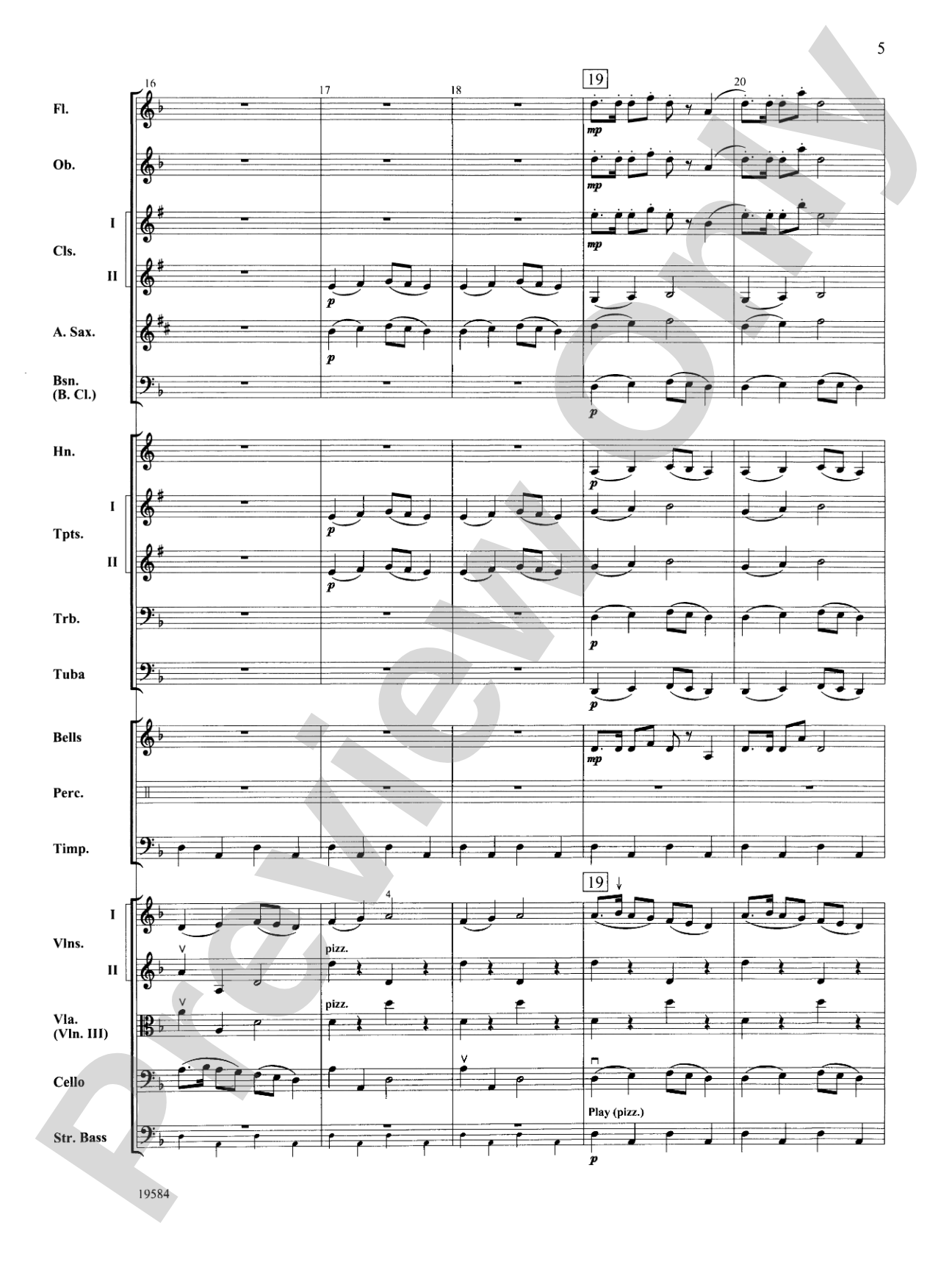
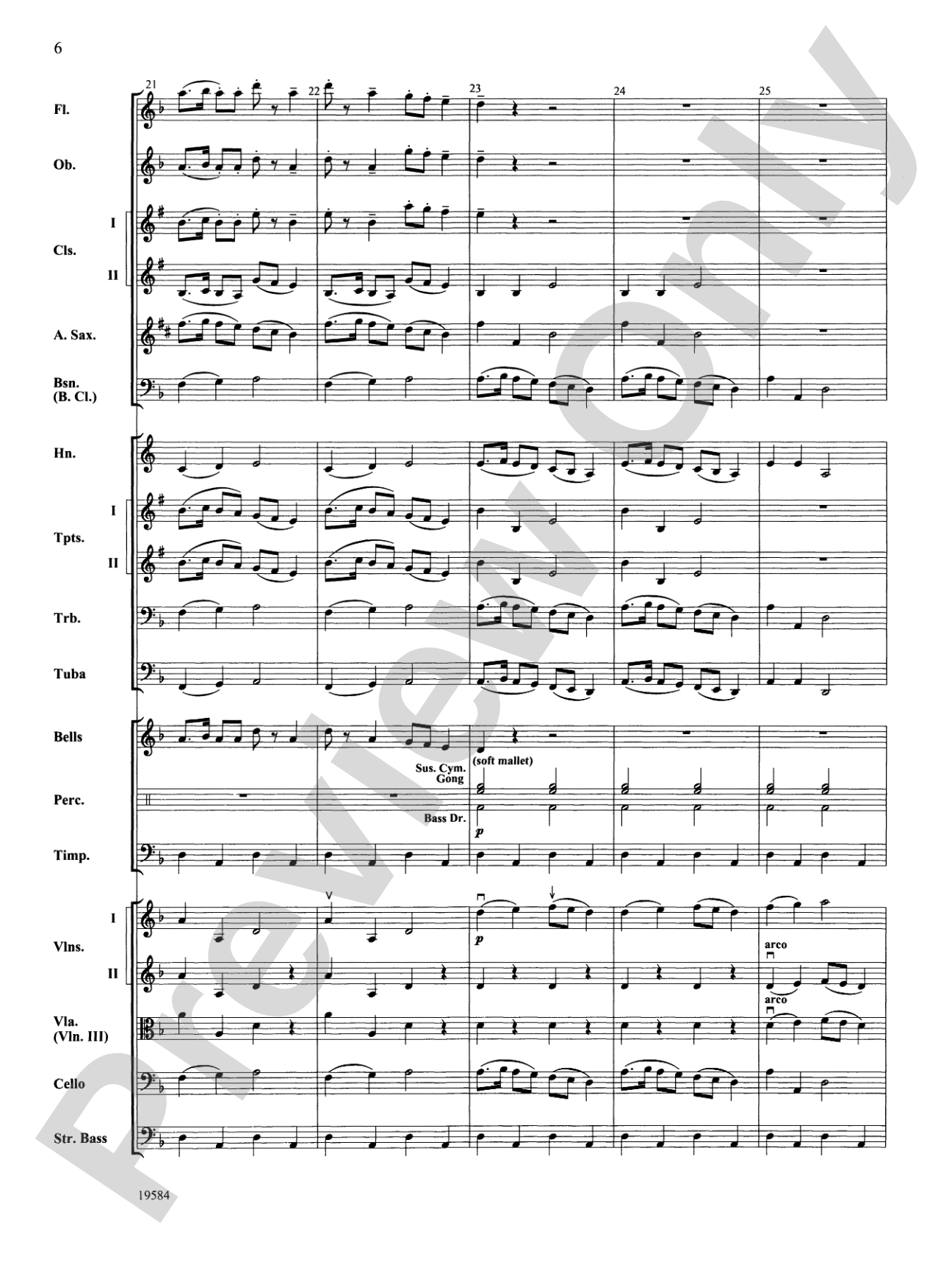
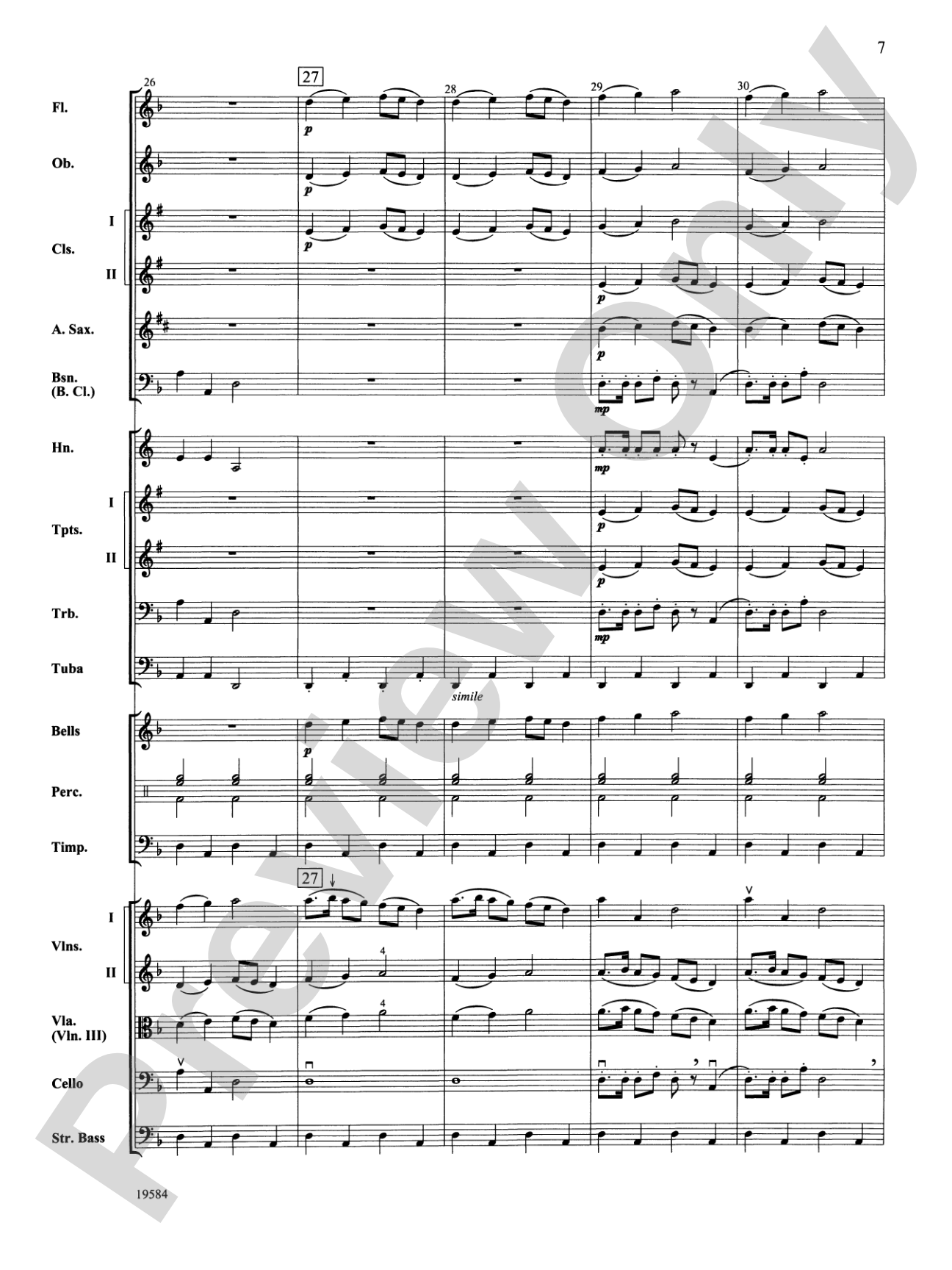
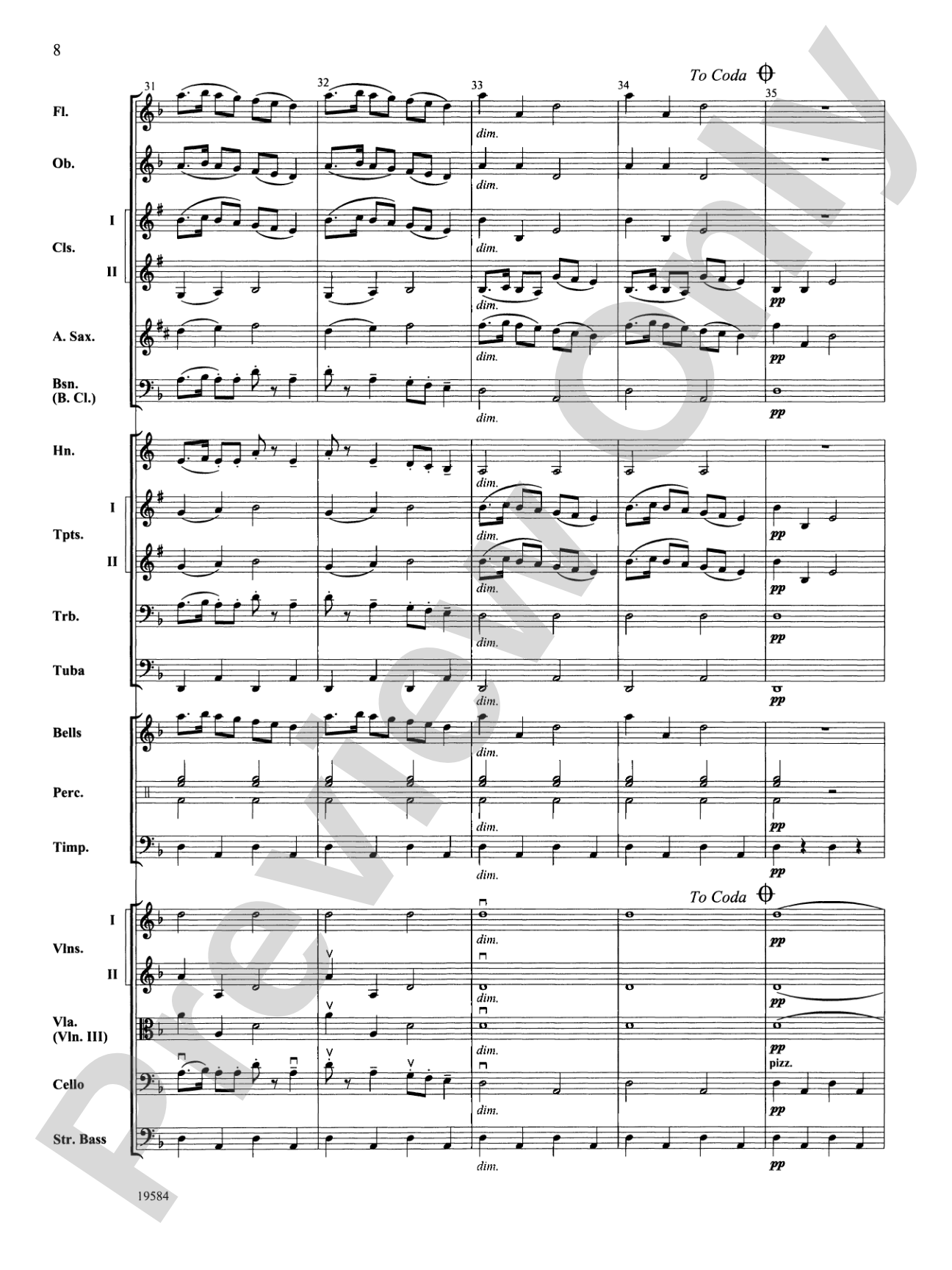
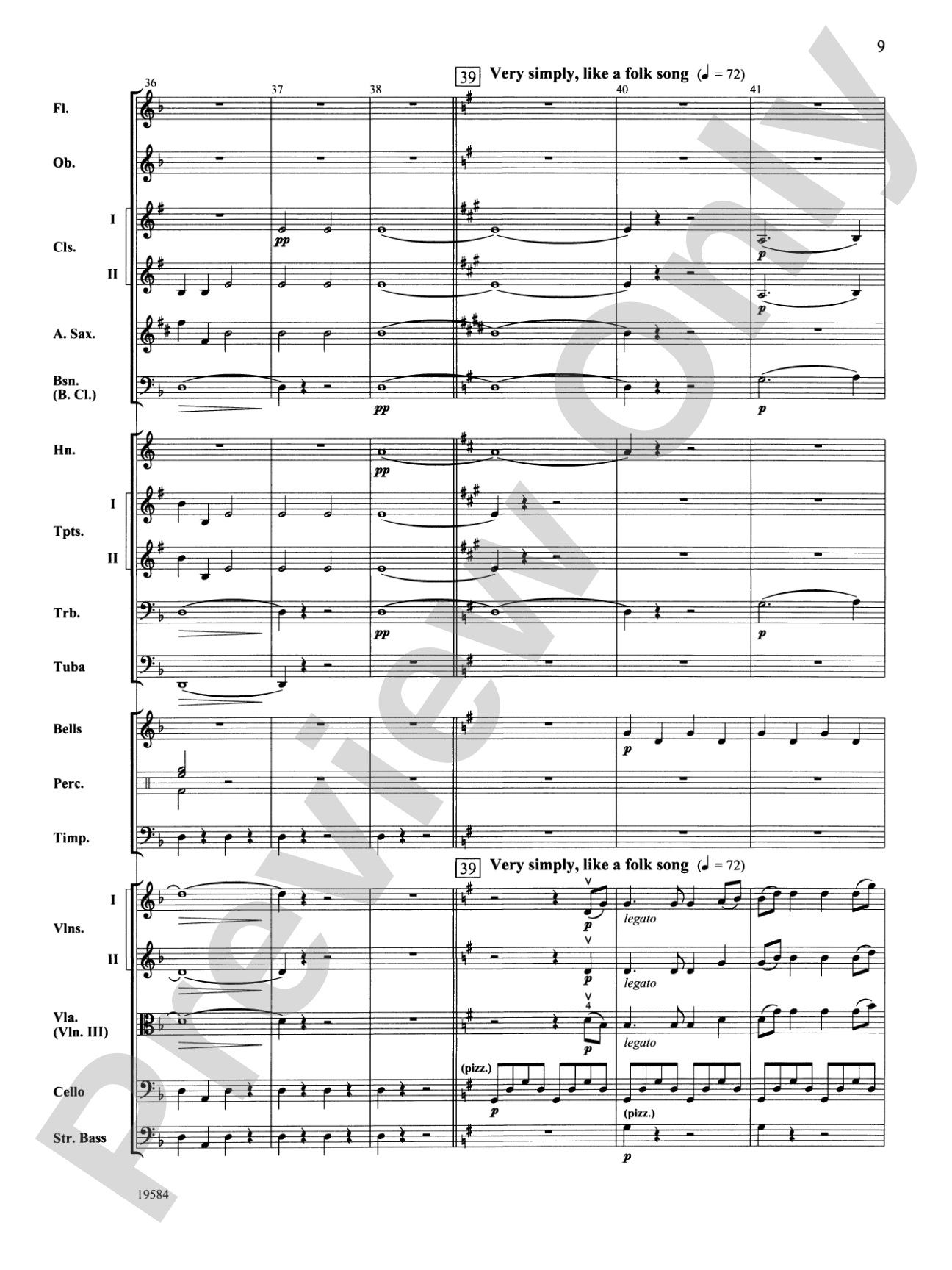
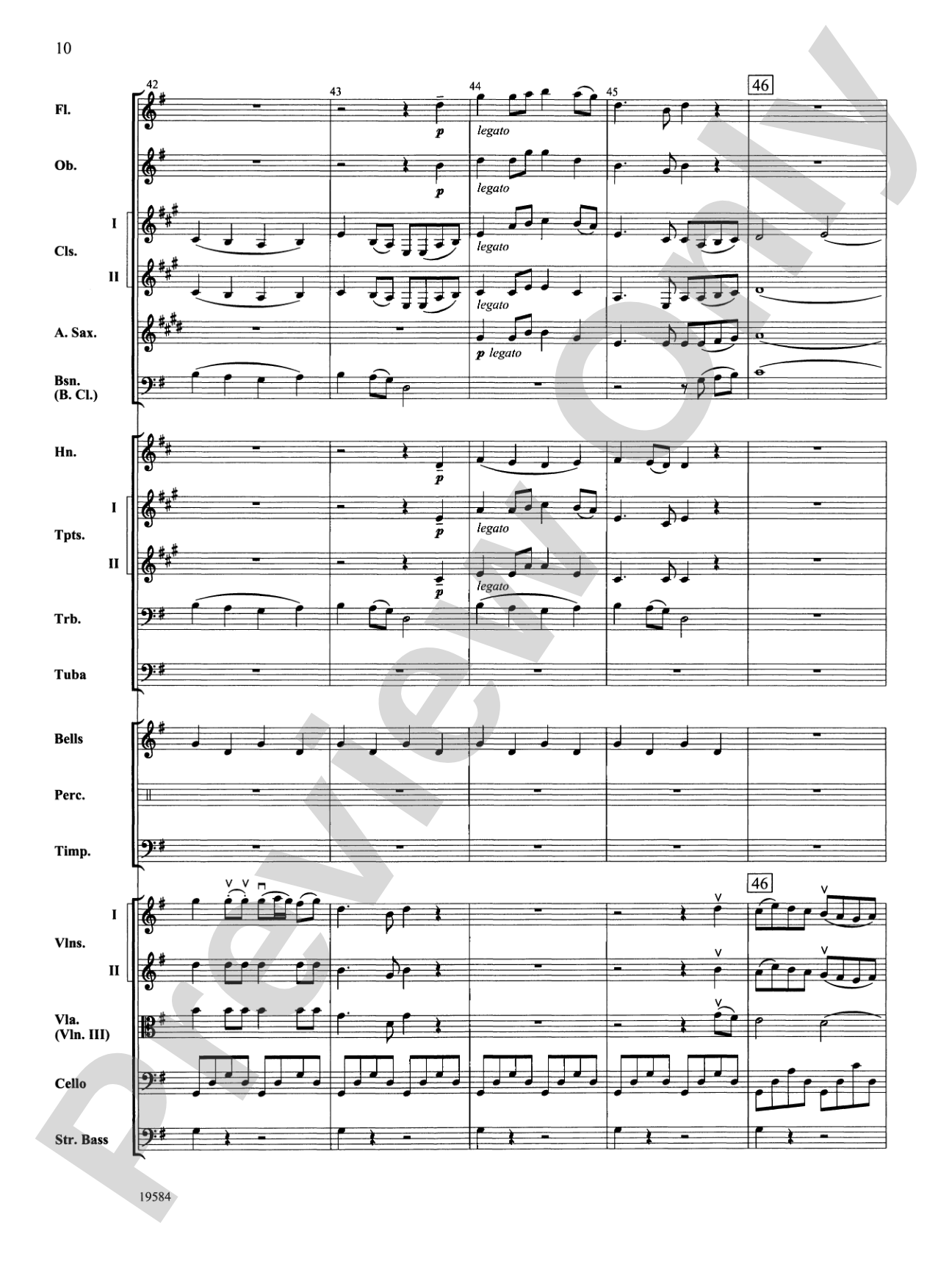
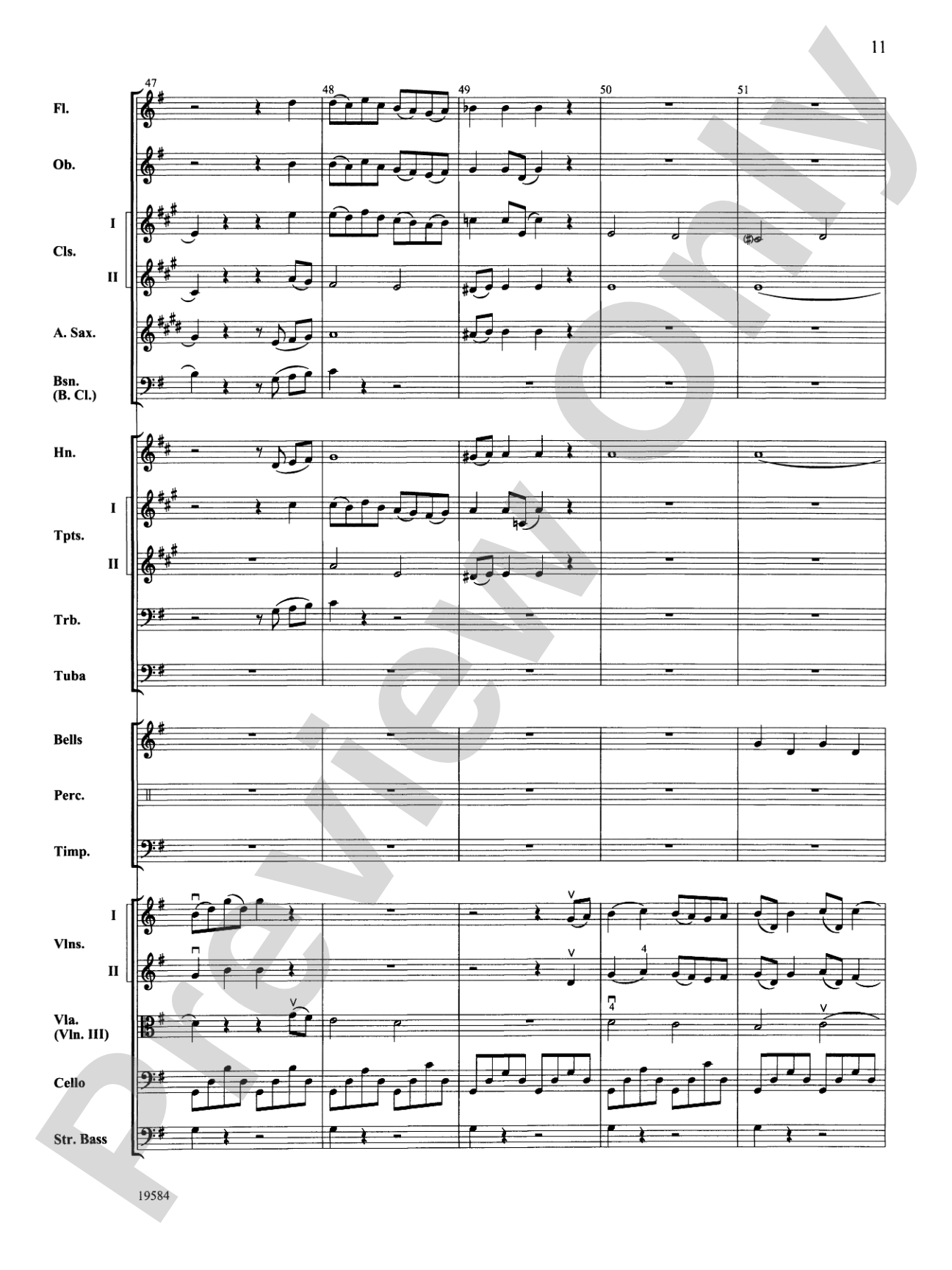
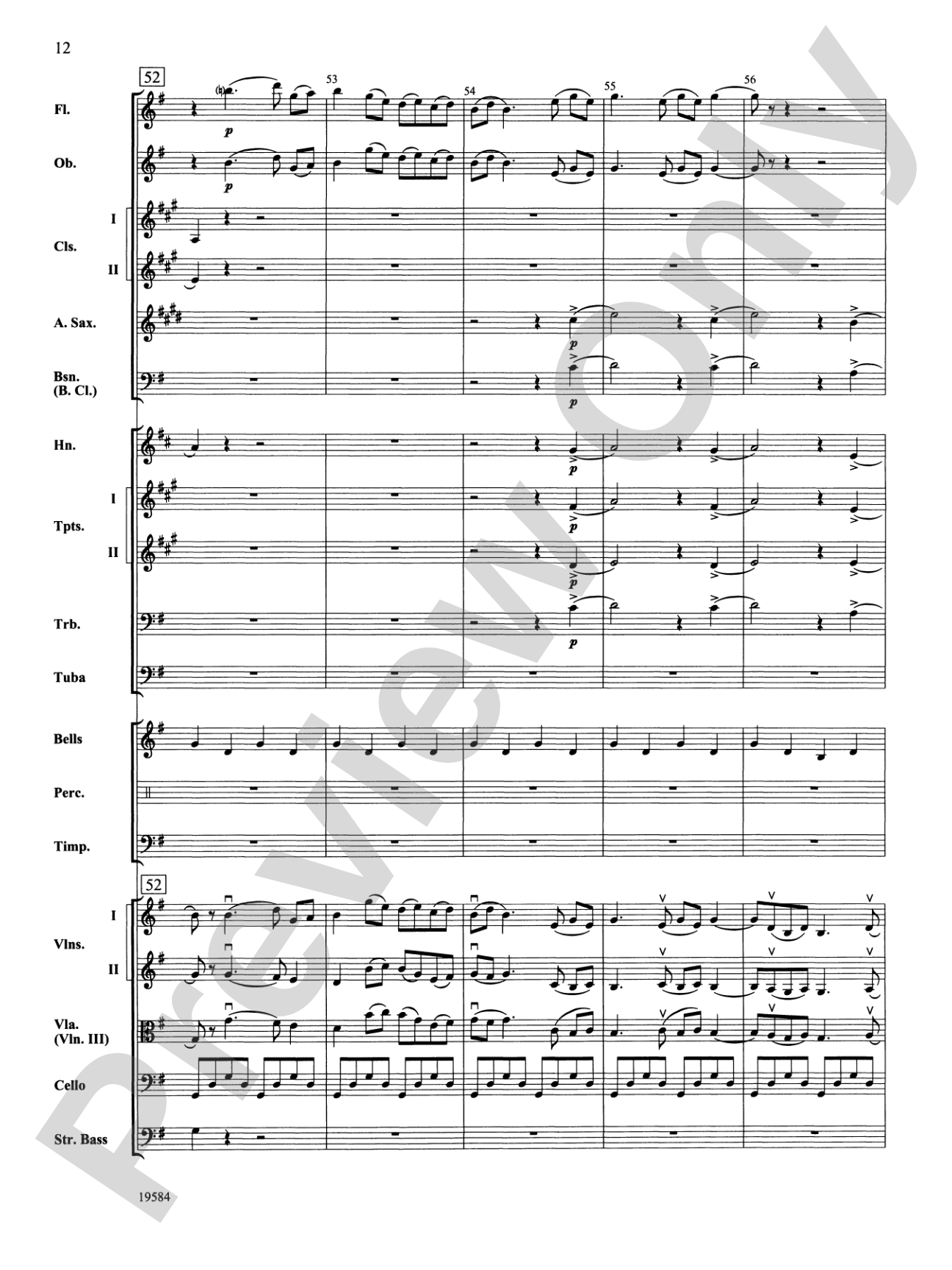
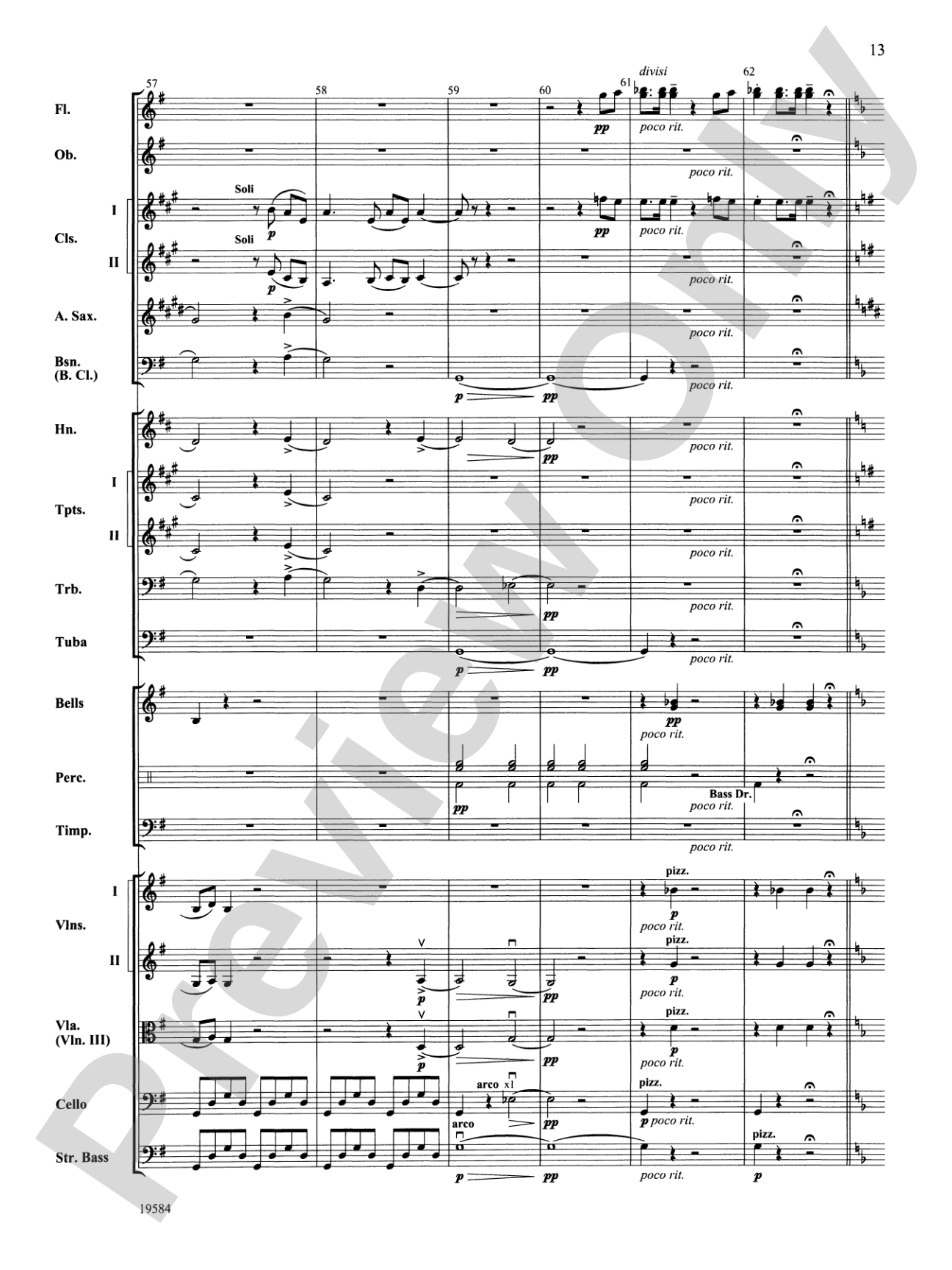
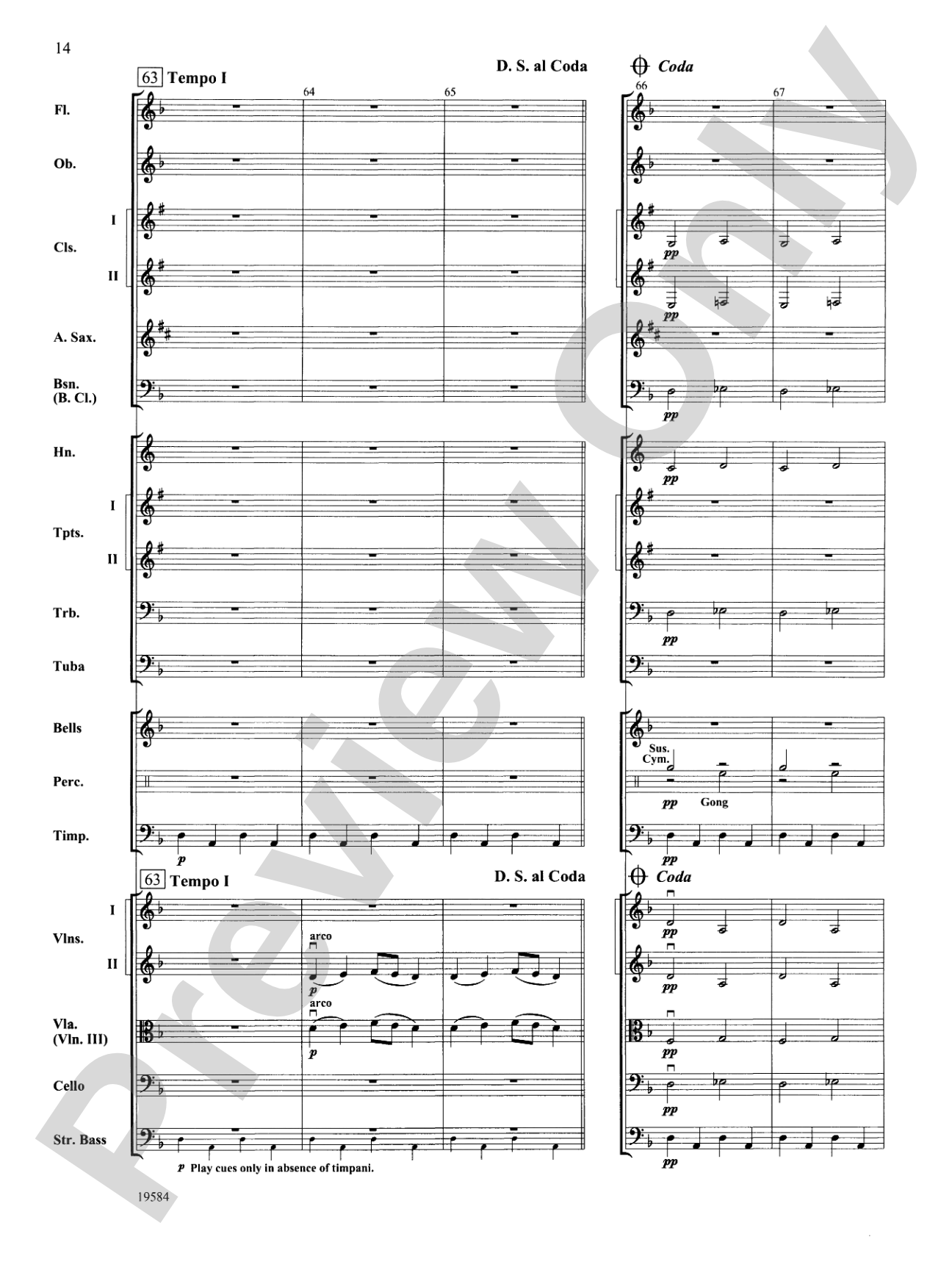
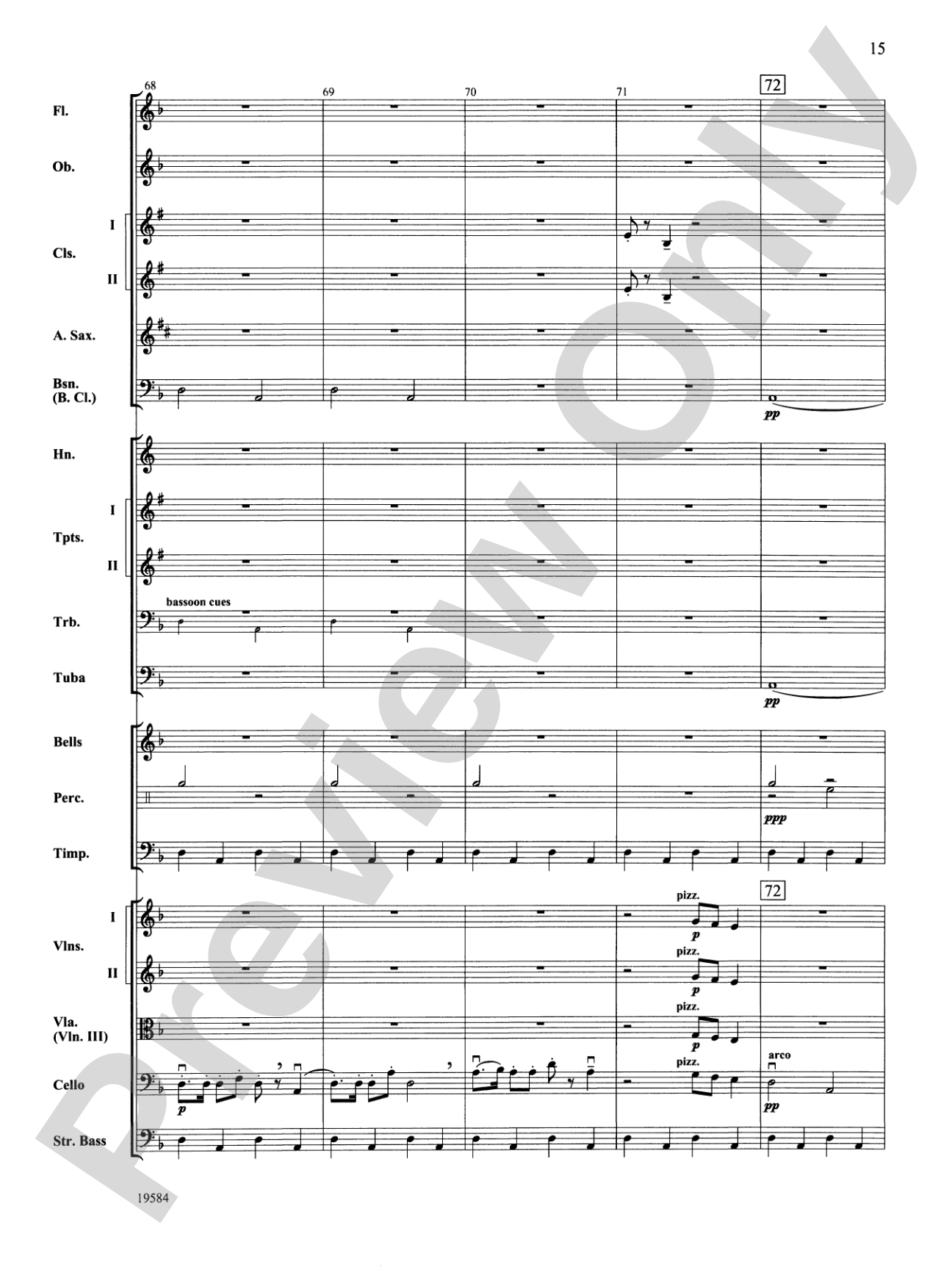
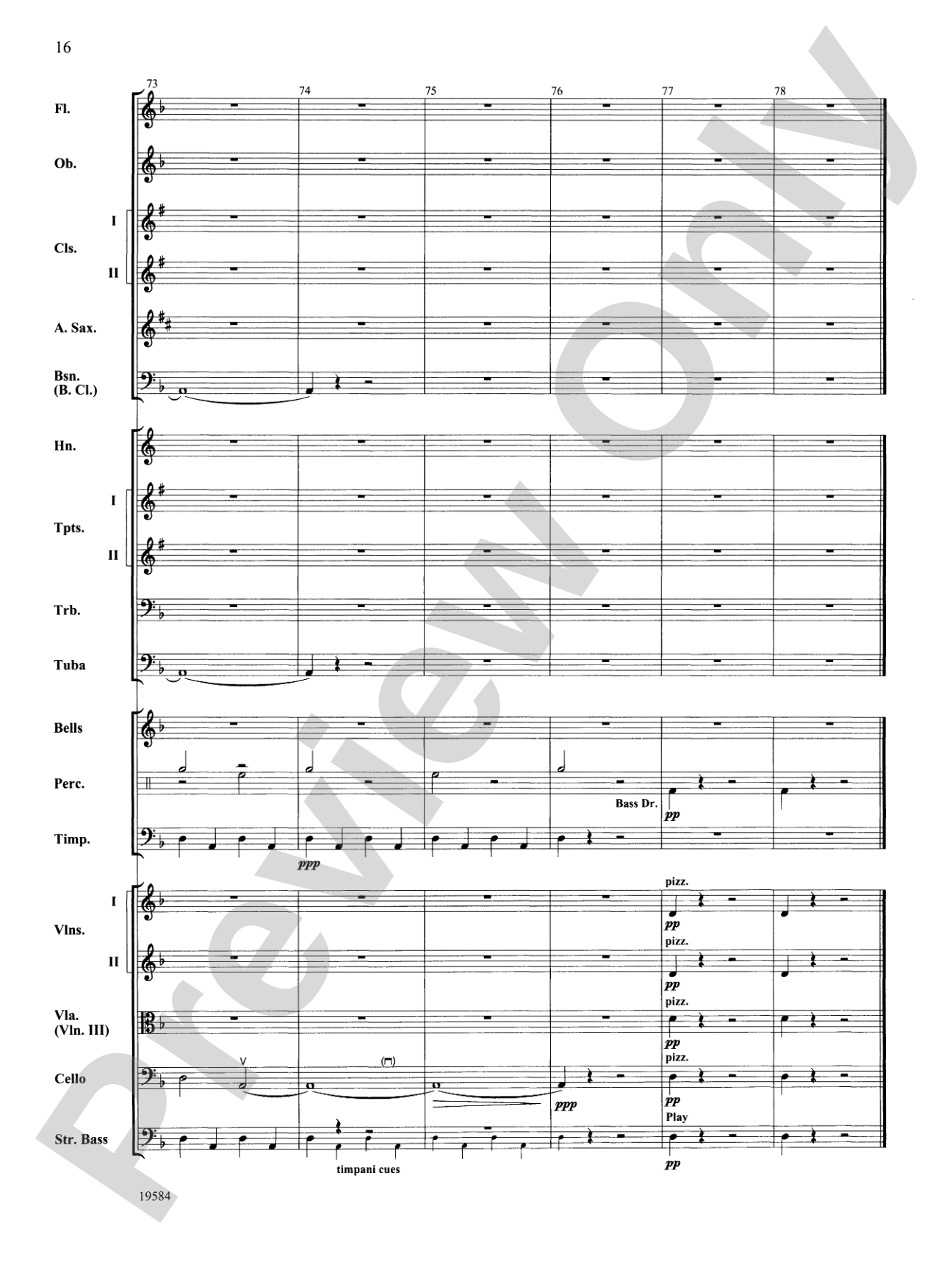

Symphony No. 1, 3rd Movement: Full Orchestra Conductor Score & Parts
By Gustav Mahler / arr. Richard Meyer
Grade: 1
Item: 00-PK-0000351

$60.00
Pickup currently not available
Buy Extra Parts (Digital PDF Download)
Parts Added to Cart!
Description
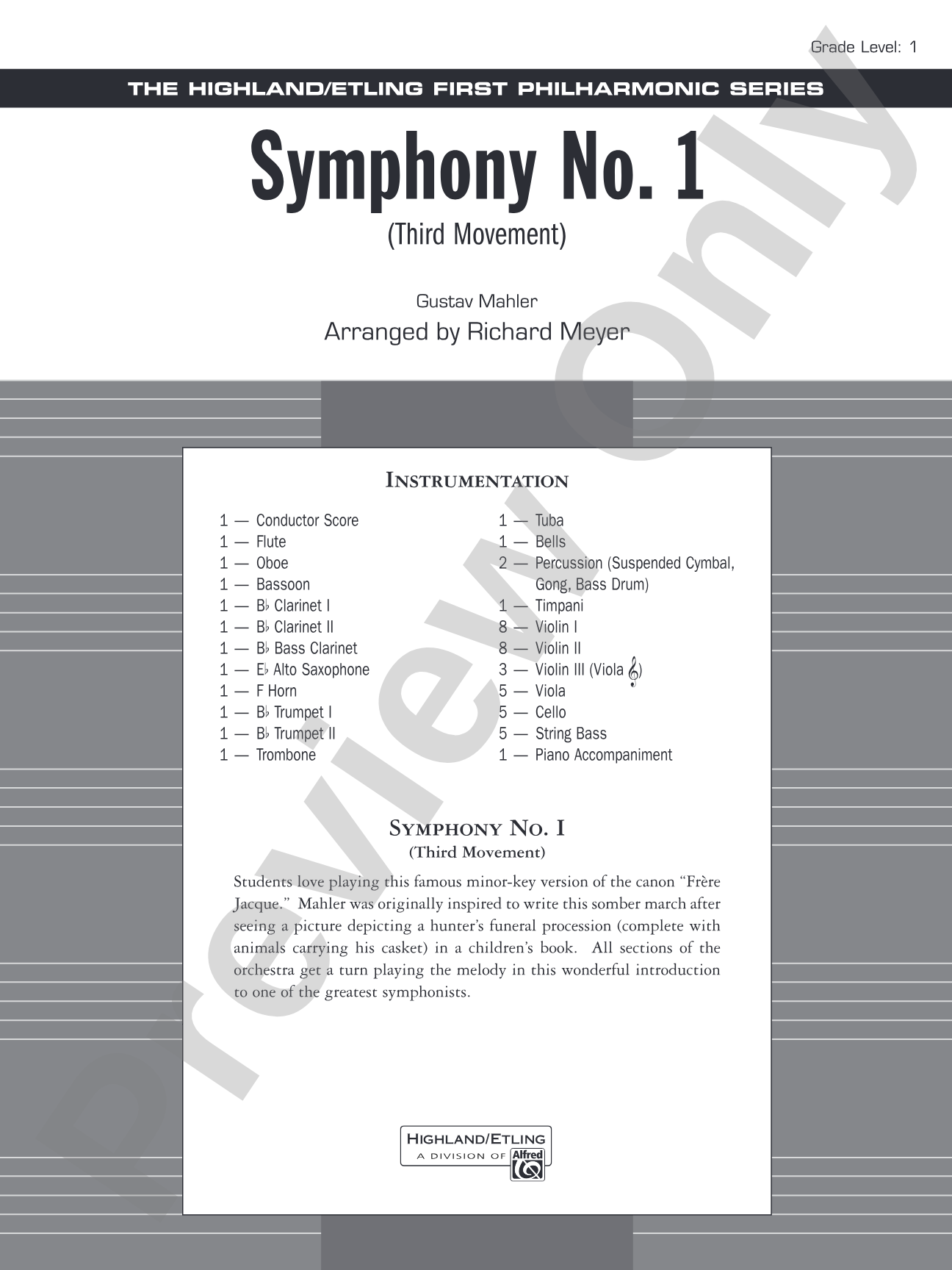
Students love playing this famous minor-key version of the canon "Frère Jacque." Mahler was originally inspired to write this somber march after seeing a picture depicting a hunter's funeral procession (complete with animals carrying his casket) in a children's book. All sections of the orchestra get a turn playing the melody in this wonderful introduction to one of the greatest symphonists.


Don't just read it, hear it, play along with it, and watch your students grow with it. In MakeMusic Cloud, Symphony No. 1, 3rd Movement: Full Orchestra Conductor Score & Parts comes alive with professional accompaniment, adjustable tempo, and built-in practice tools that turn solo practice into real progress.
Open in the Player
Jump straight in and assign it today.
Start Your Free Trial
Open this title and explore the full library in minutes.
Sample Audio
1
Audio File
--:--
0:00
0:00
Sample Video
No sample videos found.
Additional Details
Series:
Highland/Etling First Philharmonic
Publisher:
Alfred Music
Page Count:
128
SKU:
00-PK-0000351
More about this title
About the Composer: Gustav Mahler
Gustav Mahler (1860, 1911) was an Austrian composer and conductor whose symphonies rank among the most performed works in the concert repertoire. His music bridges the Romantic and early modern eras, combining lush orchestration with philosophical depth and unexpected humor. Mahler's approach to the orchestra influenced generations of composers; his willingness to layer folk melodies, marches, and found sounds into symphonic structures changed what symphonies could contain.
Why we love this
This arrangement gives young orchestras access to one of Mahler's most distinctive ideas: taking a children's nursery rhyme and transforming it into something elegiac and strange. The emotional arc unfolds gradually, with each section of the ensemble getting the melody, so every student experiences being central to the musical story. At this grade level, students discover that 'simple' melodies can carry profound expression.
What to expect
A funeral procession in minor key, slow and deliberate, with the melody passing from one family of instruments to another like a torch being carried forward. There's an underlying darkness here, almost gothic in its restraint, yet also oddly tender. Students feel the weight of the moment without needing virtuosic technical fireworks to convey it.
Who it's for
Conductors looking for meaningful repertoire that teaches students about orchestral color and thematic development without requiring advanced technical facility. Young ensembles benefit from playing an actual Mahler work, not a watered-down imitation, because it builds respect for what they're capable of interpreting.
How to get the most out of it
- Balance the melody so it projects clearly regardless of which section holds it; the point is that everyone hears the tune shift from strings to woodwinds to brass.
- Shape the phrasing in four-bar units rather than playing mechanically through. Small dynamic swells at the end of each phrase help the march feel purposeful.
- Let the minor key sit in the room. Resist the urge to play too brightly; the somber quality is the whole point.
- Use the recorded accompaniment as a rehearsal aid, but push beyond it in performance. Your students' awareness of ensemble balance matters more than matching a track.
How to use it
Schedule this as a standalone moment in a concert, perhaps closing a first half or opening a second half. Its stark character provides excellent contrast if surrounded by brighter, faster repertoire. It also works well as an educational centerpiece in a program exploring how composers use folk material, since the 'Frère Jacques' connection fascinates audiences when explained.
Skills your students will build
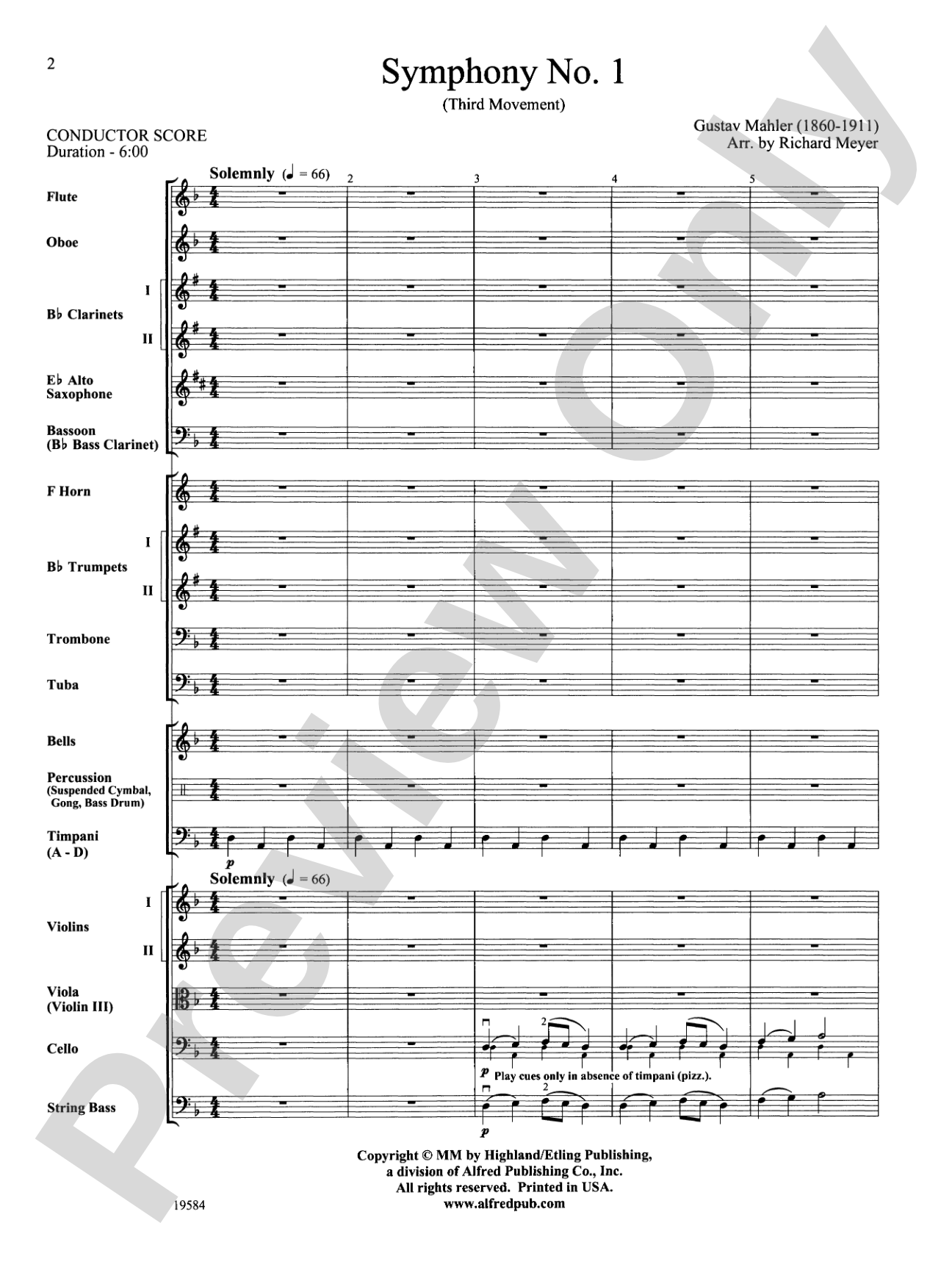
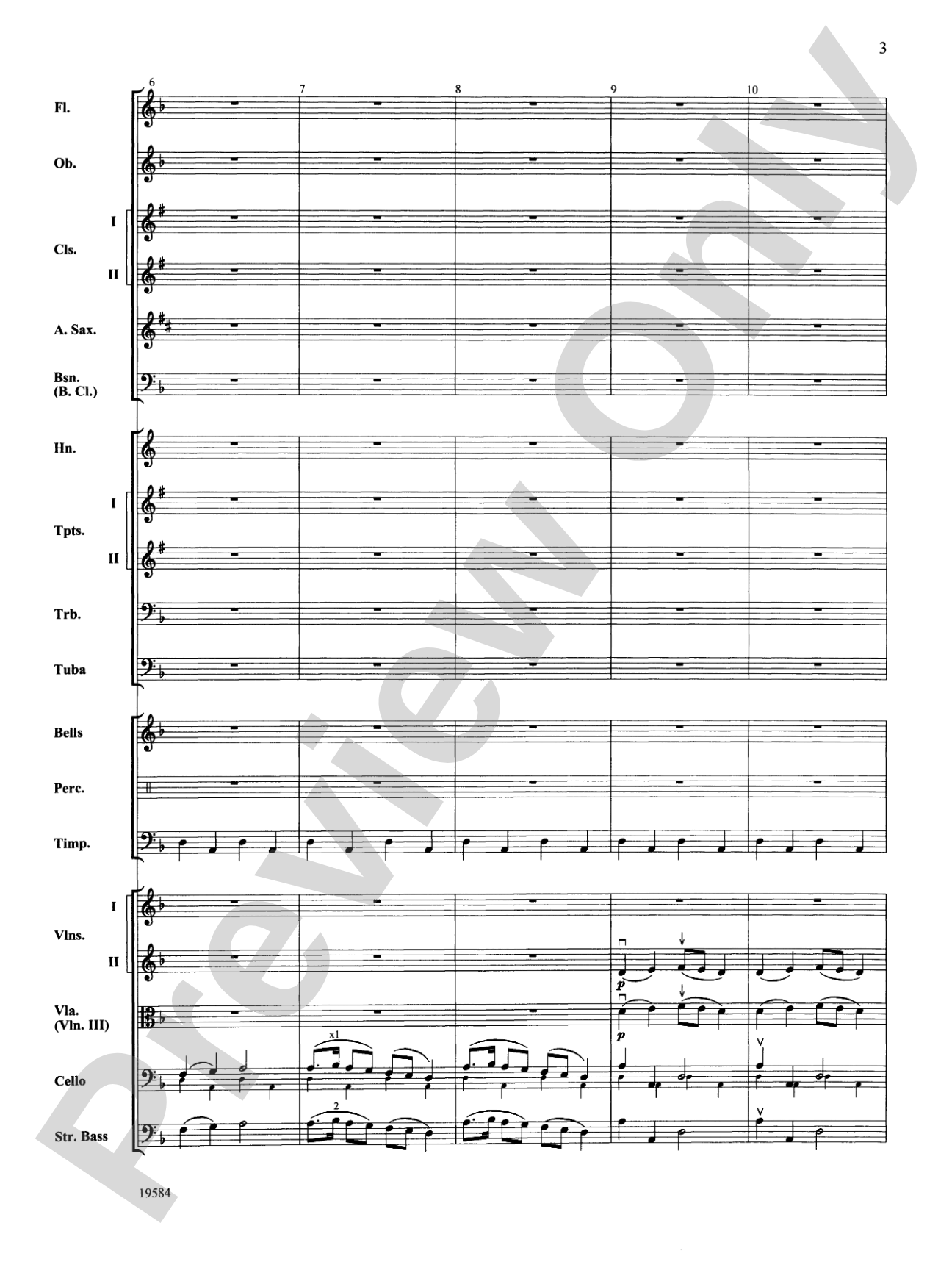
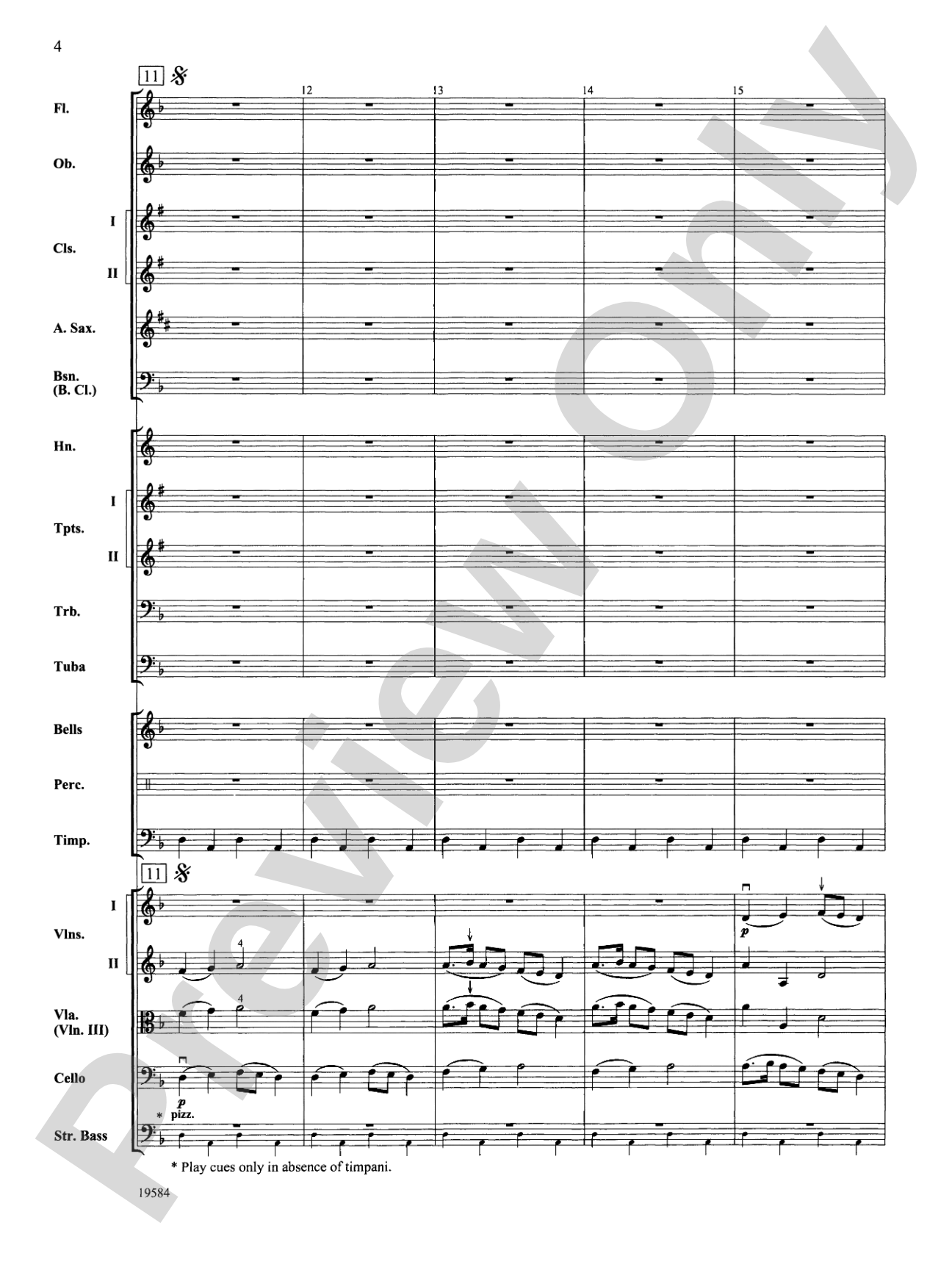
- Reading a full conductor score with multiple instrumental families notated simultaneously
- Sustaining long, soft dynamic levels without wavering
- Maintaining rhythmic unity while passing thematic material between sections
- Interpreting minor tonality and its emotional implications
- Listening across the ensemble to ensure transparency of orchestral texture