
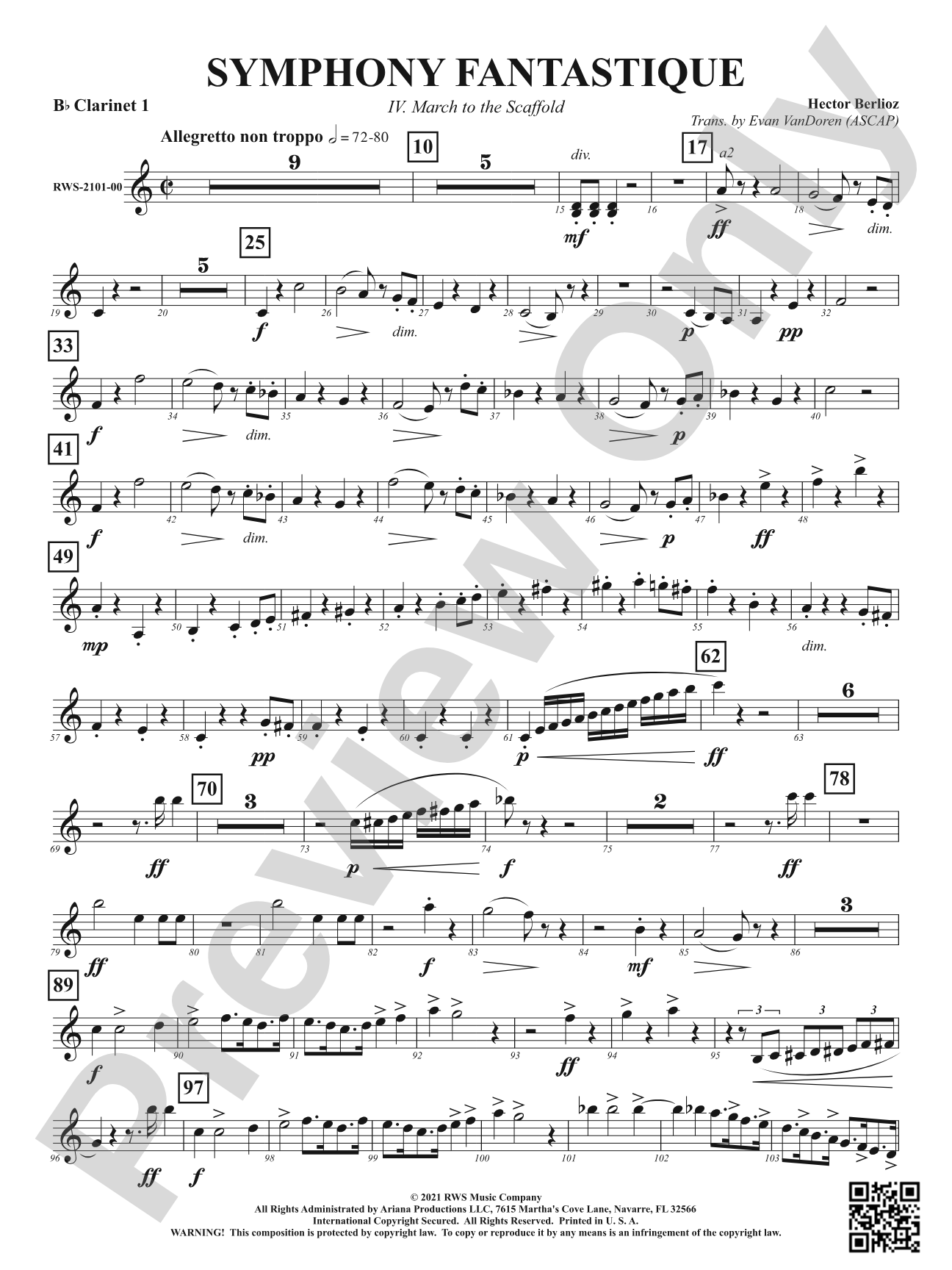

Symphony Fantastique - IV. March to the Scaffold: 1st B-flat Clarinet
IV. March to the Scaffold
By Hector Berlioz / arr. Evan VanDoren
Grade: 5
Item: 98-PC-RWS2101_C1
$3.99
Pickup currently not available
Description
Berlioz's most famous Romantic Era standard, "Symphony Fantastique" is a colorful, evocative musical masterpiece that continues to withstand the test of time, pleasing all audiences. In this transcription, Evan VanDoren has artfully crafted its fourth movement, "March to the Scaffold", for the modern wind ensemble, taking creative care to present the work in its truest form while maximizing playability!
Original Item#: RWS-2101-00


Original Item#: RWS-2101-00
Symphony Fantastique - IV. March to the Scaffold: 1st B-flat Clarinet isn't in MakeMusic Cloud just yet...but it could be. Let us know you'd like to see it, and you'll help shape what comes next. In the meantime, start a free trial and dive into thousands of interactive titles your students can play along with today.
Request This Title
Tell us you want it.
Start Your Free Trial
Explore everything that's ready to play right now.
Sample Audio
1
Audio File
--:--
0:00
0:00
Sample Video
No sample videos found.
Additional Details
Series:
RWS - Symphony Band
Publisher:
RWS Music Company
SKU:
98-PC-RWS2101_C1
More about this title
About the Composer: Hector Berlioz
Hector Berlioz (1803-1869) was a French composer who fundamentally changed how orchestral music could sound and function. He pioneered the use of the idée fixe (a recurring melodic theme that transforms throughout a work) and expanded the orchestra's expressive range with bold instrumental combinations and dynamic contrasts that were radical for the early 19th century.
Berlioz's influence on music education endures because he treated the orchestra as a compositional instrument in its own right. His scores demand that conductors and musicians understand color, balance, and narrative structure at the highest level. Symphony Fantastique remains a cornerstone of the repertoire precisely because its technical and imaginative demands continue to develop musicians who study it.
Why we love this
"March to the Scaffold" presents Grade 5 bands with a chance to own one of music history's most recognizable movements. VanDoren's arrangement preserves Berlioz's harmonic language and architectural drama while making the piece genuinely playable for modern ensembles, avoiding the bloat that can plague transcriptions of orchestral masterworks. This is the kind of concert repertoire that reminds audiences why they love live music.
What to expect
Relentless, darkly theatrical, and propulsive. The march unfolds like a procession moving inexorably forward, with moments of haunting beauty interrupted by brass outbursts that feel almost violent. The movement never settles; tension accumulates beneath the surface throughout, creating an unsettling sense of inevitability.
Who it's for
Grade 5 concert bands with solid fundamentals in intonation, blend, and dynamic control. The piece works for advanced high school ensembles, college wind bands, and ambitious community bands looking for substantive Romantic-era repertoire. Directors should expect musicians who can handle sustained lines, complex harmonic relationships, and the interpretive maturity the movement demands.
How to get the most out of it
- Establish a steady, relentless pulse from the opening march. This movement builds its narrative force through rhythmic inevitability, not tempo changes, so lock the ensemble's sense of forward motion early in rehearsals.
- Balance the woodwind and brass sections carefully during the thematic statements. The chorale-like sections require transparency so the harmony shines; the march episodes need full ensemble weight without drowning out important inner voices.
- Shape the dynamic arc across the entire movement rather than treating climaxes as isolated peaks. The march should feel like it's building toward something, even in quieter passages.
- Pay attention to the articulation markings in the percussion and low brass; they define the character of the march and its transformation. Precise execution here makes the difference between a generic military march and Berlioz's ironic, sinister version.
How to use it
Program this as a concert centerpiece or the dramatic high point of a program exploring Romantic-era classics. Pair it with shorter, lighter works to balance its intensity, or build a full concert around 19th-century masterwork arrangements if your band's level supports it. The piece also works as a powerful contest selection for bands seeking to demonstrate musicianship and maturity.
Skills your students will build
- Sustaining long melodic lines with consistent tone and phrasing across full phrases
- Balancing transparent inner voices while maintaining full ensemble volume
- Reading and executing complex articulation patterns that shift character and energy
- Responding to subtle dynamic shaping and conducting gestures in a large ensemble
- Understanding harmonic progression and its role in building dramatic momentum