
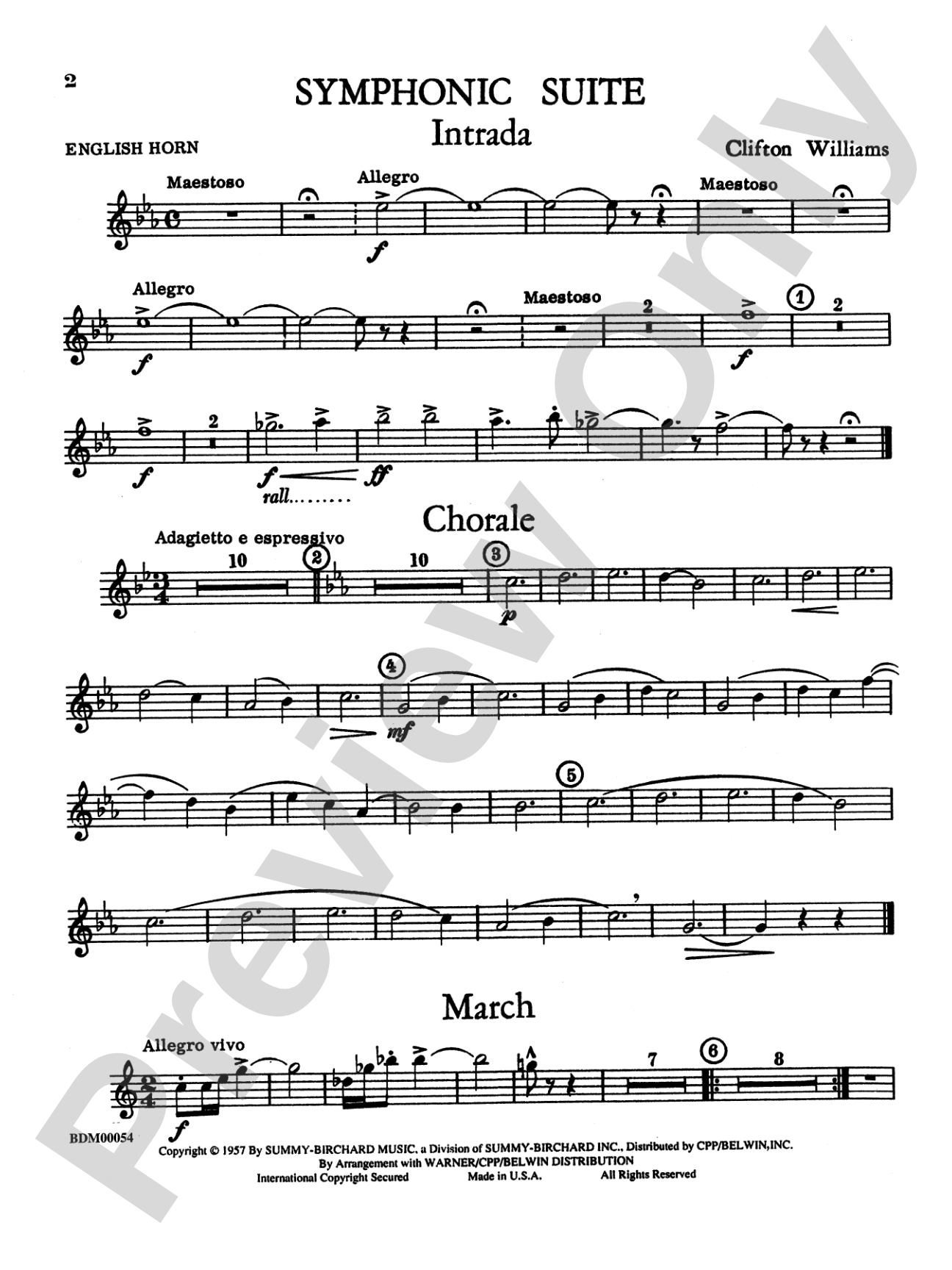

Symphonic Suite: English Horn
By Clifton Williams
Grade: 4 (Medium)
Item: 00-PC-0002133_E
$5.99
Pickup currently not available
Description
A suite of five movements with different material. Each movement is associated through the use of one theme. The first, "Intrada," is fanfare-like, and the second, "Chorale," features a trumpet solo. "March," the third movement, is reminiscent of the opening material, followed by "Antique Dance," which has a modal melody. The final movement, "Jubilee," is clearly the most intense. The work is an Ostwald Award-Winning Composition of the American Bandmasters Association and is clearly a repertoire standard. (12:23) This title is available in MakeMusic Cloud.


Don't just read it, hear it, play along with it, and watch your students grow with it. In MakeMusic Cloud, Symphonic Suite: English Horn comes alive with professional accompaniment, adjustable tempo, and built-in practice tools that turn solo practice into real progress.
Open in the Player
Jump straight in and assign it today.
Start Your Free Trial
Open this title and explore the full library in minutes.
Sample Audio
1
Audio File
--:--
0:00
0:00
Sample Video
Additional Details
Series:
Belwin Classic Band
Publisher:
Alfred Music
Page Count:
288
SKU:
00-PC-0002133_E
More about this title
About the Composer: Clifton Williams
Clifton Williams (1923-1976) was an American composer and conductor whose concert band works became cornerstones of the standard repertoire. A graduate of the University of Kansas, Williams held teaching positions at several universities and was deeply committed to elevating the artistic quality of band music. His compositions are known for their accessibility to student ensembles alongside genuine musical substance and orchestrational sophistication.
Williams' legacy rests on works that balance technical demands with musicianship development. His pieces appear on contest and festival programs nationwide, respected equally by high school directors and university conductors. The Ostwald Award from the American Bandmasters Association, which recognizes outstanding contributions to band music, affirmed what directors already knew: Williams understood how to write music that challenges students while remaining rewarding to perform and hear.
Why we love this
This suite delivers architectural coherence without sacrificing contrast between movements. The thematic unity running through all five sections gives students something to listen for and remember, while the stylistic variety (fanfare, chorale, march, modal dance, and jubilant finale) keeps the rehearsal process engaging across weeks of preparation. At Grade 4, it sits at that sweet spot where ensembles can sound genuinely impressive without the exposure of trying repertoire beyond their chops.
What to expect
The opening fanfare announces itself with ceremonial brightness before the ensemble settles into the introspective trumpet solo of the second movement. A march returns to forward momentum, then the band shifts into the quiet modal world of the antique dance. The final movement sweeps away restraint entirely, building to genuine brilliance without losing the thread that connects every moment back to the beginning.
Who it's for
This score and parts set works for concert bands at the high school and early college level. Directors preparing for festival or concert programs will find a work that showcases ensemble capability without demanding soloistic virtuosity from every section. The pedagogical payoff extends beyond performance; students learn how large-scale form operates when a single theme binds multiple contrasting sections together.
How to get the most out of it
- Balance the trumpet solo in the second movement carefully; this moment belongs to one voice, so the rest of the ensemble needs to support rather than compete.
- Use the recurring thematic material as a rehearsal tool. Mark where it appears in each movement so students track the unifying element across all five sections.
- Shape the "Jubilee" finale with building intensity rather than relying on sudden dynamic shifts. The climax works best when it feels earned.
- Let the modal melody in "Antique Dance" breathe without excessive vibrato or overly romantic phrasing. It has its own character separate from traditional major/minor harmony.
How to use it
Program this as a standalone feature on a concert devoted to American band classics, or use it to close a program that opens with lighter fare. The five-movement structure and 12-minute duration give it weight without overwhelming an audience, making it ideal for the centerpiece slot on a spring concert. Its contest/festival pedigree also makes it a natural choice when preparing for competitive events where the judges know this standard well.
Skills your students will build
- Following thematic material across multiple movements and key areas
- Sustaining ensemble blend through contrasting section textures and styles
- Executing modal melody writing and its distinct rhythmic character
- Balancing transparent accompaniment parts behind featured solos
- Building and shaping extended climaxes through graduated dynamic control
- Reading full orchestral layout and understanding voice leading in concert band context