
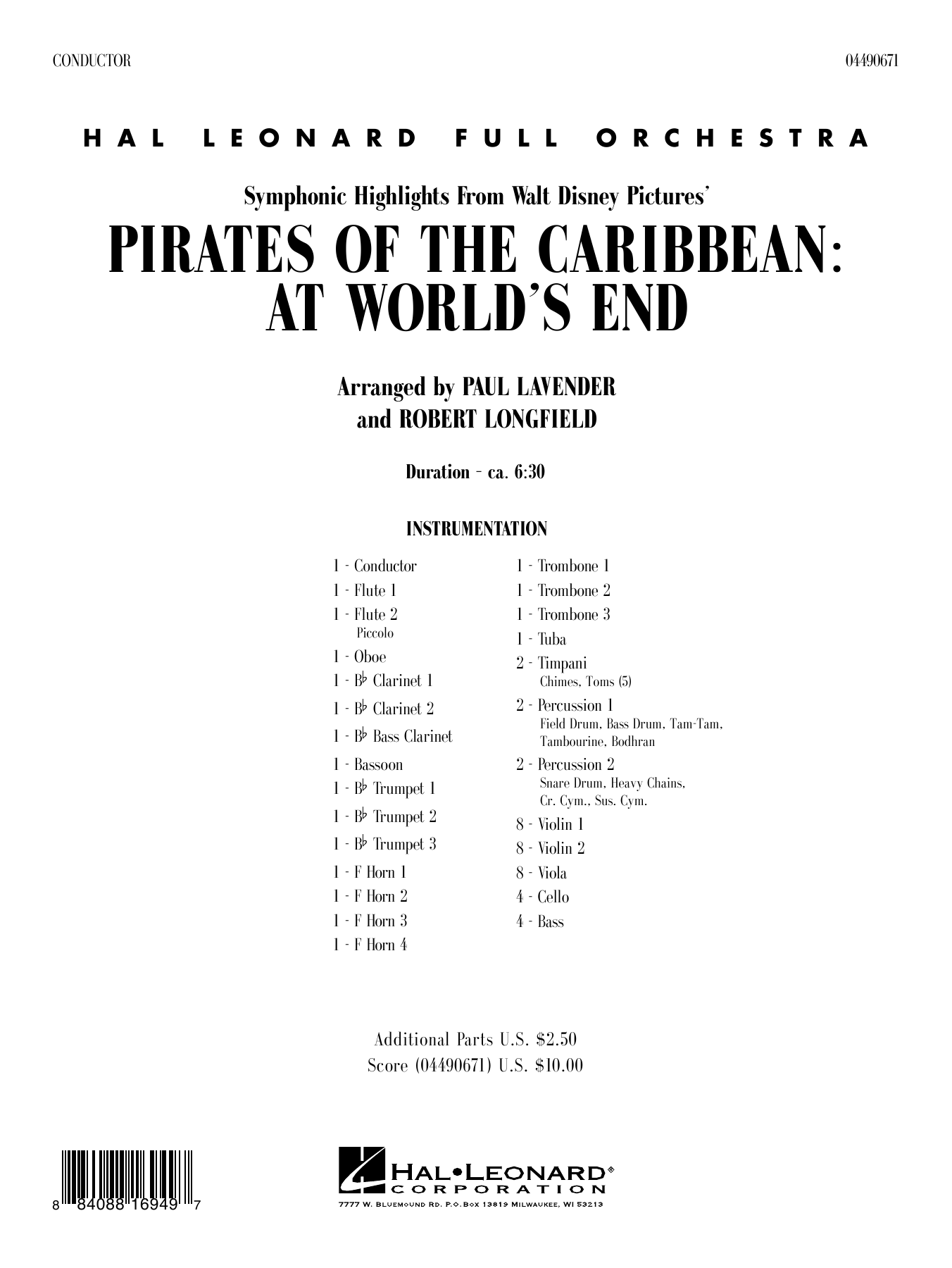

Symphonic Highlights from Pirates Of The Caribbean: At World's End (arr. Lavender/Longfield): Full Orchestra Conductor Score & Parts
By Hans Zimmer / Arranged by Paul Lavender / Arranged by Robert Longfield
Grade: 3-4
Item: 35-PK01412571
$85.00
Pickup currently not available
Buy Extra Parts (Digital PDF Download)
Parts Added to Cart!
Description
With some brilliant new themes along with familiar strains from the first two films, this third and final chapter promises to be the best yet. Hans Zimmer's powerful musical backdrop sets the adventure level at an all-time high for those orchestras who love to play film music. Includes: "Hoist the Colors, Drink Up Me Hearties, I See Dead People in Boats," and "Up Is Down."


Symphonic Highlights from Pirates Of The Caribbean: At World's End (arr. Lavender/Longfield): Full Orchestra Conductor Score & Parts isn't in MakeMusic Cloud just yet...but it could be. Let us know you'd like to see it, and you'll help shape what comes next. In the meantime, start a free trial and dive into thousands of interactive titles your students can play along with today.
Request This Title
Tell us you want it.
Start Your Free Trial
Explore everything that's ready to play right now.
Sample Audio
No sample audio found.
Sample Video
No sample videos found.
Additional Details
Publisher:
Hal Leonard
SKU:
35-PK01412571
More about this title
About the Composer: Hans Zimmer
Hans Zimmer stands among the most prolific and influential film composers working today. His approach to orchestration combines classical sophistication with contemporary sensibility, creating scores that serve the narrative while offering orchestras substantial musical material to sink their teeth into. Zimmer's work across hundreds of films has made him a staple in music education, particularly for ensembles seeking to engage students with music they recognize and love.
Why we love this
This arrangement captures the swashbuckling energy and cinematic sweep that made the Pirates trilogy resonate with audiences, and it translates remarkably well to the concert stage. The balance between accessibility and substance means students stay engaged while building genuine orchestration skills, and the familiar themes hook listeners immediately. Programming film music at this caliber attracts both players who might otherwise sit on the bench and audiences who show up specifically to hear these scores.
What to expect
Swashbuckling adventure with a theatrical edge; moments of rollicking fun punctuate darker, more dramatic passages. The orchestration bristles with energy and color, from playful woodwind conversations to broad, sweeping string lines that evoke the scale of the cinematic world.
Who it's for
Orchestras at the intermediate level who want substantial repertoire that both musicians and audiences recognize. This works equally well for concert programming, pops concerts, or film music festivals, and it's ideal for conductors introducing students to how orchestration serves storytelling.
How to get the most out of it
- Balance the melodic material across sections rather than letting it float only in the first violins; Zimmer's orchestrations ask multiple families to share thematic responsibility, which creates the fullness the arrangement intends.
- Lock the rhythmic figures in the accompaniment parts early in rehearsal. These films thrive on propulsive rhythmic energy, and tightness in the ensemble rhythm section opens up space for the melodies to breathe.
- Pay attention to dynamic contrast between sections. The move from "Hoist the Colors" into the more boisterous material demands clear architectural shaping, not just volume.
- Trust the key relationships and harmonic movement to carry forward momentum; resist the temptation to artificially accelerate or drag passages. Zimmer's pacing is already built into the musical design.
How to use it
Consider pairing this with other contemporary film scores to create a concert that draws newcomers into the hall while offering substantial music for players. It also works as a powerful closer to a concert or as the centerpiece of a spring pops program when you want something with real musical meat beneath the entertainment value.
Skills your students will build
- Balancing sustained harmonic material with active melodic lines
- Reading and executing contemporary orchestration techniques across multiple instrumental families
- Maintaining rhythmic precision in syncopated and compound metric figures
- Shaping long phrases that rely on harmonic rather than melodic propulsion
- Responding to dramatic dynamic shifts and textural changes