Symphonic Dances (from Fiddler On The Roof) (arr. Ira Hearshen) Sheet Music Preview

Symphonic Dances (from Fiddler On The Roof) (arr. Ira Hearshen): Full Orchestra Conductor Score & Parts

By Bock Harnick / Arranged by Ira Hearshen

Grade: 3-4

Item: 35-PK01341837

Digital Download
$115.00

One moment…

Description
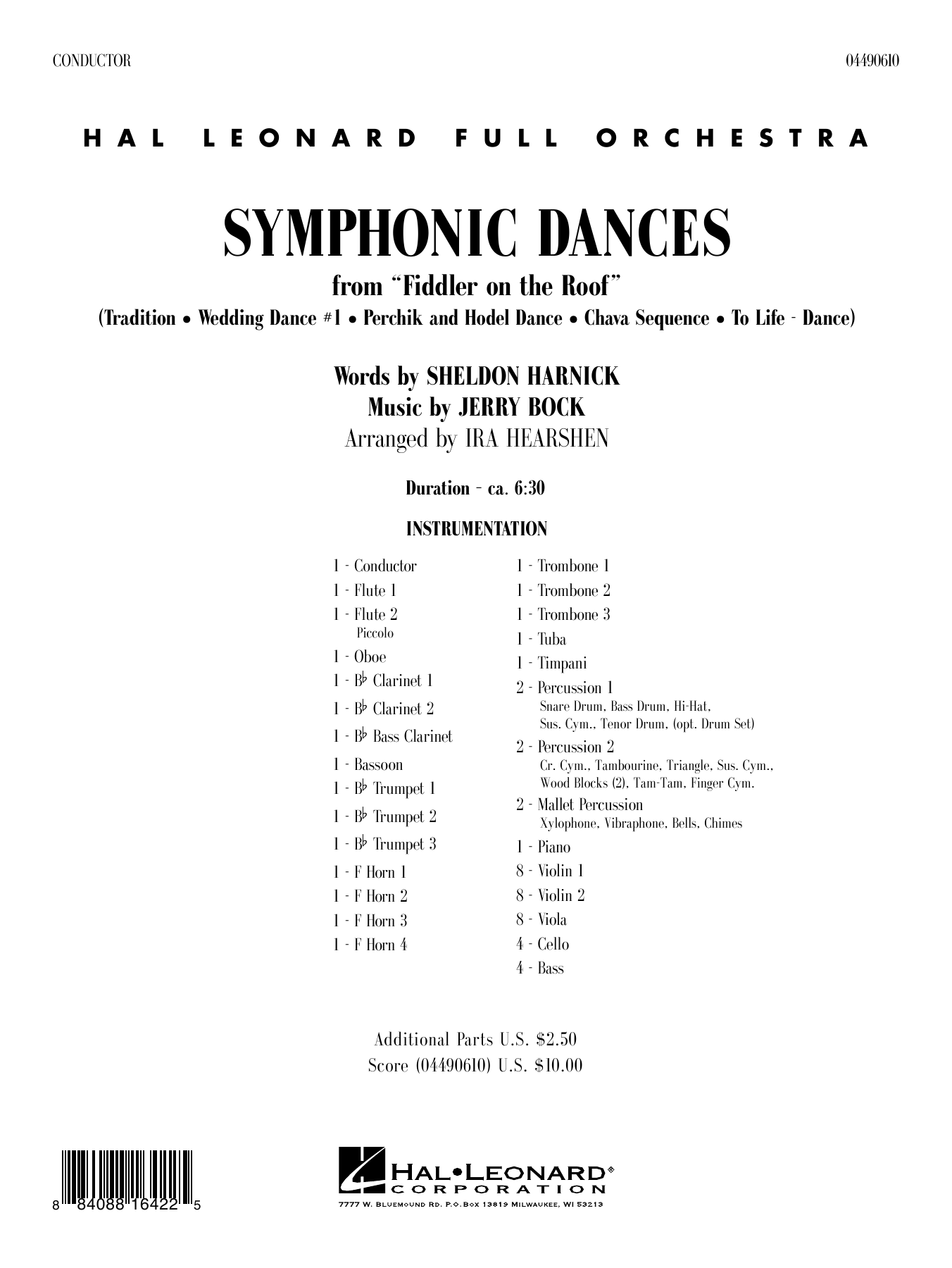
From this legendary stage show and film comes some of Broadway's most enduring music - not only the memorable songs, but also the dazzling ethnic dance music. Ira Hearshen's showcase is pure energy and musical excitement with "Tradition, Wedding Dance #1 (The Bottle Dance), Perchik and Hodel Dance, Chava Sequence" and "To Life."

Symphonic Dances (from Fiddler On The Roof) (arr. Ira Hearshen): Full Orchestra Conductor Score & Parts isn't in MakeMusic Cloud just yet...but it could be. Let us know you'd like to see it, and you'll help shape what comes next. In the meantime, start a free trial and dive into thousands of interactive titles your students can play along with today.

Sample Audio
No sample audio found.
Sample Video
Additional Details
Publisher: Hal Leonard
SKU: 35-PK01341837

More about this title

About the Composer: Bock Harnick

Jerry Bock and Sheldon Harnick formed one of Broadway's most prolific and celebrated songwriting partnerships. Their collaborations produced some of the most performed musicals in theater history, with Fiddler on the Roof standing as their masterwork. The team's gift for creating music that serves both intimate character moments and expansive ensemble scenes made them essential voices in the evolution of American musical theater.

Bock's melodic sensibility and Harnick's lyrical storytelling created songs that function equally well in concert halls and on stages. Their music consistently challenges performers to balance theatrical expression with musical sophistication, making their work valuable across educational and professional settings.

Why we love this

Hearshen's orchestration preserves the Yiddish character and rhythmic vitality of Bock and Harnick's original score while giving a full orchestra genuine work to do across all sections. The arrangement captures the folk energy and emotional weight that made these pieces central to the show's storytelling without relying on amplification or simplification. A program built around this suite announces both accessibility and substance to your audience.

What to expect

Infectious and emotionally generous. These dances pulse with the joy and sorrow of a tight-knit community celebrating together. Even the lightest sections carry an undercurrent of sincerity that keeps the energy from feeling frivolous.

Who it's for

Orchestras in grades 3 and 4 seeking substantive Broadway repertoire that showcases both technical skill and musicianship. Directors programming concert seasons that need to engage students and audiences alike without sacrificing artistic credibility.

How to get the most out of it

  • Balance the melodic material between principal chairs and sectional voices. The ethnic dance idioms work best when the arrangement's countermelodies emerge clearly rather than sounding like harmonic padding.
  • Attend to articulation patterns that define the style. The Bottle Dance and Perchik and Hodel Dance require crisp, energized articulation; the Chava Sequence demands more legit phrasing to honor its emotional content.
  • Work the recorded accompaniment into rehearsals early, but ensure your orchestra can perform independently before any dress rehearsal. This music thrives when conducted with presence, not merely played along with a track.

How to use it

Build a full concert around Bock and Harnick's theatrical legacy by pairing this suite with complementary orchestral arrangements from other musicals, or place it strategically in a concert as a second-half opener that resets energy and mood. The dramatic arc from celebration to poignancy within the suite itself makes it work equally well as a standalone feature or as part of a thematic program exploring cultural music and dance.

Skills your students will build

  • Stylistic awareness of modal and Eastern European music idioms within a Broadway context
  • Balance and blend across mixed orchestration with frequent restatement of material in different sections
  • Rhythmic precision in syncopated and dance-driven passages
  • Dynamic shaping across longer phrases that mix ensemble unison with layered countermelody
  • Character and phrasing differentiation across five contrasting movements within a single suite

You May Also Like