
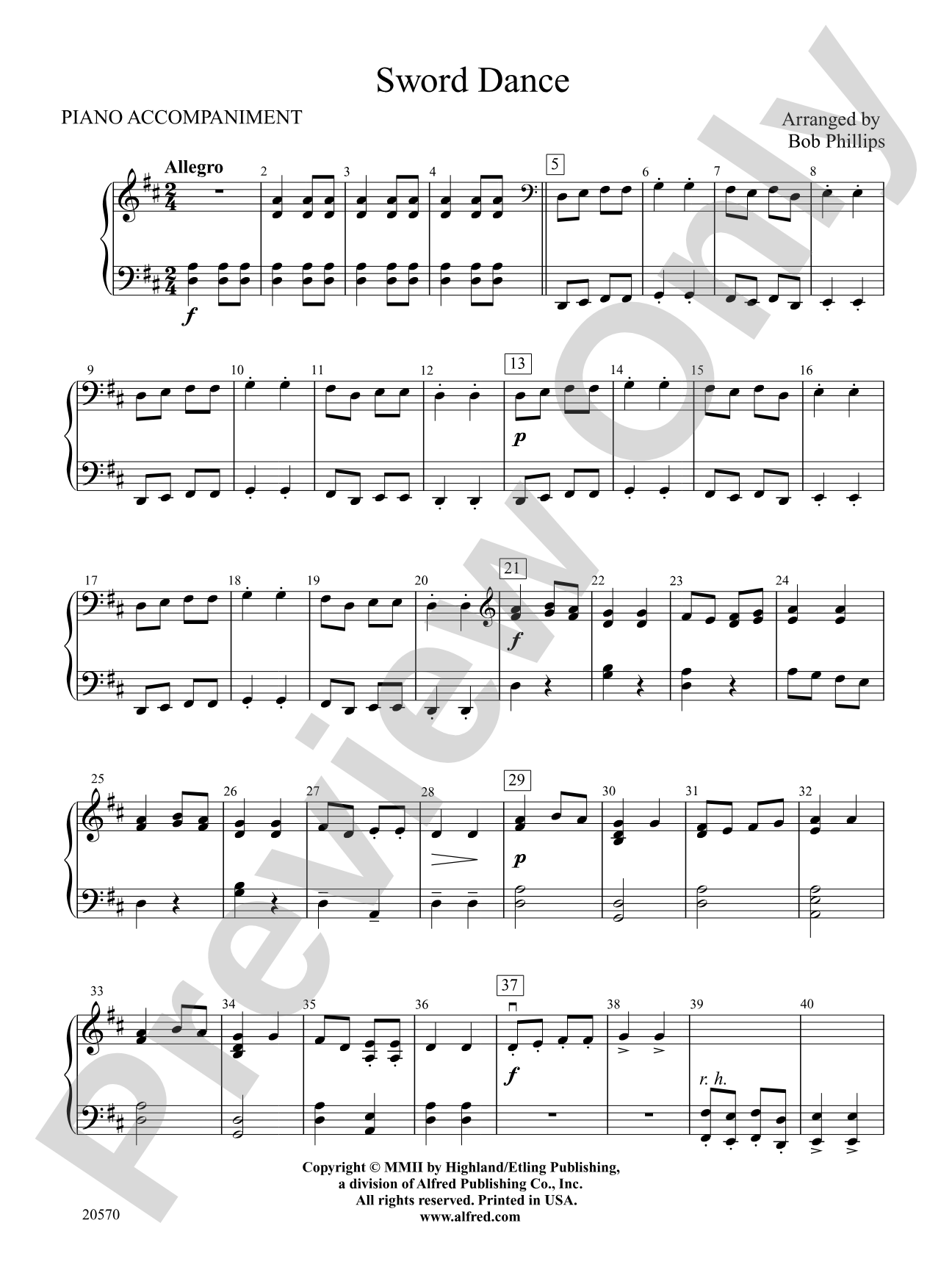

Sword Dance: Piano Accompaniment
Arr. Bob Phillips
Grade: 1
Item: 00-PC-0000409_K
$5.99
Pickup currently not available
Description
Looking for a piece that's fun to play but still educationally sound? Try Sword Dance on your next concert. Students will love this high-energy tune from the Renaissance era. The piece starts with a presentation of the tune in the low strings that continues in the violins. It is then played antiphonally, followed by a pizzicato variation that concludes in an exuberant, fast-paced ending. Correlated with String Explorer, Book 1, Unit 12. This title is available in MakeMusic Cloud.


Don't just read it, hear it, play along with it, and watch your students grow with it. In MakeMusic Cloud, Sword Dance: Piano Accompaniment comes alive with professional accompaniment, adjustable tempo, and built-in practice tools that turn solo practice into real progress.
Open in the Player
Jump straight in and assign it today.
Start Your Free Trial
Open this title and explore the full library in minutes.
Sample Audio
1
Audio File
--:--
0:00
0:00
Sample Video
Additional Details
Series:
Highland/Etling String Explorer
Publisher:
Alfred Music
Page Count:
72
SKU:
00-PC-0000409_K
More about this title
About the Arranger: Bob Phillips

Bob Phillips has spent decades shaping string education through innovative pedagogy and prolific composition. Since 1953, he has authored over 25 curricula and published more than 200 works for orchestra and band, earning ASCAP recognition and regular performance at the Midwest Clinic. His arrangements span classical repertoire and eclectic styles, from his groundbreaking Fiddlers Philharmonic and Jazz Philharmonic series to culturally diverse collections.
For 27 years, Phillips built the Saline, Michigan string program into a national model, growing it to over 700 students performing at state and national conferences. He founded the Saline Fiddlers Philharmonic, which performed internationally and at the White House, and served as resident conductor and arranger for the Wintergrass Festival in Seattle. His instructional videos and clinics have guided thousands of teachers in large ensemble pedagogy and eclectic style instruction.
Why we love this
Phillips taps into what makes Renaissance dances compelling: clear sectional architecture and accessible melodies that still demand musicality. The antiphonal writing naturally teaches listening and balance without requiring sophisticated harmonic concepts, and the pizzicato variation gives players permission to have genuine fun while staying engaged with the music.
What to expect
High-spirited and dance-like, with the infectious energy of a folk tune passed between hands. The pizzicato section brings a playful, almost comedic lightness before the piece rushes forward to an exuberant finish that leaves players and audiences alike energized.
Who it's for
Grade 1 string orchestras ready to move beyond unison repertoire into sectional writing and varied textures. This piece works for groups with solid fundamental reading skills but still developing independence across parts, since the educational alignment with String Explorer Book 1 ensures the technical demands match that curriculum level.
How to get the most out of it
- Let the low strings shape the opening melody with warmth and presence; their presentation sets the tone for everything that follows, including the violin entrance that echoes it.
- Articulate the antiphonal sections with clarity so each group's response lands distinctly. Avoid letting the sections blur into a continuous wall of sound.
- Keep the pizzicato variation light and rhythmically crisp; young players often muddy pizzicato by holding notes too long. Short, clean articulation will let the humor of this section shine.
- Drive the final fast-paced section forward with confidence, but resist the urge to rush. Lock in with a clear pulse so the energy reads as control, not chaos.
How to use it
Pair this with other Renaissance or folk-inspired pieces to create a thematic concert set, or use it as a high-energy opener to capture attention early in a program. Its relatively short length and guaranteed crowd appeal make it ideal for festival competitions or community concert settings where you want immediate engagement.
Skills your students will build
- Sectional independence (low strings, violins, and full ensemble playing distinct parts)
- Antiphonal playing and active listening across parts
- Pizzicato execution with clear articulation and rhythmic precision
- Sectional contrast through dynamic and textural changes
- Sustained tempo control in fast passages