
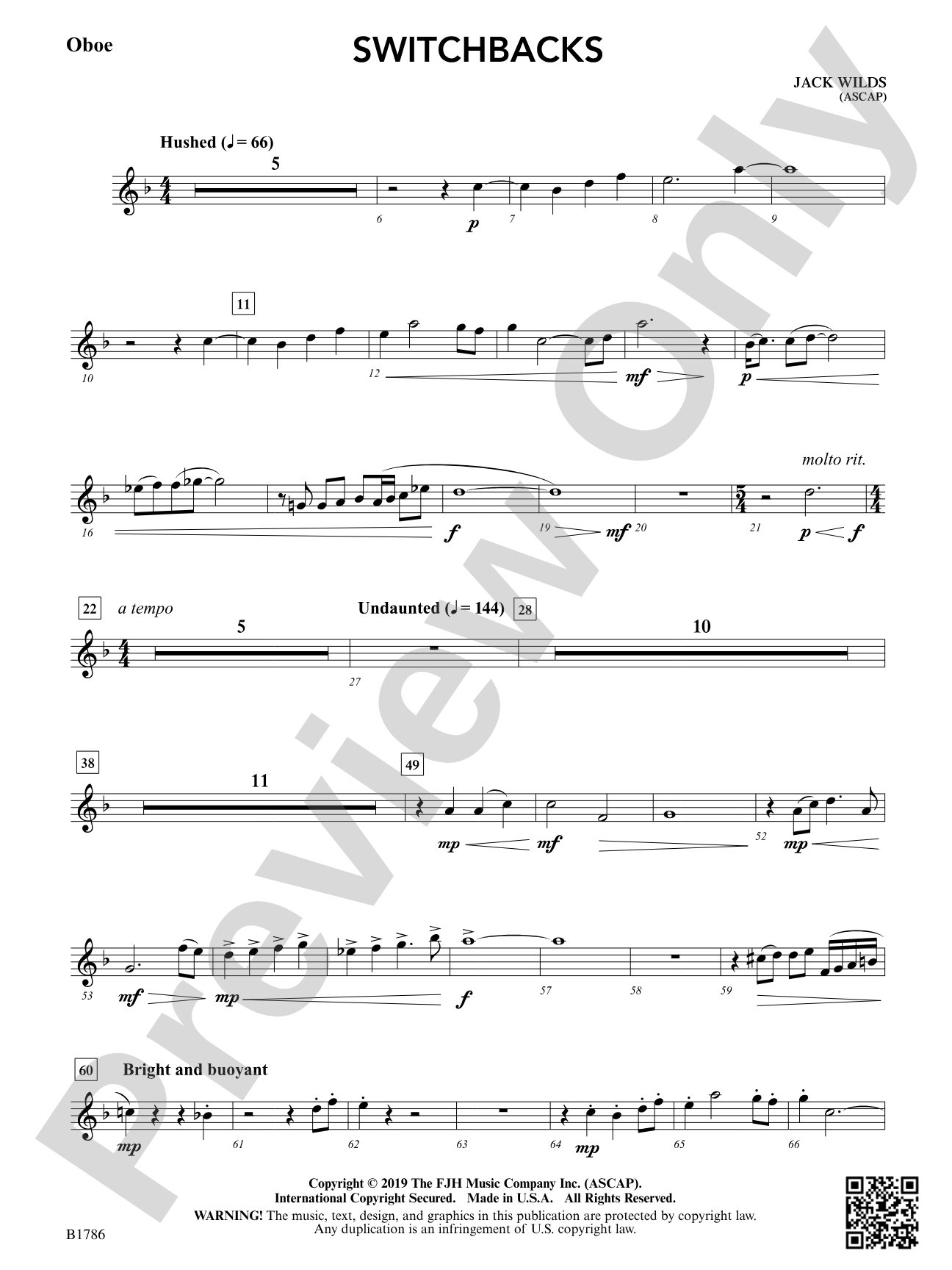

Switchbacks: Oboe
By Jack Wilds
Grade: 2.5
Item: 98-PC-DB1786_O1
$7.00
Pickup currently not available
Description
Embark on an exhilarating climb up a mountain trail with this compelling work that explores both quiet, thoughtful moments and big, powerful themes. After exerting a ton of energy during the ascent, the climber reaches the top and the piece ends as it began while the climber stares breathlessly at the incredible view from the top.


Switchbacks: Oboe isn't in MakeMusic Cloud just yet...but it could be. Let us know you'd like to see it, and you'll help shape what comes next. In the meantime, start a free trial and dive into thousands of interactive titles your students can play along with today.
Request This Title
Tell us you want it.
Start Your Free Trial
Explore everything that's ready to play right now.
Sample Audio
1
Audio File
--:--
0:00
0:00
Sample Video
Additional Details
Series:
FJH Young Band
Publisher:
The FJH Music Company, Inc.
SKU:
98-PC-DB1786_O1
More about this title
About the Composer: Jack Wilds

Jack Wilds composes across a spectrum of ensembles and age groups, from children's choirs through professional orchestras. His catalog draws inspiration from visual art, poetry, philosophical texts, and pure musical structures, resulting in works that meet performers at their current level while pushing them toward genuine artistic expression. Chamber works by Wilds have been championed by the Attacca Quartet, members of the New York Philharmonic and Atlanta Symphony, and ensembles at the University of Texas. His wind band and choral works span over 40 publications for developing musicians and appear regularly on festival required repertoire lists across multiple continents, with performances at the Midwest Clinic and educator conferences nationwide.
Wilds brings direct classroom experience to his composing. A former public school band director, he now lectures at Texas State University teaching composition, music theory, ear training, and music technology. He serves as Co-Director of Music at First Presbyterian Church in San Marcos, a role he has held for 13 years alongside his wife Noel. His teachers include Michael Ippolito at Texas State and Chris Trapani and Donald Grantham at the University of Texas. He maintains an active schedule as a clinician and adjudicator throughout the country.
Why we love this
Wilds creates a genuine narrative arc here without resorting to programmatic cliché. The climb unfolds as a series of musical contrasts that showcase young musicians' ability to shape dynamics and phrasing, making rehearsal work on ensemble control feel purposeful rather than abstract. At Grade 2.5, this strikes the exact balance where technical demands stay manageable but the payoff for thoughtful interpretation feels substantial.
What to expect
The opening suggests a solitary hike through quiet forest, deliberate and introspective. As the trail steepens, energy accumulates through layered orchestration and driving rhythms until the summit bursts into view with jubilant, triumphant themes. The return to the calm opening carries the weight of accomplishment, leaving listeners and performers alike catching their breath.
Who it's for
Young concert bands at the intermediate level who are ready to tackle pieces with genuine emotional trajectory. This works particularly well for groups developing their dynamic range and phrasing skills while building confidence with thematic material that feels both accessible and rewarding.
How to get the most out of it
- Shape the quiet passages at the beginning with attention to balance and breath; these moments set up the energy arc of the entire piece, so resist the urge to rush into volume.
- Layer the building sections carefully so that each entrance registers as a distinct event rather than a sudden wall of sound. Stagger dynamic growth across the ensemble.
- Mark the climactic moments clearly with your conducting so that the ensemble locks into those powerful themes with confidence and precision.
- Return to the opening mood with intention during the final section. This mirrors the exhausted climber; the tempo and tone should feel earned, not just a repeat of what came before.
How to use it
Program this as the centerpiece of a concert themed around nature, journeys, or achievement. It pairs well before or after a slower lyrical work, as its narrative shape gives the concert clear narrative momentum. Also consider this for festival competition programs where judges value musical storytelling alongside technical execution.
Skills your students will build
- Dynamic shaping and control across a multi-section form
- Ensemble balance during layered entrances and builds
- Thematic continuity and recognition across contrasting sections
- Sustained playing with musical purpose during quiet passages
- Transitioning between contrasting tempos and characters