Swinging: String Bass Sheet Music Preview

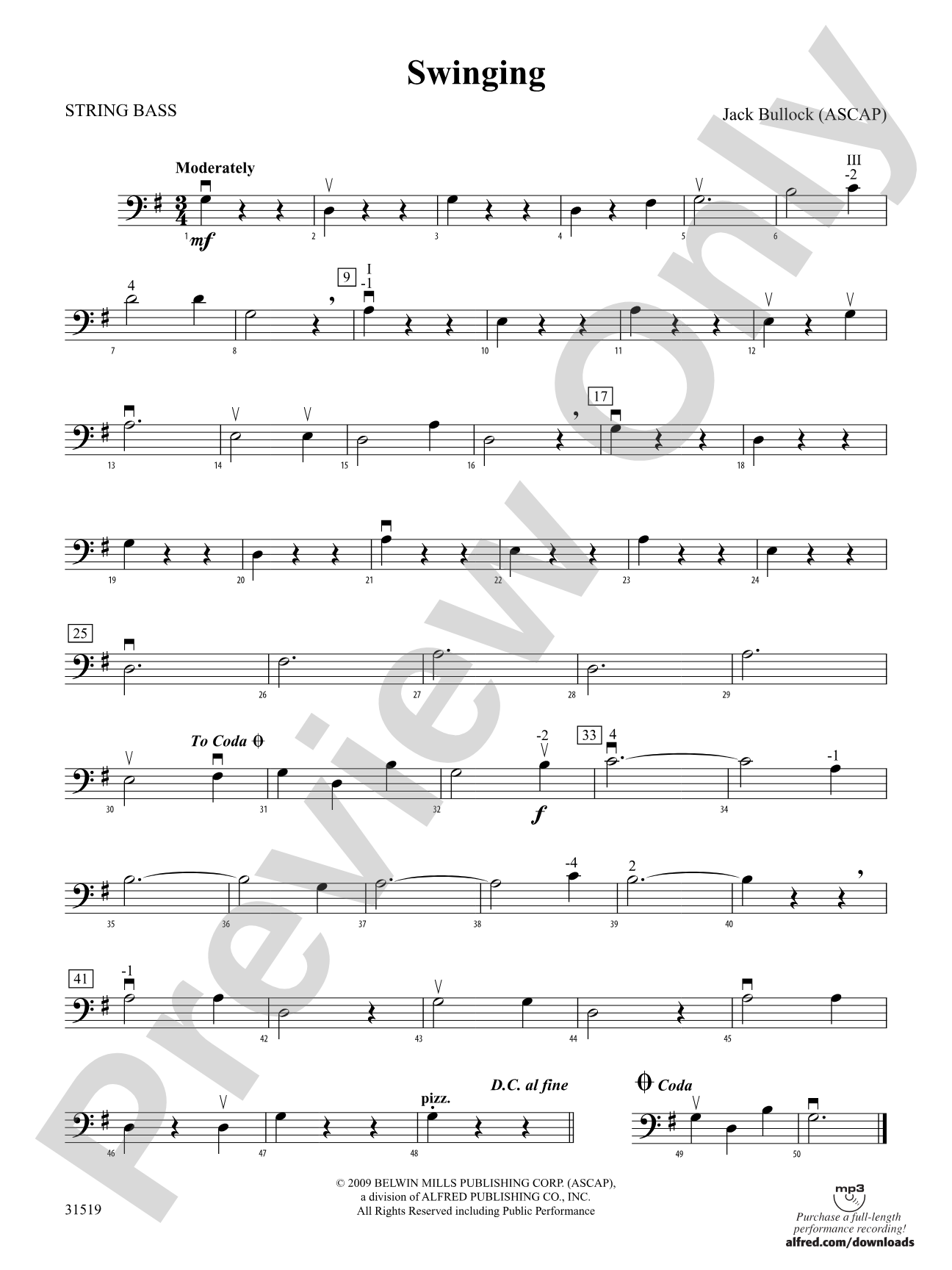
Swinging: String Bass

By Jack Bullock

Grade: 1.5

Item: 00-PC-0001712_SB

Digital Download
$5.99
Description
Swinging has been a favorite pastime for children forever. Just close your eyes and remember the cool breeze in your hair as you soar through the air. Feel the soothing sense of contentment as the swing follows its rhythmic path, out and back. A great piece to teach musicianship, relating to the students' experiences in a very easy technical setting!

Don't just read it, hear it, play along with it, and watch your students grow with it. In MakeMusic Cloud, Swinging: String Bass comes alive with professional accompaniment, adjustable tempo, and built-in practice tools that turn solo practice into real progress.

Sample Audio
0:00
0:00
Sample Video
Additional Details
Series: Belwin Beginning String Orchestra
Publisher: Alfred Music
Page Count: 76
SKU: 00-PC-0001712_SB

More about this title

About the Composer: Jack Bullock

Jack Bullock

Jack Bullock brings three decades of performance and teaching experience to his work as a composer and arranger. A trumpet player who performed with the Miami Philharmonic Orchestra and Miami Opera Company, as well as with regional and touring ensembles, he has authored over 600 compositions and arrangements spanning concert band, orchestra, jazz ensemble, and marching band. He holds degrees in Music Education at the undergraduate, graduate, and doctoral levels.

Bullock's pedagogical foundation runs deep. He spent 20 years teaching instrumental music in school settings and served as assistant band director at Ithaca College's School of Music, where he also chaired the Music Education Department for four years. His work on the Belwin 21st Century Band Method and as a contributing arranger for Alfred Music's Music Expressions curriculum reflects his commitment to making music accessible to developing musicians. He is an ASCAP member and has led clinics across the United States, Canada, and England.

Why we love this

Bullock taps into genuine childhood memory here, crafting a piece that honors what students already know while building real musicianship. The Grade 1.5 writing is genuinely easy without being empty, letting young orchestras focus on ensemble blend, rhythmic precision, and musical phrasing rather than technical survival. It's the kind of piece that reminds students why they started playing in the first place.

What to expect

Swinging captures the meditative, cyclical feeling of a childhood moment: the gentle push, the weightless rise, the steady return. The music breathes with simplicity and contentment, allowing listeners to close their eyes and drift into memory, just as the piece description suggests.

Who it's for

String orchestra directors teaching Grade 1 or early Grade 2 ensembles who want a piece that connects to student experience while developing fundamental musicianship. Beginners benefit from the accessible technical demands, which allow focus on tone production, intonation, and ensemble cohesion.

How to get the most out of it

  • Emphasize the arcing shape of each phrase by having the ensemble grow slightly in volume as the melody rises, then gently subside as it descends, mirroring the forward and back motion of the swing.
  • Mark a clear pulse in your conducting that feels unhurried and steady; let the rhythmic simplicity free students to listen across parts and balance the texture.
  • Use natural vibrato selectively in the melody lines to add warmth and maturity without overwhelming the straightforward harmonic language.

How to use it

This works beautifully as a concert opener for a young orchestra's spring or fall performance, setting a reflective tone before more energetic repertoire. It also makes an excellent choice for a family concert or educational outreach program, where its emotional accessibility resonates with audiences of all ages.

Skills your students will build

  • Sustaining tone quality across long phrases
  • Balancing melody and accompaniment within a simple texture
  • Responding to conducting gesture for dynamic shaping and phrasing
  • Listening for intonation in unison and two-part writing
  • Coordinating ensemble entries and releases with rhythmic precision

You May Also Like