Swingin' on the Housetop: Tuba Sheet Music Preview

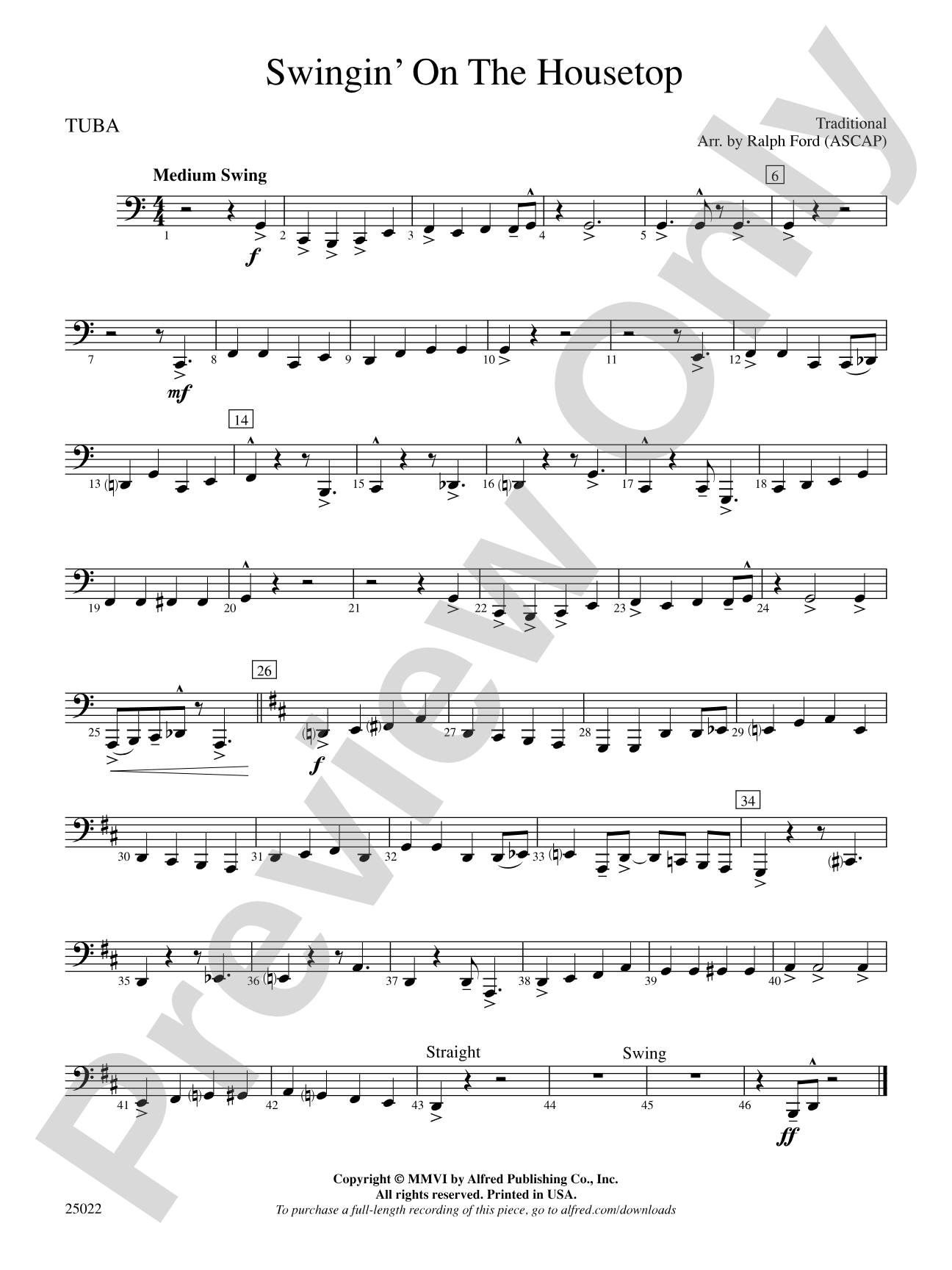
Swingin' on the Housetop: Tuba

Traditional / arr. Ralph Ford

Grade: 2

Item: 00-PC-0000998_TB1

Digital Download
$3.00
Description
It don't mean a thing if it don't got that swing! Totally hip and features the bass! Students will feel soooooo cool playing this setting of Up on the Housetop. A great vehicle to develop the feel of swing eighths. This may be played by strings alone or with any combination of winds.

Don't just read it, hear it, play along with it, and watch your students grow with it. In MakeMusic Cloud, Swingin' on the Housetop: Tuba comes alive with professional accompaniment, adjustable tempo, and built-in practice tools that turn solo practice into real progress.

Sample Audio
0:00
0:00
Sample Video
Additional Details
Series: Belwin Intermediate String/Full Orchestra
Publisher: Alfred Music
Page Count: 124
SKU: 00-PC-0000998_TB1

More about this title

About the Arranger: Ralph Ford

Ralph Ford

Ralph Ford has spent nearly three decades in university teaching while maintaining a prolific career as a composer and arranger across multiple mediums. His professional path began at fifteen as an arranger in Panama City, Florida, and continued through his undergraduate years at Troy State University, where he directed the Jazz Ensemble I and served as staff arranger for the university band program starting in his sophomore year.

Since 1999, Ford has worked as an exclusive composer and arranger for the Belwin division of Alfred Music, with over 250 published titles for orchestra, concert band, jazz ensemble, and marching band performed worldwide by university, military, professional, community, and school ensembles. Beyond music, his work in media and broadcast has included live radio, television voice-overs, commercial jingles, and news packages for national network affiliates; he has received international and regional advertising awards for his contributions to animation and broadcast production.

Why we love this

Ford's swing arrangement captures what makes this holiday standard genuinely fun to play rather than dutiful, and the Grade 2 scoring respects student musicians by letting them feel the groove from the opening notes. The flexibility to perform with strings alone or add any combination of winds means this works for virtually any full orchestra configuration, making it practical for schools navigating changing enrollment.

What to expect

Hip and playful, with a groove that makes students sound far more sophisticated than the technical demands require. The featured bass line and swagger of the swing style give every musician in the ensemble a sense of cool competence.

Who it's for

Student orchestras at the Grade 2 level looking to explore swing style without heavy rhythmic complexity. This arrangement works equally well for schools with full orchestras or those relying primarily on string sections, since wind doublings are optional.

How to get the most out of it

  • Establish the swing eighth feel early in rehearsal by isolating the rhythm section and having them lock the pocket before the full ensemble enters; this foundation makes the stylistic shift clear for all players.
  • Balance the featured bass line so it leads without overpowering the ensemble, especially in passages where strings and winds are playing lighter textures above it.
  • Keep the tempo bouncy but not rushed; swing style often calls for a slightly more relaxed rhythmic feel than the written notation suggests, so model this with your conducting.

How to use it

Schedule this for a holiday concert where you want to shift mood and energy from reverent arrangements; it pairs well alongside traditional carols since it keeps the season present while showcasing your students' rhythmic and stylistic range. The winter season timing makes it natural programming, and the novelty appeal often becomes a audience favorite.

Skills your students will build

  • Swing eighth feel and articulation
  • Balancing melody and bass line in ensemble texture
  • Flexible instrumentation (playing with optional parts)
  • Stylistic interpretation beyond straight classical rhythm

You May Also Like