
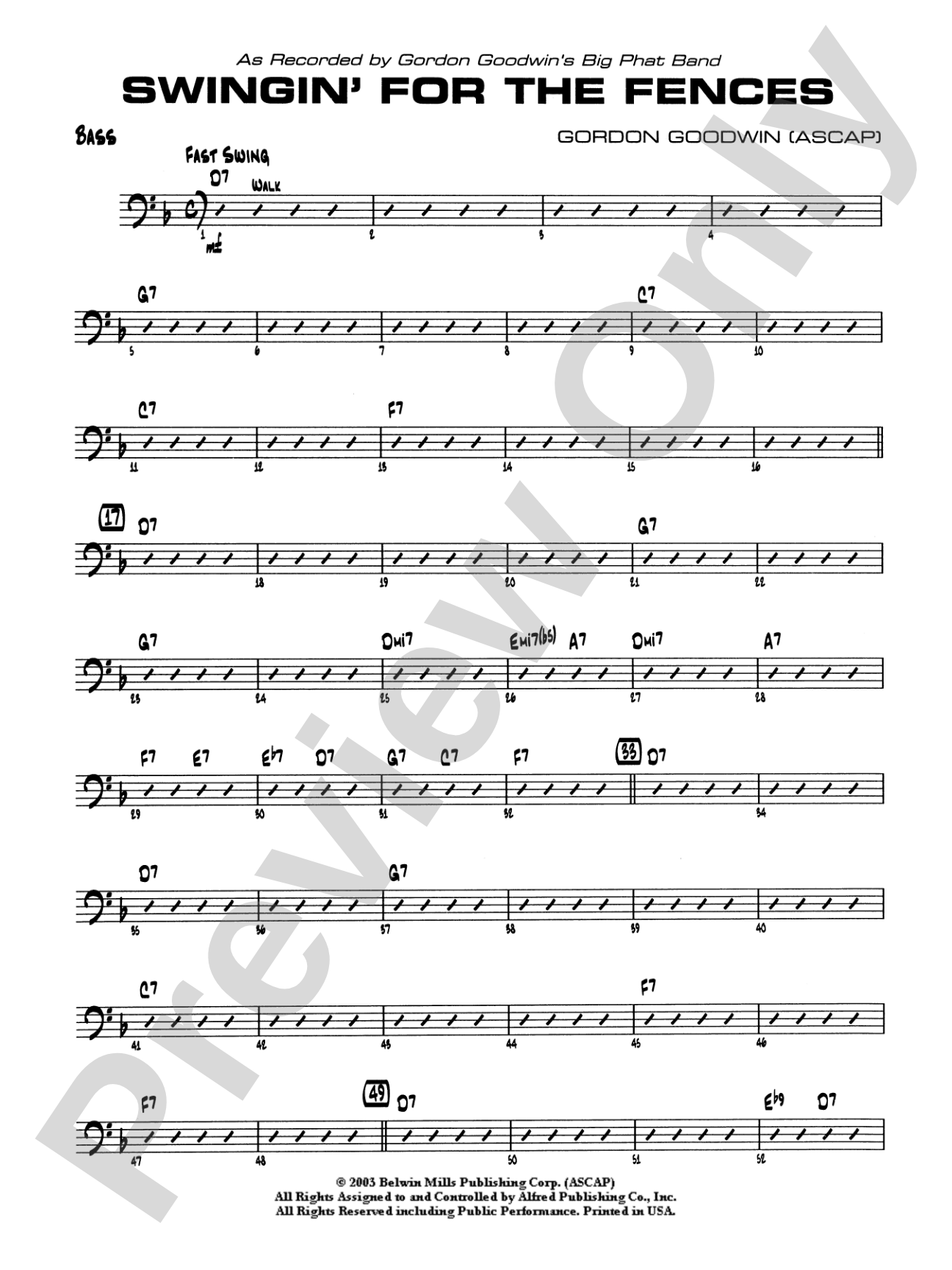

Swingin' for the Fences: String Bass
By Gordon Goodwin
Grade: 5.5 (Advanced / Difficult)
Item: 00-PC-0002456_SB
$4.00
Pickup currently not available
Description
Based on the changes to "Sweet Georgia Brown," Swingin' for the Fences can be fast or if you have the horses, really fast. In this Gordon Goodwin original, the solo section provides space for alto, tenor, trumpet, trombone, and piano or vibes. The title says it all when the full ensemble gets its wish - a rompin', stompin' tutti section that will put your band on the map. Optional parts provided for vibes, flute (2nd alto), and soprano sax (1st alto). A brilliant chart! As recorded on Gordon Goodwin's Big Phat Band: Swingin' for the Fences. This title is available in MakeMusic Cloud.


Don't just read it, hear it, play along with it, and watch your students grow with it. In MakeMusic Cloud, Swingin' for the Fences: String Bass comes alive with professional accompaniment, adjustable tempo, and built-in practice tools that turn solo practice into real progress.
Open in the Player
Jump straight in and assign it today.
Start Your Free Trial
Open this title and explore the full library in minutes.
Sample Audio
1
Audio File
--:--
0:00
0:00
Sample Video
No sample videos found.
Additional Details
Series:
Gordon Goodwin Series
Publisher:
Alfred Music
Page Count:
98
SKU:
00-PC-0002456_SB
More about this title
About the Composer: Gordon Goodwin

Gordon Goodwin began composing full-length pieces at age five, writing down the intricate arrangements that played in his mind. By thirteen, he had already written his first big band chart, establishing himself as a prodigious voice in jazz orchestration. His gifts caught the attention of film and television producers, leading to Emmy Awards and Grammy nominations for his work on blockbuster films including Bad Boys II, Con Air, and Remember the Titans. He has written for and performed alongside some of jazz and popular music's most celebrated artists, from Ray Charles to Christina Aguilera.
In 2000, Goodwin founded Gordon Goodwin's Big Phat Band, transforming Los Angeles's jazz scene with a ensemble known for ambitious charts and infectious energy. The band's debut album made Grammy history, and subsequent releases have cemented Goodwin's reputation as one of contemporary jazz's most inventive arrangers and bandleaders. Beyond the Big Phat Band, he continues to conduct world-class symphony orchestras and remains deeply committed to composing music that energizes both performers and audiences.
Why we love this
Goodwin has the rare gift of writing charts that sound exponentially bigger than their parts suggest. The rhythm section and ensemble interplay in this tune create a driving groove that carries even less experienced rhythm sections, and the solo section is genuinely rewarding without requiring virtuosos to sound polished. The tutti hits land with such force and clarity that your band will feel the difference immediately in rehearsal.
What to expect
Groove-heavy and irresistible, with a swagger rooted in hard-swinging big band tradition. The solos breathe with jazz authenticity, trading over changes that feel conversational rather than academic, then the full ensemble ignites with a driving, celebratory weight that sounds like everyone in the room is grinning.
Who it's for
Advanced jazz ensembles ready to dig into sophisticated changes and high-energy ensemble writing. This chart rewards groups with solid section cohesion and soloists capable of handling bebop-derived changes at tempo, making it ideal for competitive jazz programs or bands looking to showcase genuine musicianship alongside showmanship.
How to get the most out of it
- Keep the tempo rock solid during the solo section; each soloist will appreciate the unwavering pulse, and it becomes your foundation for the explosive ensemble passages that follow.
- Balance the rhythm section carefully in rehearsal. The piano or vibes soloist needs clarity, which means your bassist and drummer must be locked in from the first run-through.
- Let the ensemble feel the swagger in those tutti moments. The chart is written to cook, so resist over-polishing; some of that raw energy is the whole point.
- Mark breathing points for full sections well before performance. Those "rompin', stompin'" passages move fast, and your players need air.
How to use it
Close out a jazz concert with this one. Its energy and accessibility make it a crowd favorite while maintaining enough musical substance to satisfy serious listeners. It pairs beautifully with darker, introspective jazz standards earlier in the set, providing the high-impact finale that leaves your audience energized.
Skills your students will build
- Soloing over jazz changes with a clear harmonic foundation
- Ensemble swing feel and rhythmic precision at fast tempos
- Sectional balance and blend in big band writing
- Reading conductor cues and navigating key section entrances
- Stylistic interpretation of bebop-derived melodic lines