Swing There, Done That: Violin 3 (Viola T.C.)/Violin Solo Sheet Sheet Music Preview

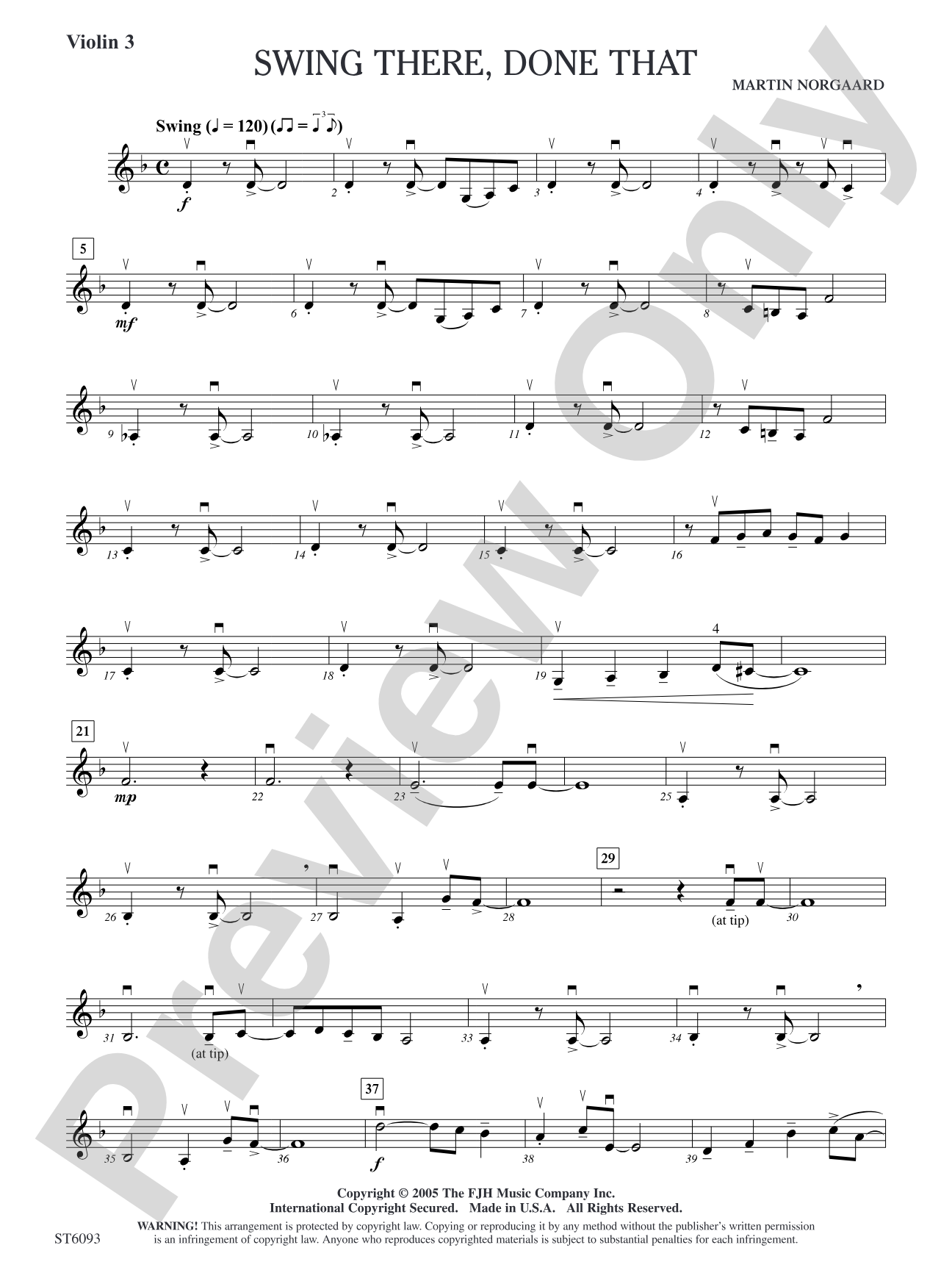
Swing There, Done That: Violin 3 (Viola T.C.)/Violin Solo Sheet

By Martin Norgaard

Grade: 2.5

Item: 98-PC-DST6093_VN3SOLOSH

Digital Download
$7.00
Description
Jazz composer and violinist Martin Norgaard offers this exciting new swing composition for your orchestra. Celli and basses get a chance to shine on the melody at the beginning of the piece. Solo sheets are provided for every instrument and you are free to "open this one up" to encourage improvisation. Optional drum set is included to help with the style and mood. A great change of pace for your next program, and an ideal way to incorporate the National Standards into a musical setting!

Don't just read it, hear it, play along with it, and watch your students grow with it. In MakeMusic Cloud, Swing There, Done That: Violin 3 (Viola T.C.)/Violin Solo Sheet comes alive with professional accompaniment, adjustable tempo, and built-in practice tools that turn solo practice into real progress.

Sample Audio
0:00
0:00
Sample Video
Additional Details
Series: FJH Developing Strings
Publisher: The FJH Music Company, Inc.
SKU: 98-PC-DST6093_VN3SOLOSH

More about this title

About the Composer: Martin Norgaard

Martin Norgaard is a composer and violinist whose work bridges classical training and jazz idiom. His compositions for string orchestras emphasize accessibility without sacrificing musical integrity, making him a valued voice in the repertoire for developing ensembles.

Why we love this

Norgaard gives the low strings a genuine moment in the spotlight here, opening with cello and bass melody that immediately signals this isn't your typical classical arrangement. The built-in flexibility for improvisation and optional drum set make this one of those rare pieces that sounds fresh every time you perform it, encouraging ensemble members to listen and respond to one another in real time.

What to expect

Relaxed and rhythmically playful, with the swagger of a classic swing tune heard from a fresh angle. The piece captures the loose, conversational quality of jazz while staying rooted in the warm, blended sound that string orchestras do best.

Who it's for

String orchestras at the intermediate level (Grade 2.5) looking for repertoire that challenges musicality without overwhelming technical demands. Conductors seeking ways to introduce jazz language and improvisation into the traditional string orchestra setting will find this piece both approachable and genuinely educational.

How to get the most out of it

  • Let the cello and bass melody breathe in the opening; these players need confidence that the orchestra is listening to them lead, not just accompanying.
  • Establish the swing feel first in sectional rehearsals without the full ensemble, so rhythm section players (and optional drums) lock the groove before adding harmonic parts.
  • Encourage improvisers to listen closely to what's happening around them before stepping into a solo; a good swing improvisation conversations with the orchestra, not over it.
  • Use the optional drum set strategically: consider rehearsing without it first so strings own the style, then add drums to deepen the swing character once the ensemble feels secure.

How to use it

This works beautifully as a program-opener or closer, offering audiences a complete tonal shift from more traditional fare on the same concert. It's equally at home in a spring pops program or as a festival selection where you want to demonstrate ensemble musicianship in a contemporary idiom.

Skills your students will build

  • Swing rhythm and feel interpretation
  • Improvisation within a harmonic framework
  • Leading and supporting roles within an ensemble context
  • Jazz articulation and stylistic phrasing
  • Listening and responding in real time to ensemble partners

You May Also Like