
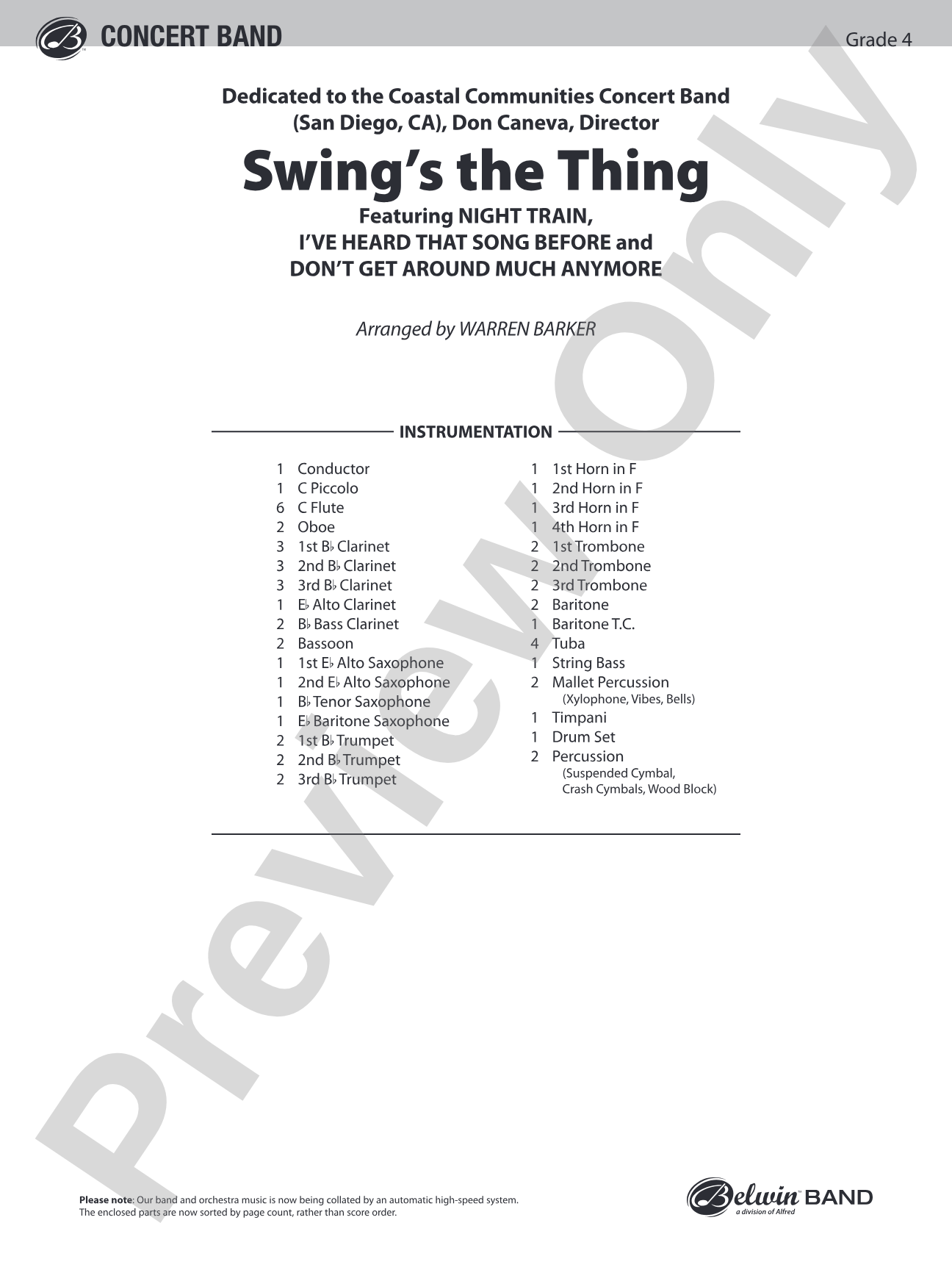

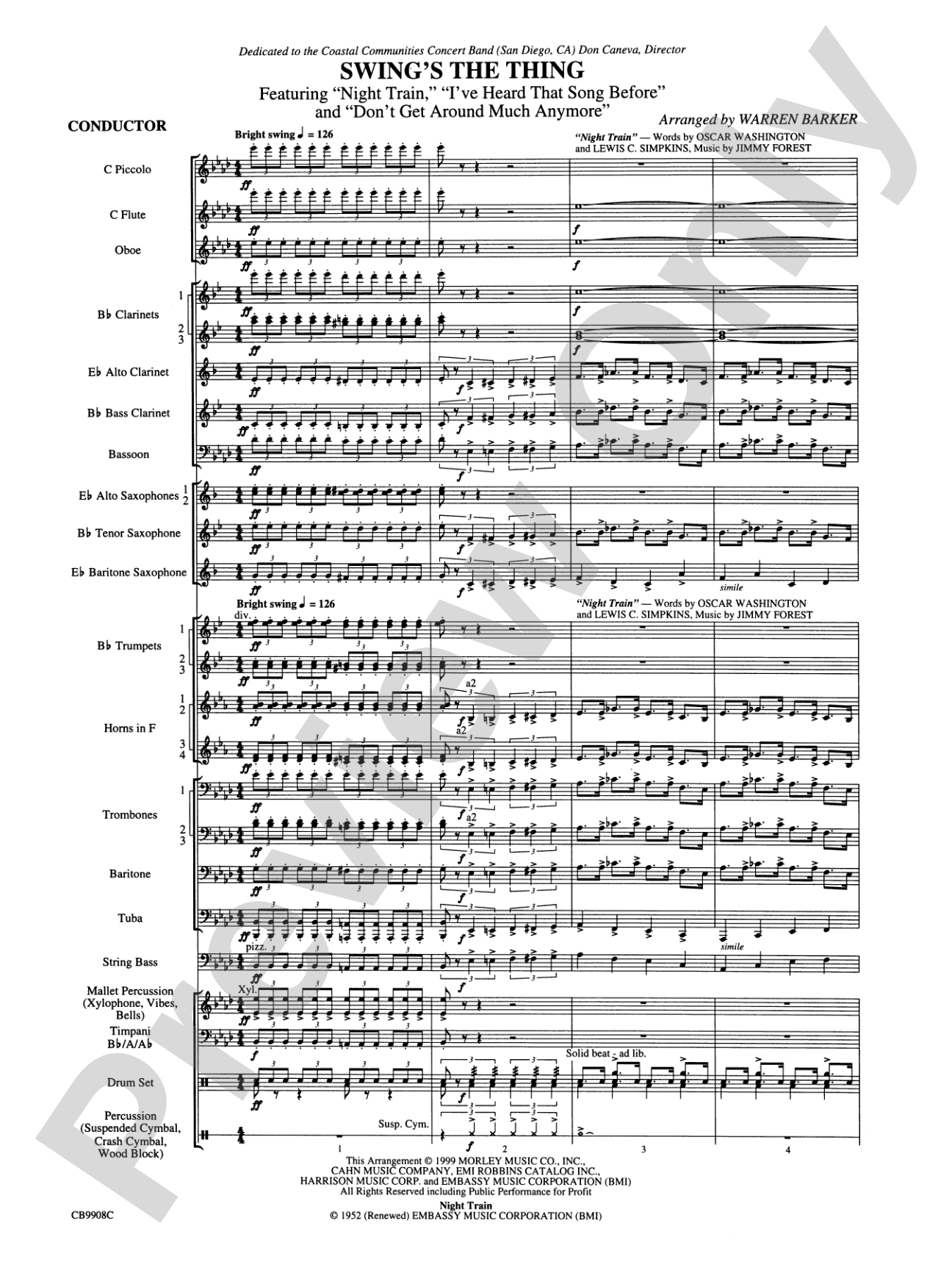
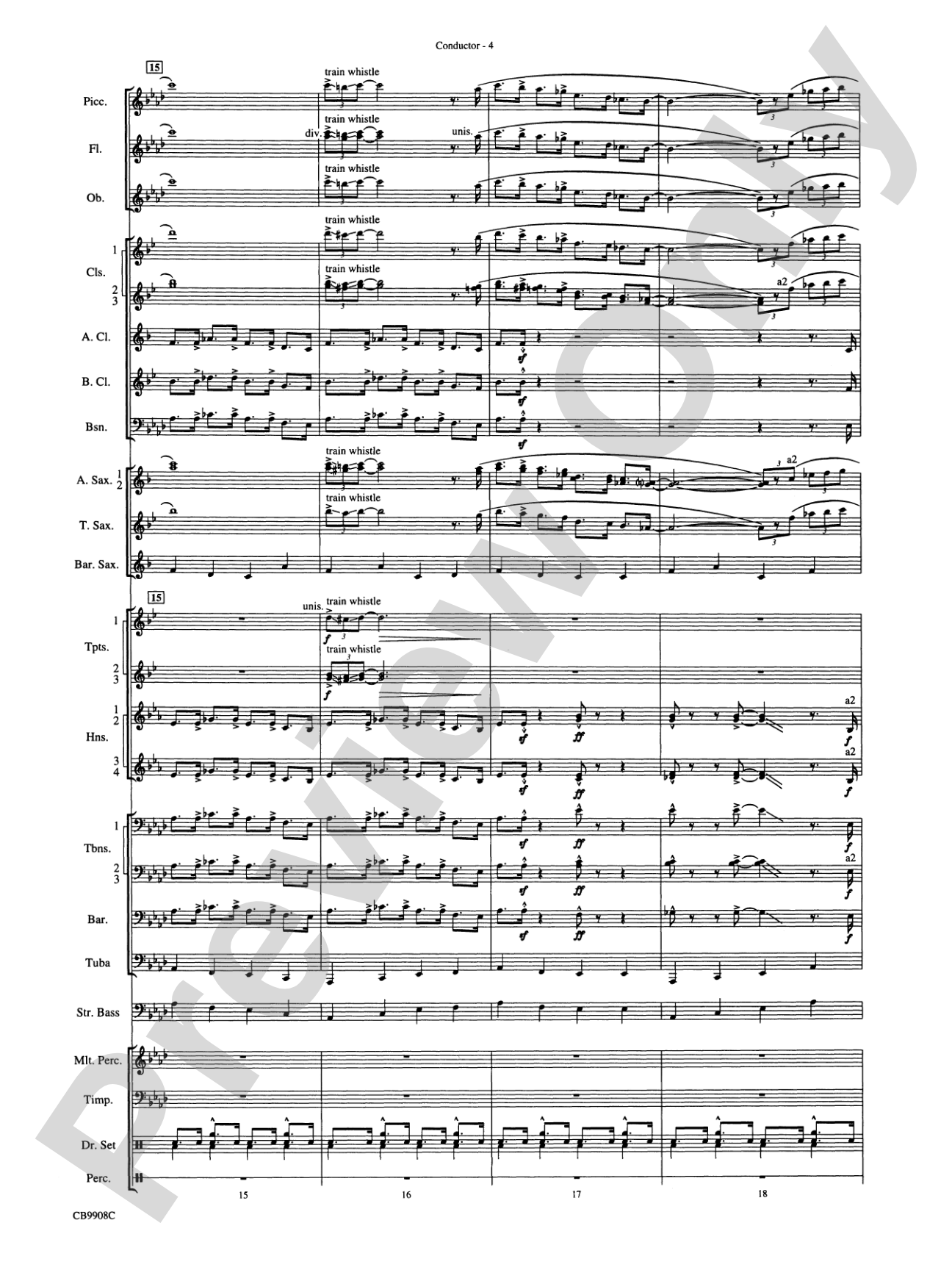
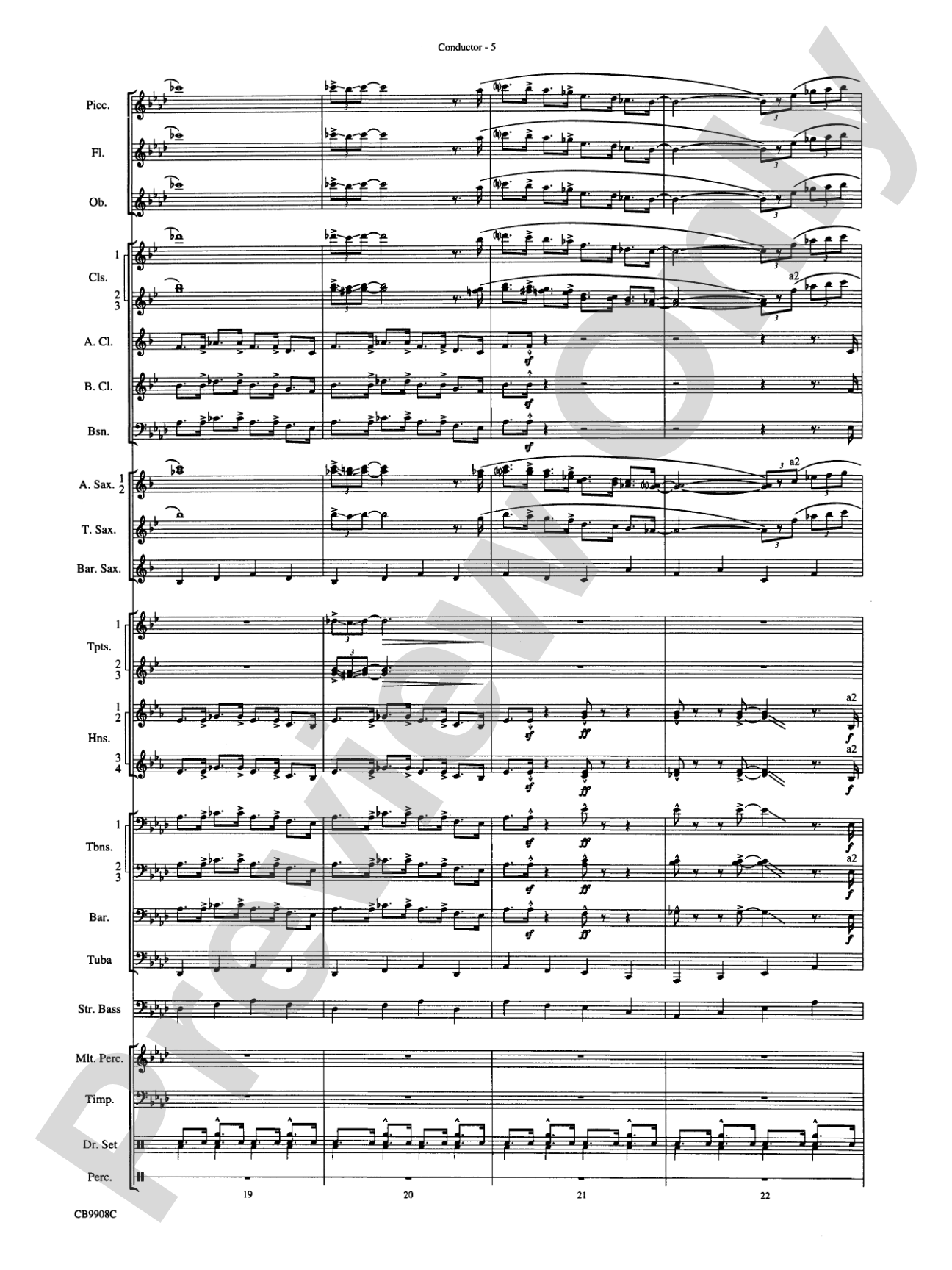
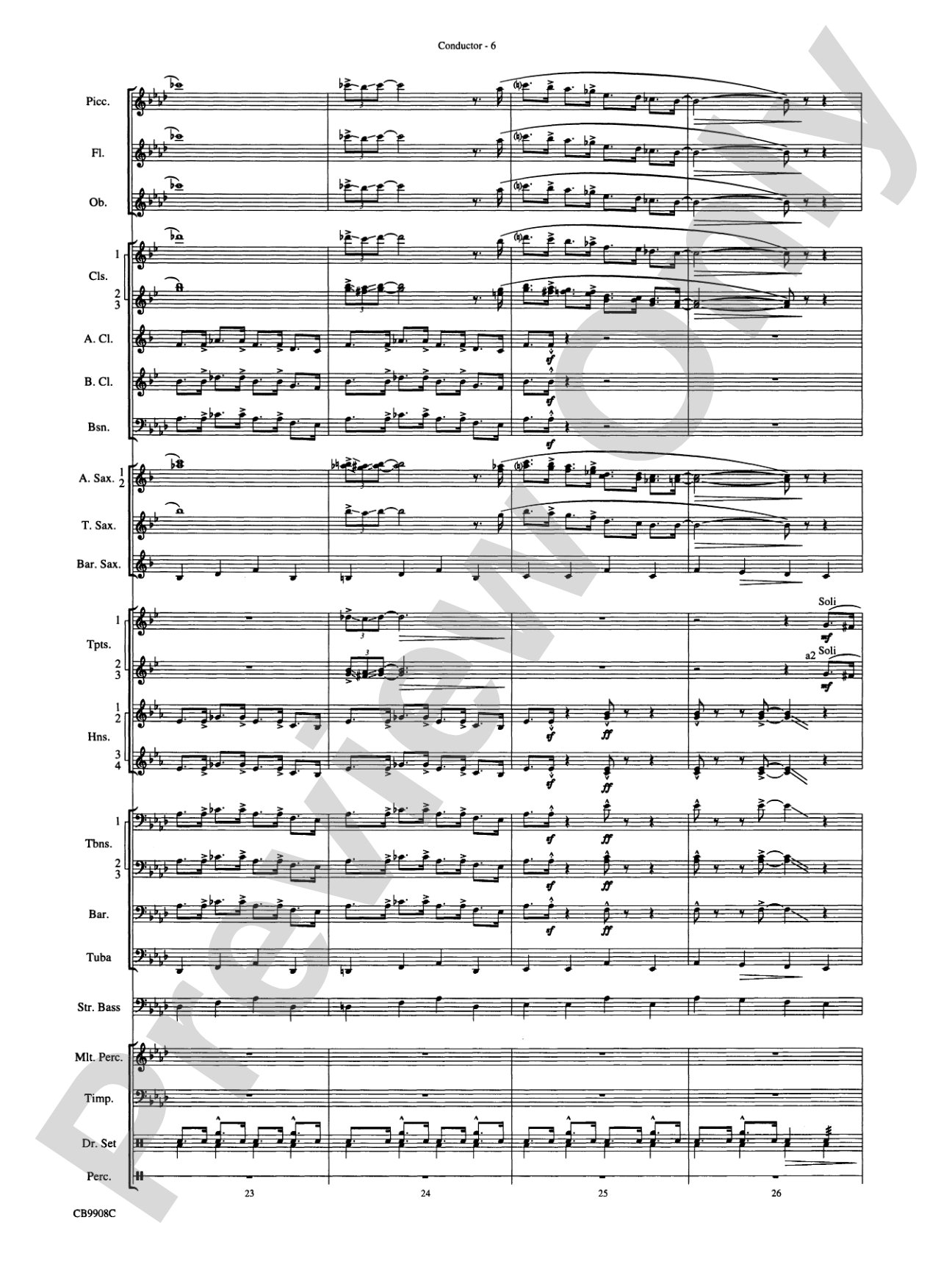
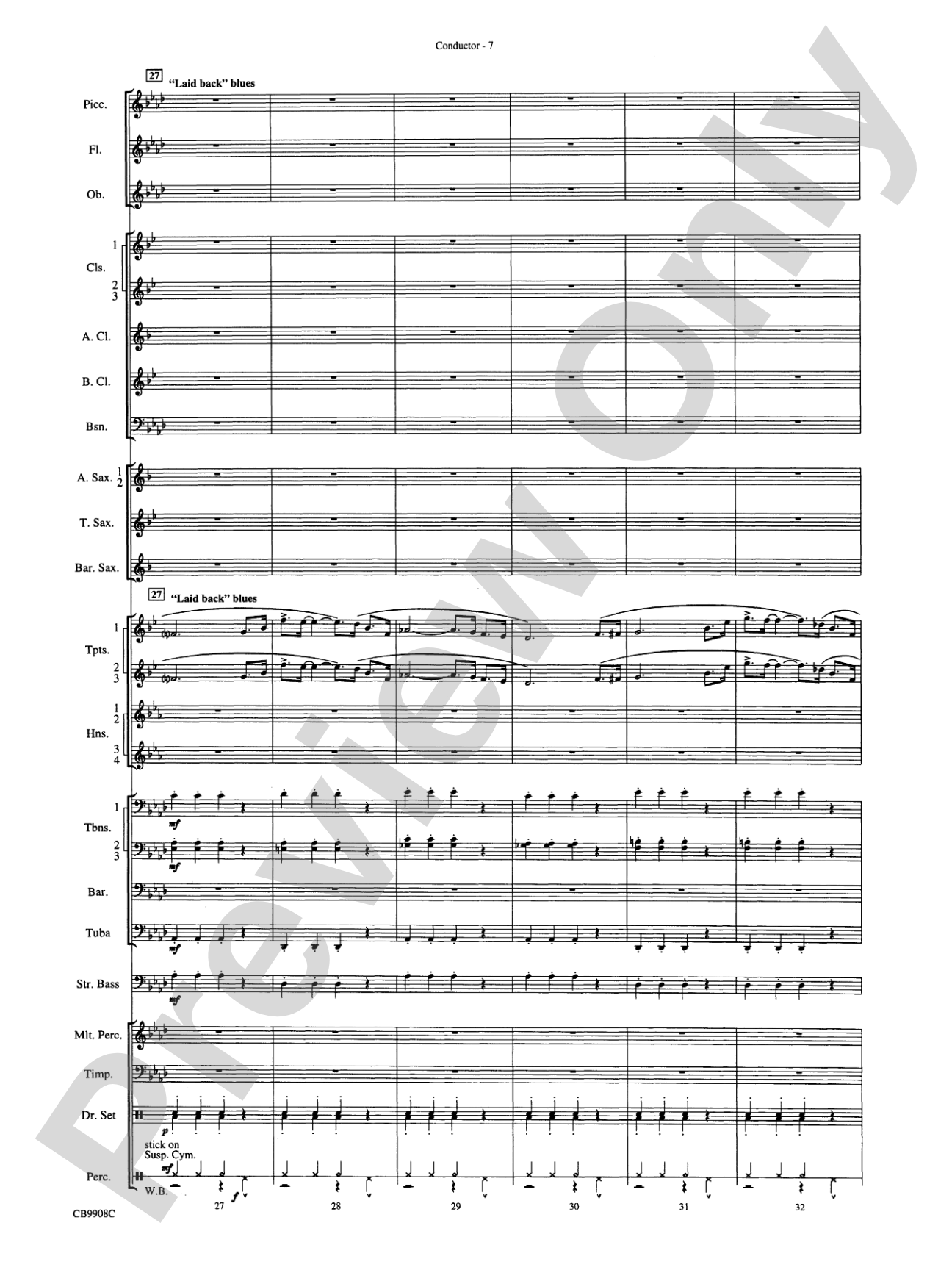
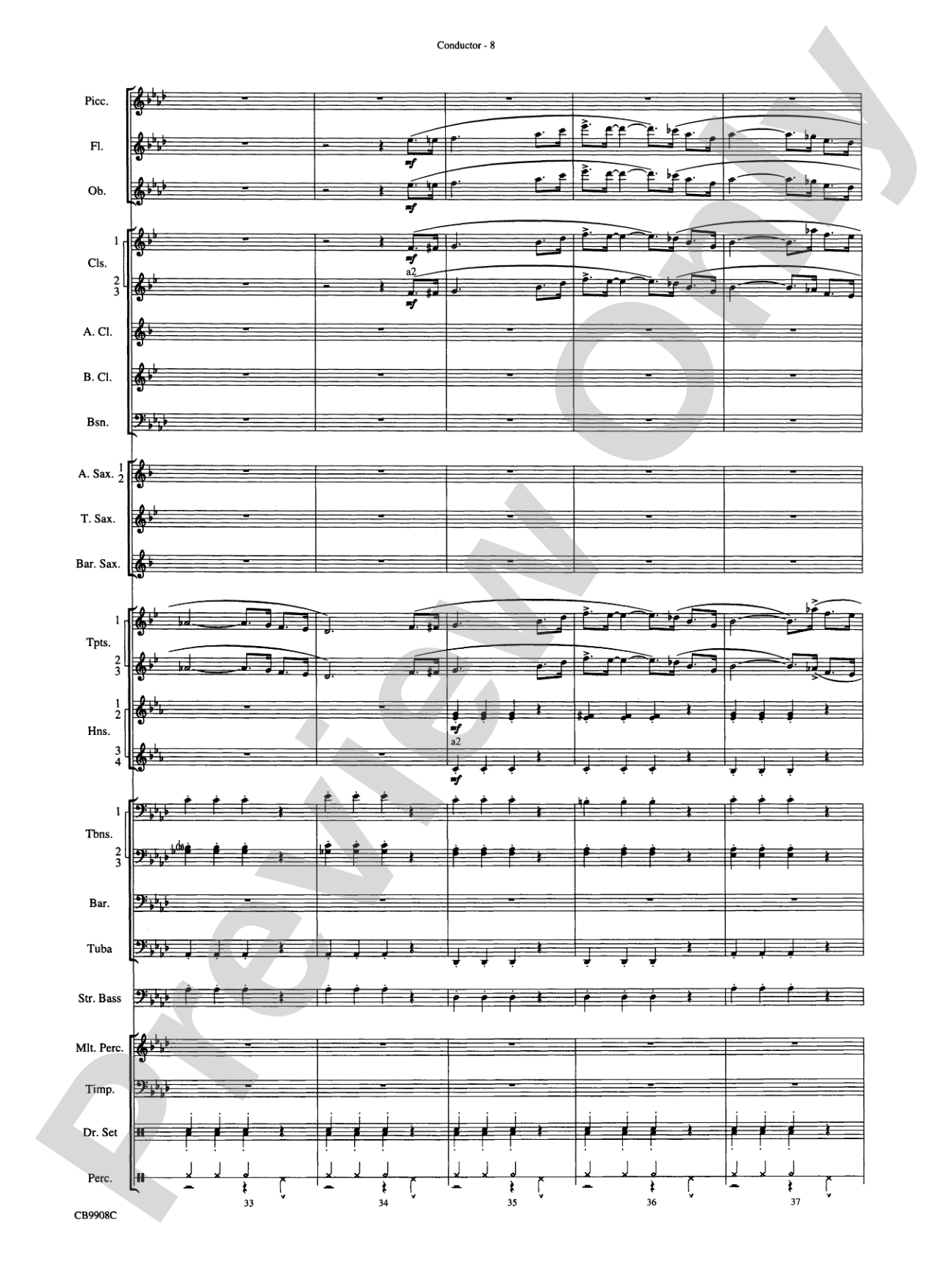
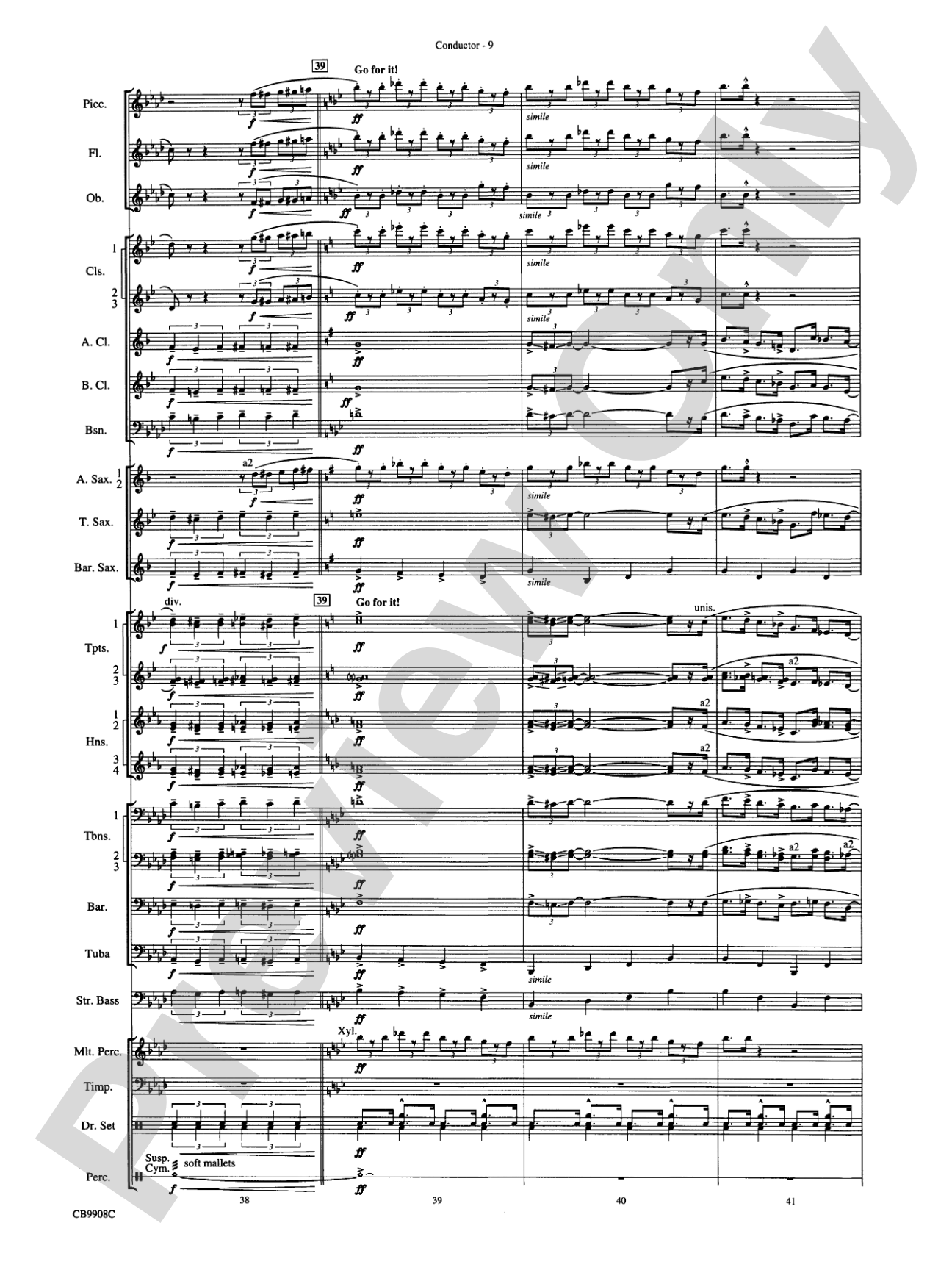
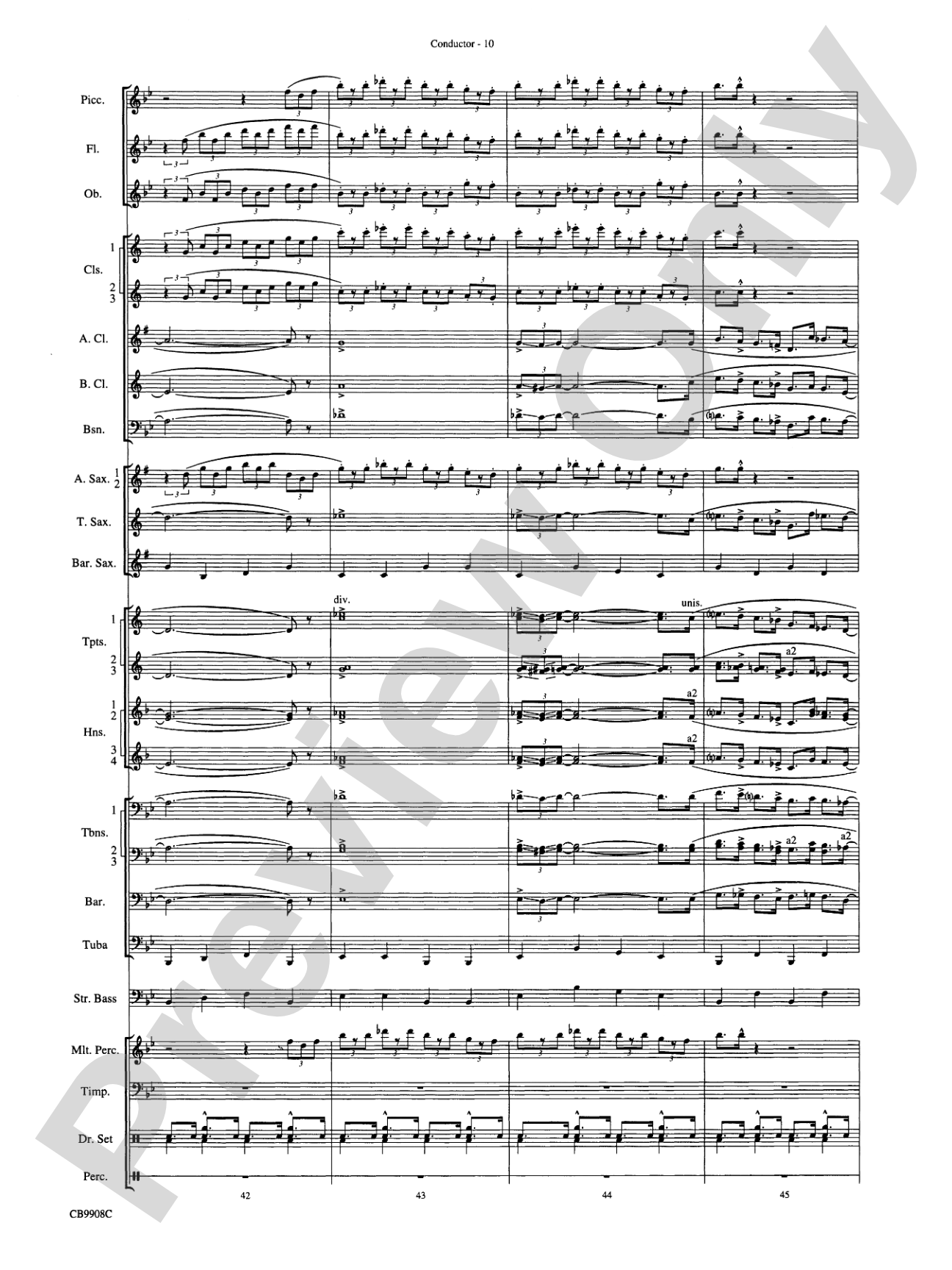
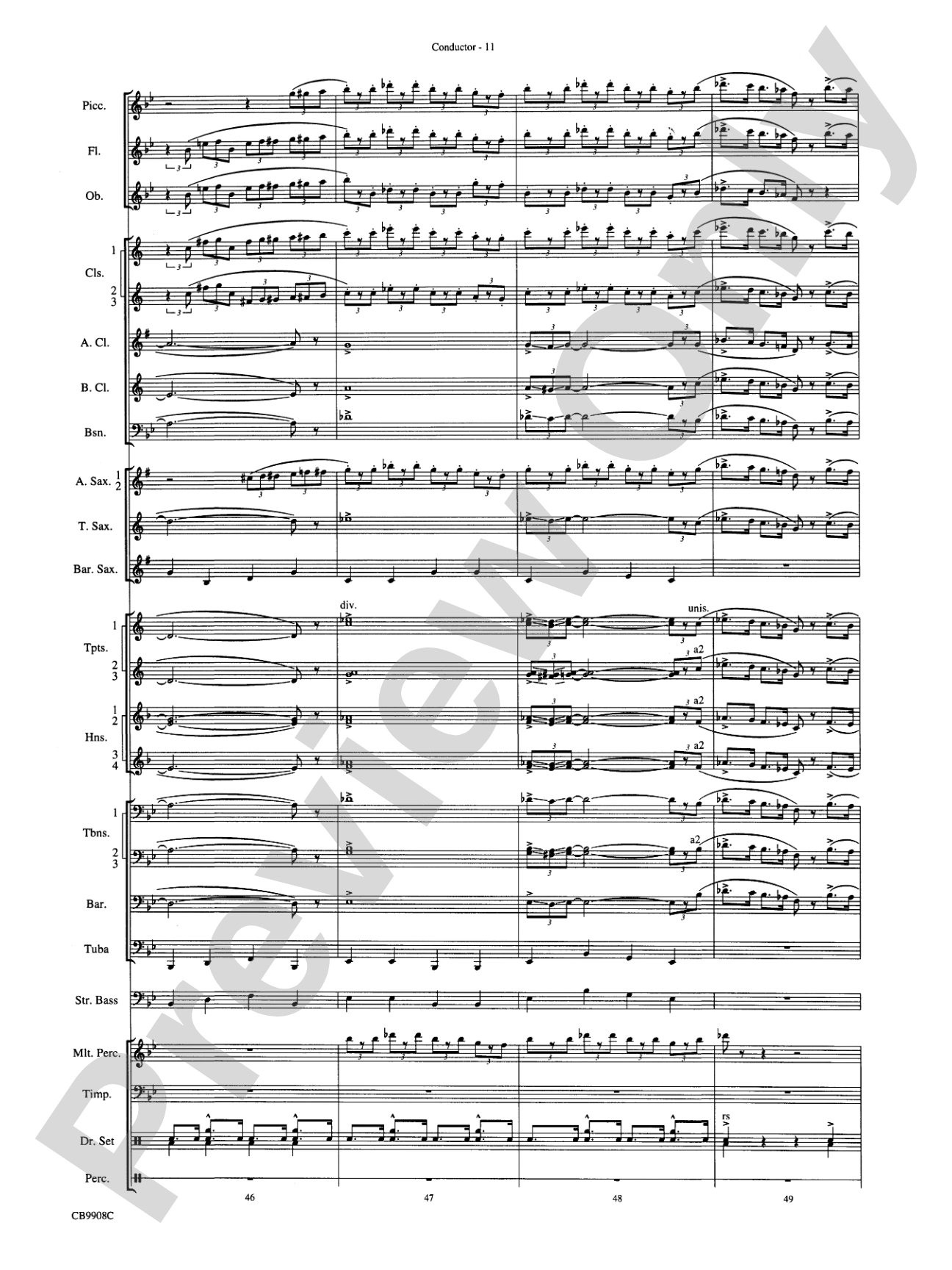
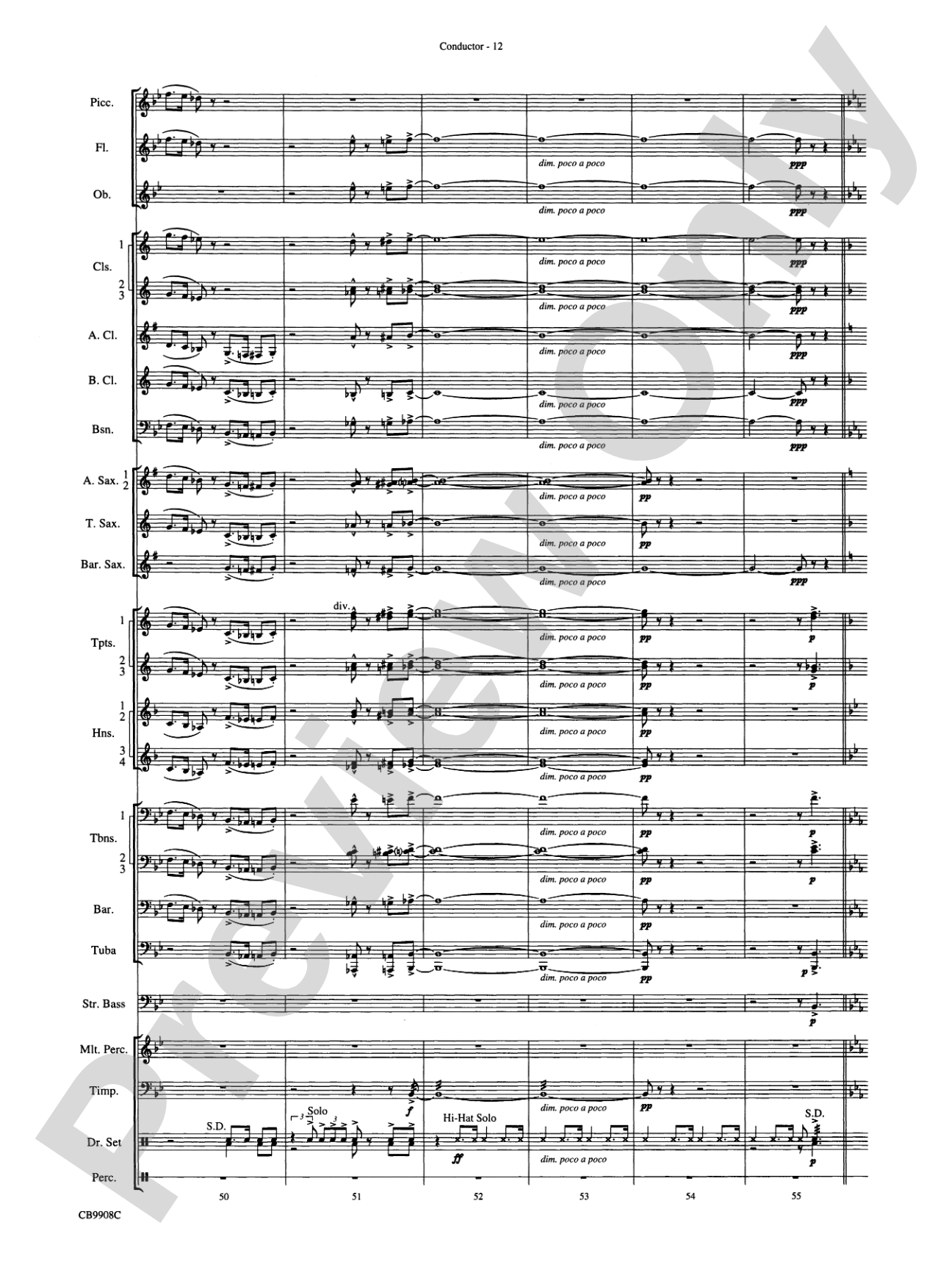
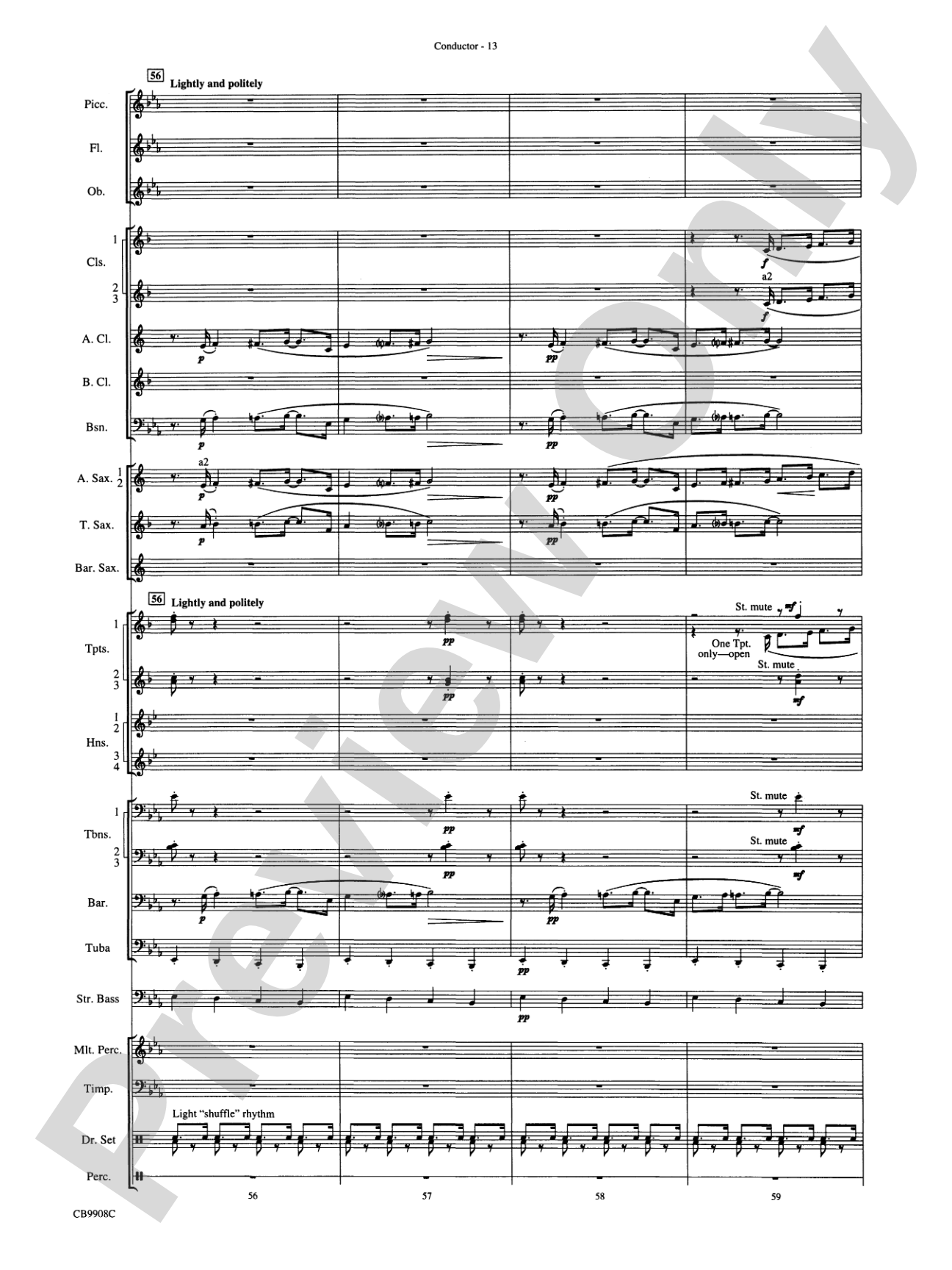
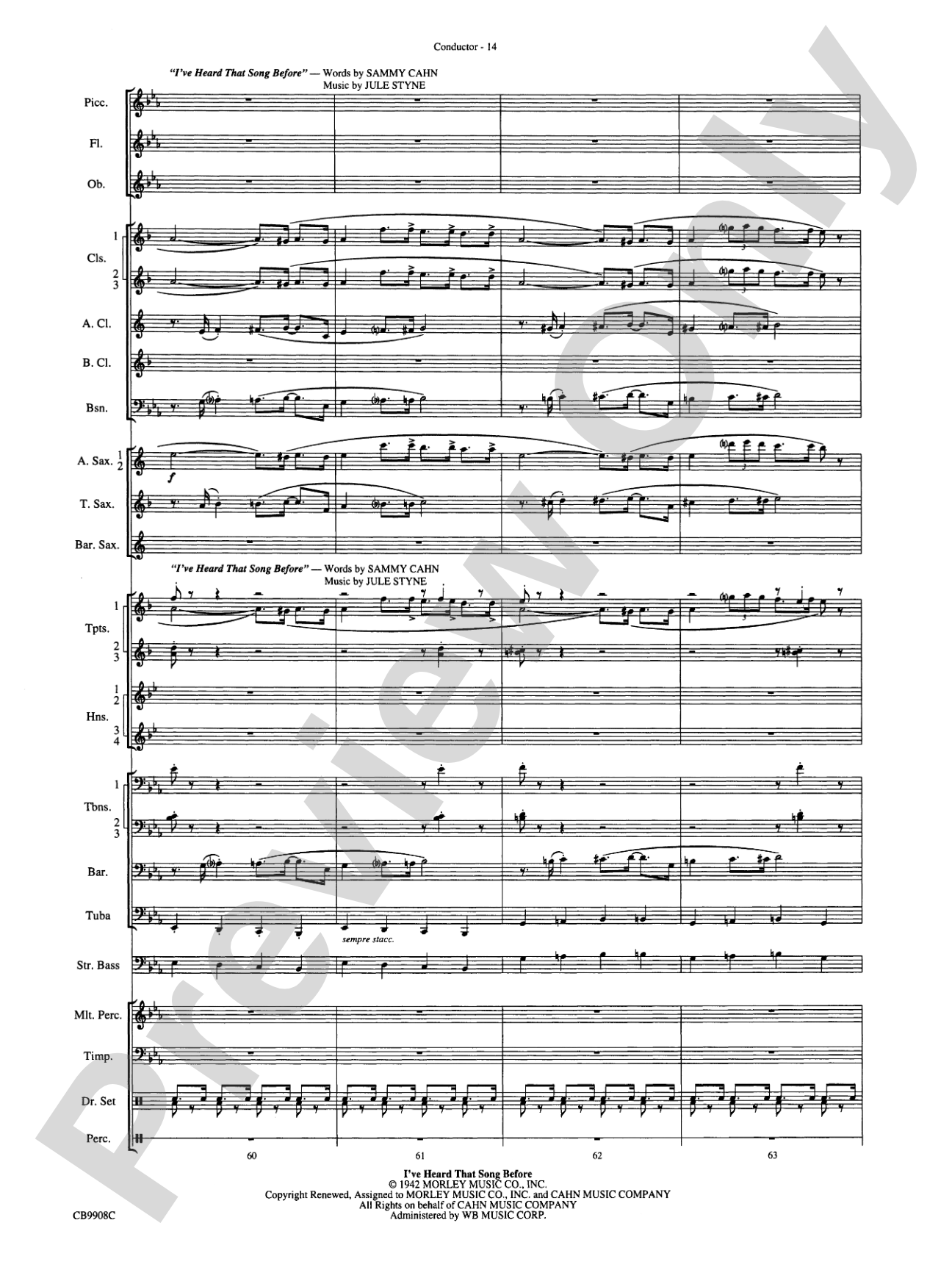
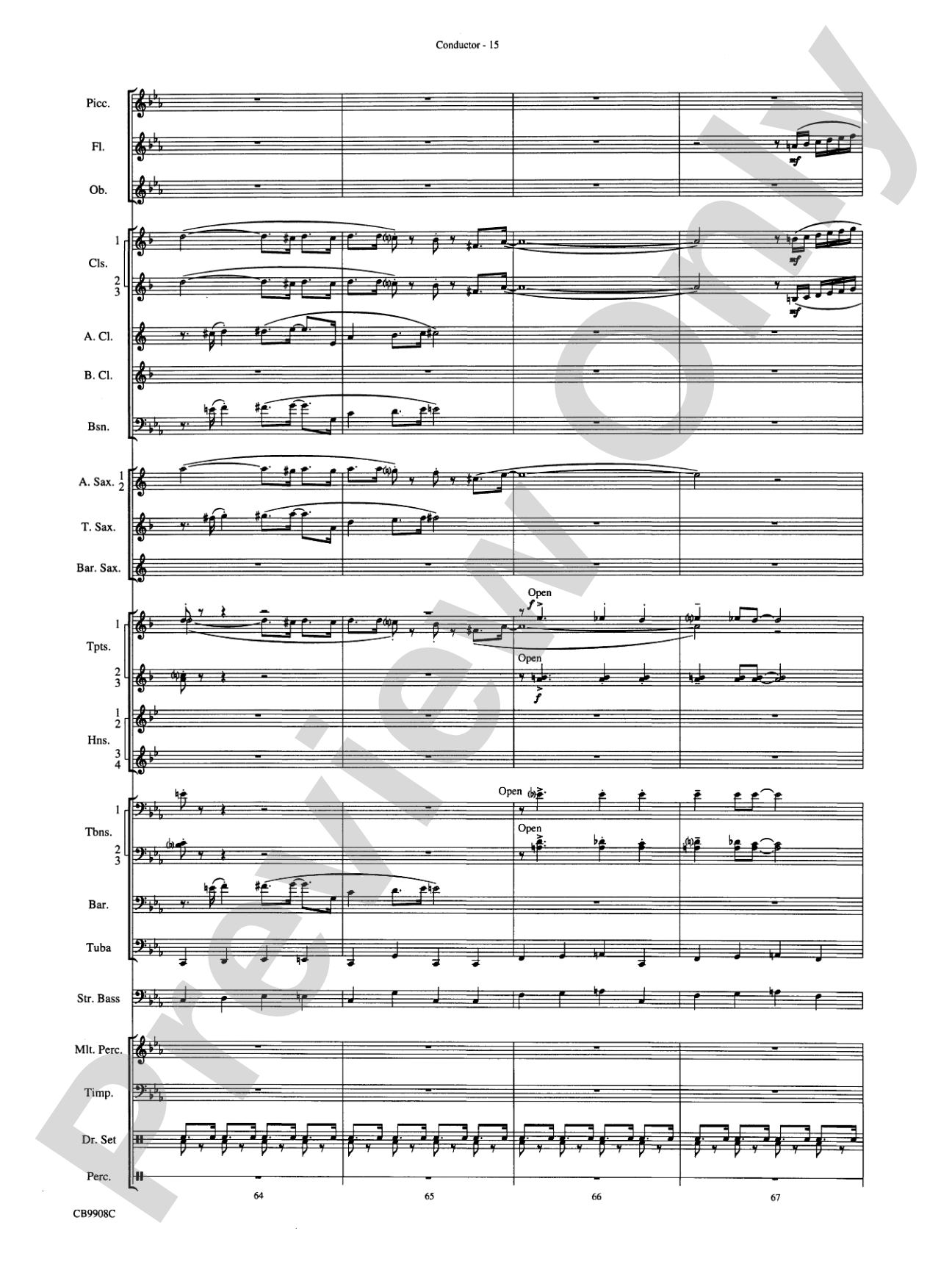
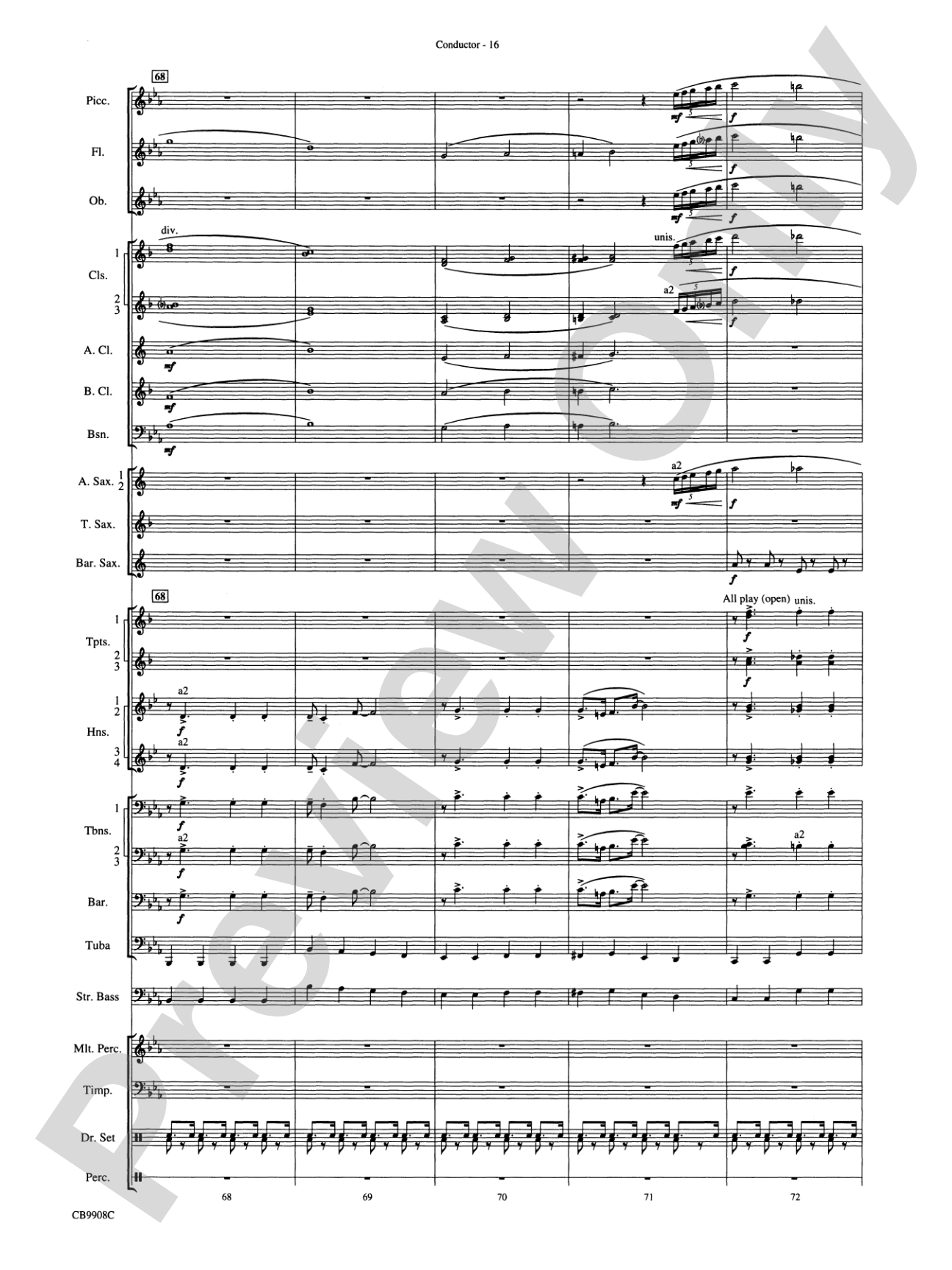
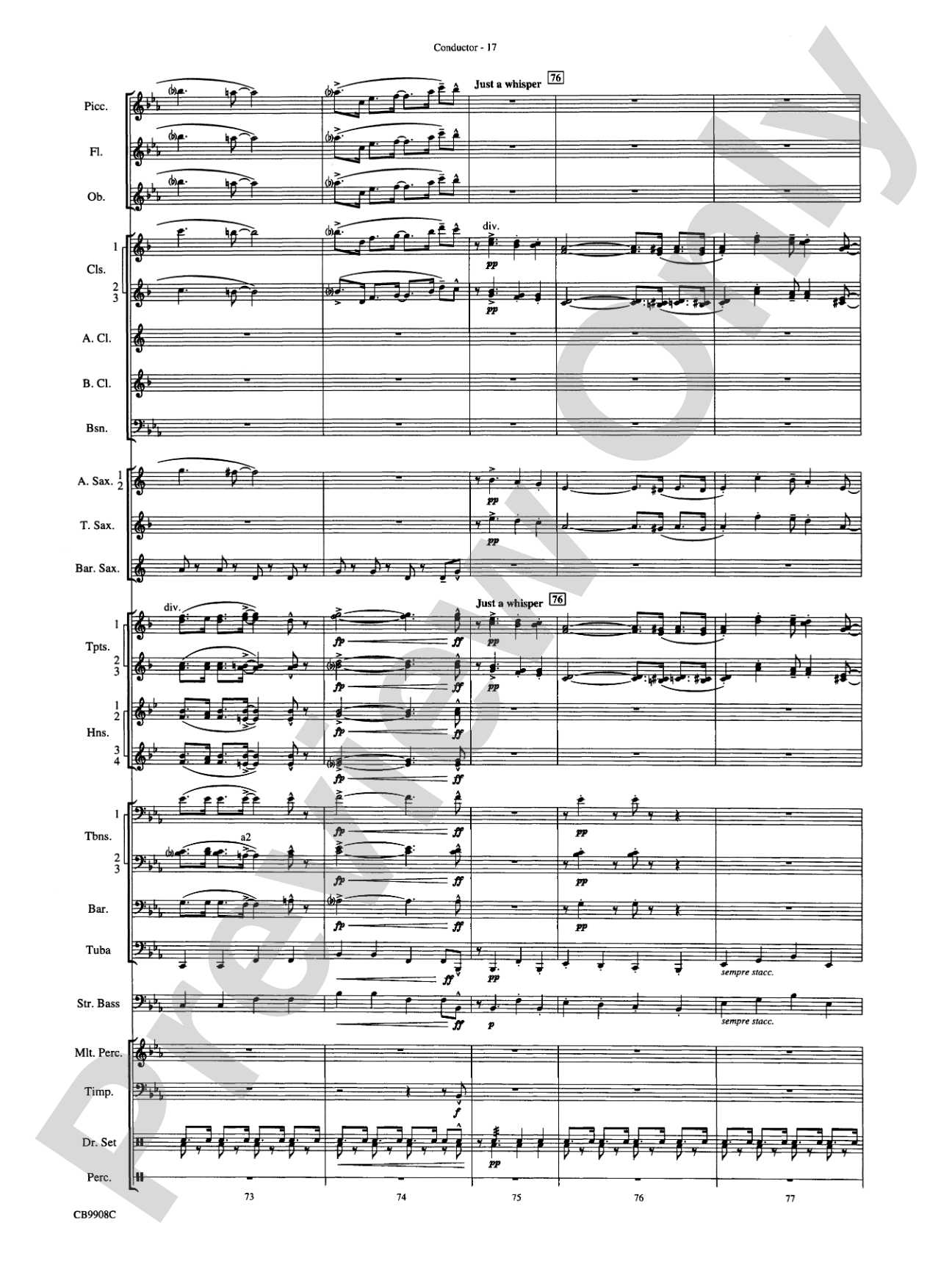
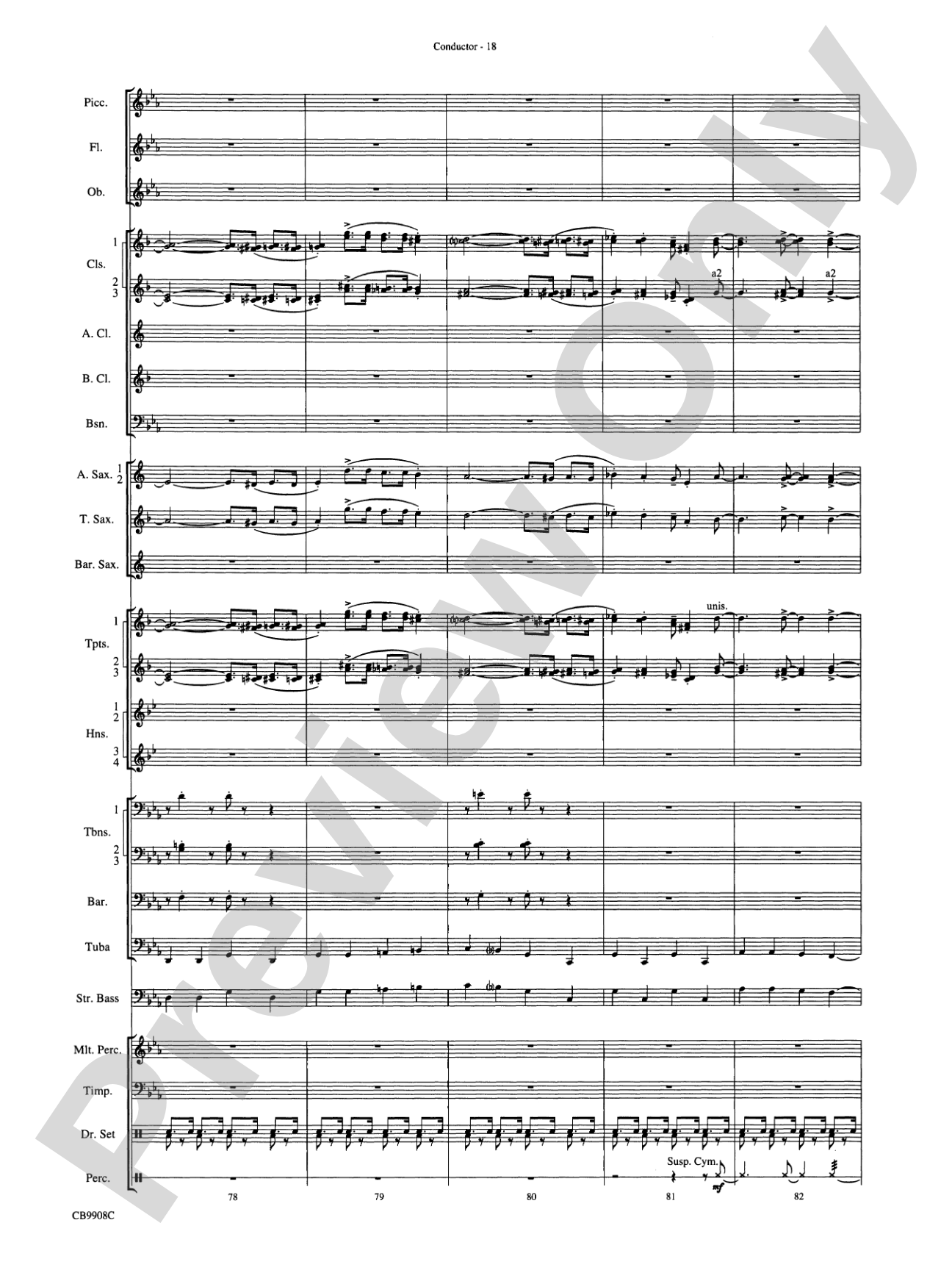
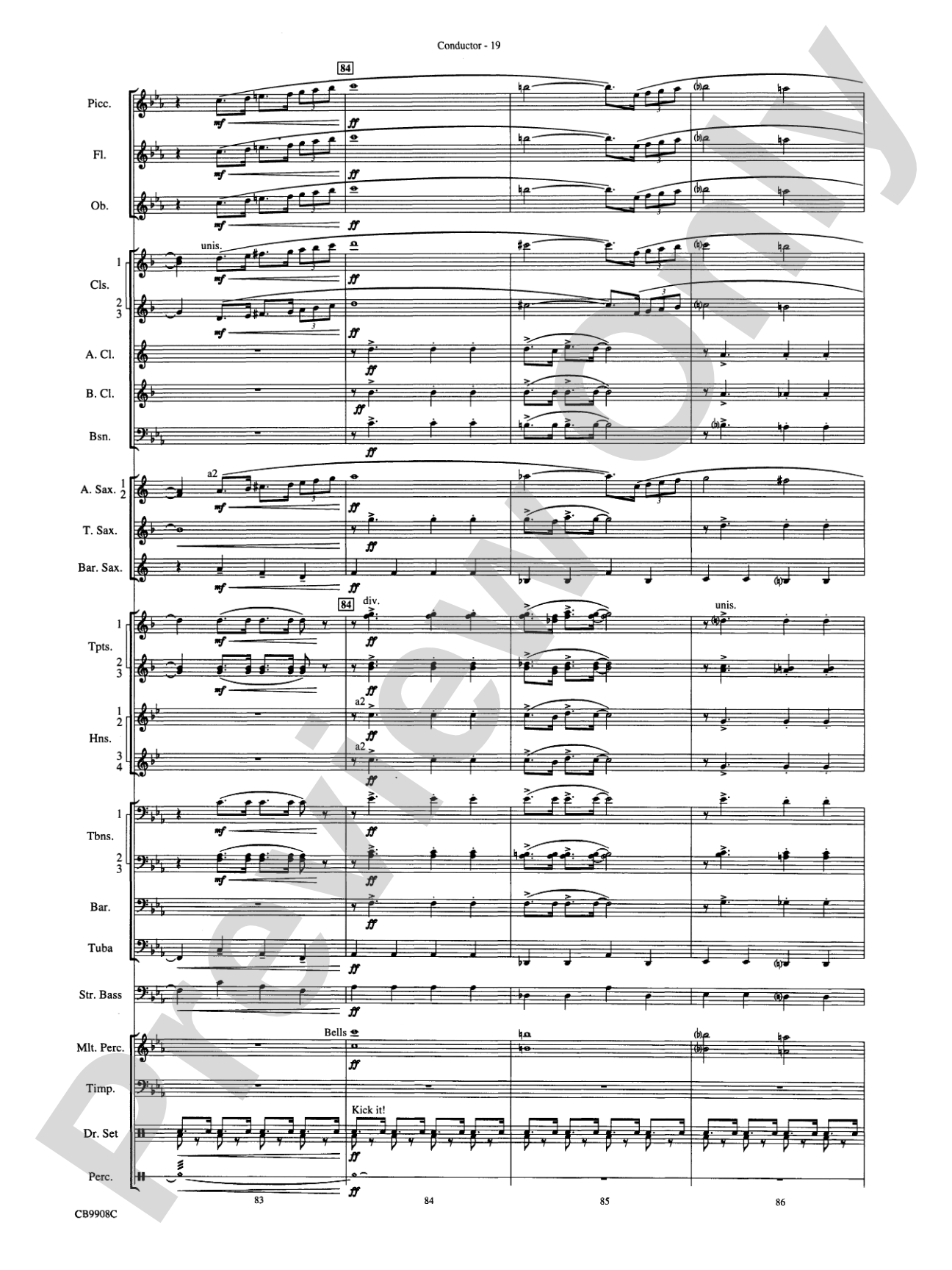
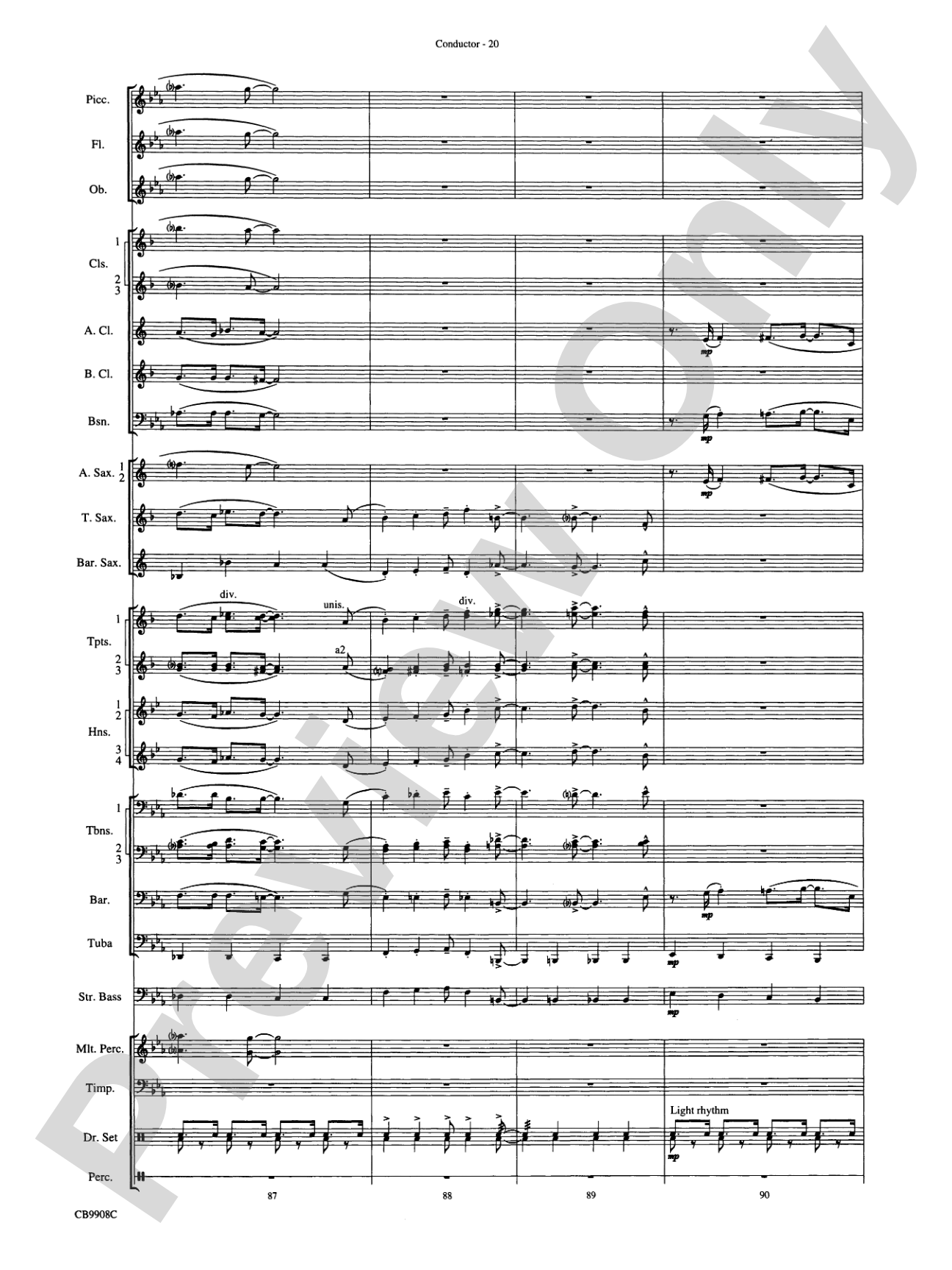
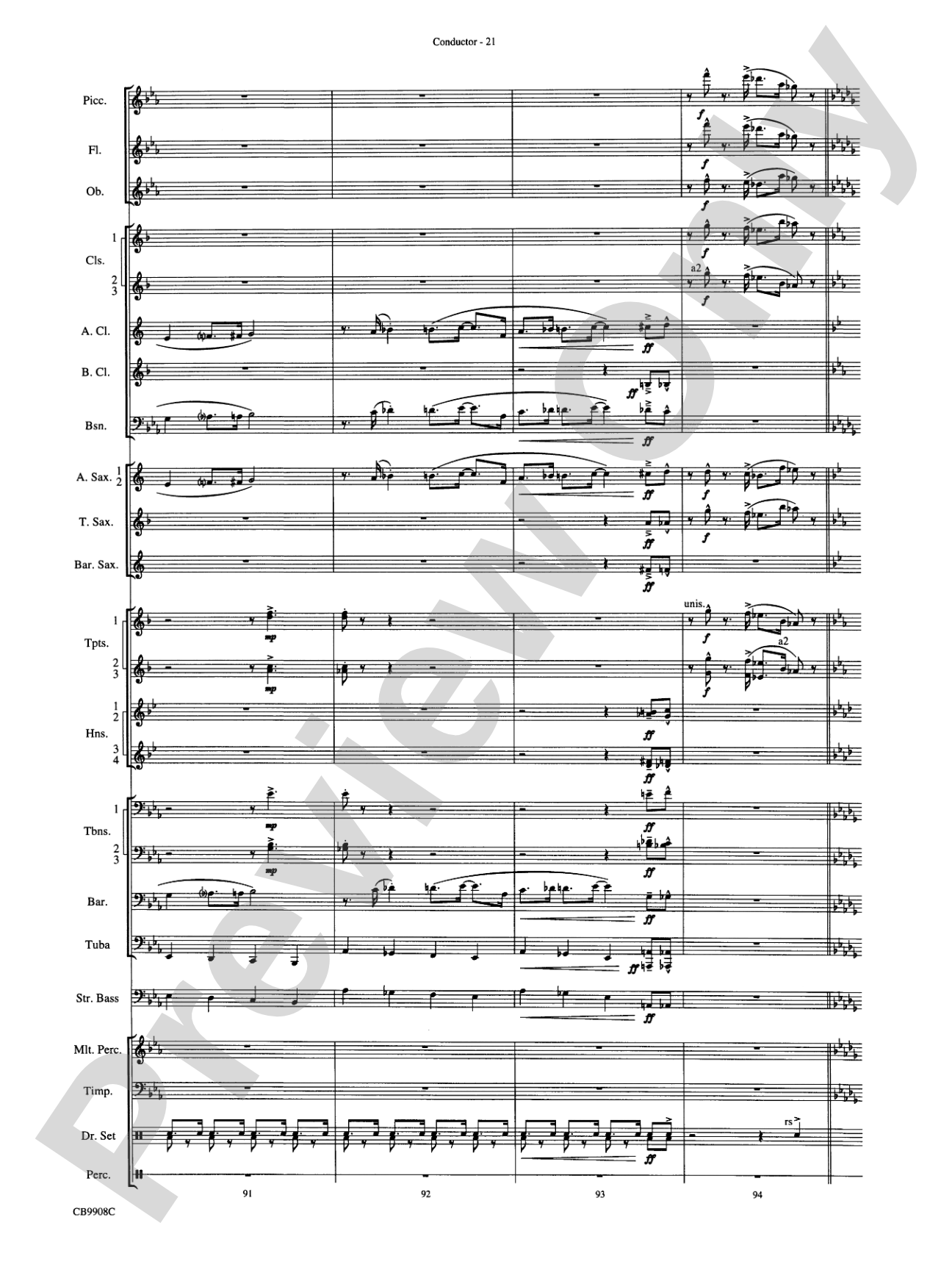
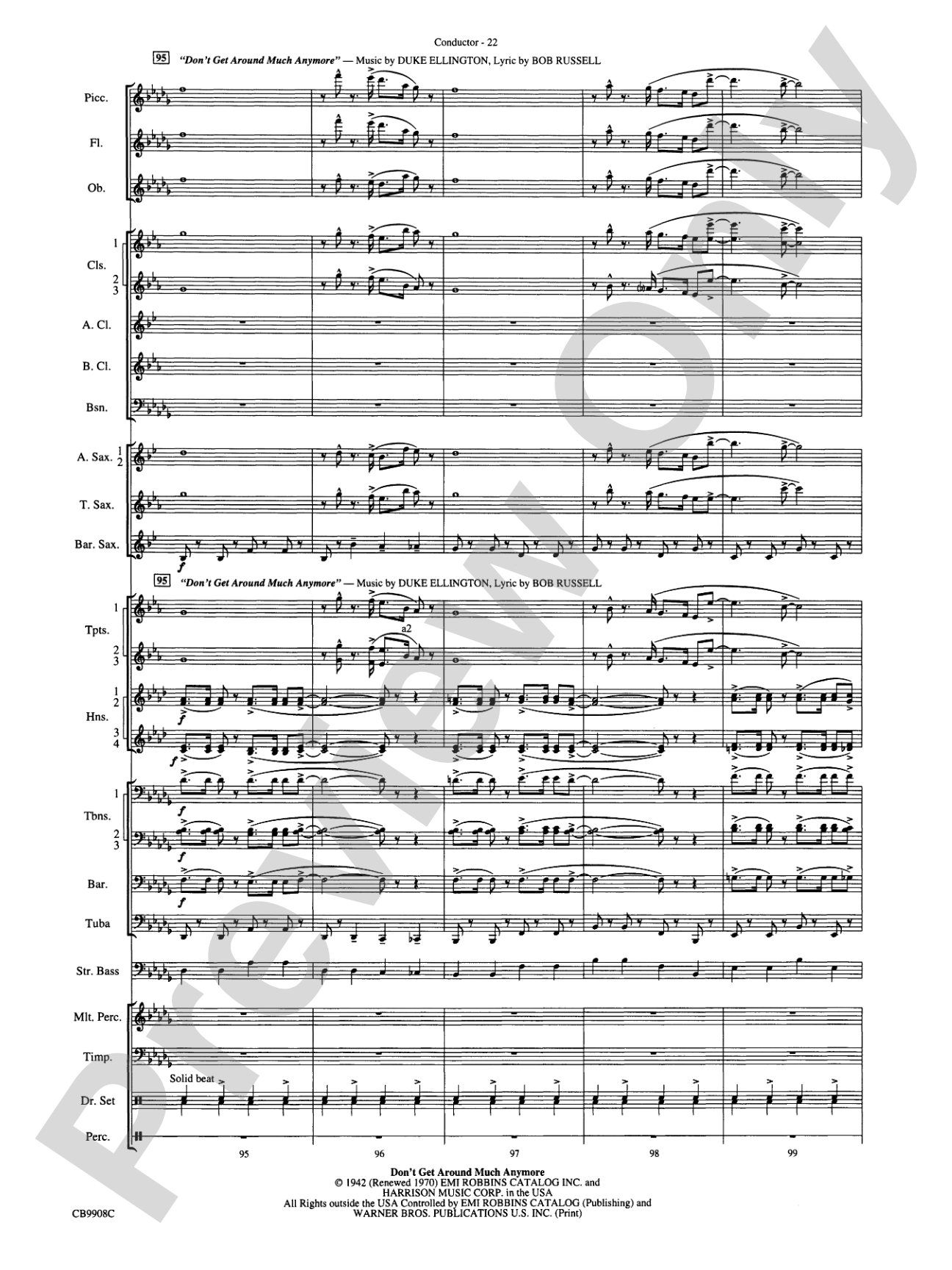
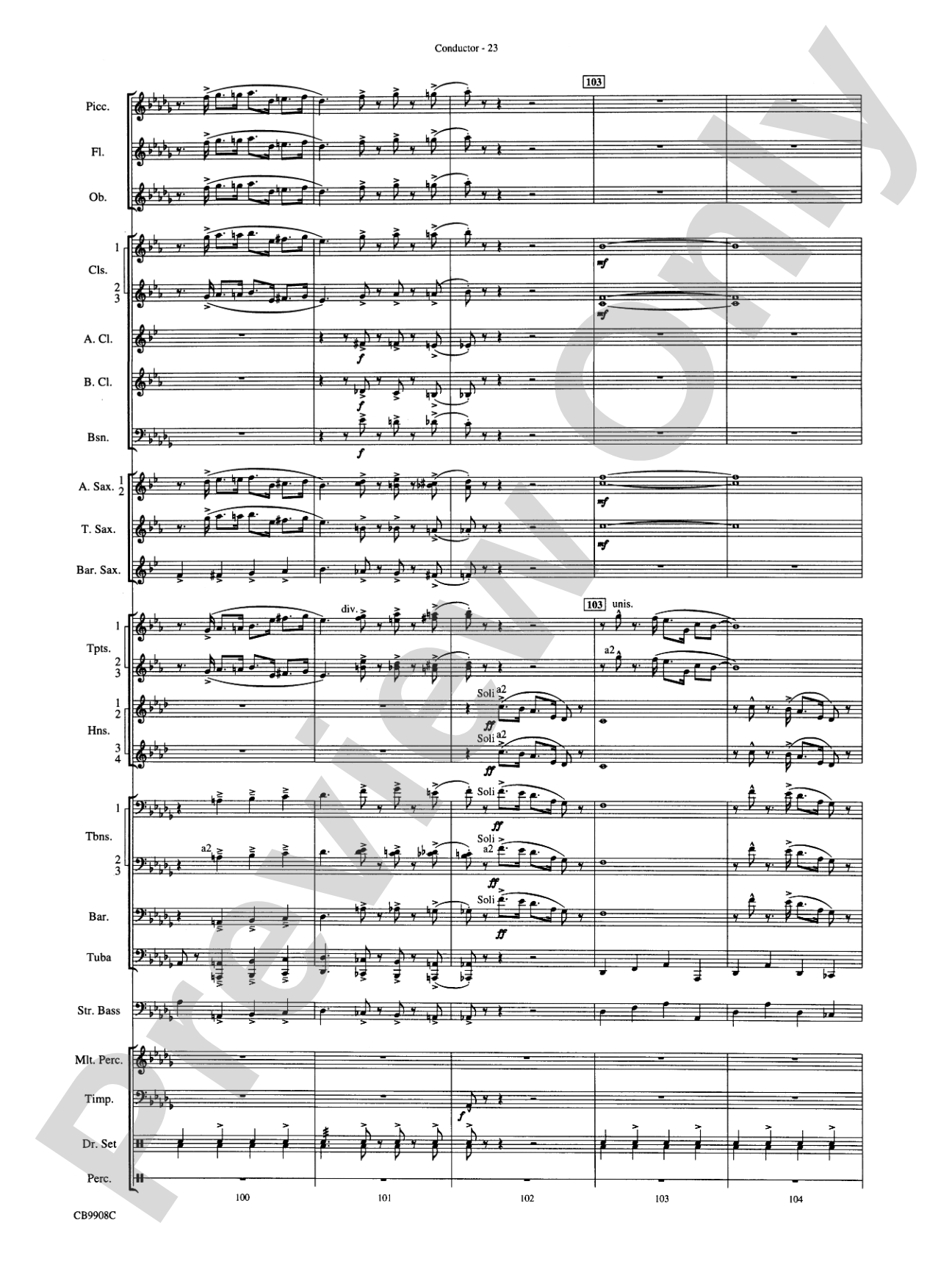
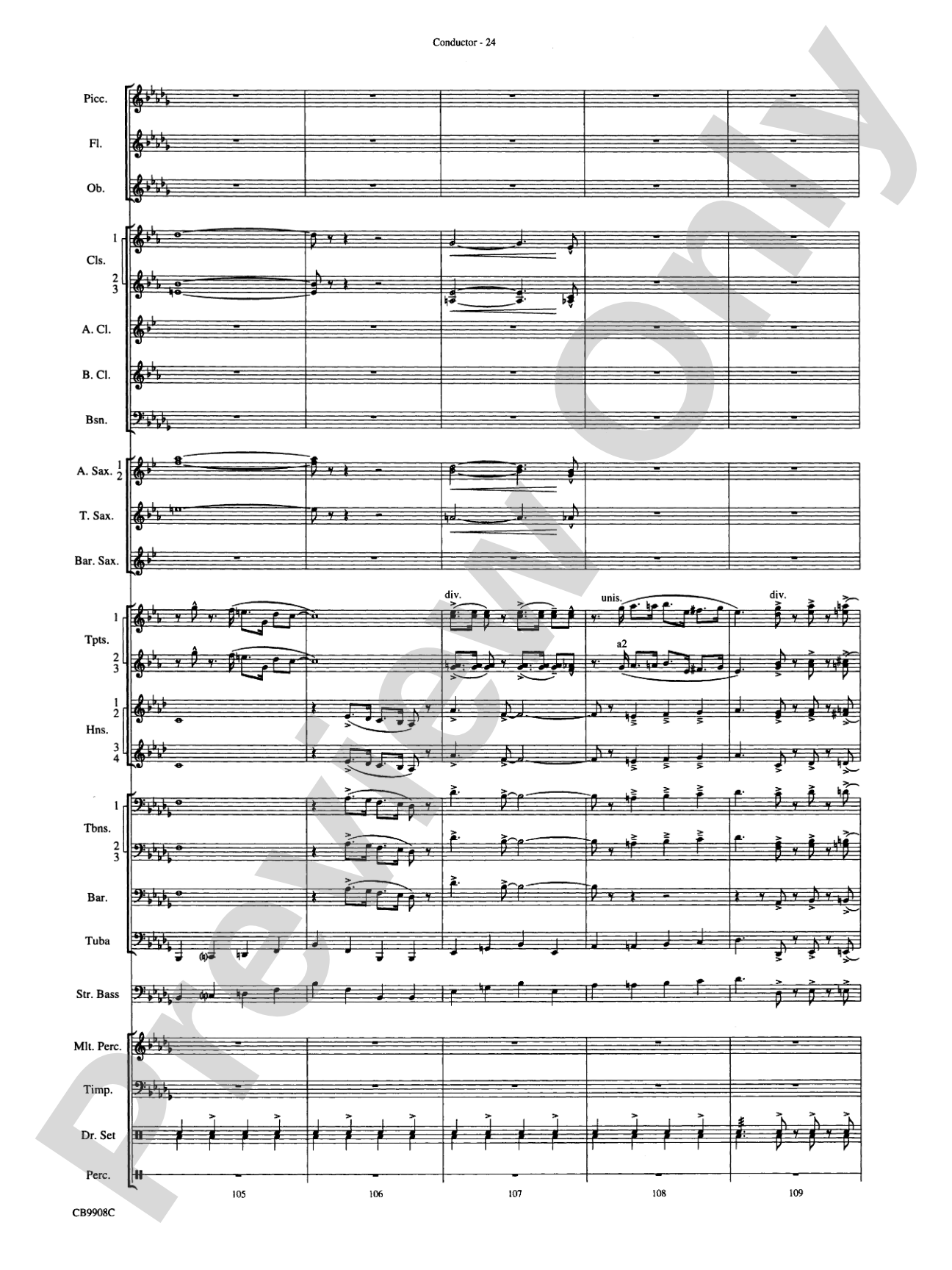
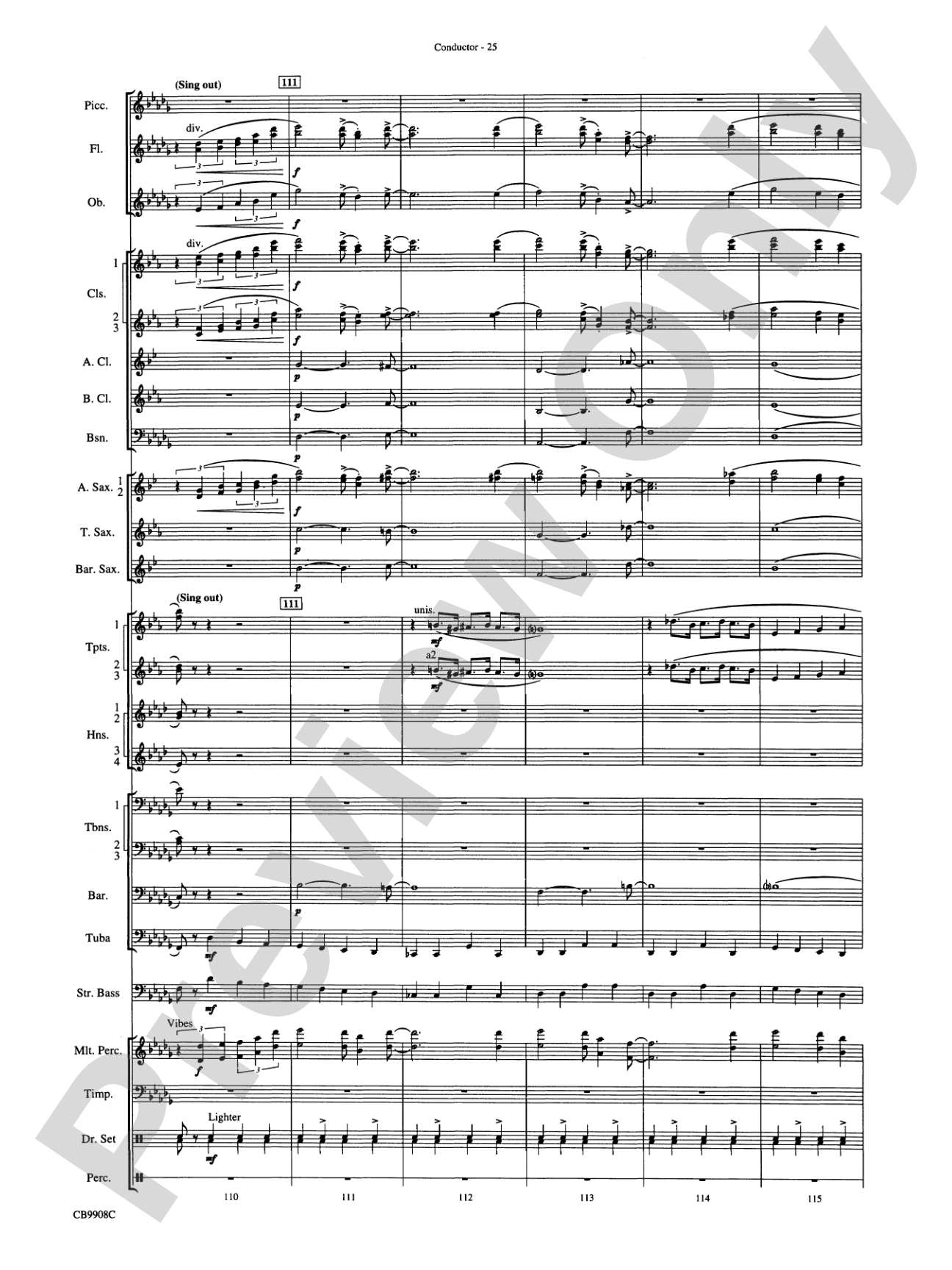
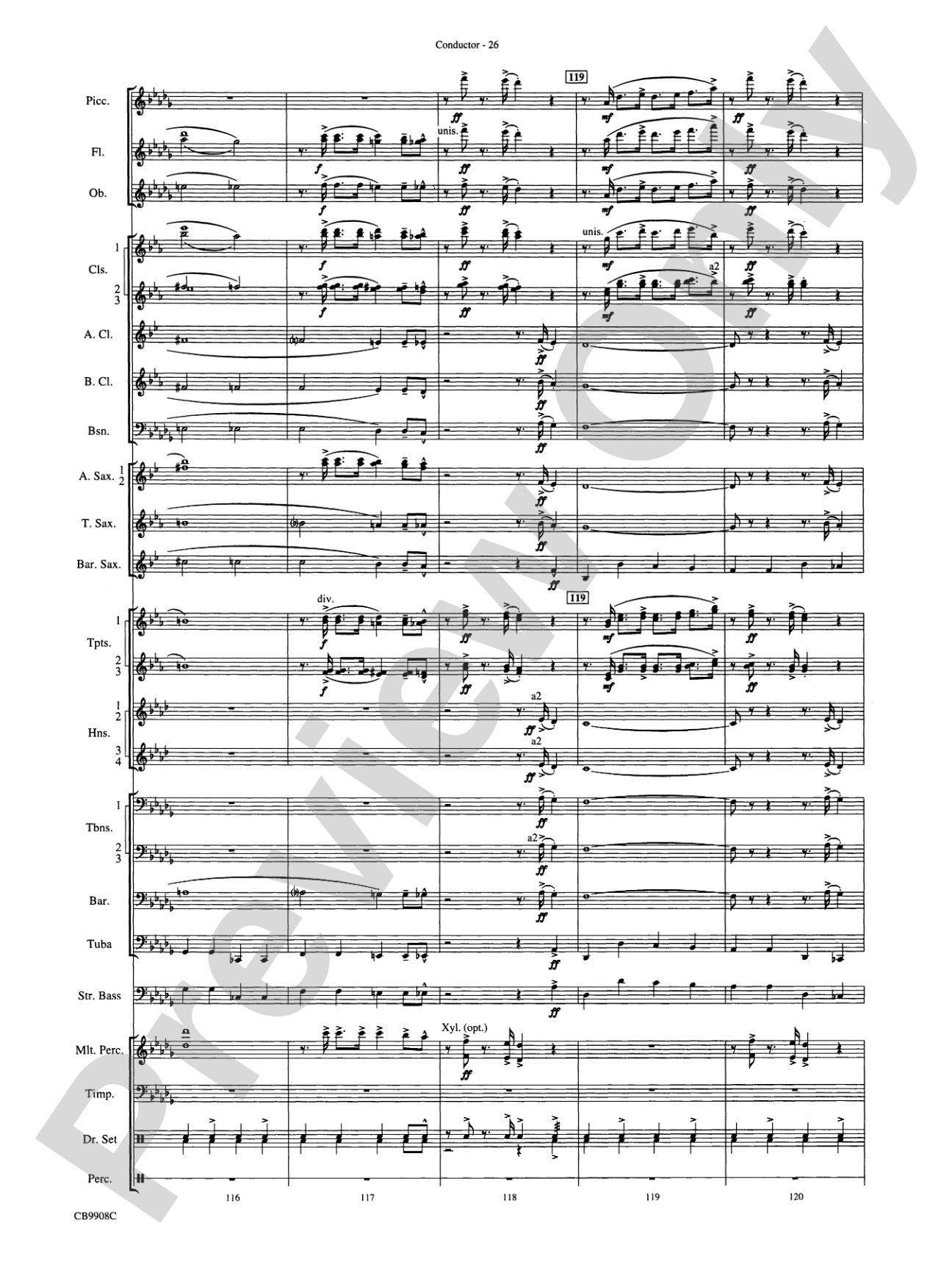
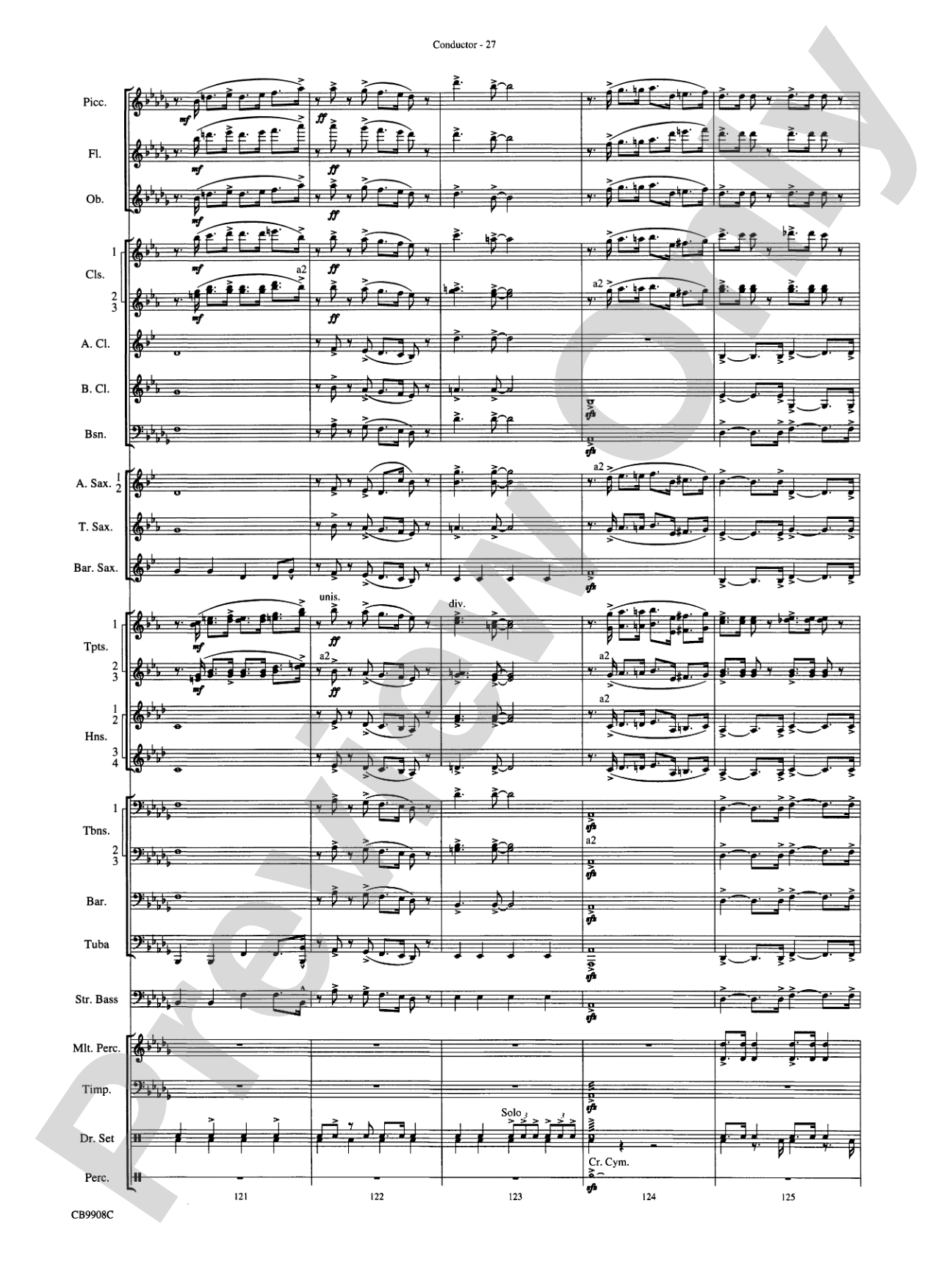
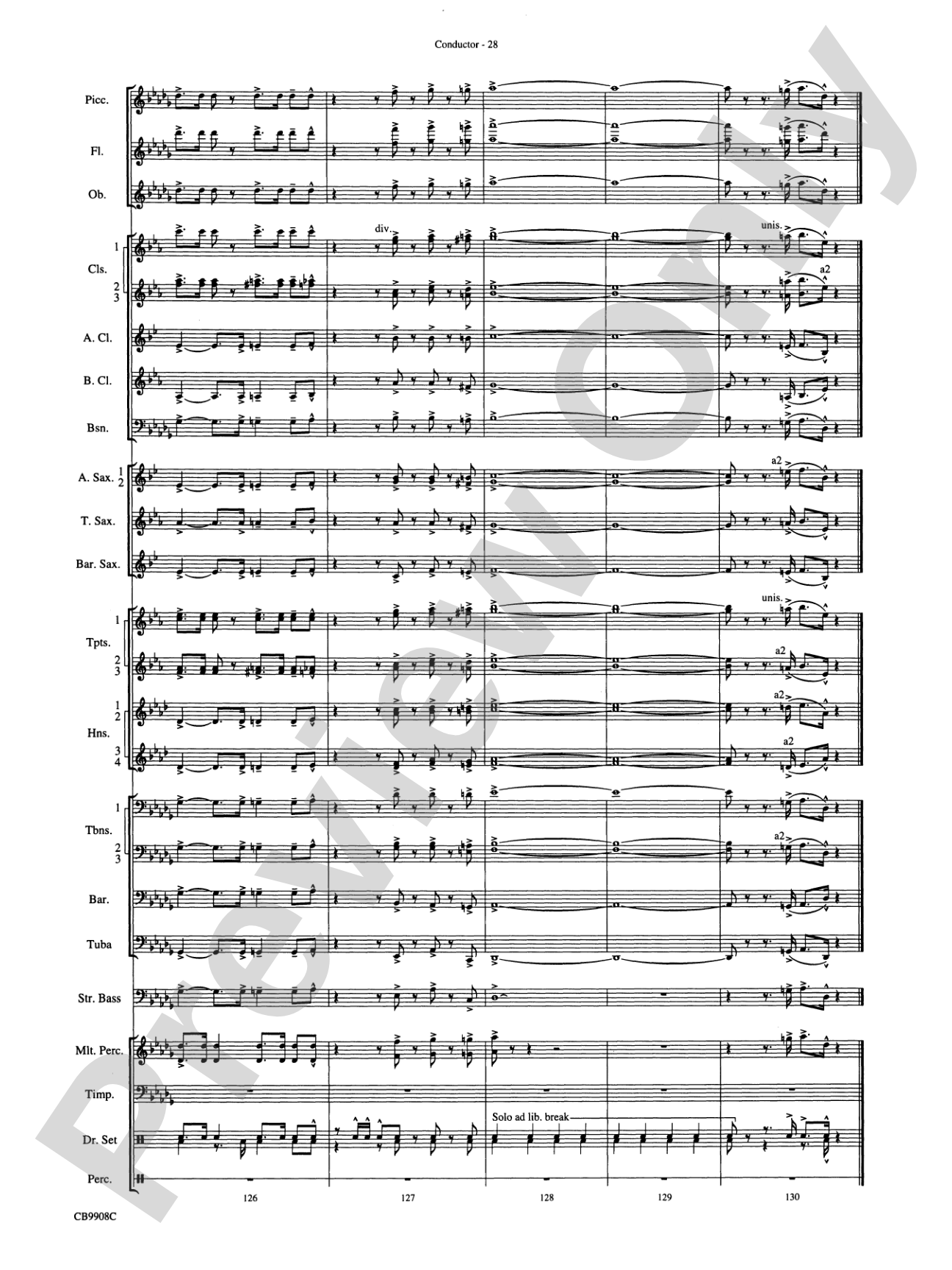
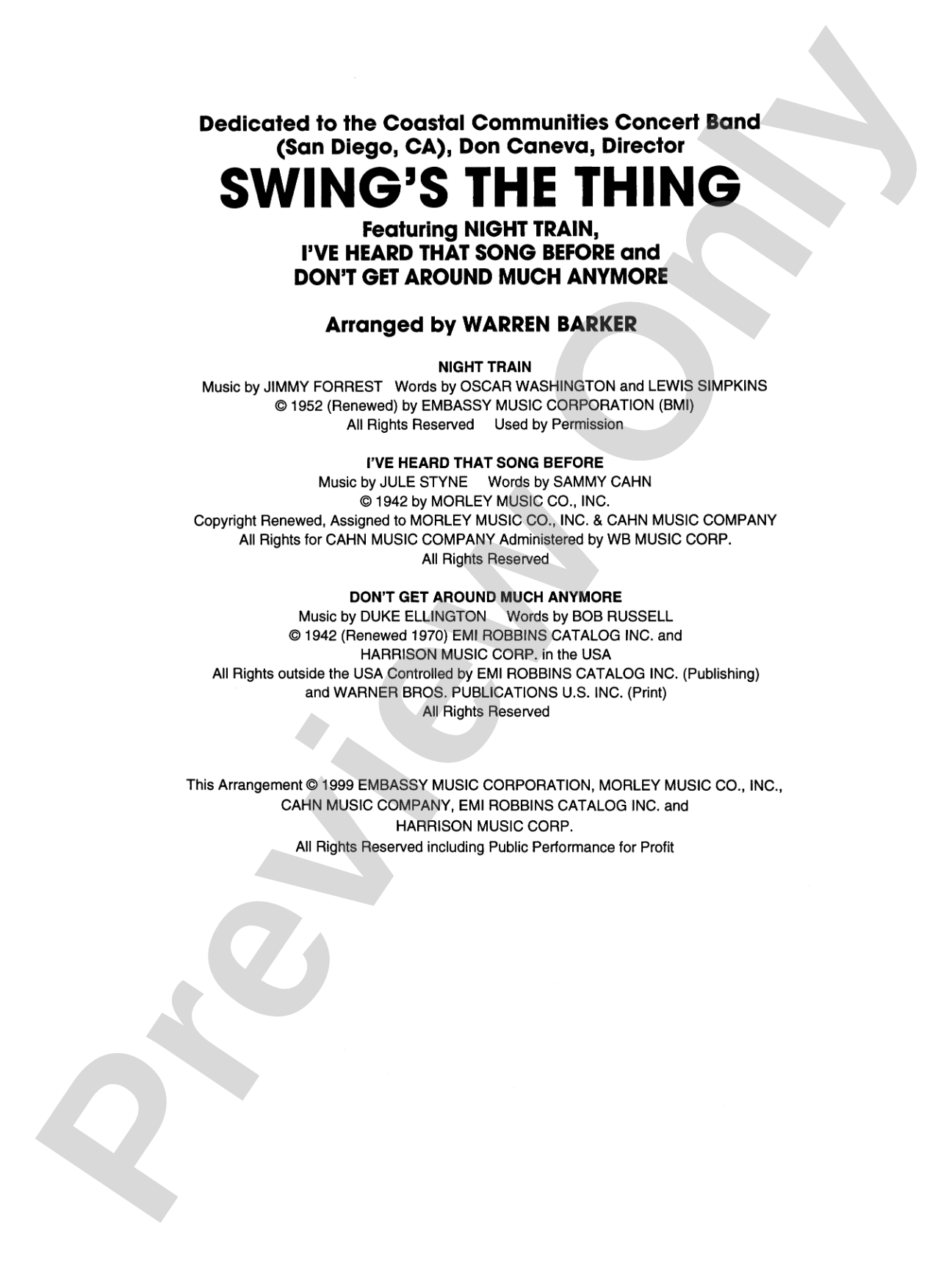


Swing's the Thing: Concert Band Conductor Score & Parts
Featuring: Night Train / I've Heard That Song Before / Don't Get Around Much Anymore
Arr. Warren Barker
Grade: 4 (Medium)
Item: 00-PK-0006842

$87.00
Pickup currently not available
Buy Extra Parts (Digital PDF Download)
Parts Added to Cart!
Description
Swing is back . . . with a vengeance! Get off your couch, lose that remote, and get down to the club for your swing dance lessons. A new generation has rediscovered the joys of the sound their parents grew up with. The genius of Warren Barker kicks into high gear with a big, bad medley featuring "Night Train," "I've Heard That Song Before," and "Don't Get Around Much Anymore." The coolest, man! (4:11) Medium


Don't just read it, hear it, play along with it, and watch your students grow with it. In MakeMusic Cloud, Swing's the Thing: Concert Band Conductor Score & Parts comes alive with professional accompaniment, adjustable tempo, and built-in practice tools that turn solo practice into real progress.
Open in the Player
Jump straight in and assign it today.
Start Your Free Trial
Open this title and explore the full library in minutes.
Sample Audio
No sample audio found.
Sample Video
No sample videos found.
Additional Details
Series:
Pop Symphonic Band
Publisher:
Alfred Music
Page Count:
218
SKU:
00-PK-0006842
More about this title
About the Arranger: Warren Barker
Warren Barker (1923-2006) was a prolific composer and arranger whose work became a cornerstone of the American concert band and film scoring traditions. His gift for orchestration and his ability to craft accessible yet sophisticated arrangements made him an essential figure in expanding the concert band repertoire beyond classical works into popular idioms and jazz-influenced styles. Barker's output included hundreds of compositions and arrangements for band, along with scores for television and film, and his work remains a go-to resource for programs seeking to engage audiences with music that bridges classical form and popular appeal.
Why we love this
Barker's command of swing style is on full display here: he knows exactly how to voice a big band sound for concert band and when to let the rhythm section drive the groove. The medley structure gives you three memorable tunes without feeling scattered, and the 4:11 runtime fits perfectly into a concert flow without dominating a single block. This is the kind of arrangement that reminds audiences why swing still swings.
What to expect
Dancing. The kind of irresistible motion that makes audiences lean forward in their seats and tap their feet without thinking. Barker layers clever harmonies and orchestral color over a propulsive rhythm, creating something that feels both nostalgic and utterly current. It's exhilarating without being exhausting.
Who it's for
Band directors at the middle school and high school level looking to inject some genuine swing energy into their concert programming. This work appeals equally to students who thrive in jazz contexts and those who may be encountering swing idioms in a concert band setting for the first time.
How to get the most out of it
- Establish a solid swing feel from the first rehearsal by having the rhythm section lock the pulse; this isn't straight jazz, but it also isn't classical precision. The groove depends on that relaxed, behind-the-beat pocket.
- Balance the solo voices against the background figures. Barker writes engaging melody lines that need to sing, so resist the urge to let the fuller sections overshadow the featured parts.
- Shape the transitions between the three tunes so they feel like natural conversations rather than awkward splices. A slight lift or breath mark can signal the shift without losing momentum.
- Keep the articulation light and consistent in the rhythm section parts. Swing articulation is subtle; overstated tonguing will kill the style faster than anything else.
How to use it
Program this as a centerpiece for a pops concert or as a high-energy change of pace within a more traditional concert. The familiarity of the tunes makes it an excellent audience connector, and its medium difficulty allows strong middle school bands and developing high school groups to deliver a satisfying performance. It also pairs well with other swing or jazz-influenced works if you're building a themed program.
Skills your students will build
- Interpreting swing articulation and rhythmic feel in a concert band context
- Balancing solo melodic lines against ensemble background figures
- Managing tempo and rhythmic precision within a groove-based style
- Responding to section leadership and ensemble cues across multiple musical ideas
- Reading and executing idiomatic writing for jazz-influenced concert band literature