

Swing on a String: Score
By Martin Norgaard
Grade: 3
Item: 98-DST6071S
$5.00
Pickup currently not available
Description
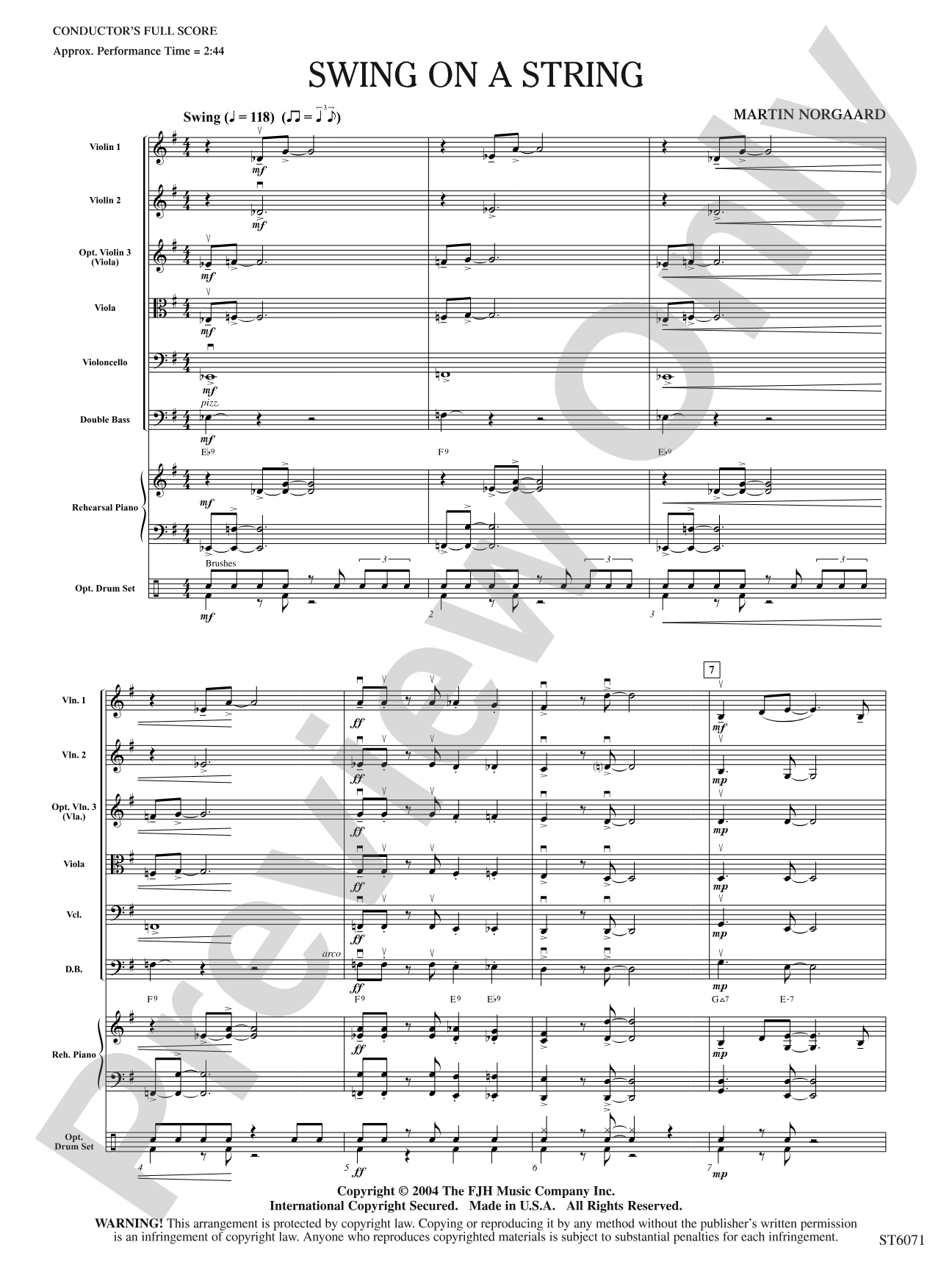
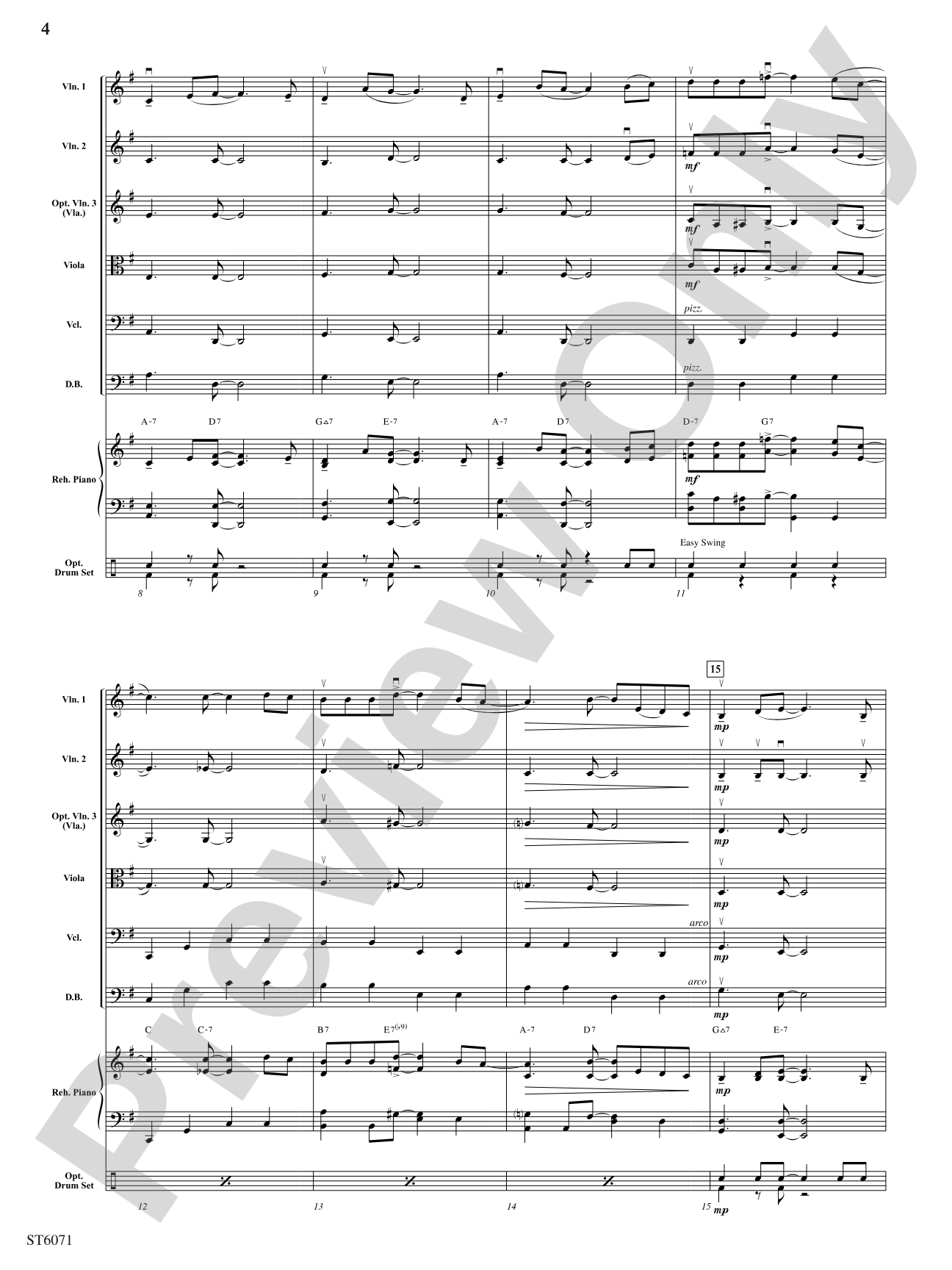
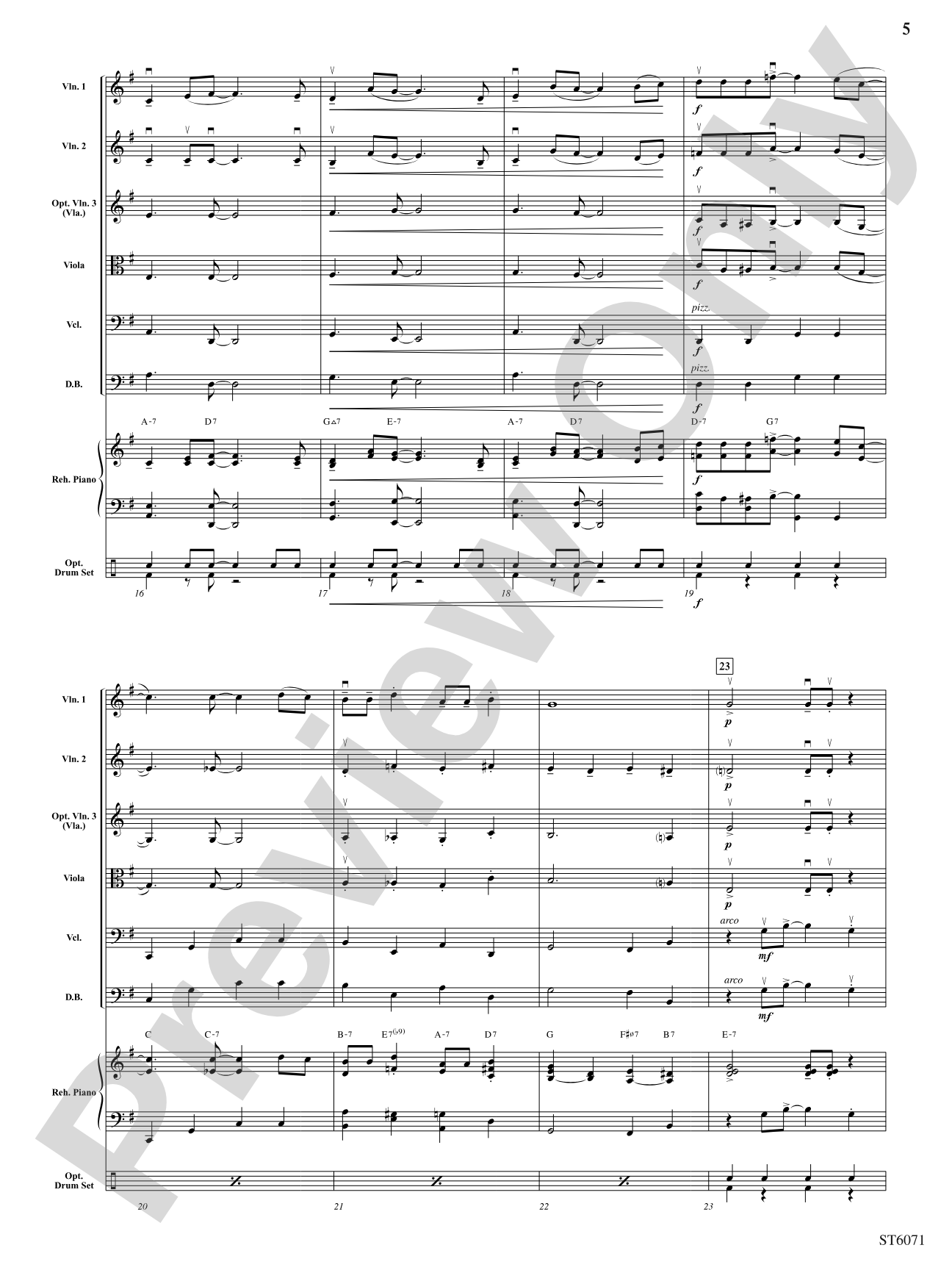
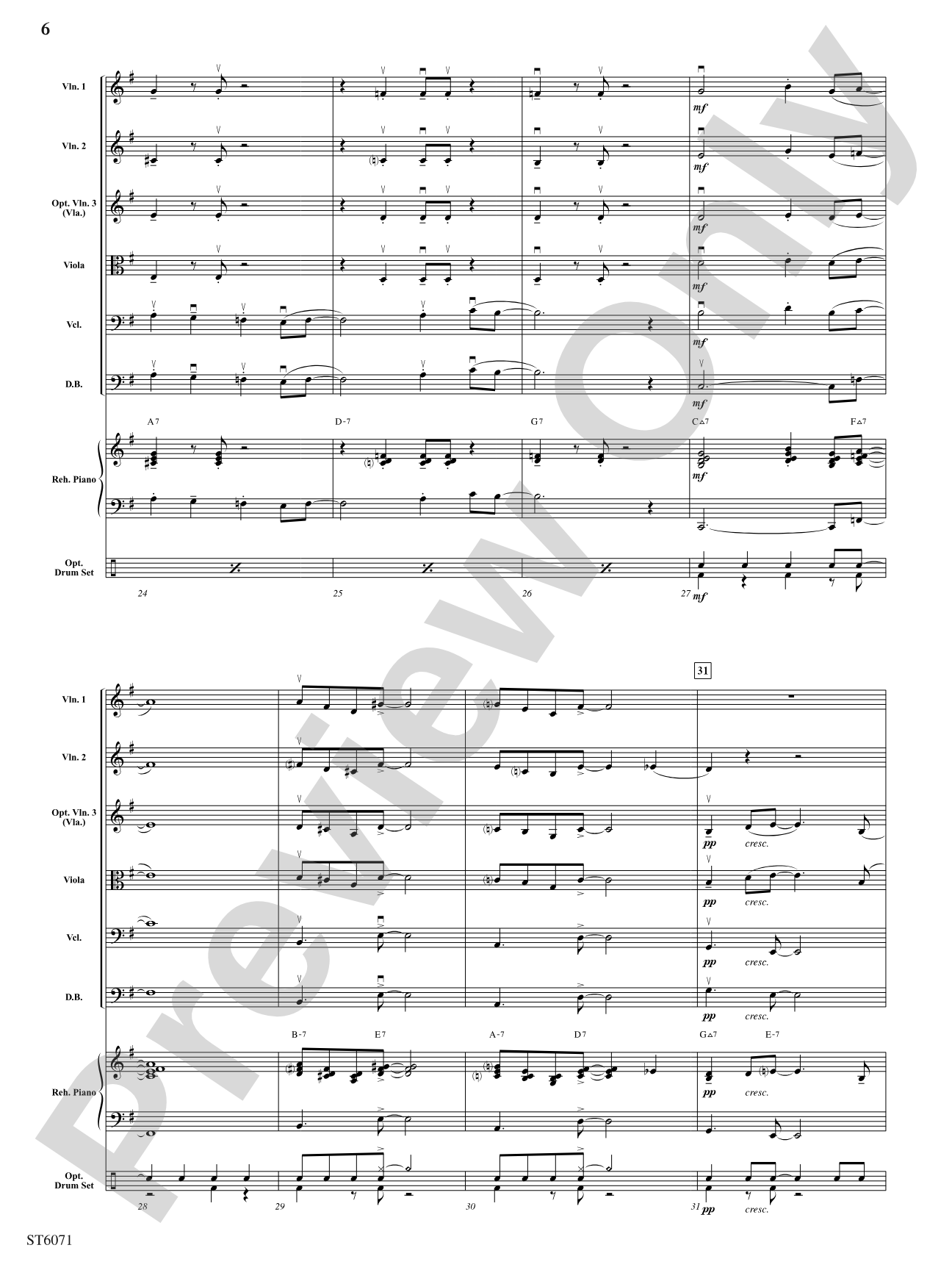
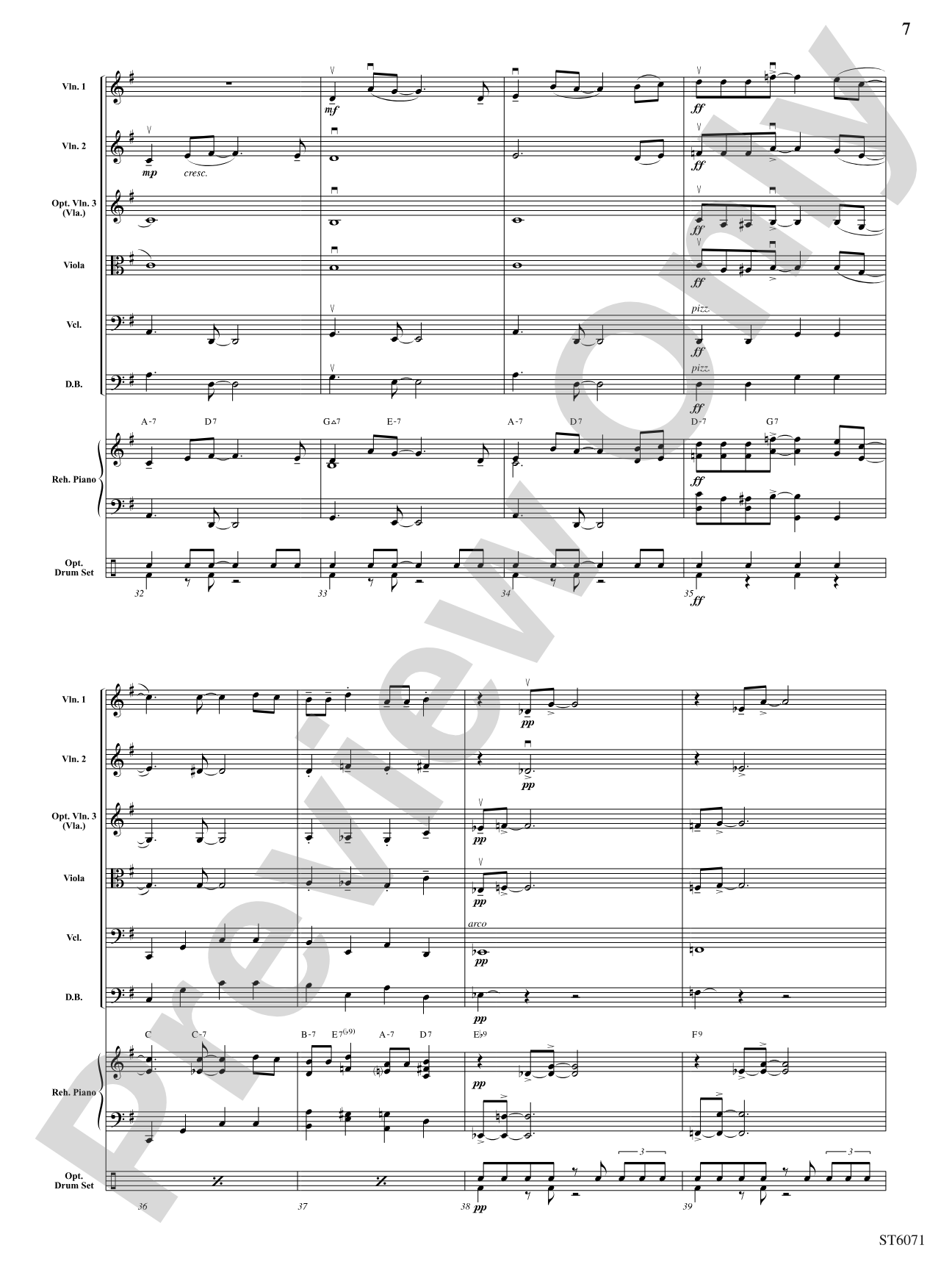
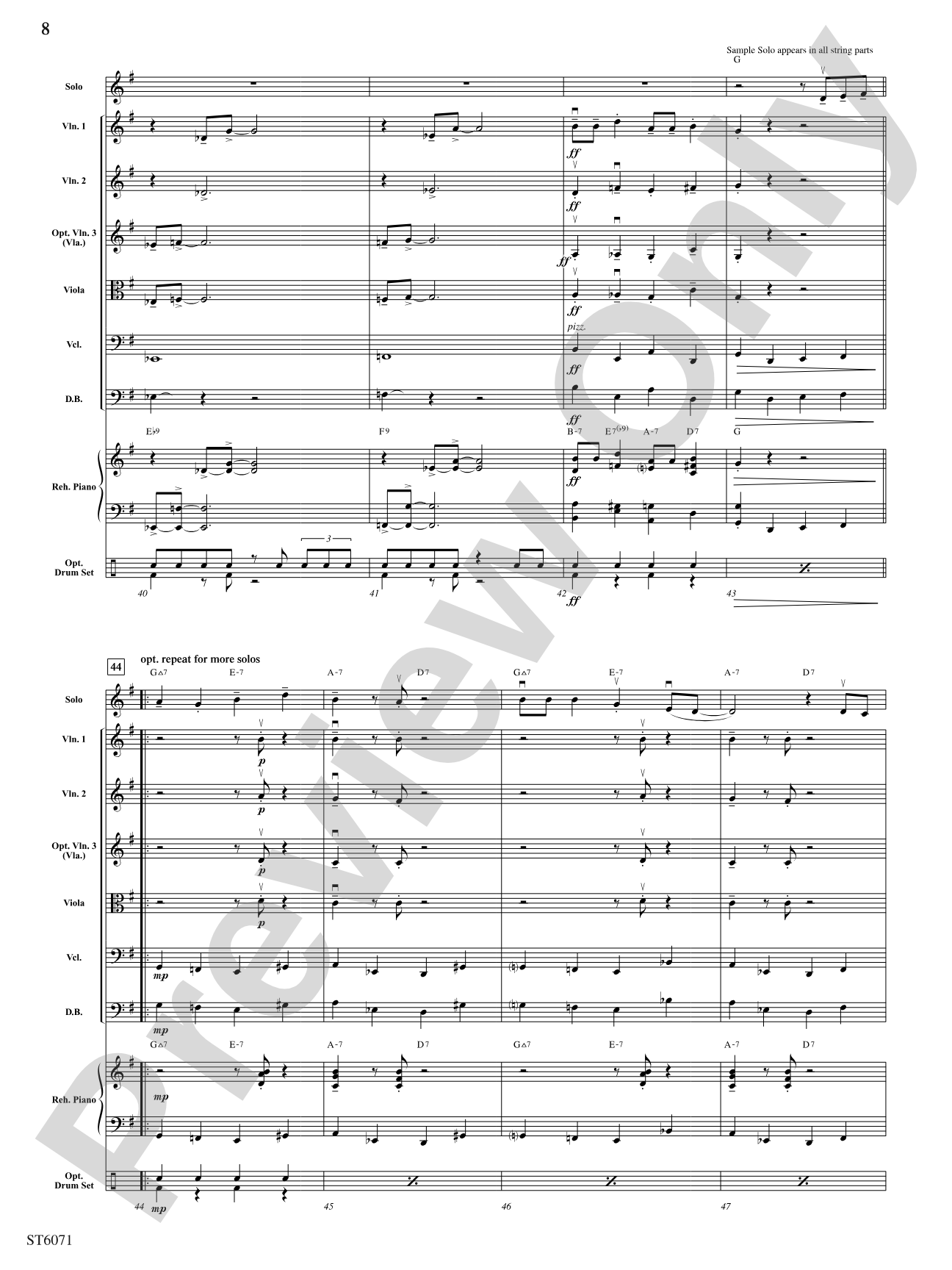
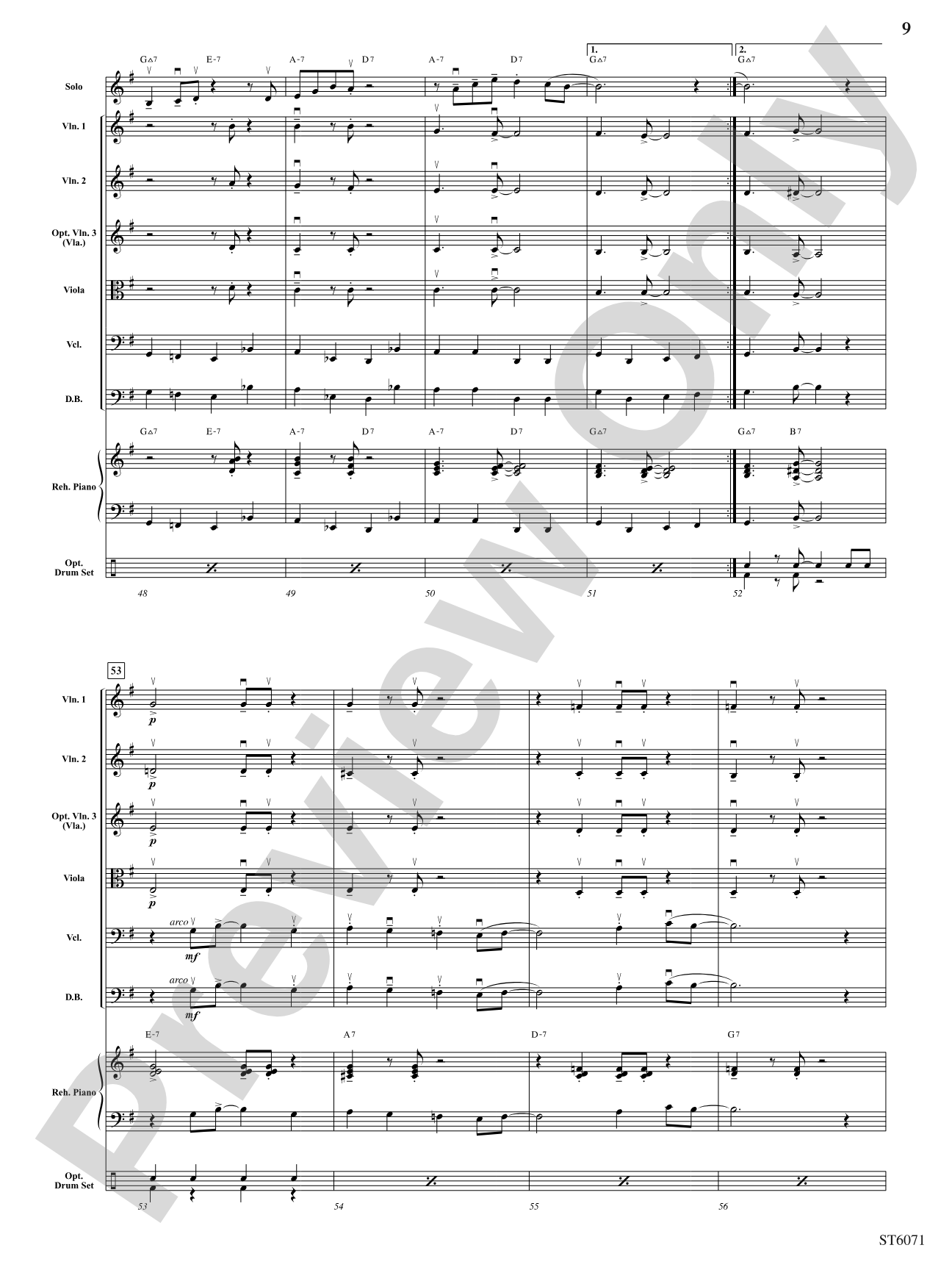
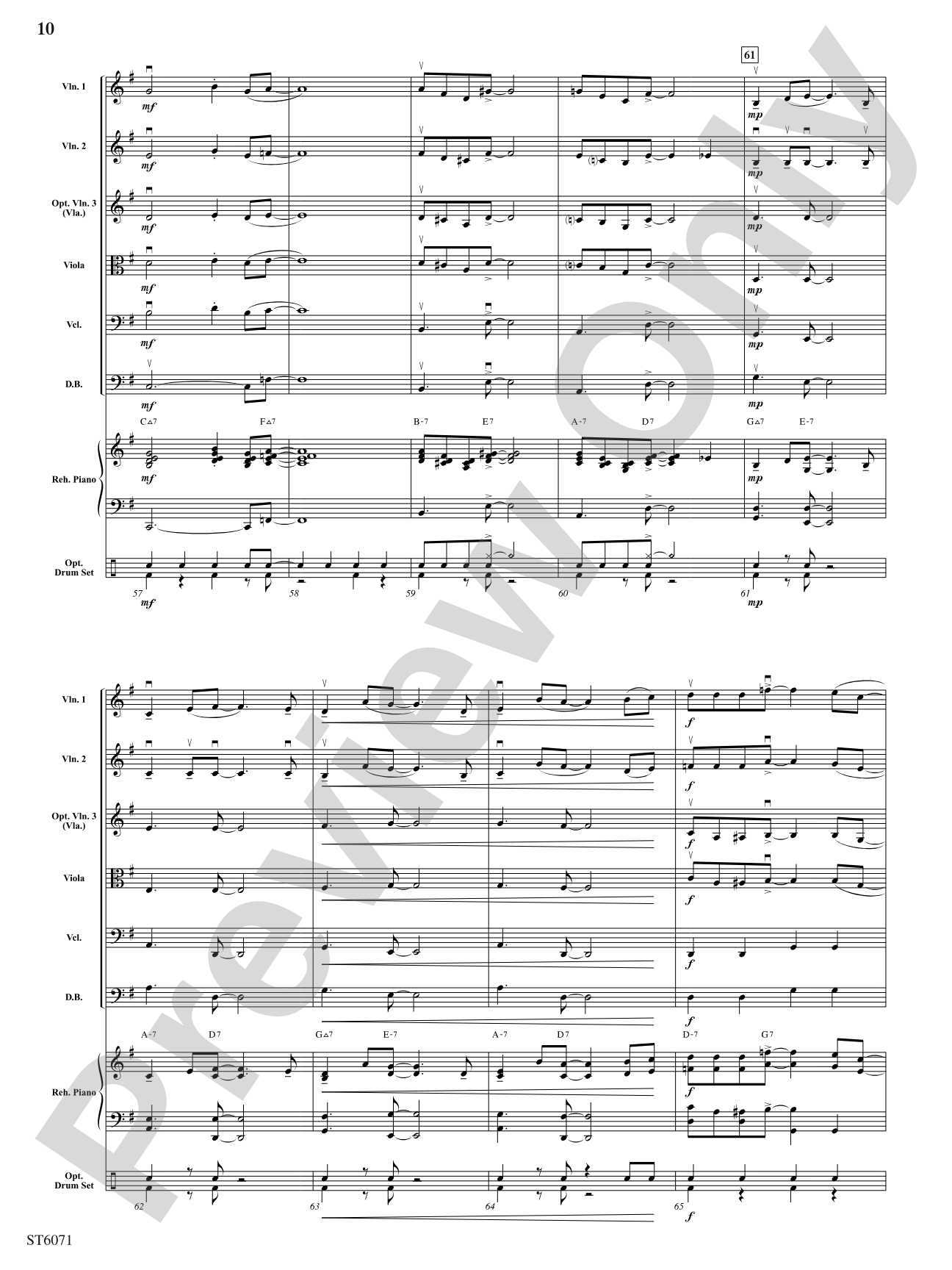
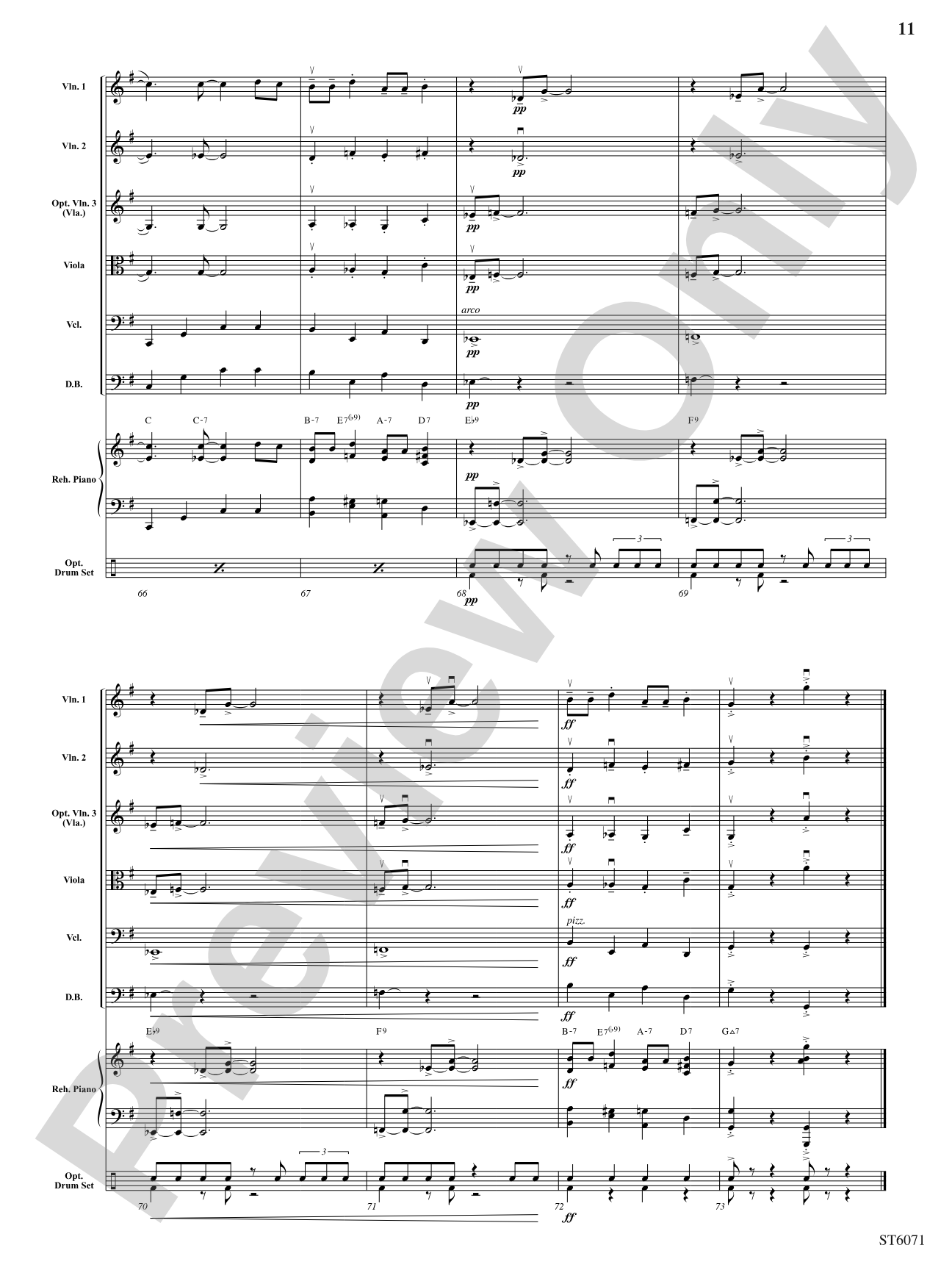
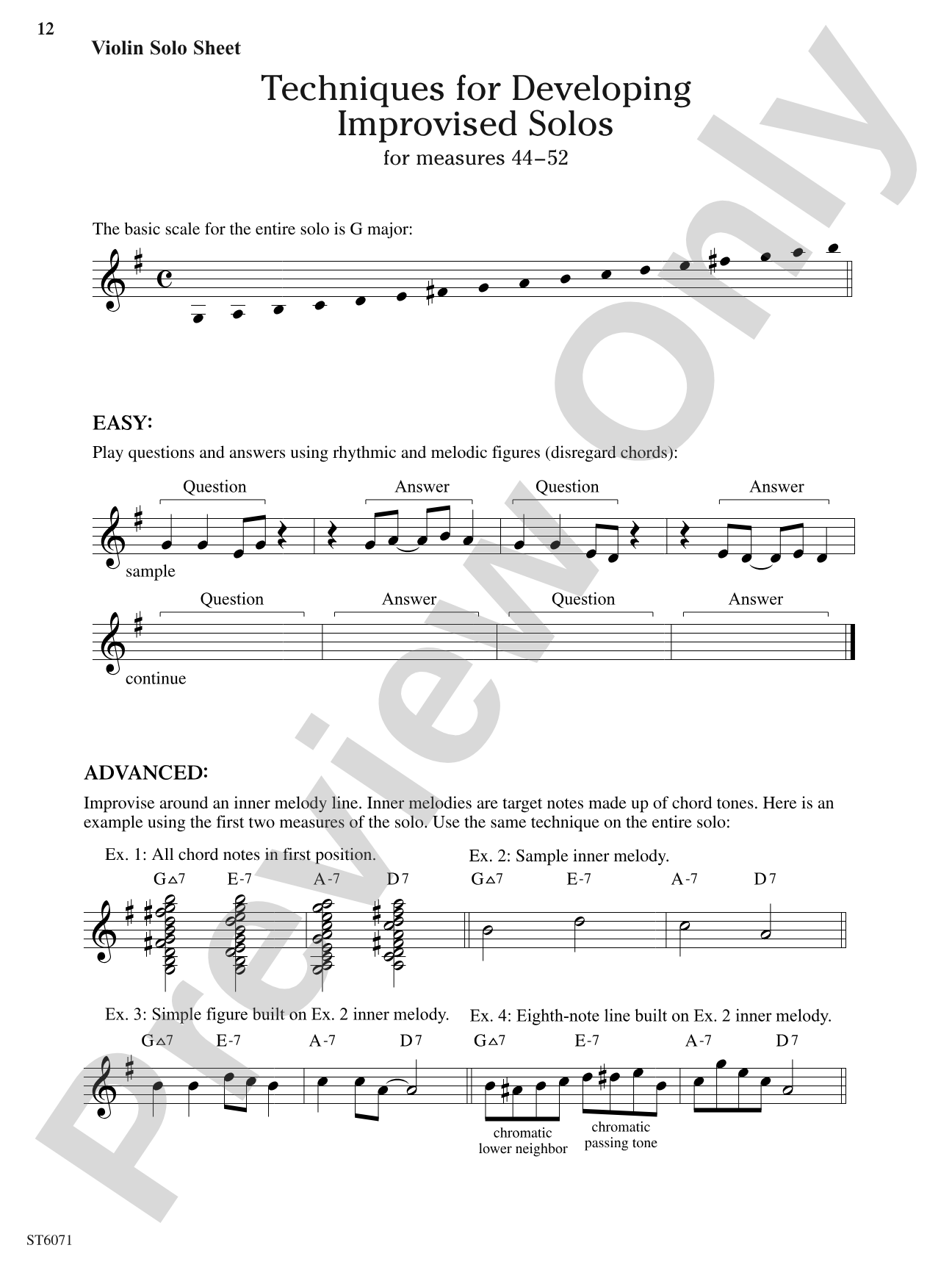
Here's an exciting opportunity to incorporate jazz into your classroom and concert hall with this medium slow swing chart. An optional drum set part really helps set the mood. An open solo section enables you to feature as many players as you would like, with optional backgrounds in the other parts. All players are given a sample solo along with a solo sheet on the back of their parts teaching them the basics of improvisation. In this case, the entire basis of the solo is a G Major scale, making for a positive experience for virtually any performer. Outstanding writing by a jazz violinist!


Swing on a String: Score isn't in MakeMusic Cloud just yet...but it could be. Let us know you'd like to see it, and you'll help shape what comes next. In the meantime, start a free trial and dive into thousands of interactive titles your students can play along with today.
Request This Title
Tell us you want it.
Start Your Free Trial
Explore everything that's ready to play right now.
Sample Audio
1
Audio File
--:--
0:00
0:00
Sample Video
No sample videos found.
Additional Details
Series:
FJH String Orchestra
Publisher:
The FJH Music Company, Inc.
SKU:
98-DST6071S
More about this title
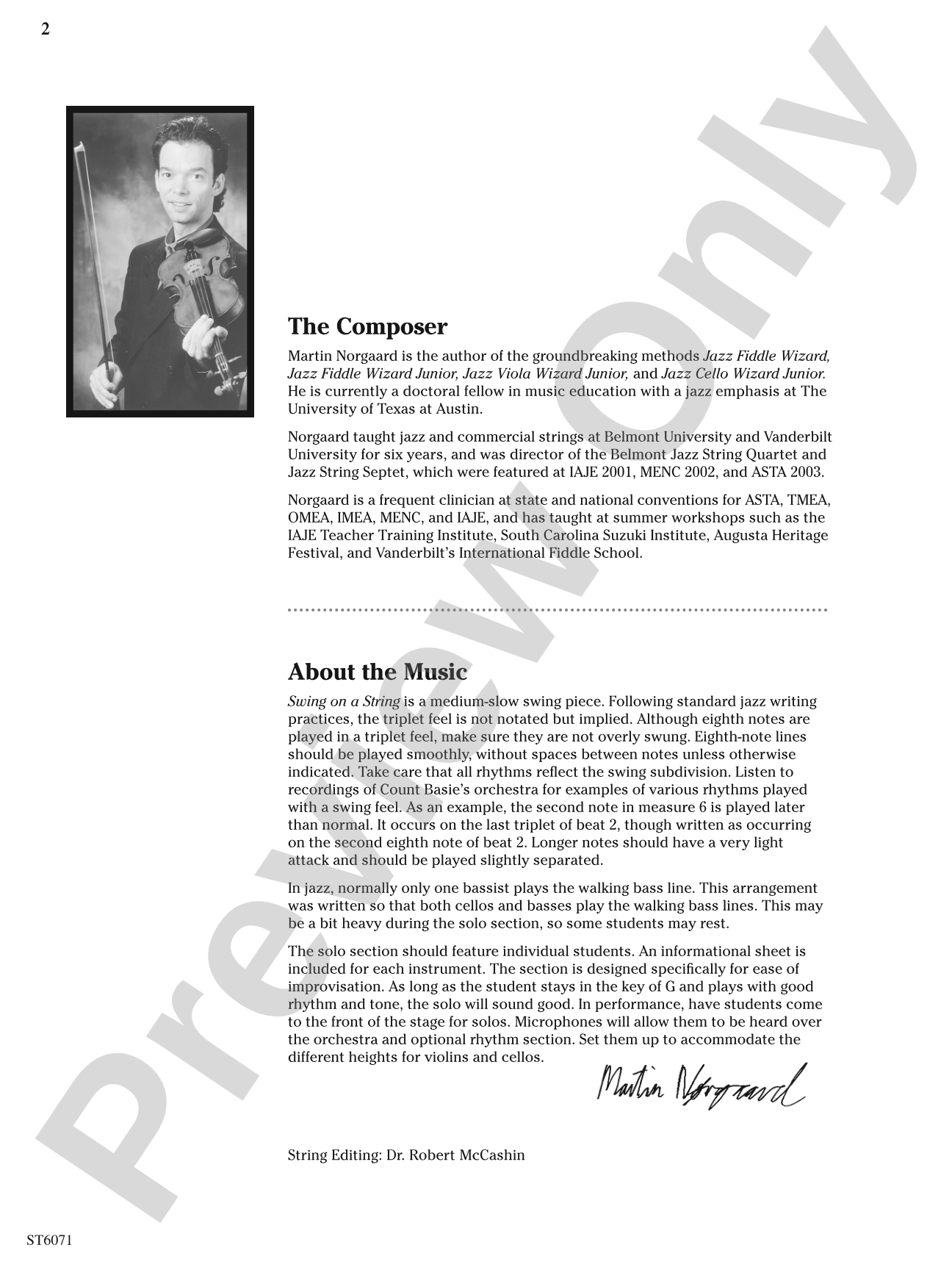
About the Composer: Martin Norgaard
Martin Norgaard is a violinist and composer with deep roots in jazz pedagogy. His work bridges classical string training and improvisation, bringing authentic jazz vocabulary to young ensemble players in ways that feel accessible rather than intimidating.
Why we love this
Norgaard solves a genuine teaching challenge: how to introduce jazz phrasing and improvisation to string players without overwhelming them. The G Major scale limitation is brilliant pedagogically, removing harmonic anxiety so players can focus on rhythmic feel and articulation. The optional solo sections mean every student can have a moment in the spotlight, and the included solo instruction sheet teaches the idiom right there in the parts.
What to expect
Medium-slow swing with real groove and swagger. The piece swings without demanding breakneck tempos, so students can actually feel the pulse and articulate cleanly. There's a coolness to it, that effortless-sounding jazz sophistication that makes young musicians feel like they're playing something genuinely current.
Who it's for
String orchestras in grades 3-5 looking to add a jazz piece to their concert calendar. This works equally well for Festival or contest contexts and as a standalone feature. Any director who wants to build improvisation confidence in young string players will find the scaffolding here invaluable.
How to get the most out of it
- Work the rhythm section (especially the optional drum set part) to lock in the swing feel before bringing in the full ensemble. Even slight drag or rushing will undermine the groove.
- Have soloists practice their sample solo multiple times before the open solo section so they develop ownership of the material rather than sight-reading it in performance.
- Balance the backgrounds: they support the soloist but shouldn't overpower. A light, conversational dynamic works better than pushing for volume.
- Encourage soloists to listen to each other's phrasings and respond. The best jazz performances feel like dialogue, not a series of isolated turns.
How to use it
Use this to open a second half or conclude a concert on a relaxed, sophisticated note. It pairs well with one classical work and one contemporary piece, creating program variety that shows your orchestra's range. The accessible improvisation components also make it ideal for a school assembly or community outreach performance where audience engagement matters.
Skills your students will build
- Reading and performing swing articulation and rhythmic feel
- Basic jazz improvisation using a defined scale
- Balancing solo and background roles in an ensemble context
- Responding to other musicians' phrasing in real time
- Understanding jazz as a distinct idiom separate from classical string writing