Swing Low, Sweet Chariot: 4th Trombone Sheet Music Preview

Swing Low, Sweet Chariot: 4th Trombone

By Wallace Willis / arr. Rick Hirsch

Grade: 2.5

Item: 00-PC-0019358_TN4

Digital Download
$3.00
Description
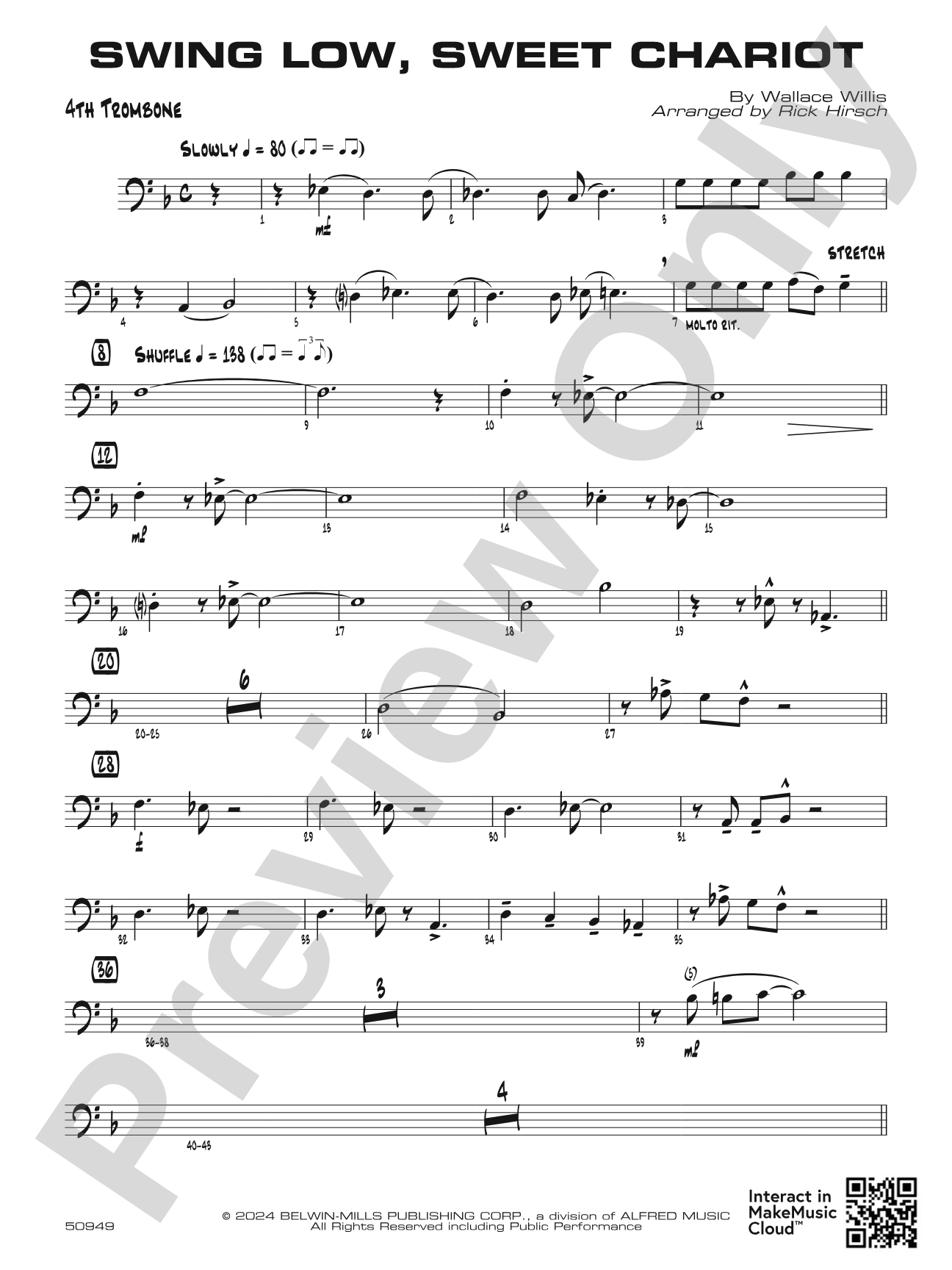
A very clever treatment of this well-known traditional spiritual, the opening statement is a slow chorale moving into an easy shuffle played around 138 BPM. The melody bounces between sections then into a driving shuffle that swings. Solos are provided for trombone 1 and alto 1, lead trumpet range is to written G. This chart is excellent! (4:45)

Don't just read it, hear it, play along with it, and watch your students grow with it. In MakeMusic Cloud, Swing Low, Sweet Chariot: 4th Trombone comes alive with professional accompaniment, adjustable tempo, and built-in practice tools that turn solo practice into real progress.

Sample Audio
0:00
0:00
Sample Video
Additional Details
Series: Young Jazz Ensemble
Publisher: Alfred Music
SKU: 00-PC-0019358_TN4

More about this title

About the Composer: Wallace Willis

Wallace Willis composed "Swing Low, Sweet Chariot" in the 19th century, creating one of the most enduring spirituals in the American musical canon. His melody has been arranged countless times across classical, jazz, and popular idioms, testament to its melodic strength and emotional resonance.

Why we love this

Rick Hirsch's arrangement captures the spiritual's inherent dignity while building genuine swing energy that drives through the piece. The strategic placement of solos and the textural arc from chorale to shuffle gives students and audiences a genuine musical journey, making this a smart programming choice for festivals and concerts.

What to expect

The piece opens with the meditative reverence of a spiritual, the full ensemble holding a slow chorale statement that feels grounded and reflective. As the arrangement settles into its shuffle groove around 138 BPM, the energy lifts without losing the melody's inherent warmth; sections begin trading the theme back and forth while the rhythm section locks into an easy, swinging pocket that invites soloing and conversation between voices.

Who it's for

Jazz ensemble directors working with developing players will find this arrangement scales beautifully across the 2.5 grade level, offering enough harmonic and rhythmic engagement to challenge students without overwhelming younger or less experienced groups. Soloists at this level can find expressive opportunities within a supportive ensemble context.

How to get the most out of it

  • Establish the chorale opening with a warm, unified sound across the full ensemble; this quiet foundation makes the shift into shuffle much more dramatic.
  • Let the trombone 1 and alto 1 soloists find their own voice over the shuffle groove rather than doubling them with section members.
  • Keep the lead trumpet's ascent to written G clean and supported; the section should lock behind the solo voice without overshadowing it.
  • Balance the melody trades between sections in the mid-section by rehearsing each ensemble's entrance so the melody line feels continuous, not fragmented.

How to use it

Program this as a set closer or concert centerpiece when you want to honor the spiritual tradition while celebrating the ensemble's ability to swing. It pairs well with other carefully arranged standards on a mixed jazz concert, offering both accessibility for general audiences and legitimate musical substance for musicians.

Skills your students will build

  • Interpreting and performing swing rhythms at a moderate tempo
  • Trading melody phrases between instrumental sections while maintaining ensemble unity
  • Accompanying solo improvisation with a solid ensemble groove
  • Managing dynamic range from legit chorale style to energetic shuffle feel
  • Balancing lead voice projection with section support in a jazz context

You May Also Like