
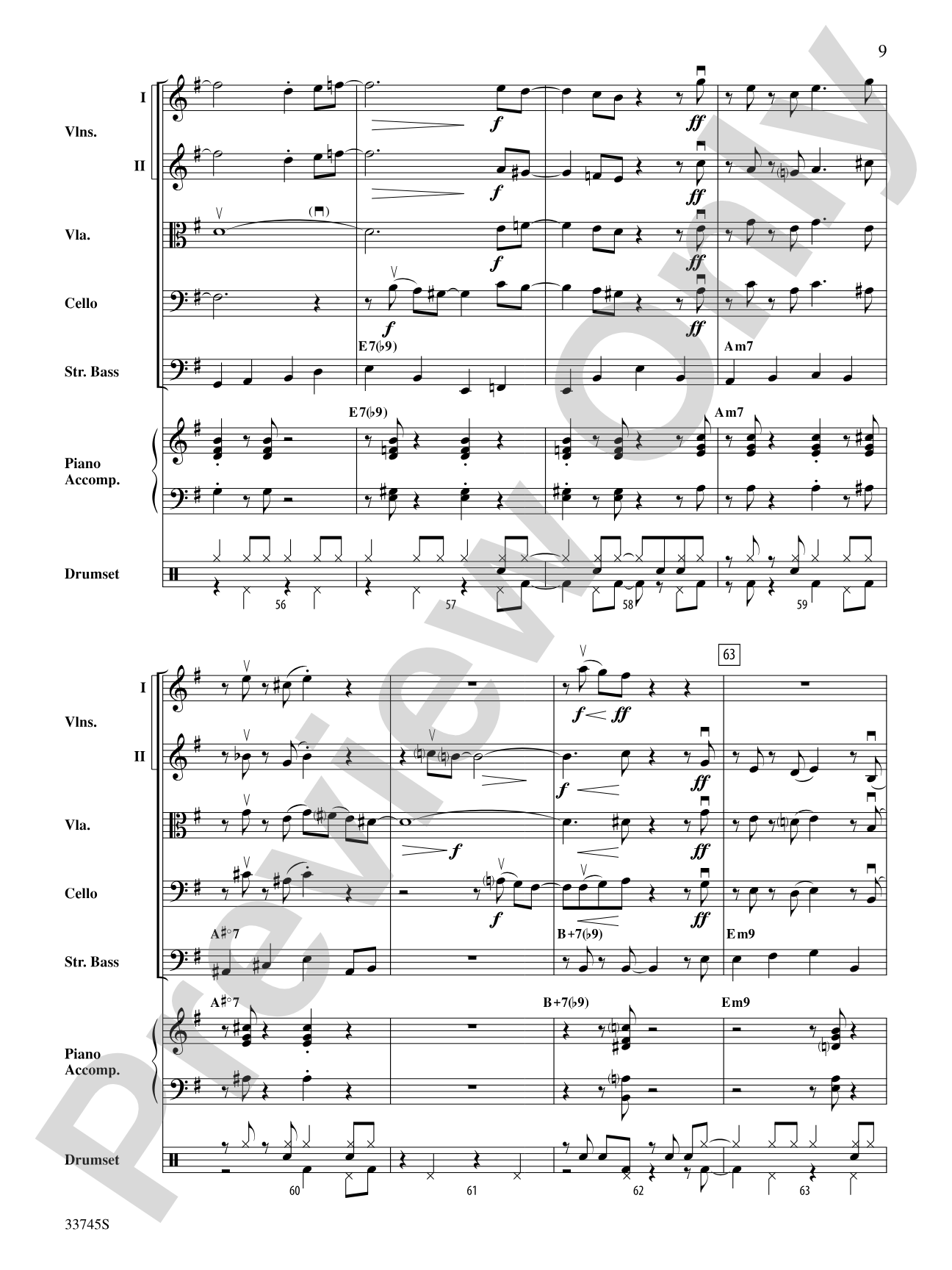
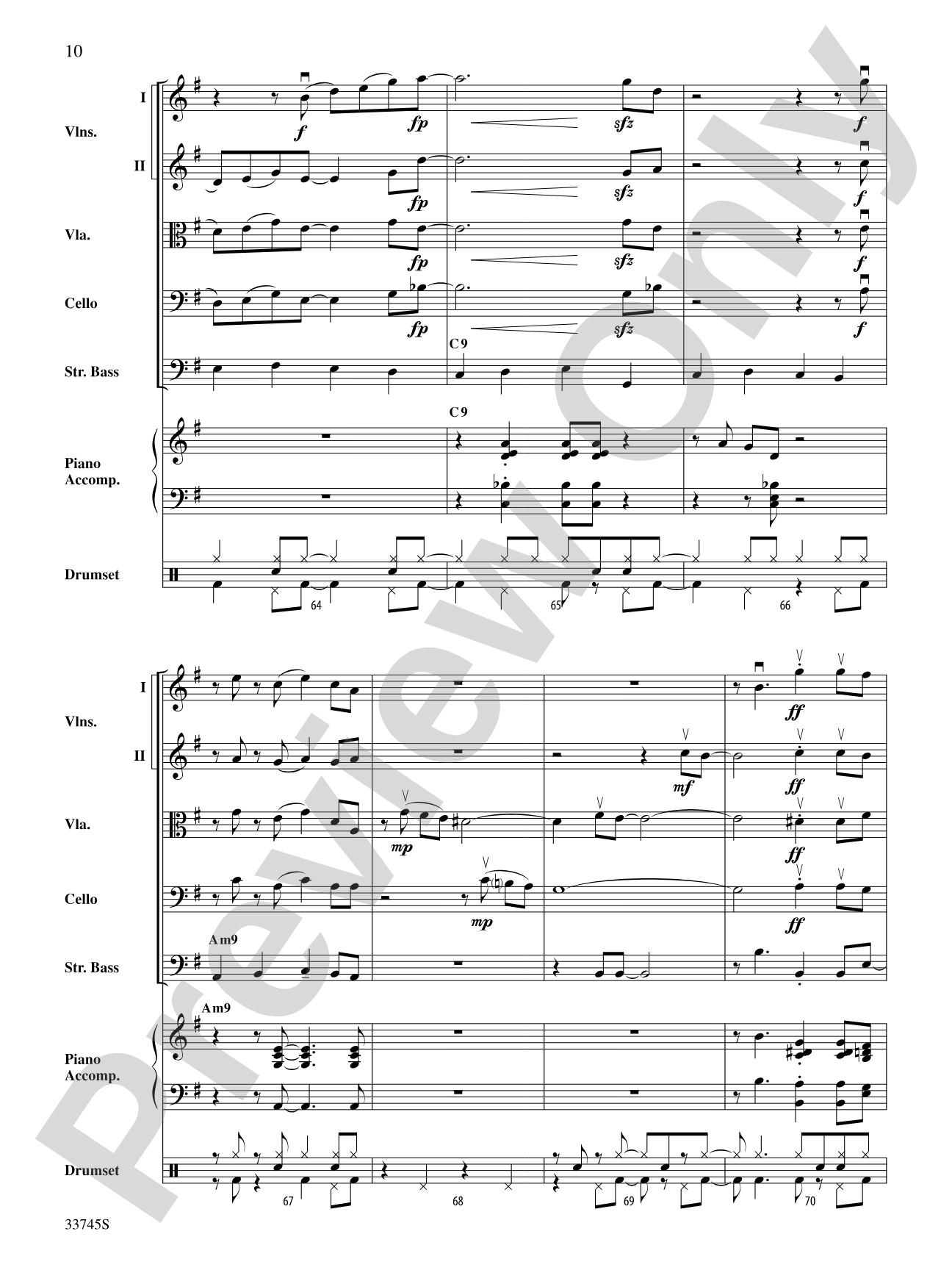
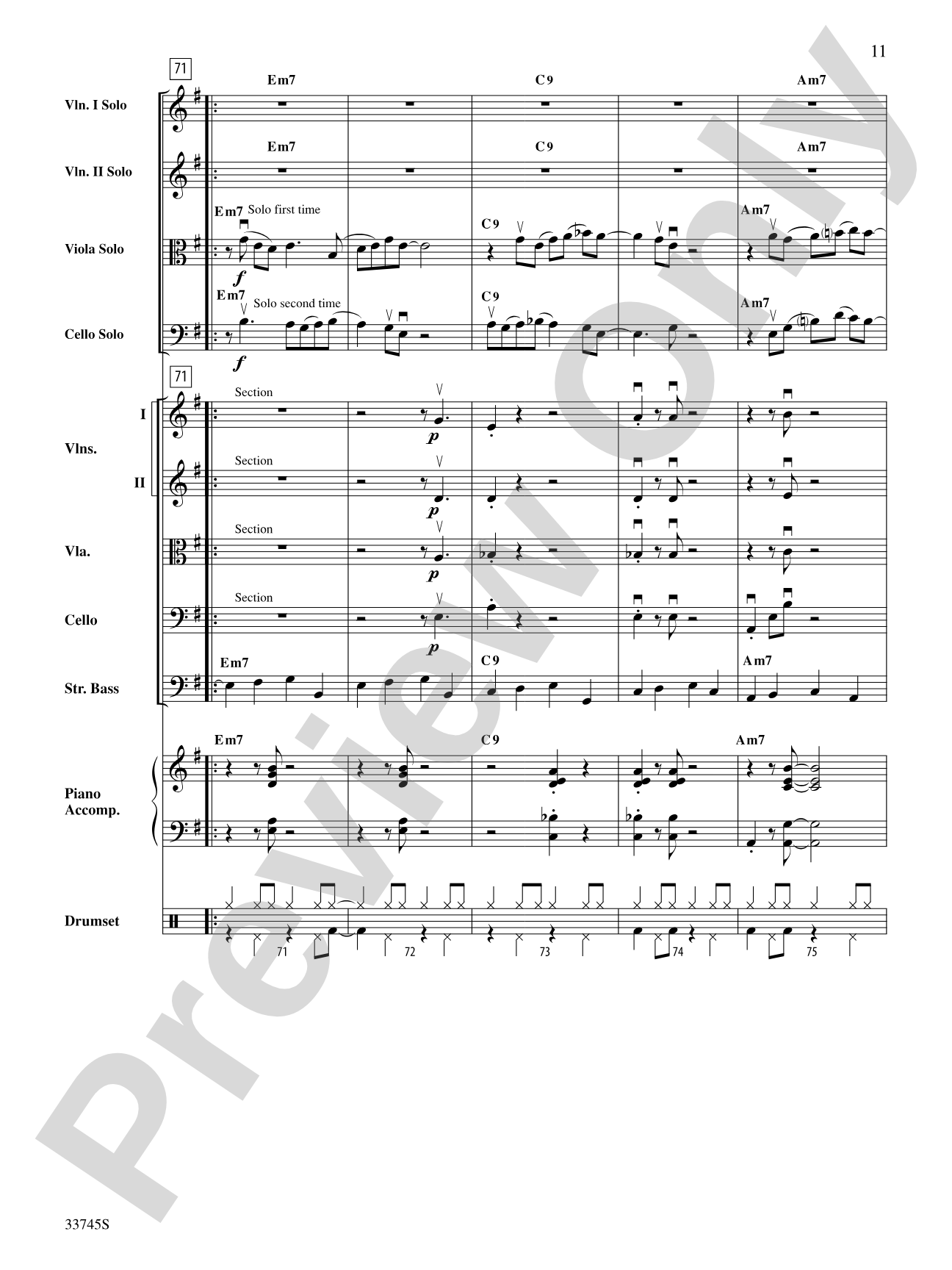
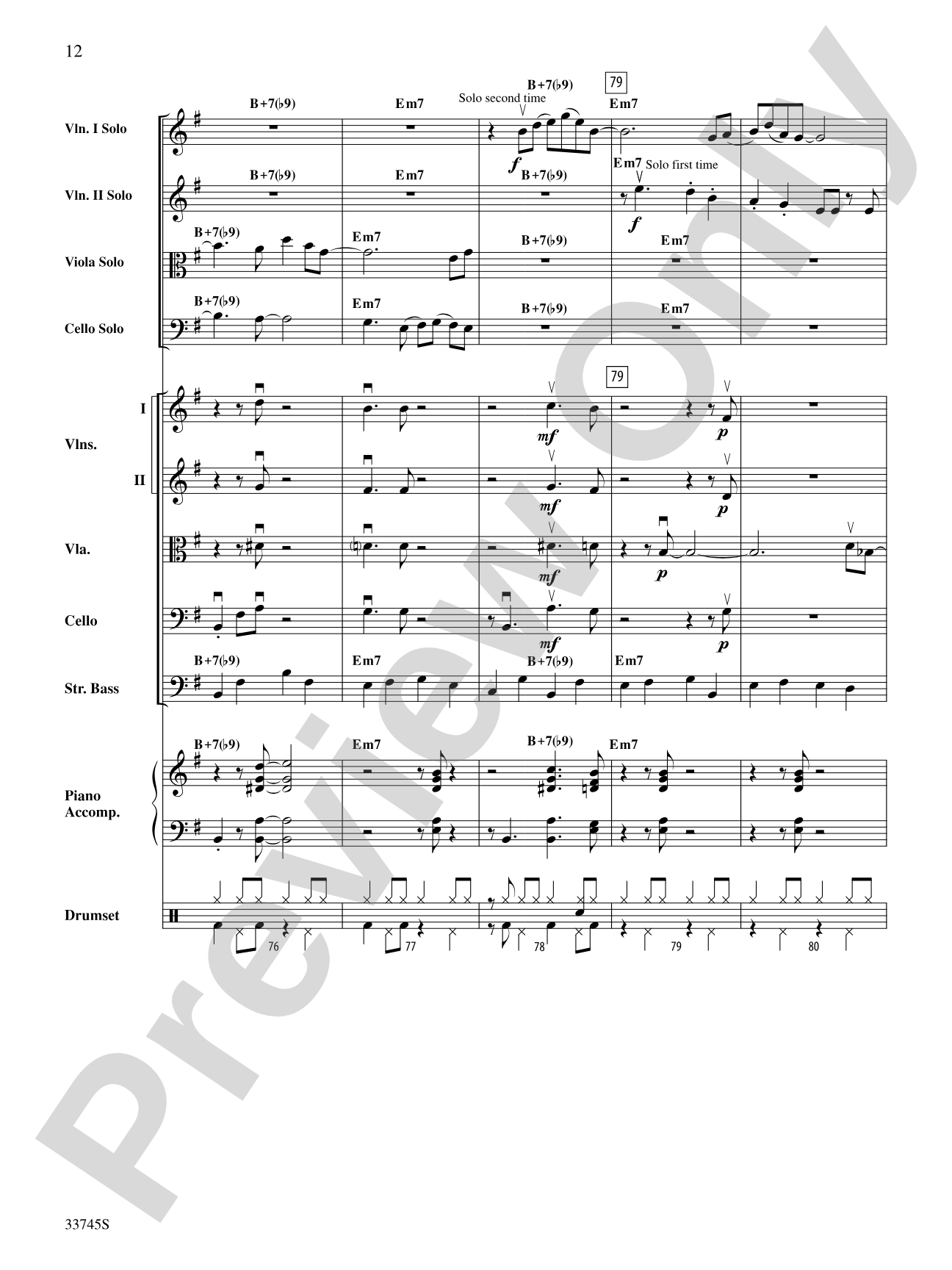
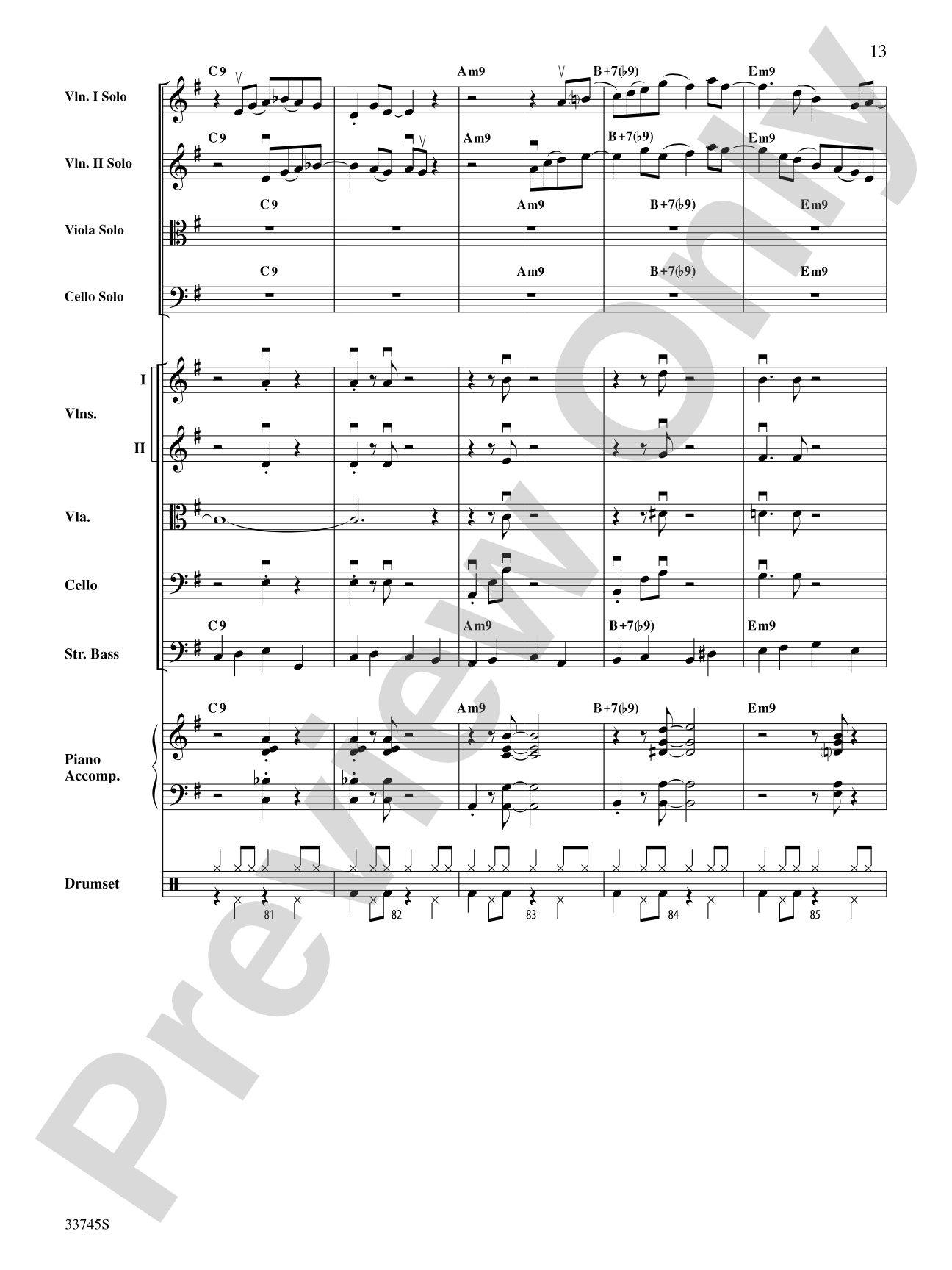
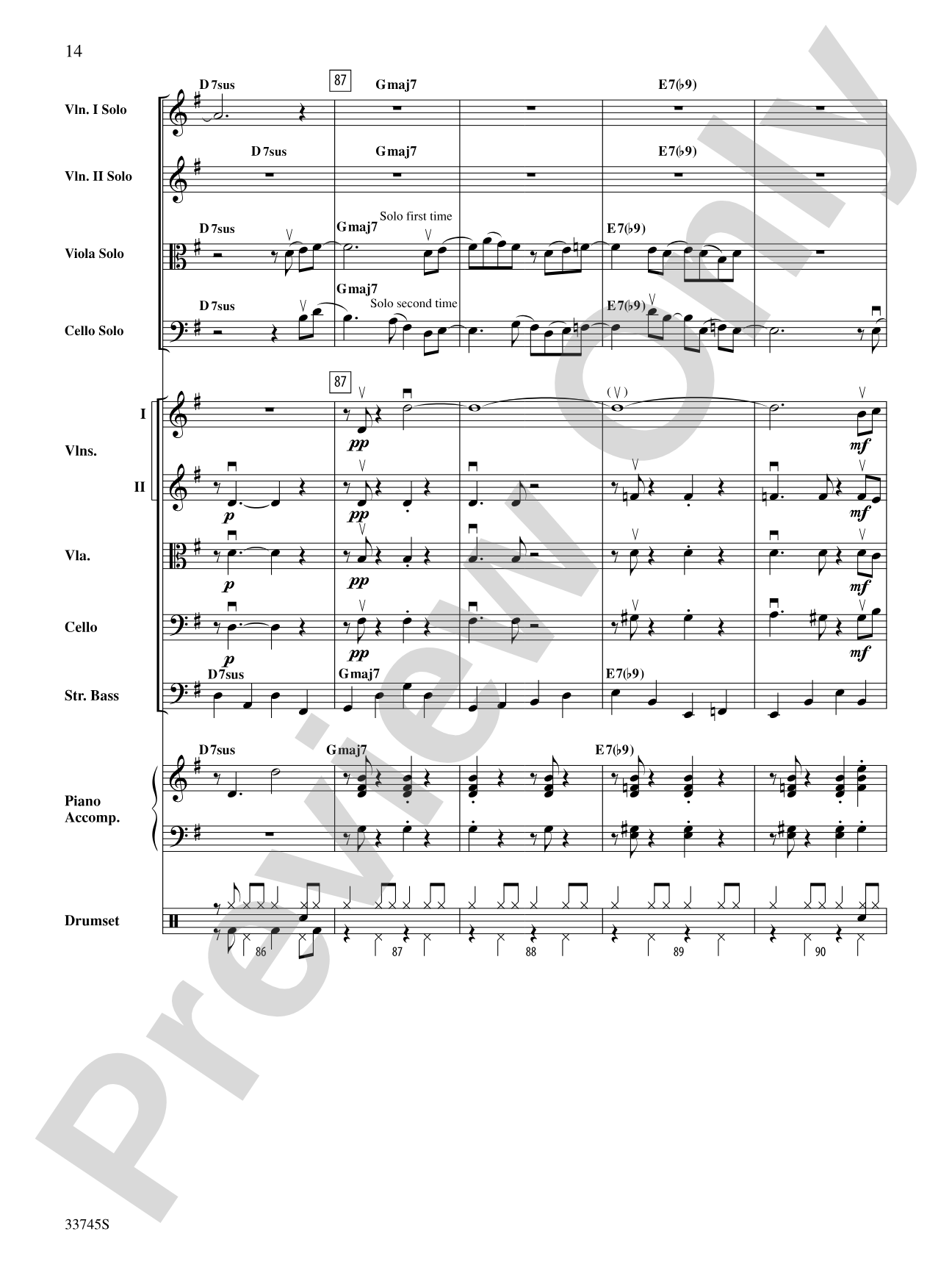
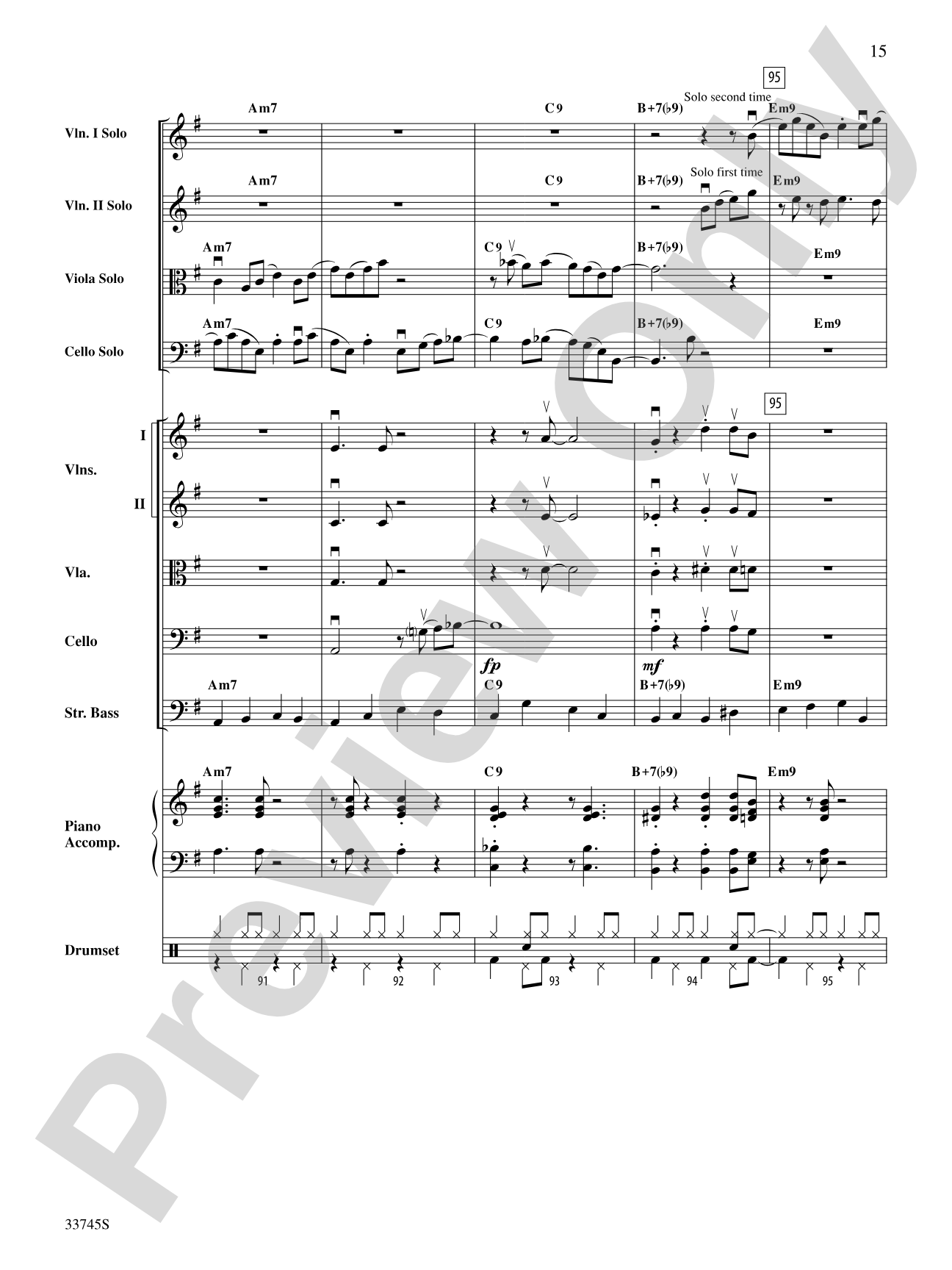
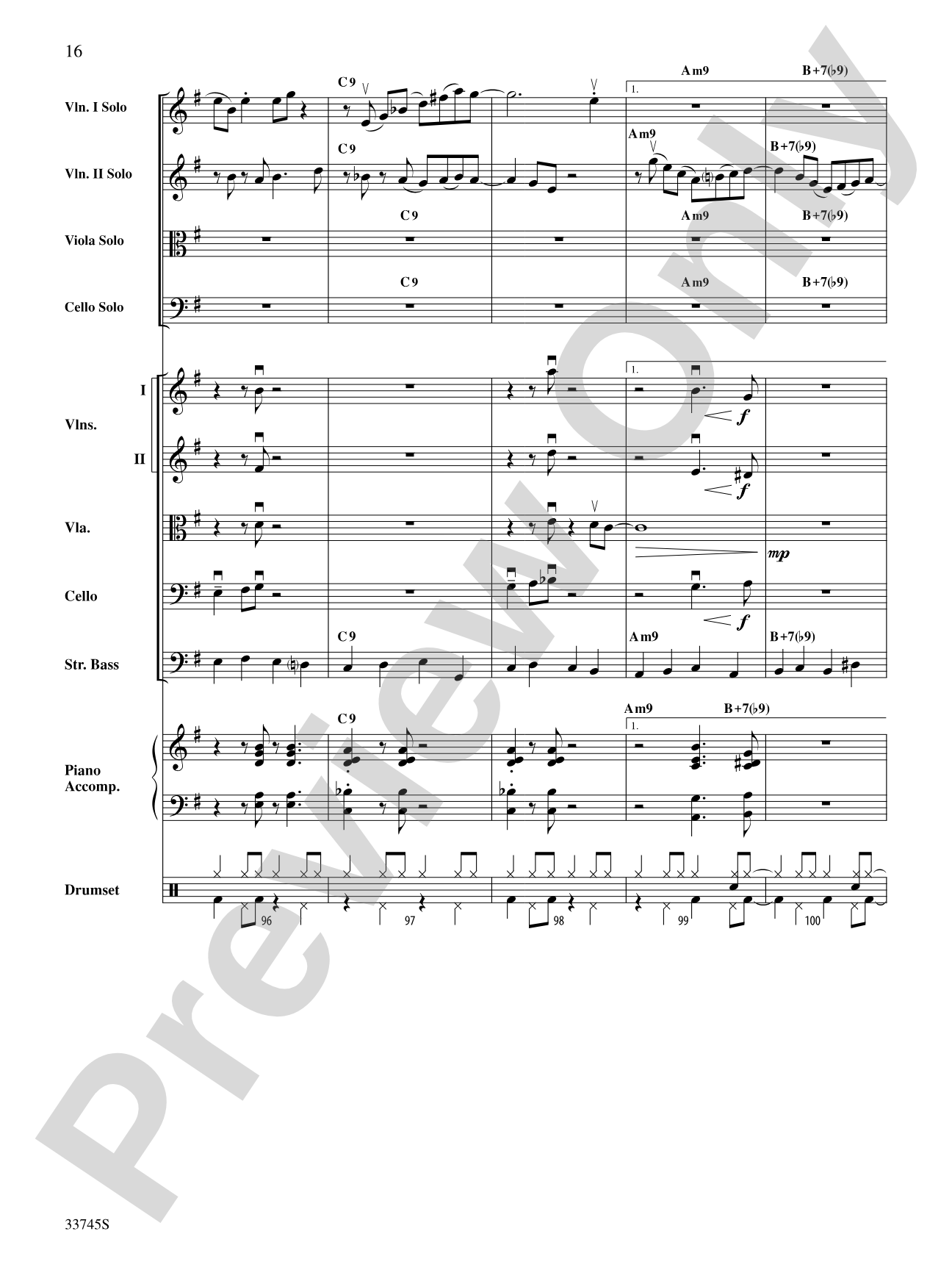
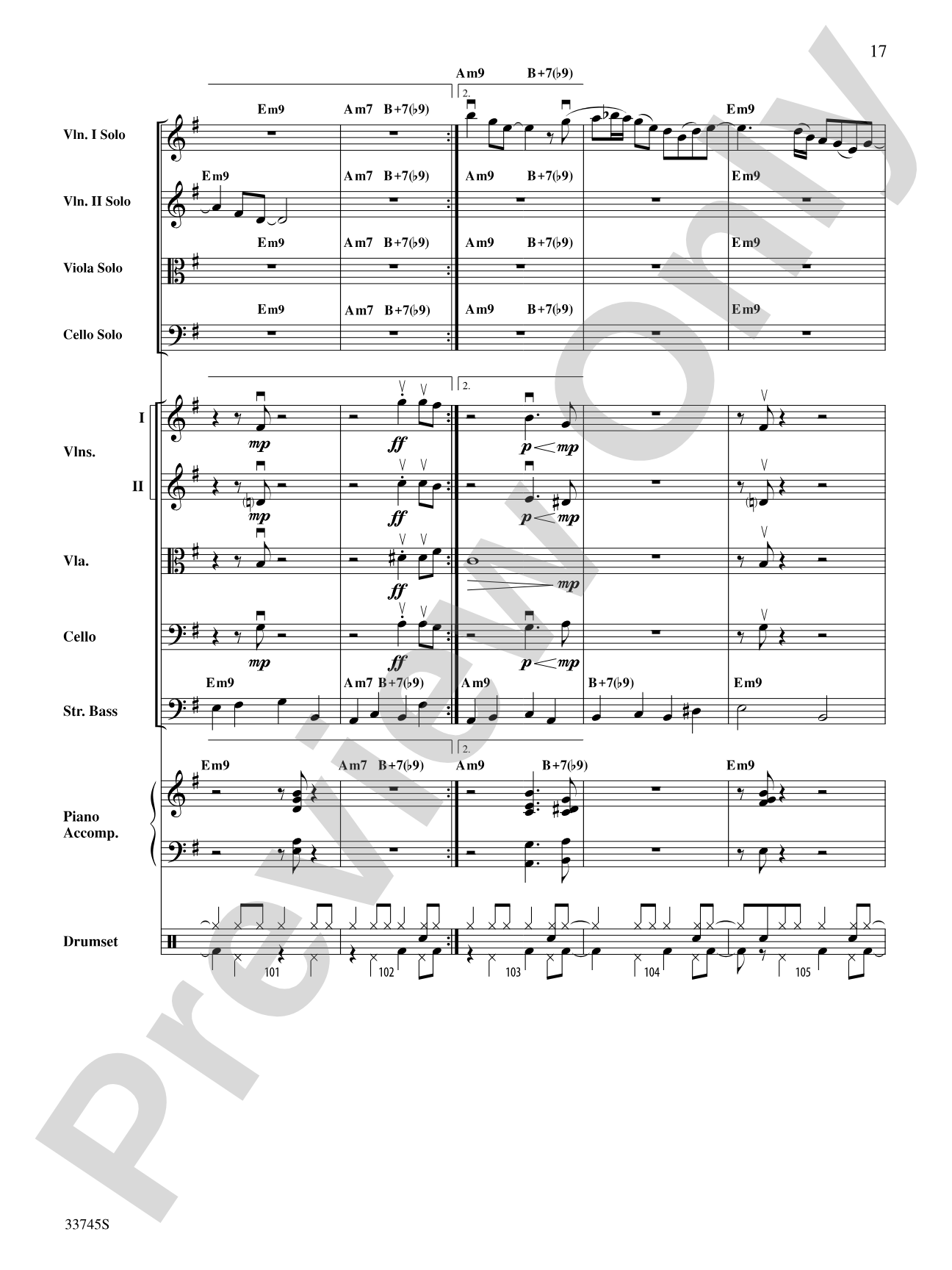
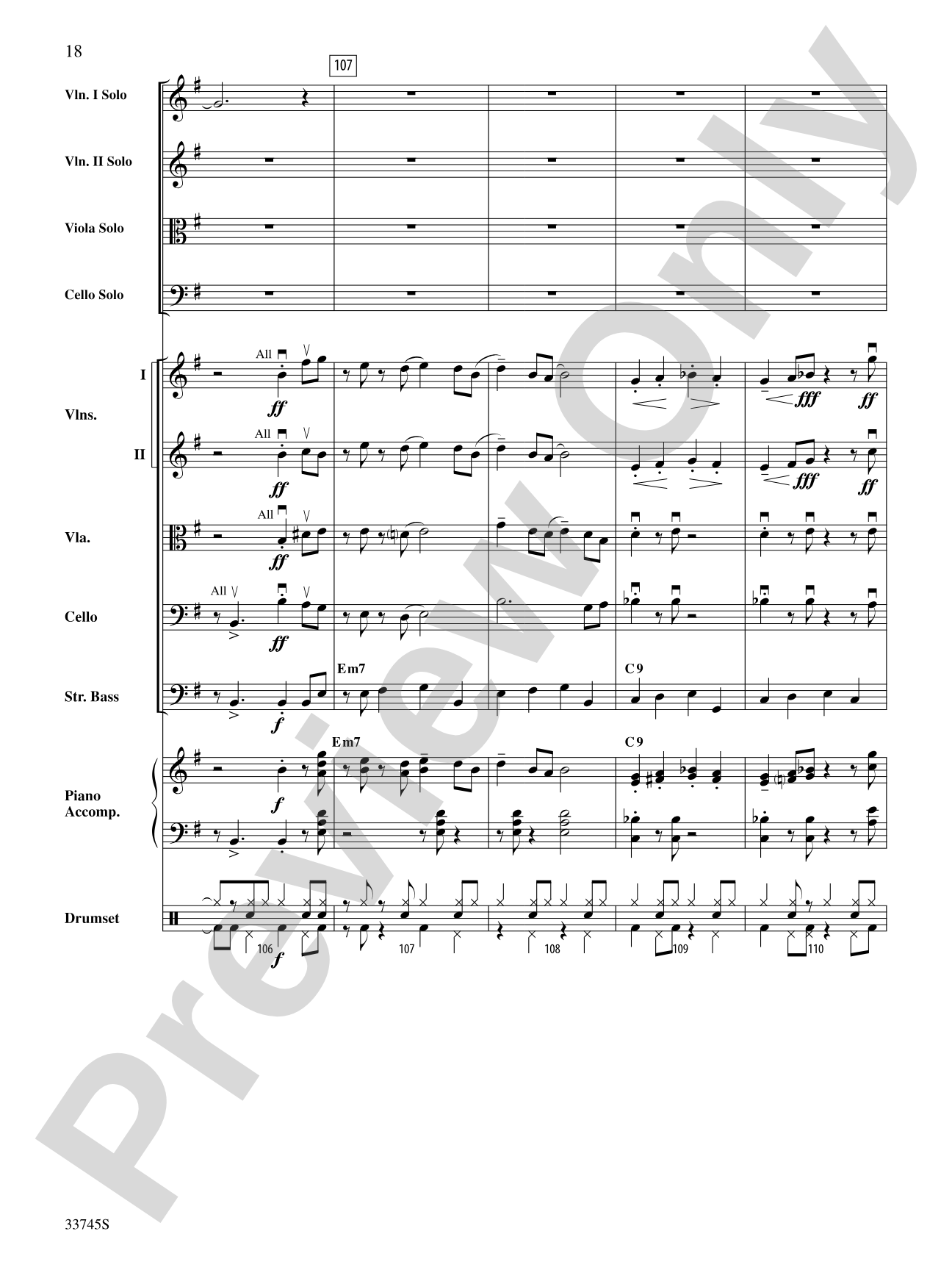
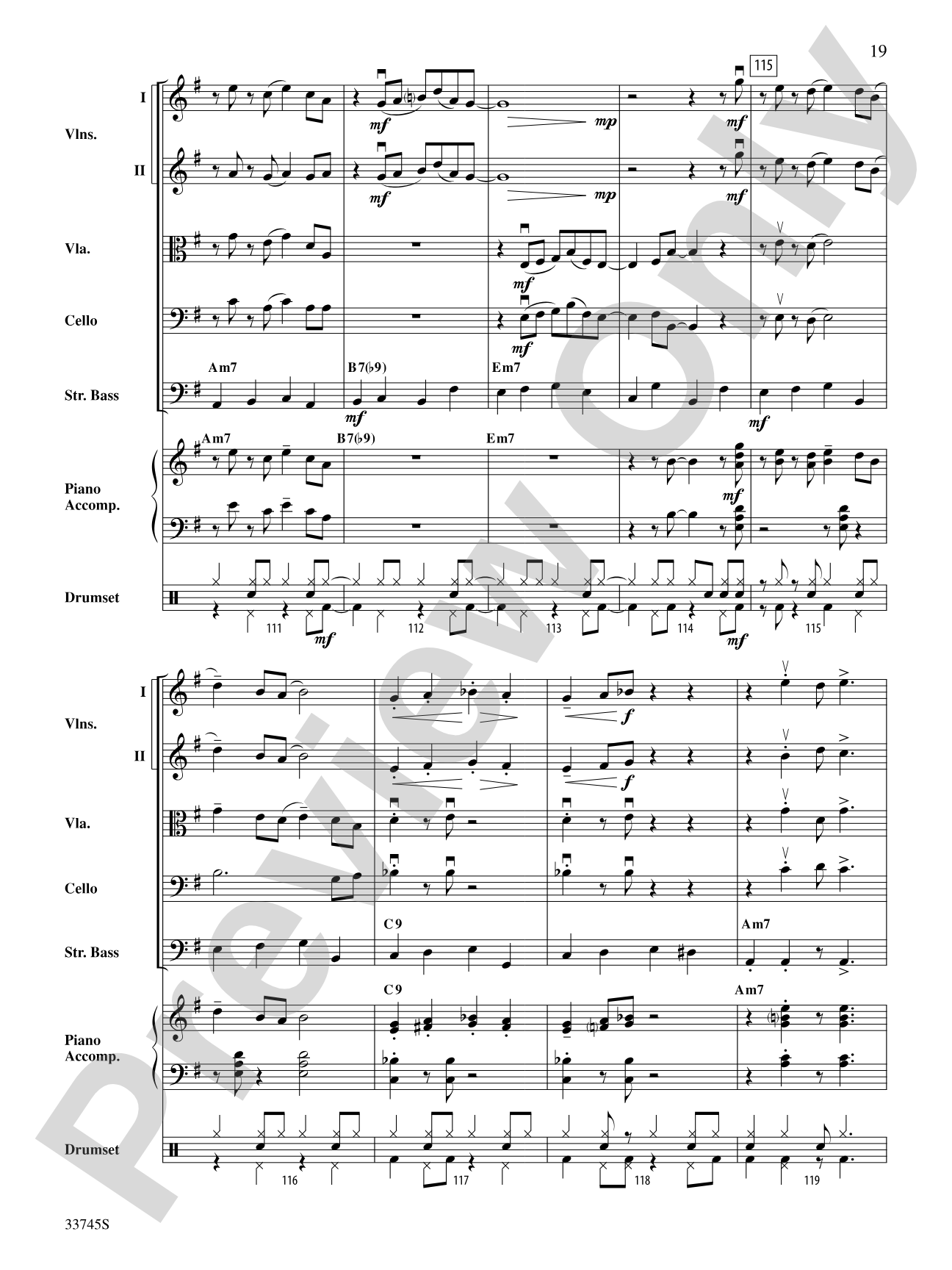
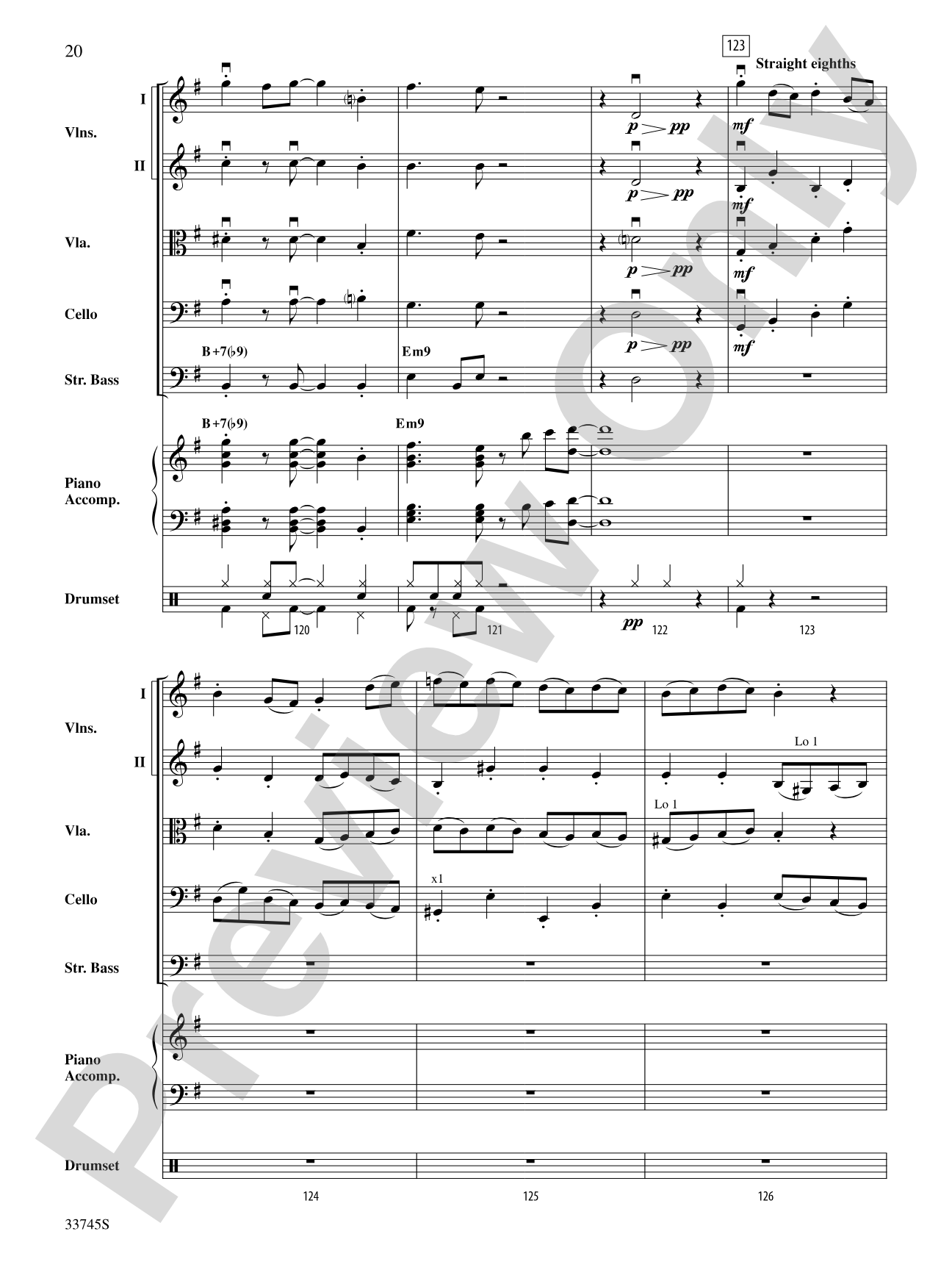
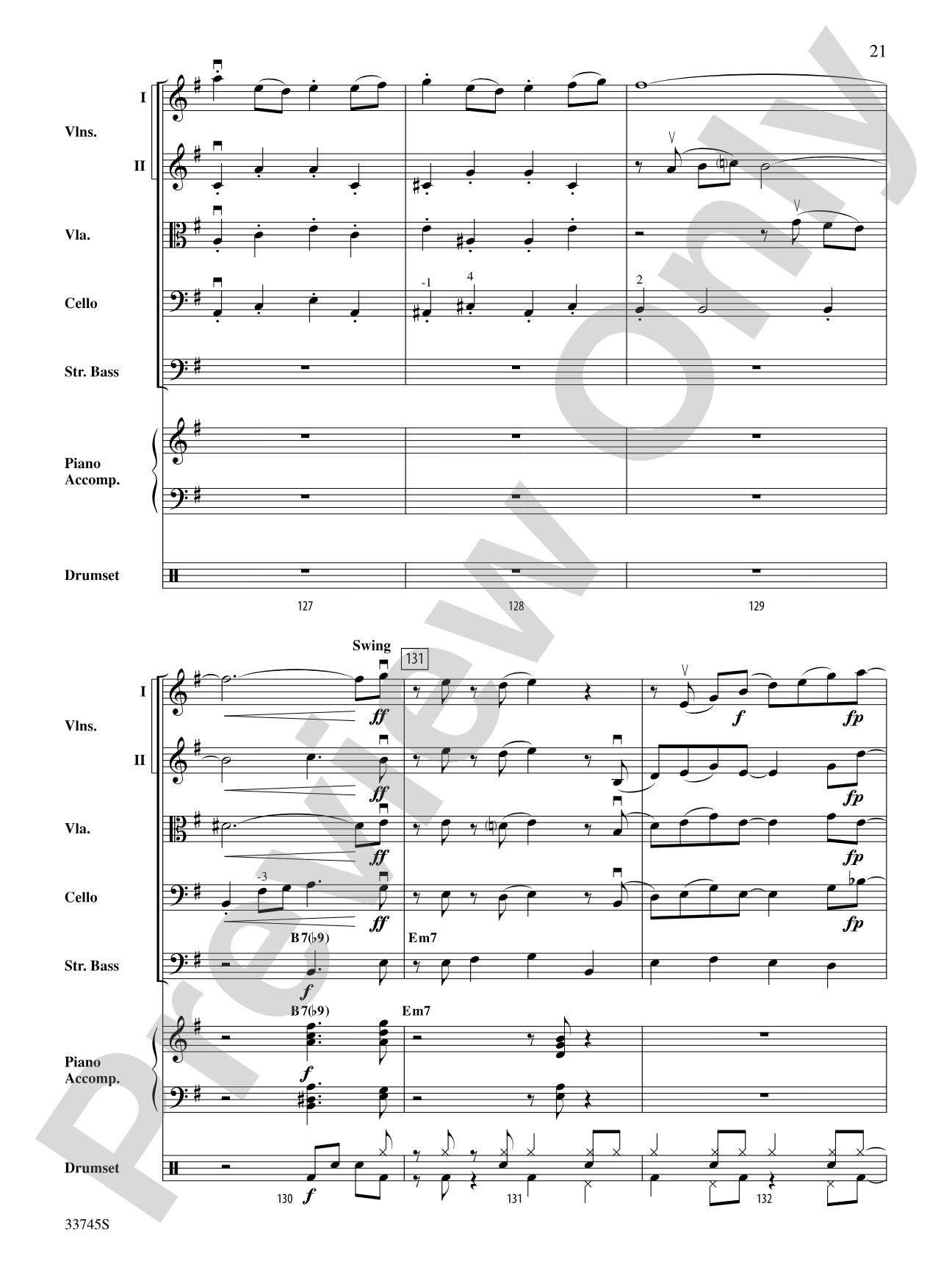
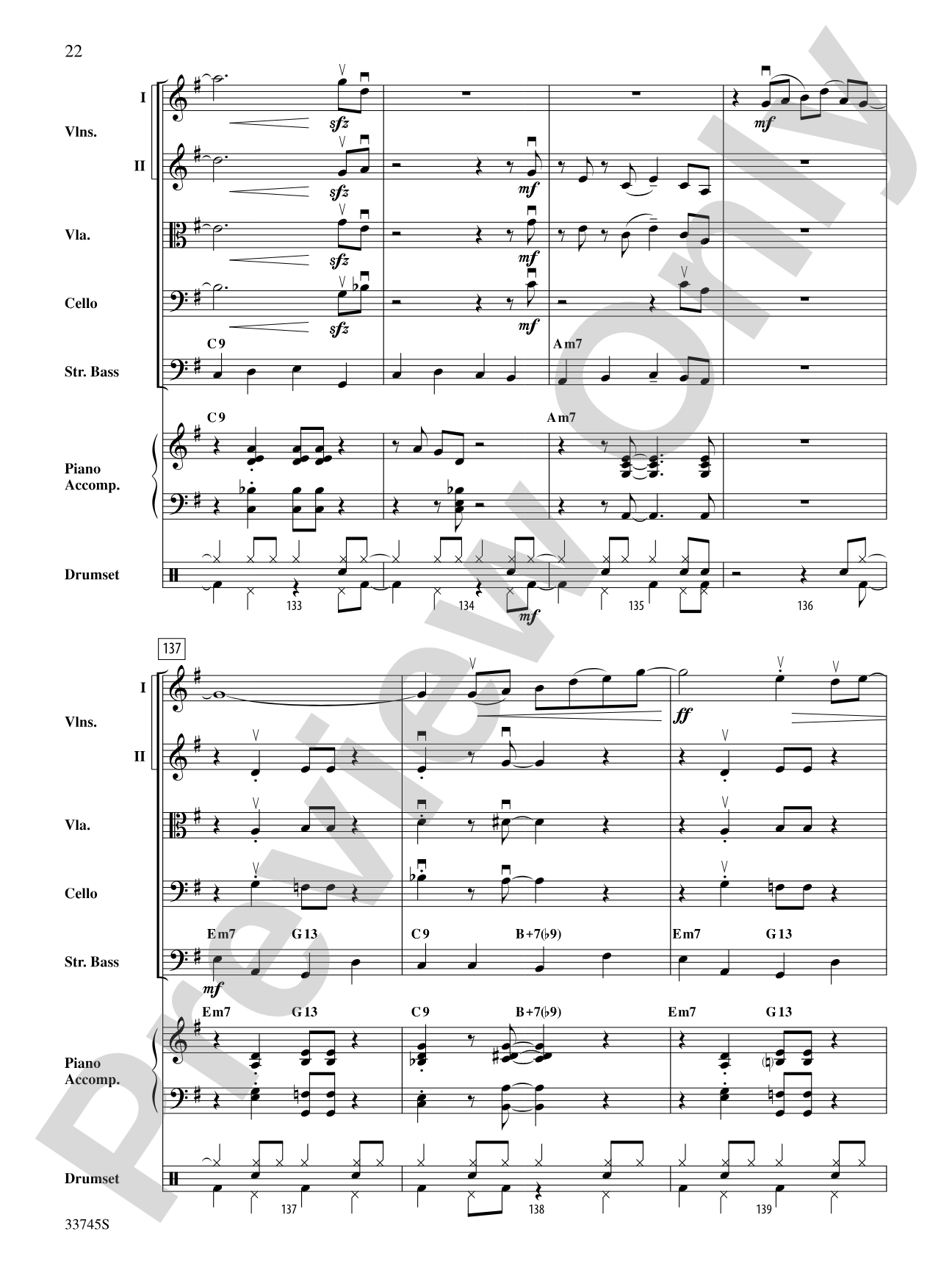
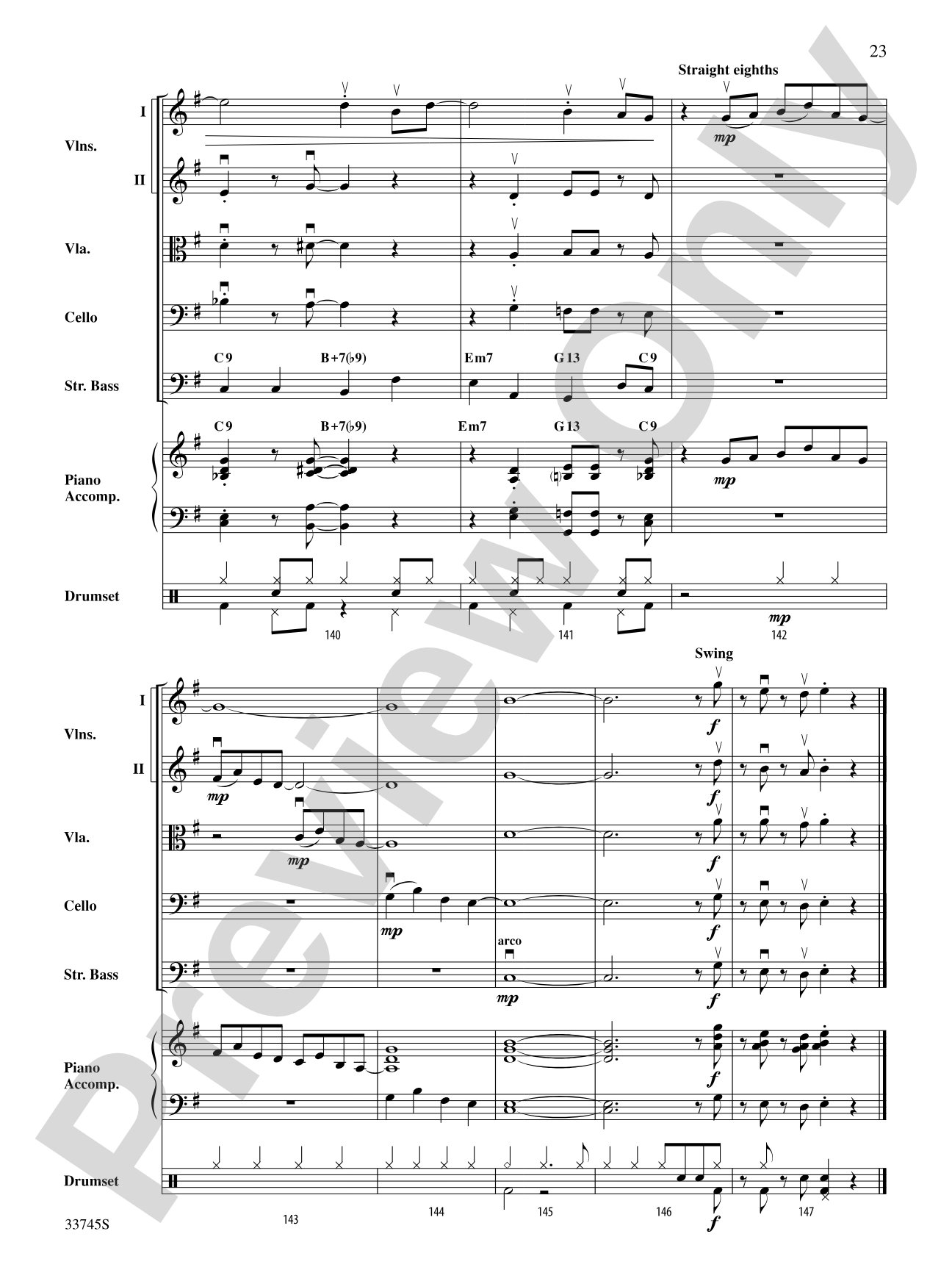


Swing Break: Score
By Bert Ligon
Grade: 3.5
Item: 00-PR-0002848
$7.00
Pickup currently not available
Description
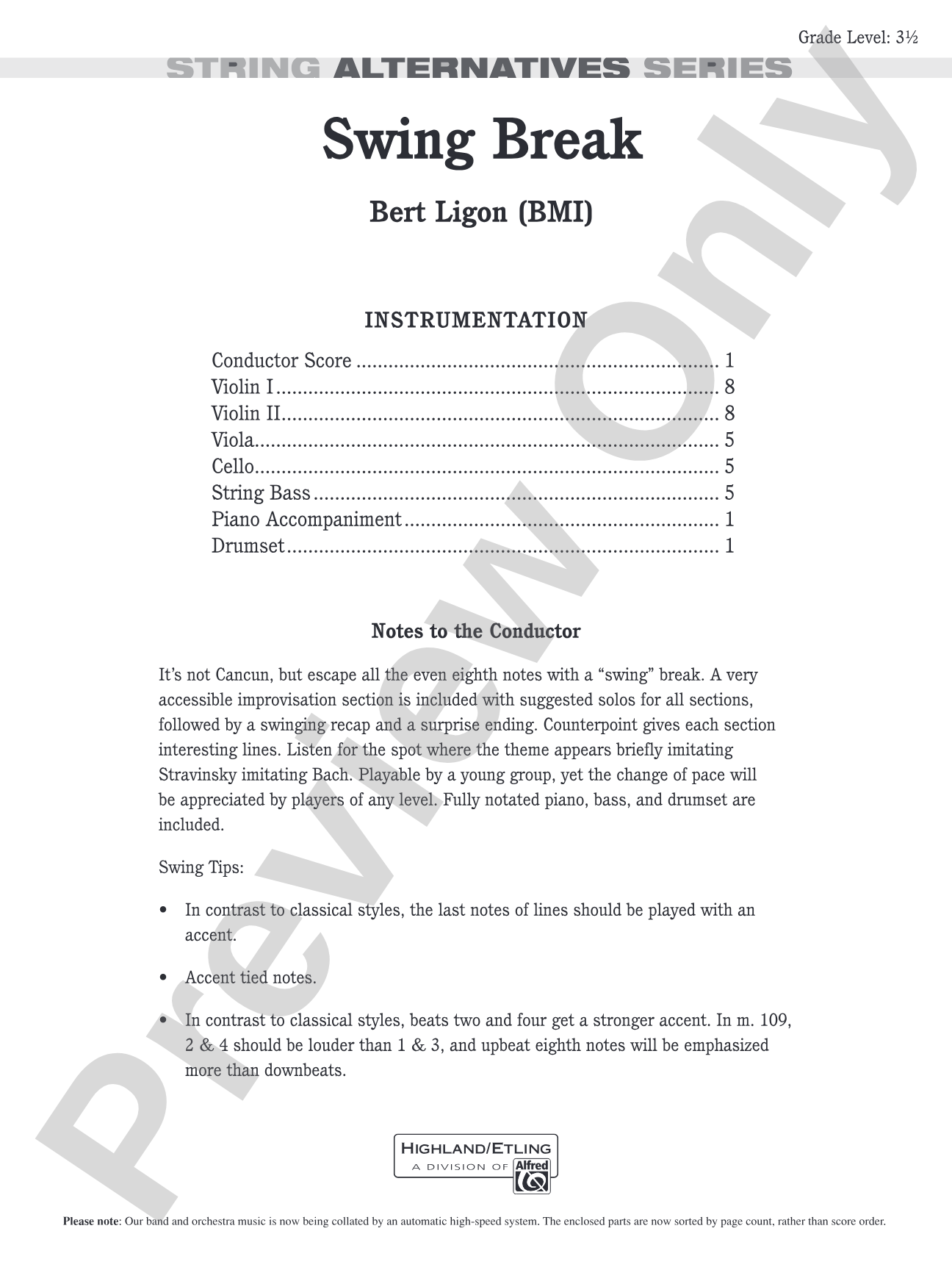
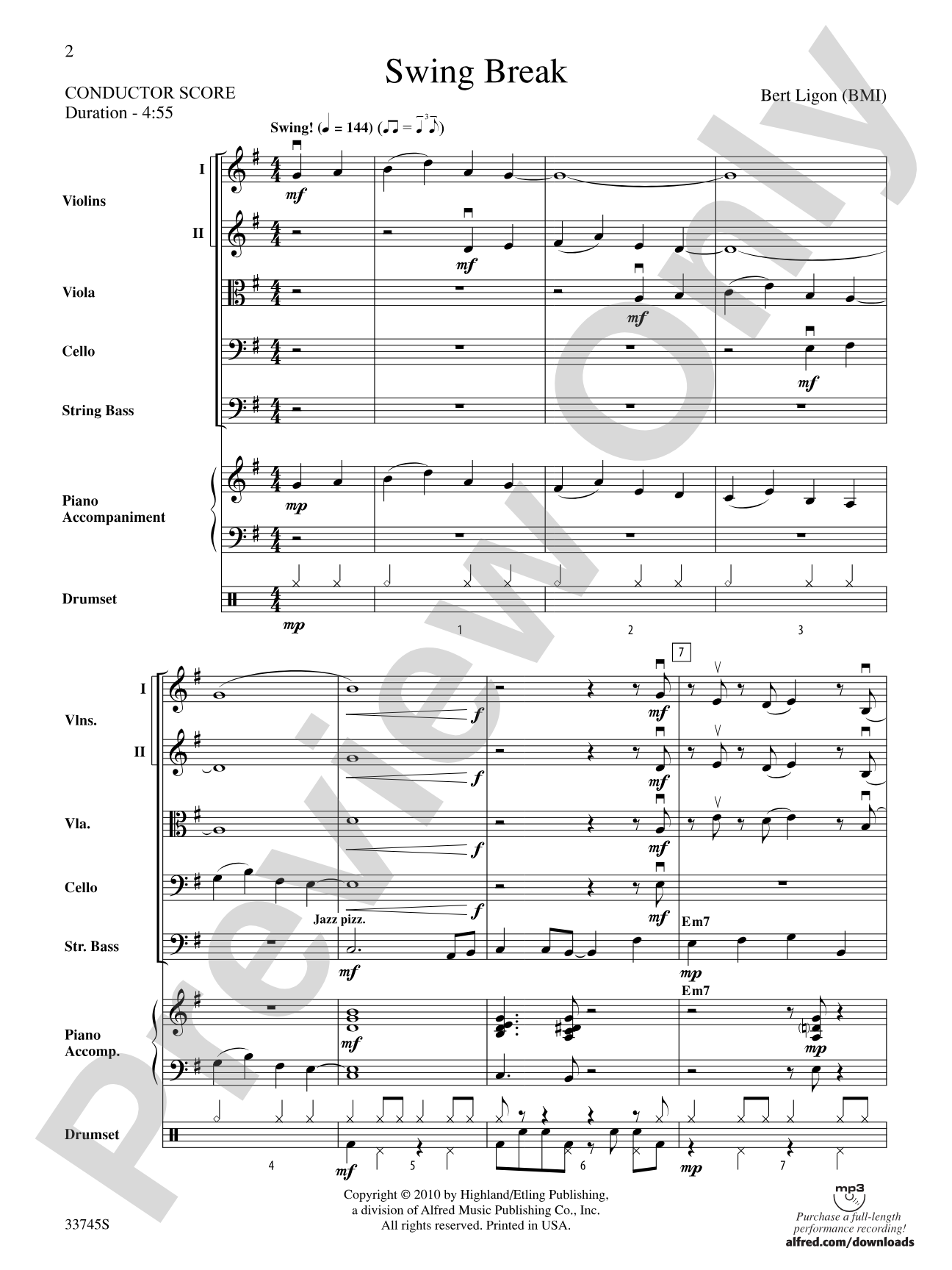
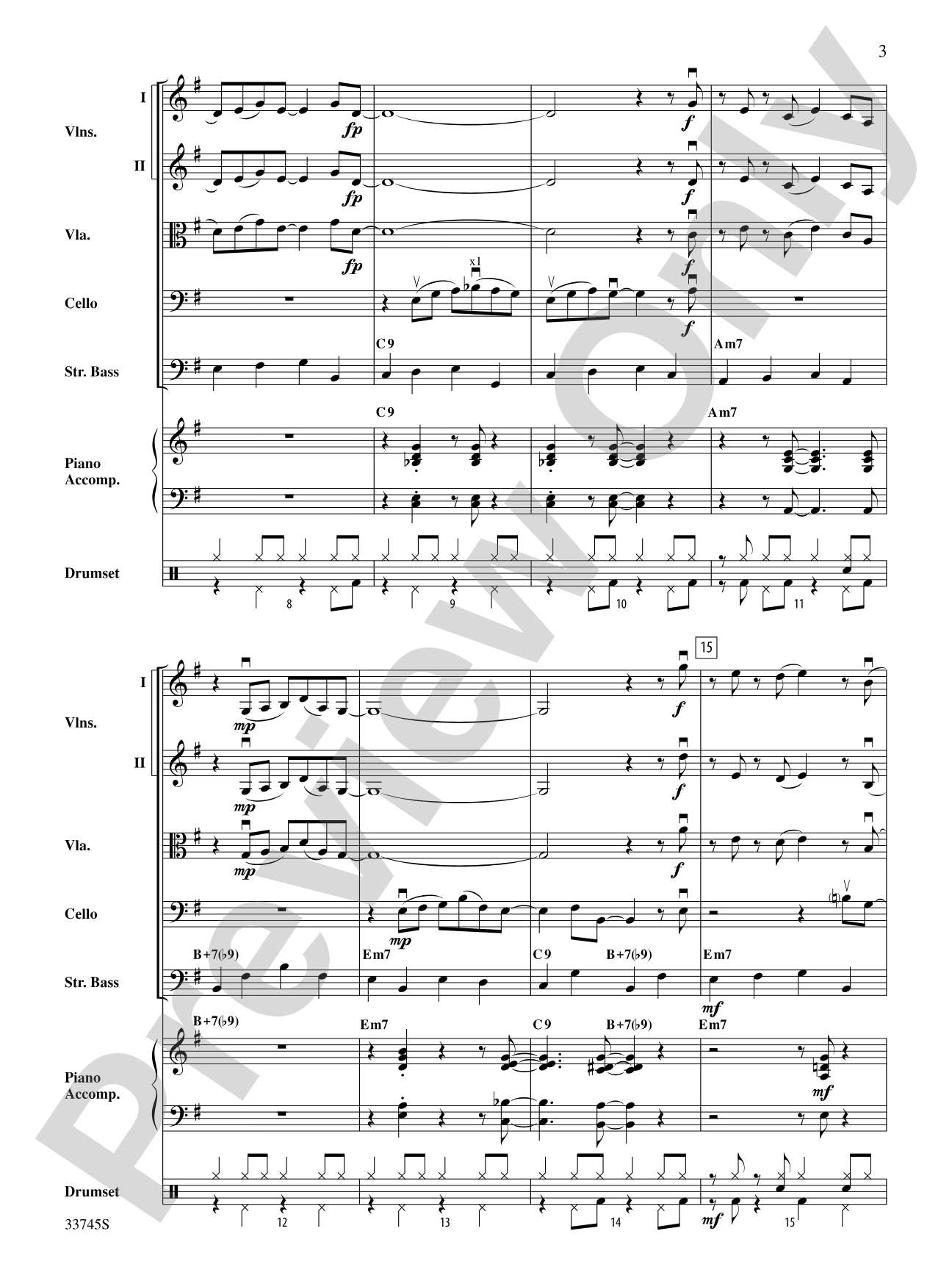
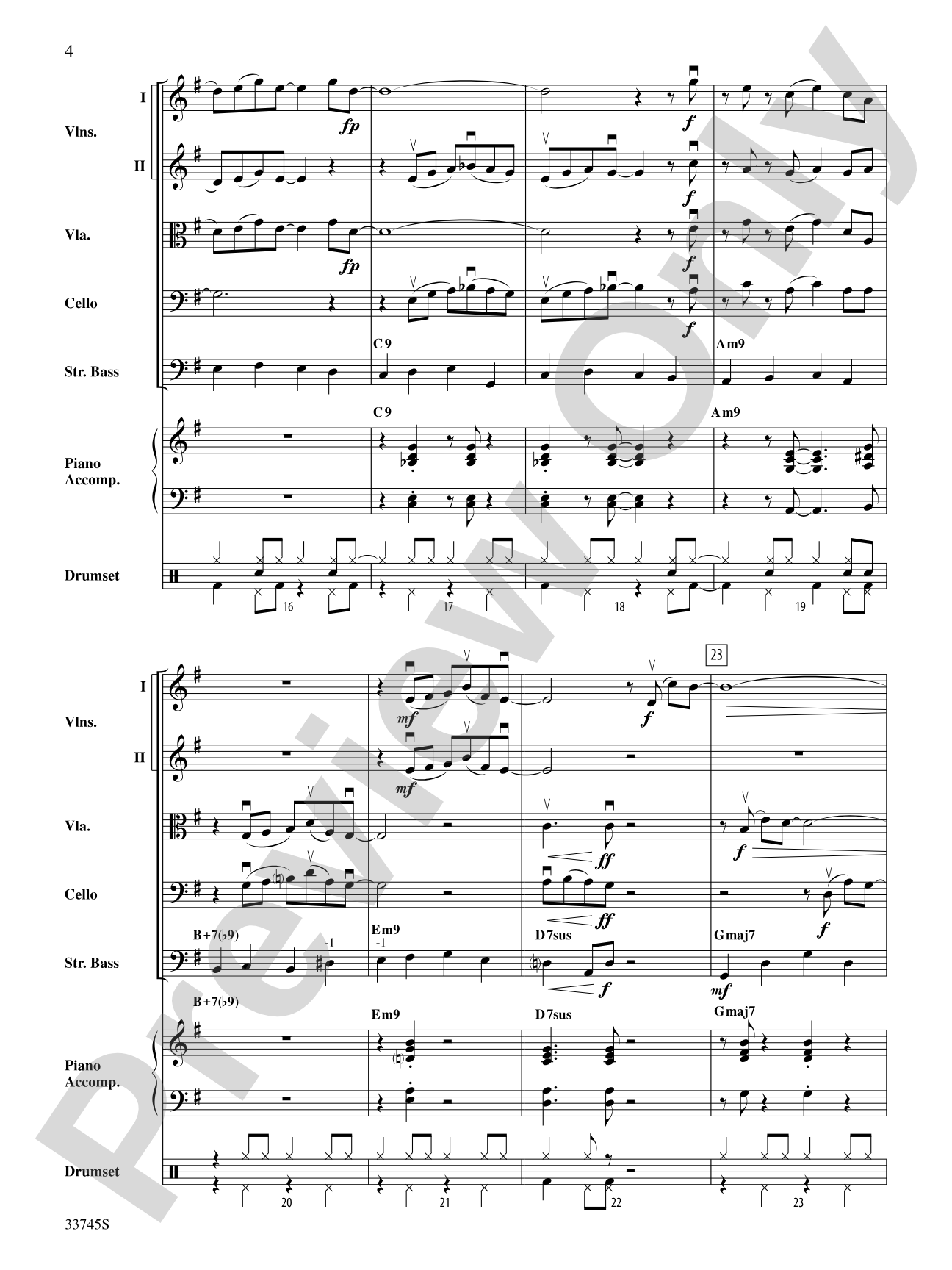
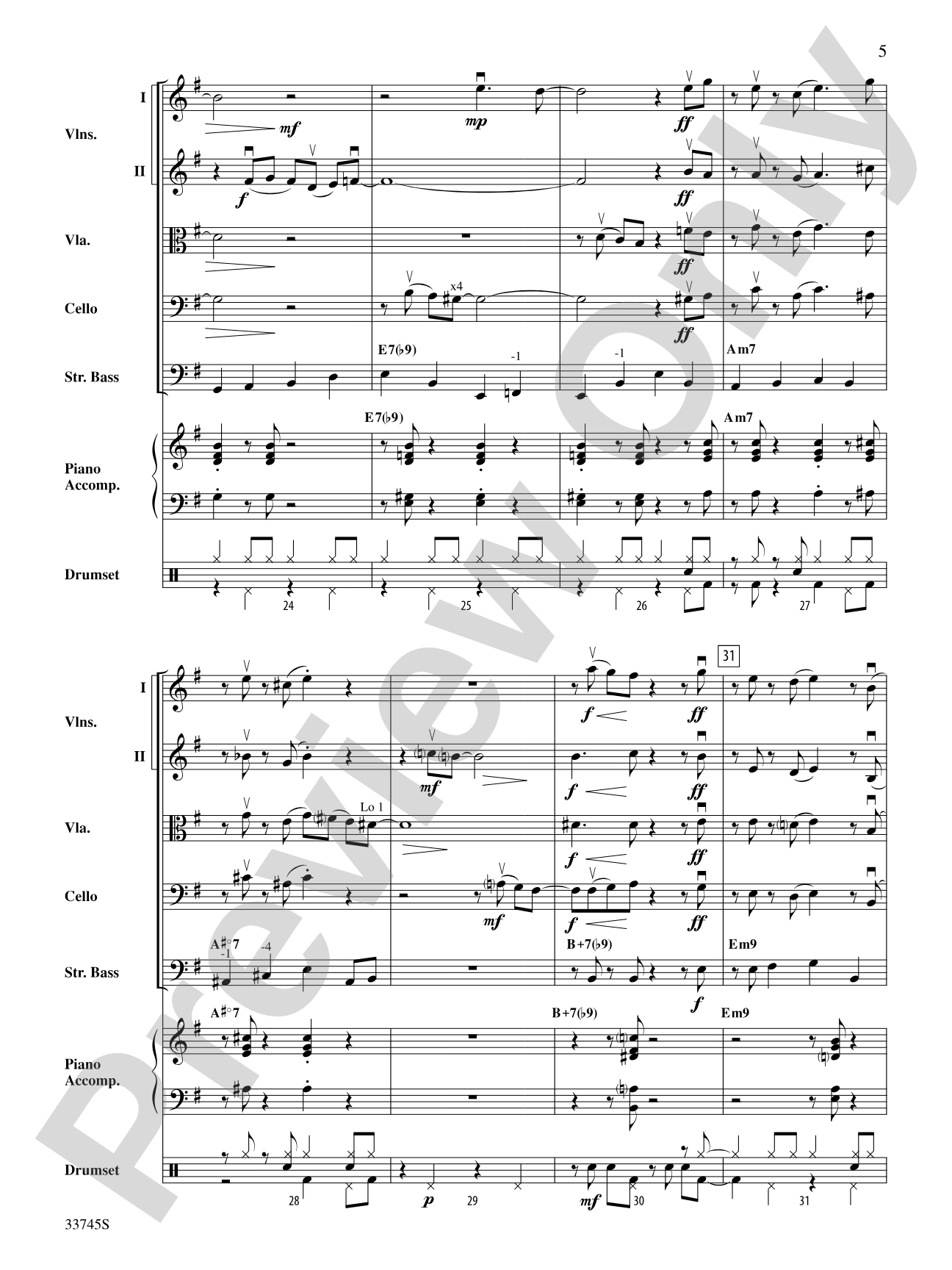
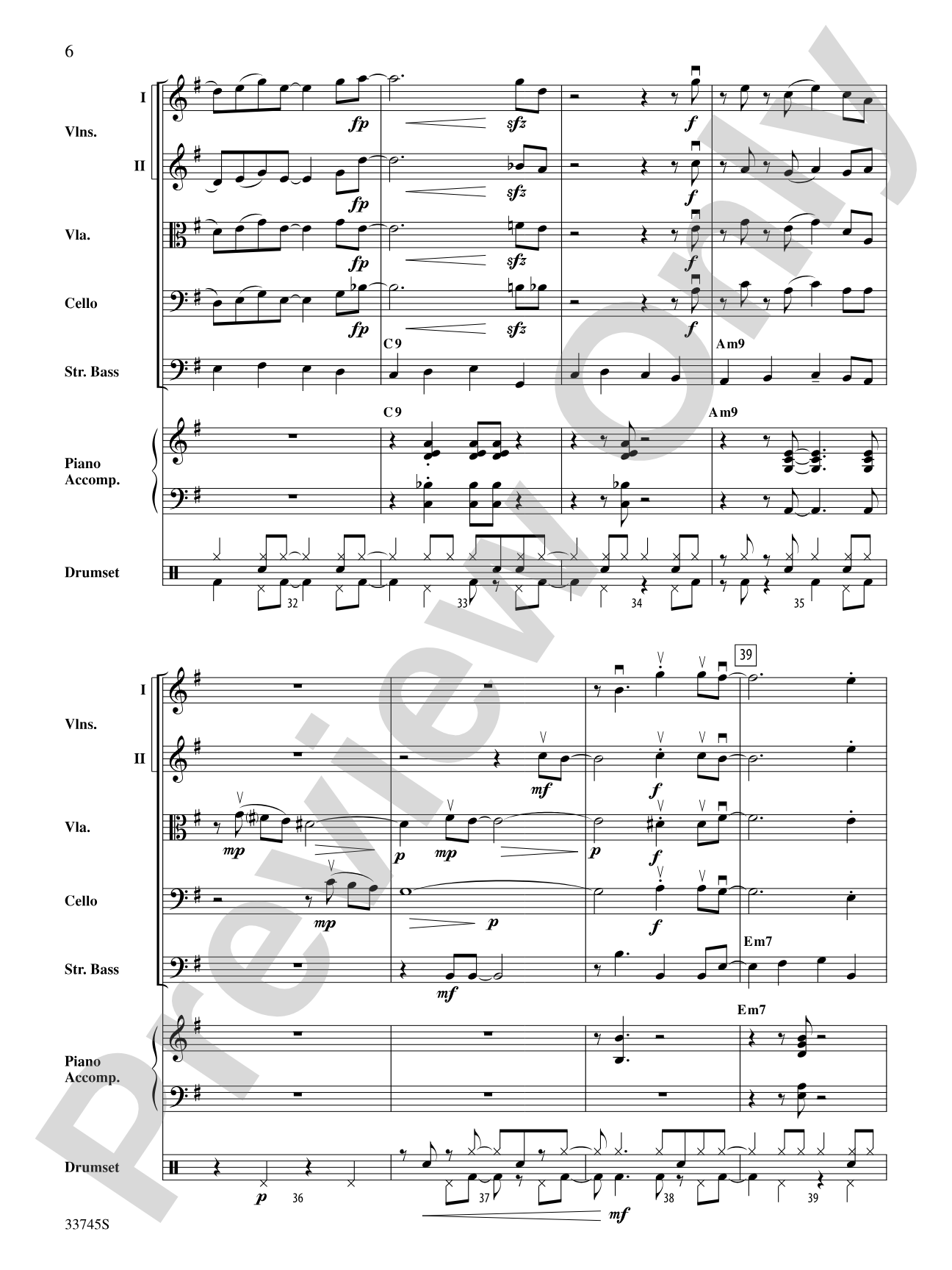
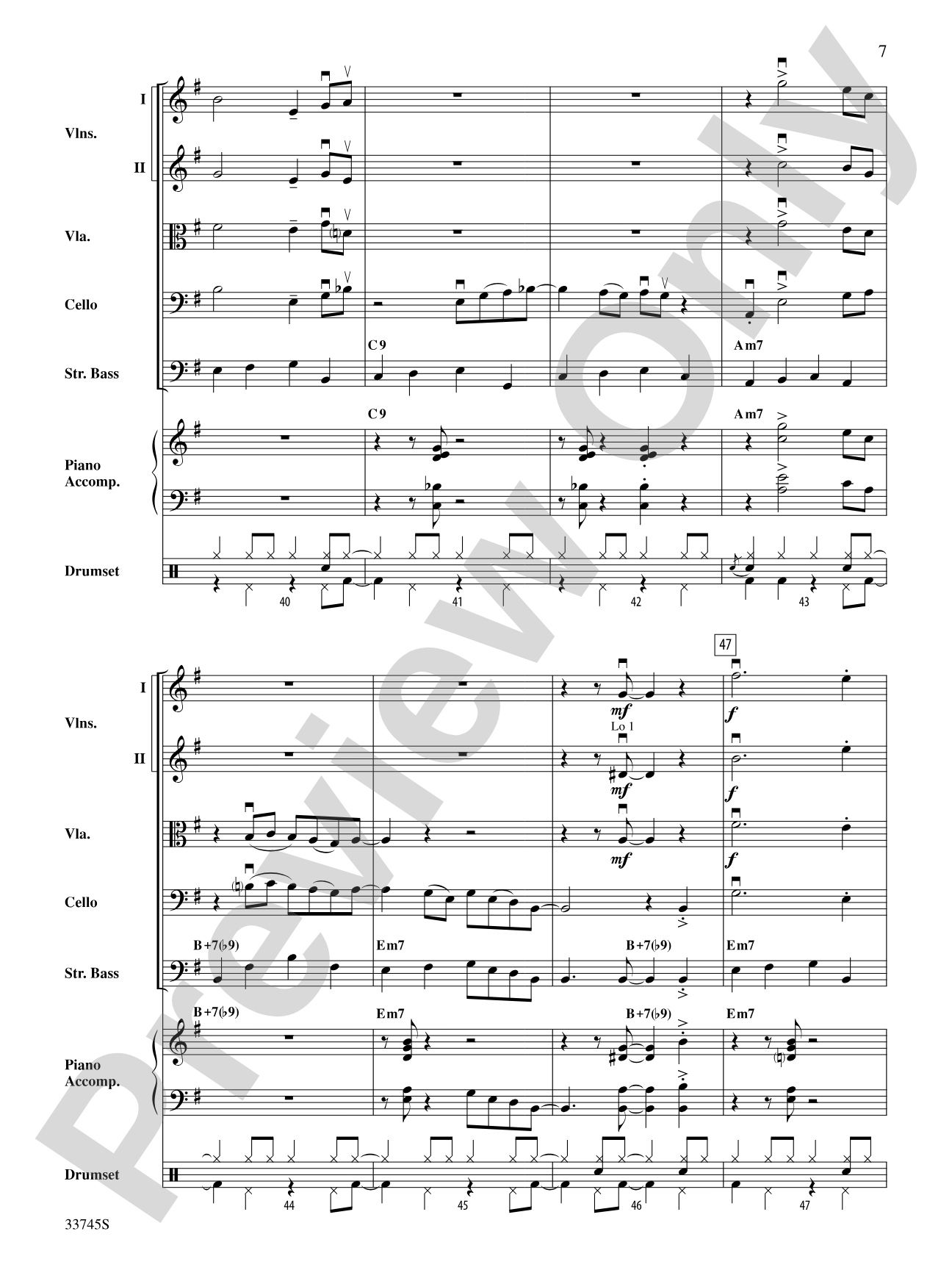
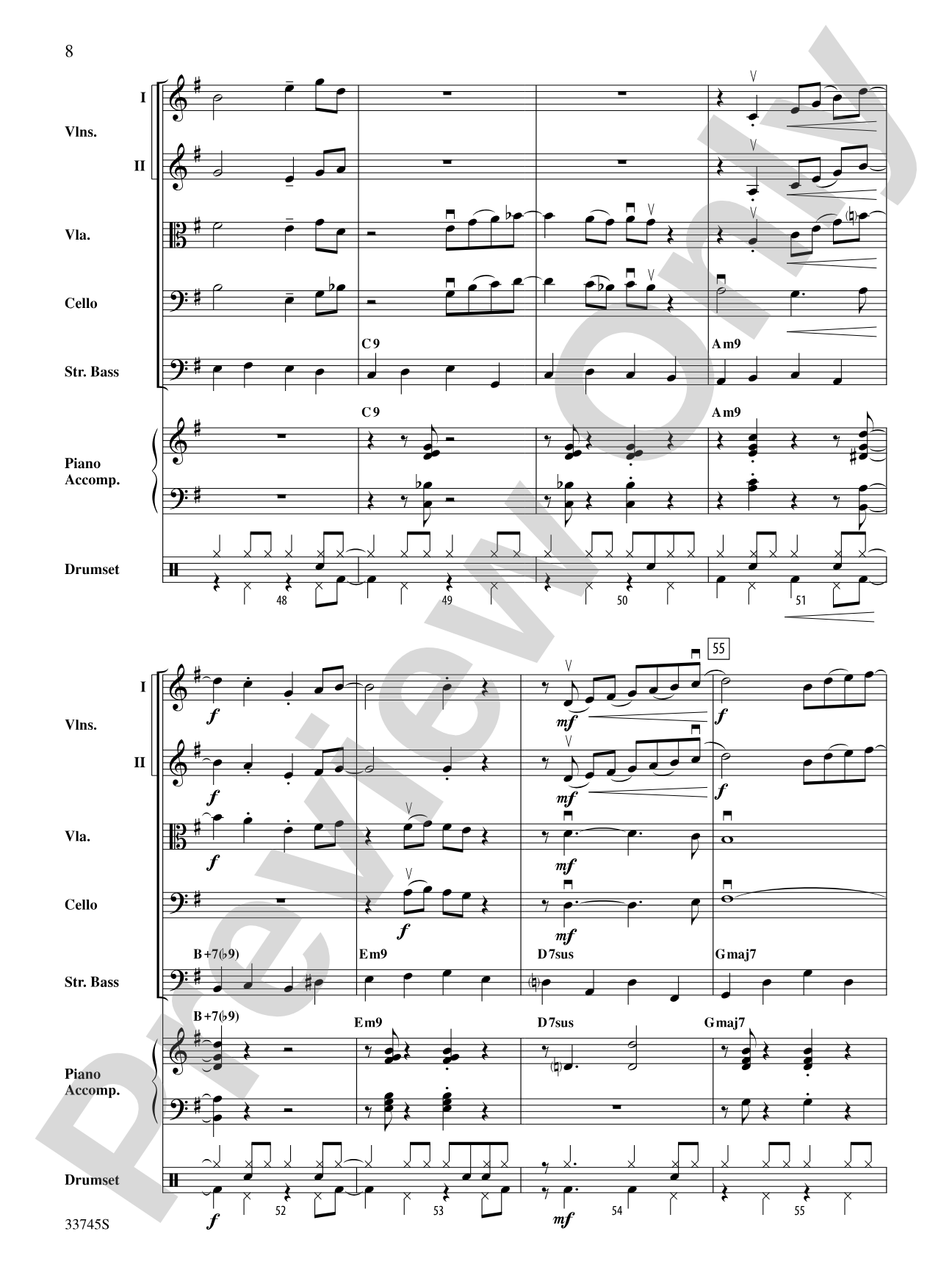
It's not Cancun, but take a break from even eighth notes with a "swing" break. A very accessible improvisation section is included with suggested solos for all sections followed by a swinging recap and a surprise ending. Counterpoint gives each section interesting lines. Playable by a young group yet the change of pace will be appreciated by players of any level. Fully notated piano, bass, and drumset are included.


Don't just read it, hear it, play along with it, and watch your students grow with it. In MakeMusic Cloud, Swing Break: Score comes alive with professional accompaniment, adjustable tempo, and built-in practice tools that turn solo practice into real progress.
Open in the Player
Jump straight in and assign it today.
Start Your Free Trial
Open this title and explore the full library in minutes.
Sample Audio
1
Audio File
--:--
0:00
0:00
Sample Video
No sample videos found.
Additional Details
Series:
Highland/Etling String Alternatives
Publisher:
Alfred Music
Page Count:
132
SKU:
00-PR-0002848
More about this title
About the Composer: Bert Ligon

Bert Ligon directs jazz studies at the University of South Carolina, where he oversees jazz combos and big bands while teaching improvisation, arranging, and jazz theory. His compositions span big band, orchestra, jazz combo, steel band, and string ensemble contexts. He has authored three significant texts on jazz musicianship: Connecting Chords with Linear Harmony, Comprehensive Technique for the Jazz Musician, and Jazz Theory Resources Vol. 1 & 2.
Ligon performs on piano and guitar, and his recording Jazz Trio 2006 documents his playing alongside violinist Martin Norgaard and cellist Renata Bratt. His dual expertise as both educator and working musician informs his approach to writing accessible yet musically substantial repertoire for student ensembles.
Why we love this
Ligon crafts a genuine jazz experience for student strings without requiring advanced improvisation skills or unusual technical demands. The accessible improv section with suggested solos removes the anxiety many young players feel when encountering jazz, while counterpoint throughout ensures every section stays engaged. You get swing, musical substance, and a moment of real novelty in a typical concert without sacrificing ensemble balance.
What to expect
Buoyant and conversational, with the relaxed energy of a group that knows how to lay back and breathe together. The swing feel invites players to find a pocket rather than stay rigidly on the beat, and the interplay between sections creates dialogue and momentum rather than formal structure.
Who it's for
String orchestras at the Grade 3.5 level looking to program a genuine jazz experience without overwhelming young soloists or the ensemble. Directors who want to introduce improvisation in a notated, guided format that still feels playful and swinging.
How to get the most out of it
- Establish a steady quarter-note pulse during the improvisation section even as soloists vary their rhythmic placement; this gives them security and lets the rhythm section stay locked.
- Balance the suggested solos by having rhythm section members sit forward during their feature passages; full string sound can easily bury the piano, bass, or drums.
- Work the counterpoint between sections in rehearsal as you would homophonic writing, ensuring each line breathes independently and arrives at phrase endings together.
- Rehearse the 'surprise ending' separately so the ensemble trusts the timing; anticipation here will flatten the impact.
How to use it
Slot this mid-concert as a tonal and stylistic pivot from traditional repertoire, or use it as a season closer when you want to remind audiences and players that string orchestras can swing. The improvisation section makes it ideal for a concert built around 'What Strings Can Do' or a pops program.
Skills your students will build
- Swing feel and rhythmic placement behind the beat
- Reading notation while improvising within harmonic and melodic frameworks
- Balance and blend when sharing solo and accompaniment roles
- Counterpoint reading with independence of line
- Listening and responding to other sections in real time