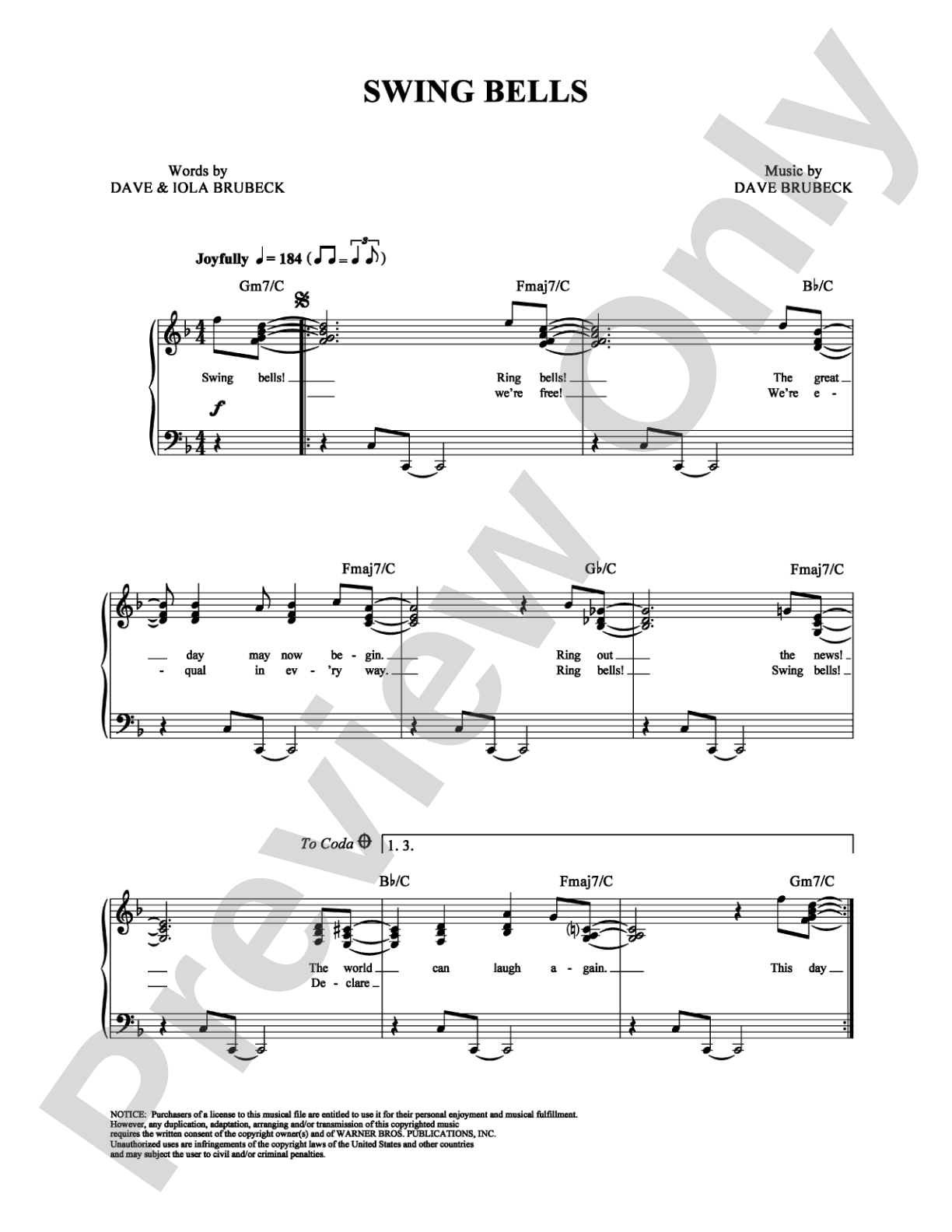
Swing Bells: Piano/Vocal/Chords Digital Sheet Music

Swing Bells: Piano/Vocal/Chords Digital Sheet Music

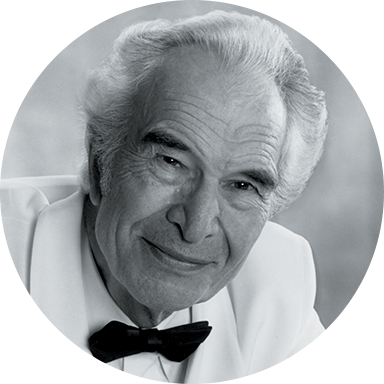
Dave Brubeck

Item: 00-PS-0000996

Digital Download
$3.99
Description

Swing Bells: Piano/Vocal/Chords Digital Sheet Music isn't in MakeMusic Cloud just yet...but it could be. Let us know you'd like to see it, and you'll help shape what comes next. In the meantime, start a free trial and dive into thousands of interactive titles your students can play along with today.

Sample Audio
No sample audio found.
Sample Video
Additional Details
SKU: 00-PS-0000996

More about this title

About the Artist: Dave Brubeck

Dave Brubeck

Dave Brubeck was a pianist and composer whose improvisational gifts shaped modern jazz while his concert works spanned choral pieces, orchestral compositions, chamber music, and large-scale choral-orchestral works. His groundbreaking album Time Out became the first jazz record to sell over a million copies, and his composition "Take Five" remains a jazz standard. Beyond music, Brubeck was instrumental in breaking racial barriers in mid-20th-century America, earning recognition that extended far beyond the jazz world.

His formal training included study with French composer Darius Milhaud at Mills College following World War II, an influence that encouraged him to synthesize jazz language with classical forms. Throughout his career, Brubeck received the Grammy Lifetime Achievement Award, the Presidential Medal of the Arts, and induction into the American Classical Music Hall of Fame in 2003. His sacred works, including To Hope! and the oratorios The Voice of the Holy Spirit and Beloved Son, have been performed and recorded internationally by major orchestras and choirs.

Why we love this

Brubeck's jazz vocabulary feels fresh in a classical music training context, and this piano/vocal arrangement gives singers and pianists a chance to inhabit his distinctive harmonic language without requiring a full ensemble. The chord chart format invites the performer to engage with jazz reharmonization while the notation keeps everything grounded and readable.

What to expect

Brubeck's melodic sensibility is warm and introspective, built on gentle swing rhythms that never feel rushed. The piece carries the relaxed sophistication of a late-night jazz lounge, where precision and swing are balanced in an effortless-sounding conversation between voice and piano.

Who it's for

Pianists and singers exploring jazz repertoire at the intermediate level and above, as well as pianists accompanying jazz vocalists in rehearsal or performance. This format also works for music students wanting to learn Brubeck's harmonic approach without the complexity of a full jazz ensemble arrangement.

How to get the most out of it

  • Lean into the swing eighth-note feel early in rehearsal; get the band locked on the shuffle before polishing melodic details.
  • Let the piano's comping breathe, this isn't a rhythm section that plays in lockstep. The pianist should listen actively to the singer and respond with space, not fill.
  • Record a full run-through and listen back for balance between voice and accompaniment; jazz vocals often need more presence than classical singers expect.
  • If you're using a rhythm section, work the bassline and drums separately first, then bring them together with the piano to establish the pocket.

How to use it

Include this as a standalone jazz feature in a recital program, or pair it with other Brubeck compositions to create a thematic segment celebrating his work. It also serves well as an encore or as part of a jazz appreciation concert where classical and jazz traditions share the stage.

Skills your students will build

  • Reading and interpreting chord symbols in a jazz context
  • Singing or playing with swing articulation and phrasing
  • Accompanying a vocalist with sensitivity to jazz style and rubato
  • Understanding Brubeck's approach to melody and harmonic movement

You May Also Like