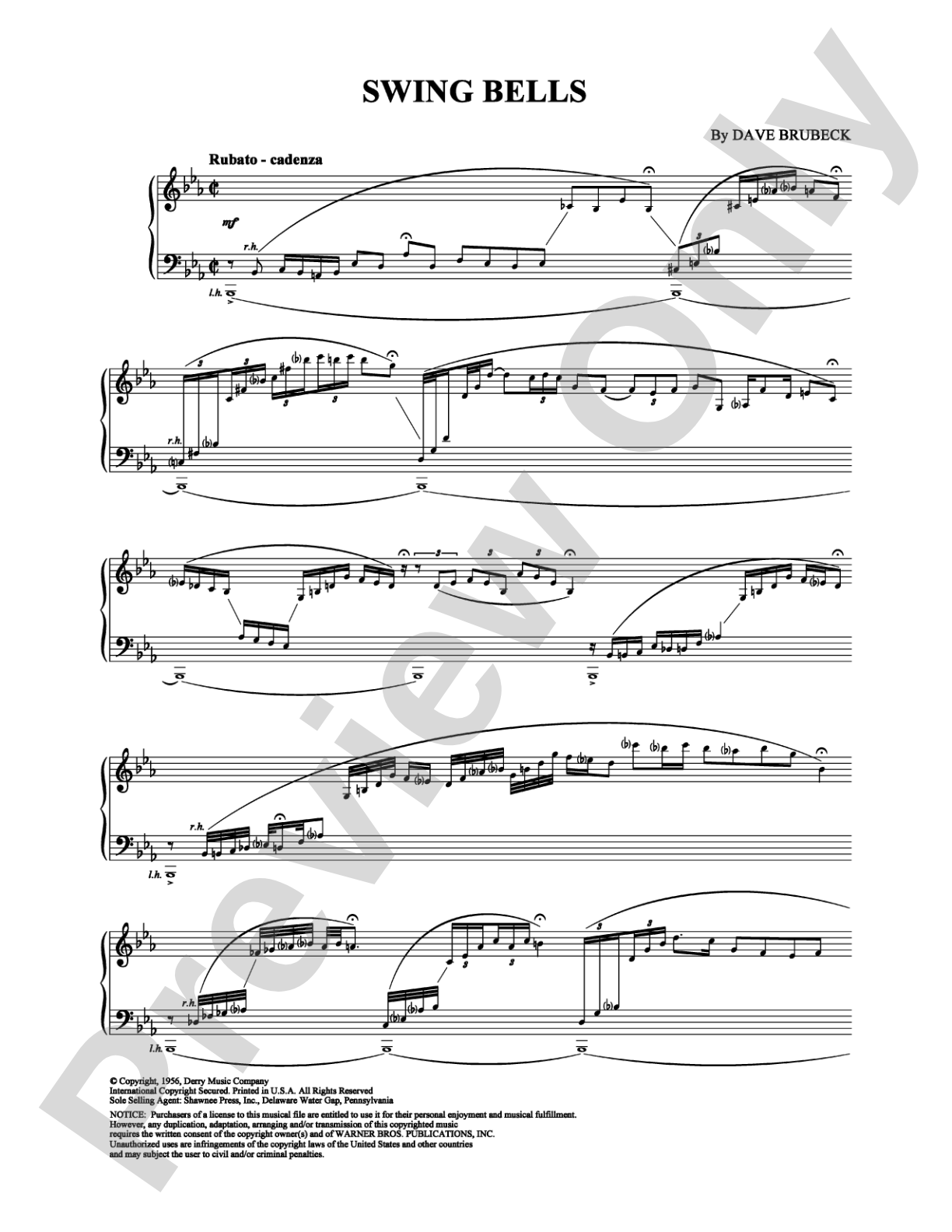
Swing Bells: Piano Digital Sheet Music

Swing Bells: Piano Digital Sheet Music

Dave Brubeck

Item: 00-PS-0000995

Digital Download
$3.99
Description

Swing Bells: Piano Digital Sheet Music isn't in MakeMusic Cloud just yet...but it could be. Let us know you'd like to see it, and you'll help shape what comes next. In the meantime, start a free trial and dive into thousands of interactive titles your students can play along with today.

Sample Audio
No sample audio found.
Sample Video
Additional Details
SKU: 00-PS-0000995

More about this title

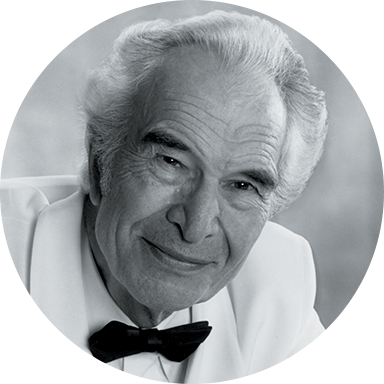
About the Artist: Dave Brubeck

Dave Brubeck

Dave Brubeck stands as one of jazz's most significant figures, equally commanding as an improviser and a disciplined composer. His body of work spans jazz standards, large-scale orchestral pieces, choral music, and chamber works that reflect decades of artistic evolution. He studied composition with French master Darius Milhaud after World War II, an influence that shaped his ability to blend jazz language with classical structure. His album "Time Out" became the first jazz record to exceed one million sales, and "Take Five" remains iconic in the jazz canon.

Beyond music, Brubeck was a civil rights pioneer who integrated his performing ensembles in the 1950s when doing so carried genuine risk. His sacred works, including the mass "To Hope!" and oratorios recorded by the London Symphony Orchestra, demonstrate the spiritual dimension of his compositional voice. He received the Presidential Medal of the Arts, a Grammy Lifetime Achievement Award, and was elected to the American Classical Music Hall of Fame in 2003, recognitions that reflect his lasting influence on both jazz and classical music.

Why we love this

Brubeck's jazz writing for solo piano carries the sophistication of a composer who understood both idiom and structure. This piece captures the energy and harmonic language his audiences expect while remaining playable in recital settings where improvisation can flourish. Programming work by a canonized jazz composer alongside classical pieces enriches any student recital or concert series.

What to expect

Bright, celebratory energy with the sophisticated harmonies that define Brubeck's style. The piece captures the infectious quality of a jazz ensemble distilled for solo piano, inviting the performer to inhabit both the role of melody player and rhythm keeper. It swings with ease while maintaining the kind of structural clarity that makes it memorable and re-playable.

Who it's for

Intermediate to advanced pianists comfortable with jazz harmony and swing rhythms. Students exploring the intersection of classical training and jazz vocabulary will find this piece both musically rewarding and technically manageable. Pianists preparing recitals that mix genres benefit from having essential Brubeck in their repertoire.

How to get the most out of it

  • Balance the swing feel with precision in your rhythmic placement; jazz time requires both relaxation and accuracy.
  • Listen to Brubeck's recorded versions to absorb his approach to tempo, phrasing, and the subtle push-and-pull of jazz articulation.
  • Treat the written notes as a foundation for expressive interpretation; understand where your own musical choices can enter the performance.
  • Let the harmonic movement breathe; Brubeck's chord changes often reward a touch of rubato in the melody while keeping the underlying pulse steady.

How to use it

Use this as a centerpiece in a jazz or American music recital, pairing it with other piano works that span classical to contemporary idioms. Its accessible energy and clear melodic content also make it valuable as an encore or as a bridge between a formal recital and a more informal concert setting.

Skills your students will build

  • Reading and executing swing rhythms and jazz articulation
  • Interpreting jazz harmony and understanding chord substitutions
  • Balancing written composition with idiomatic improvisation
  • Developing independence between right and left hand in jazz contexts
  • Listening and internalizing jazz performance practice through score study

You May Also Like