
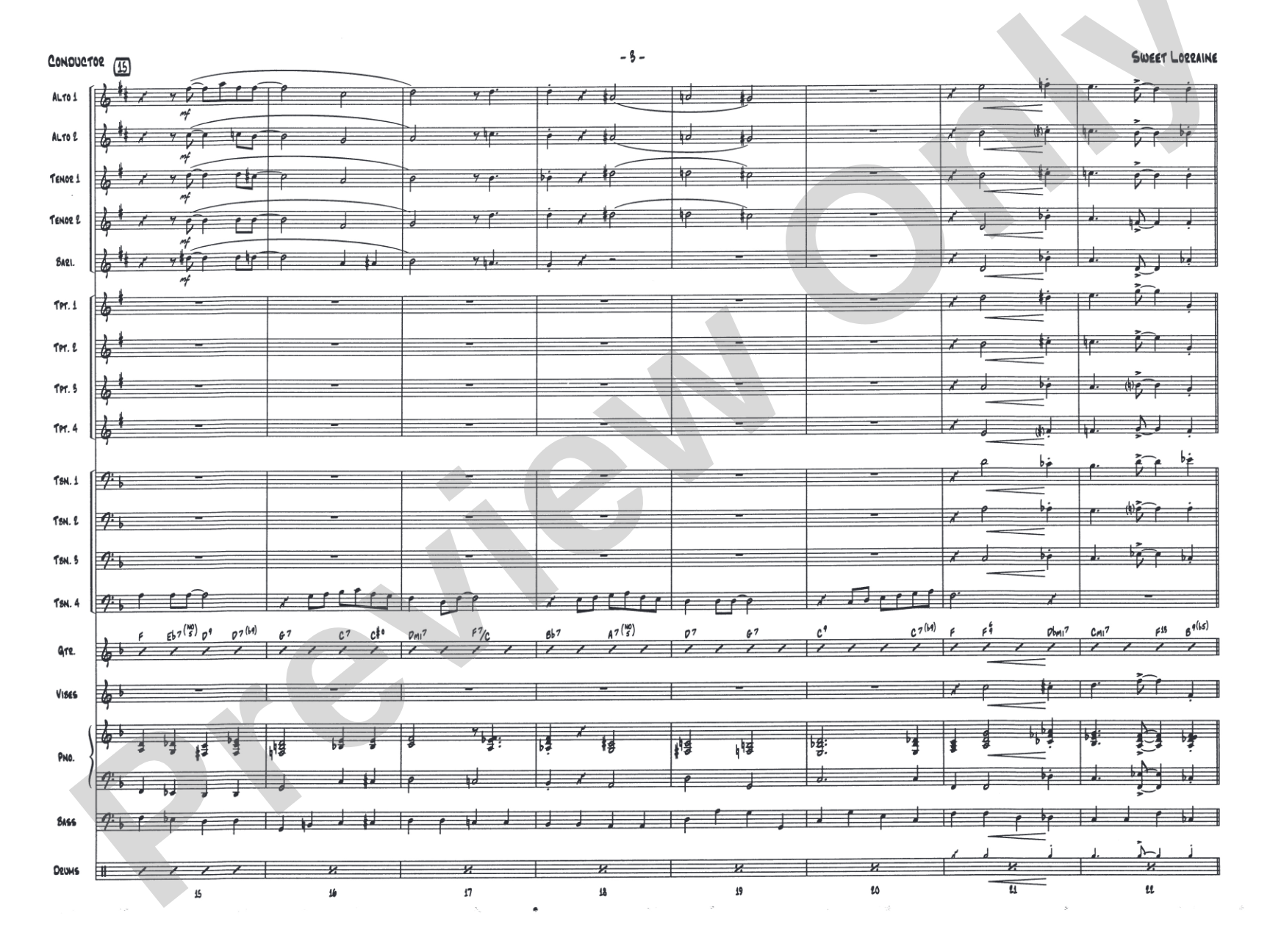
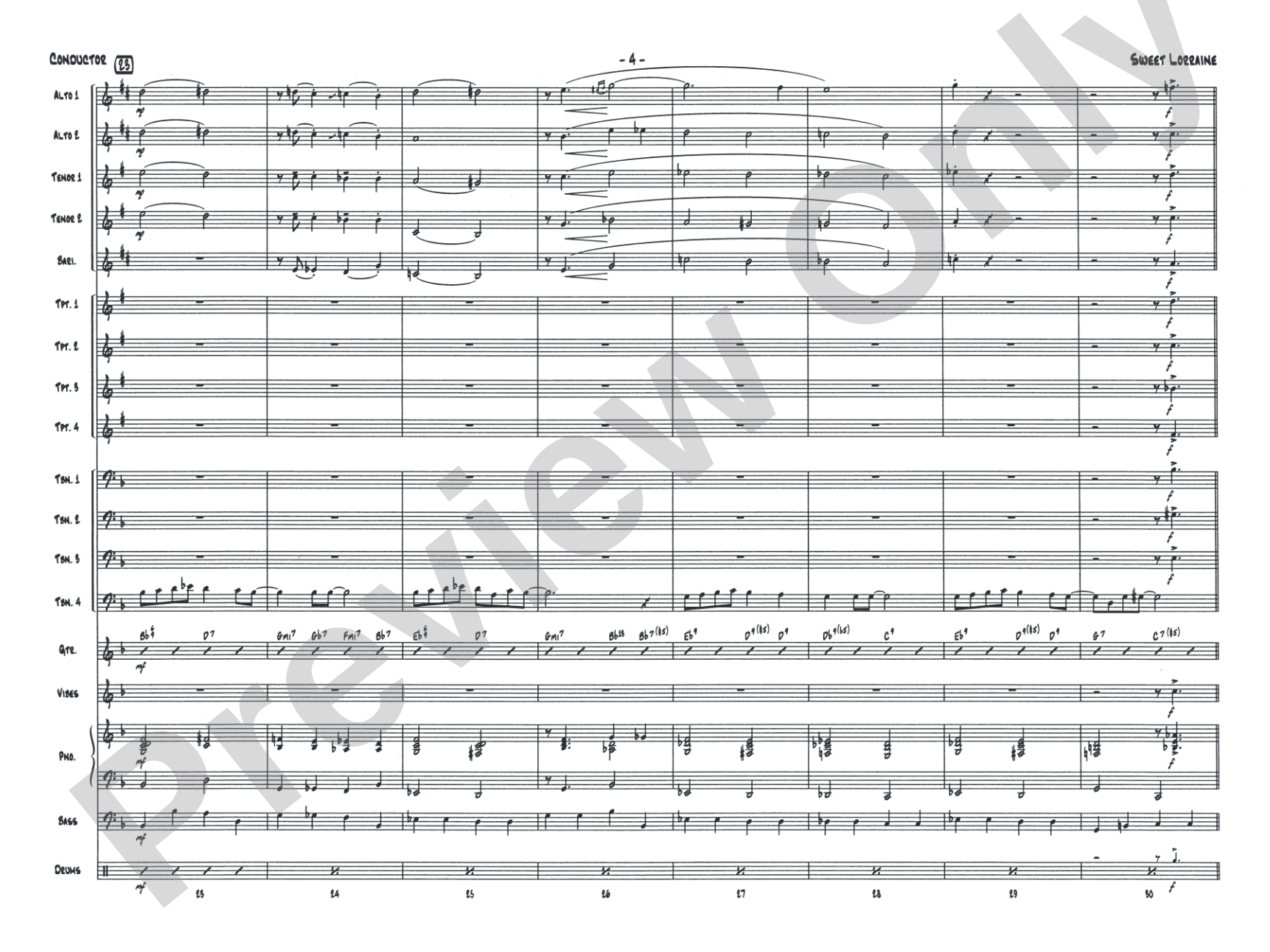
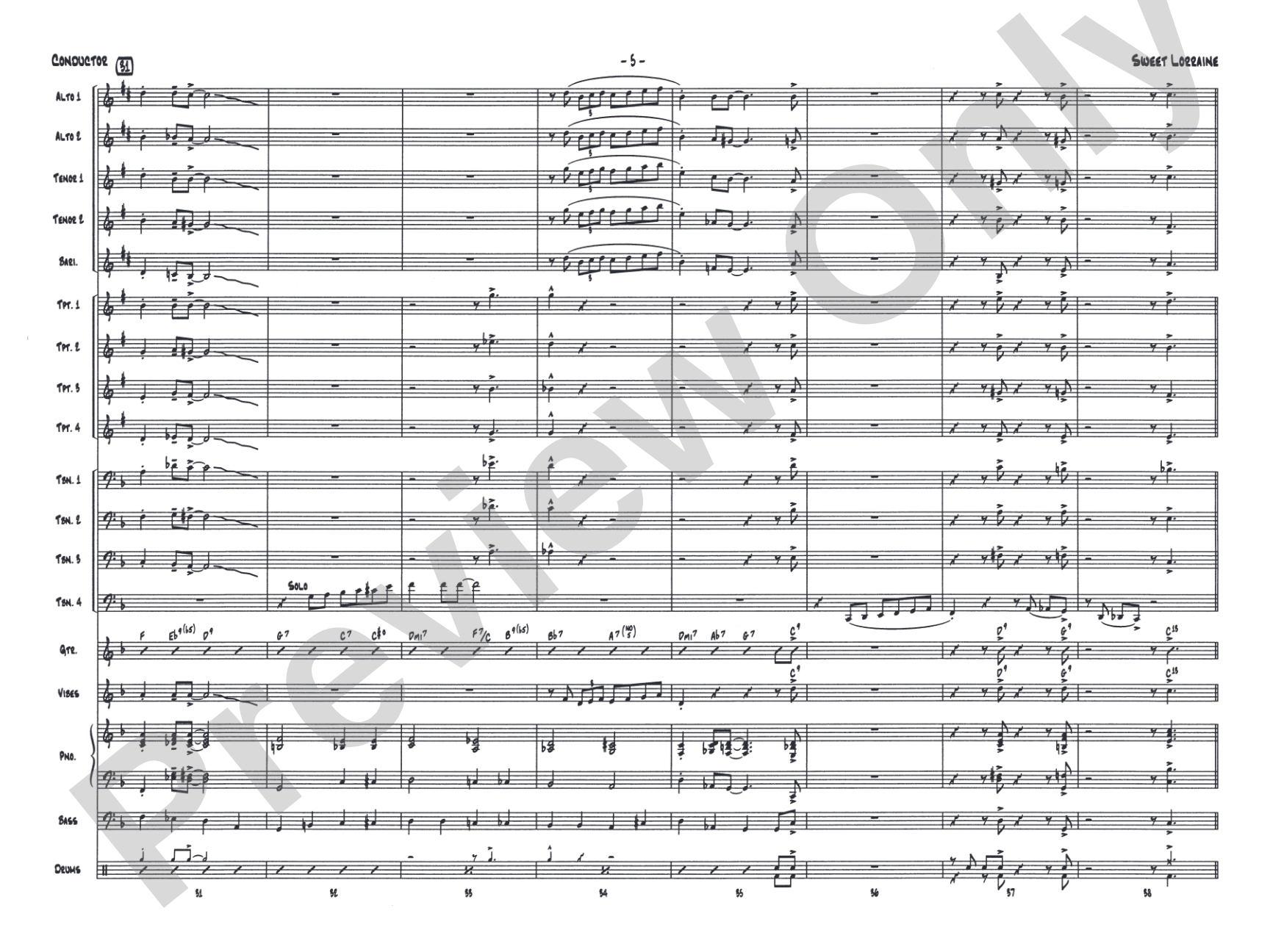
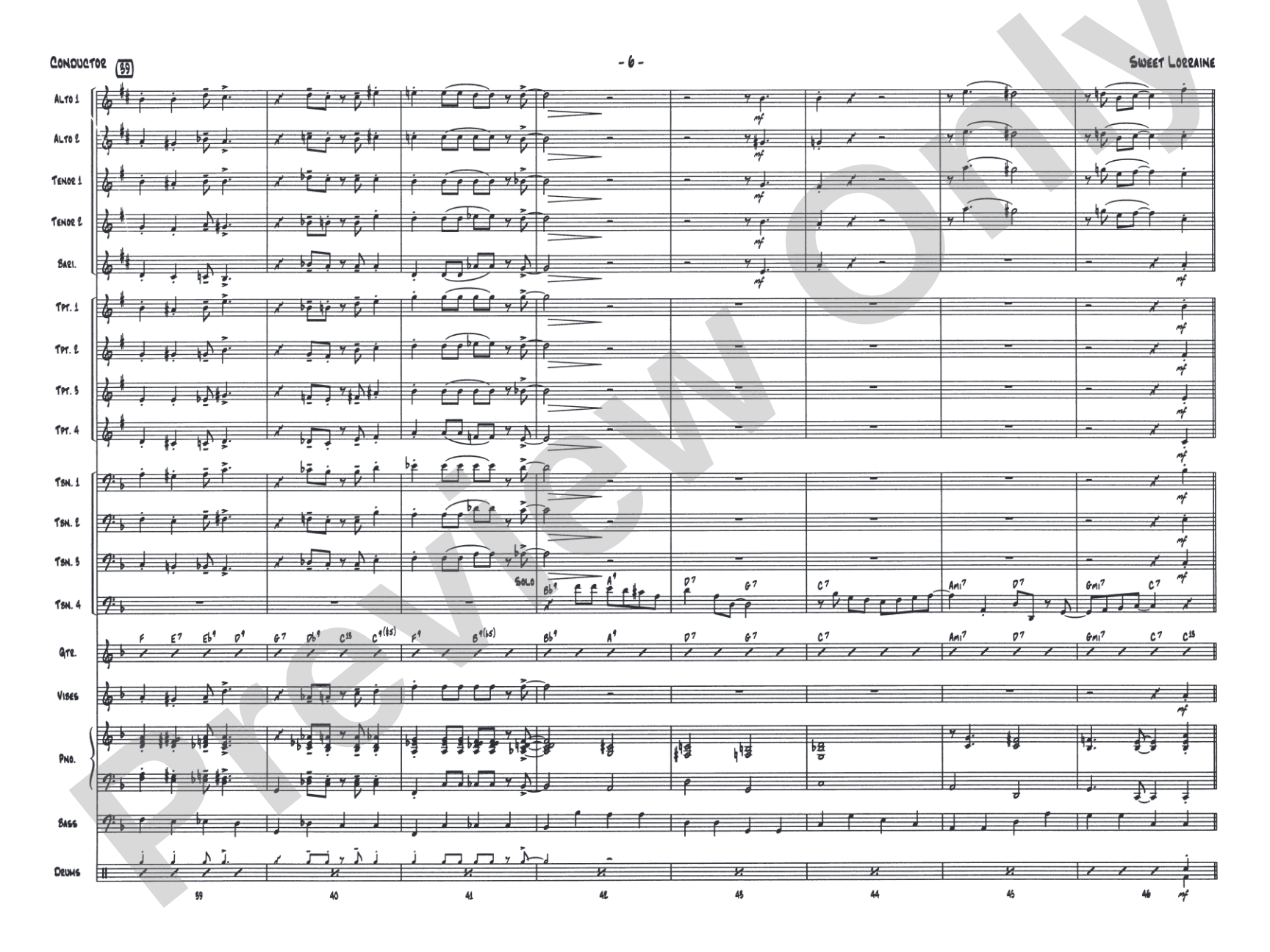

Sweet Lorraine: Score
Music by Cliff Burwell, words by Mitchell Parish / arr. Dave Wolpe
Grade: 3 (Medium)
Item: 00-PR-0005556
$8.00
Pickup currently not available
Description
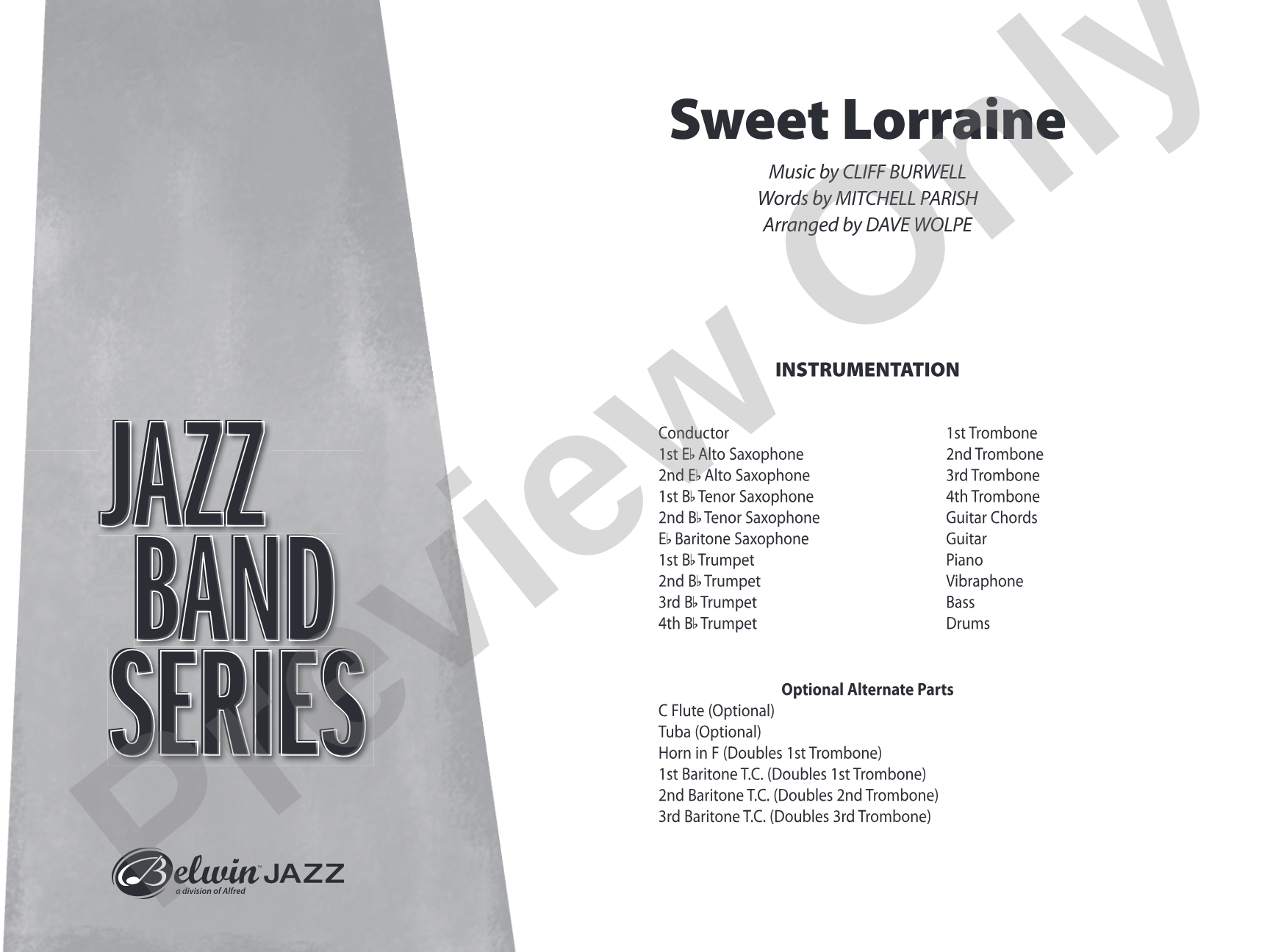
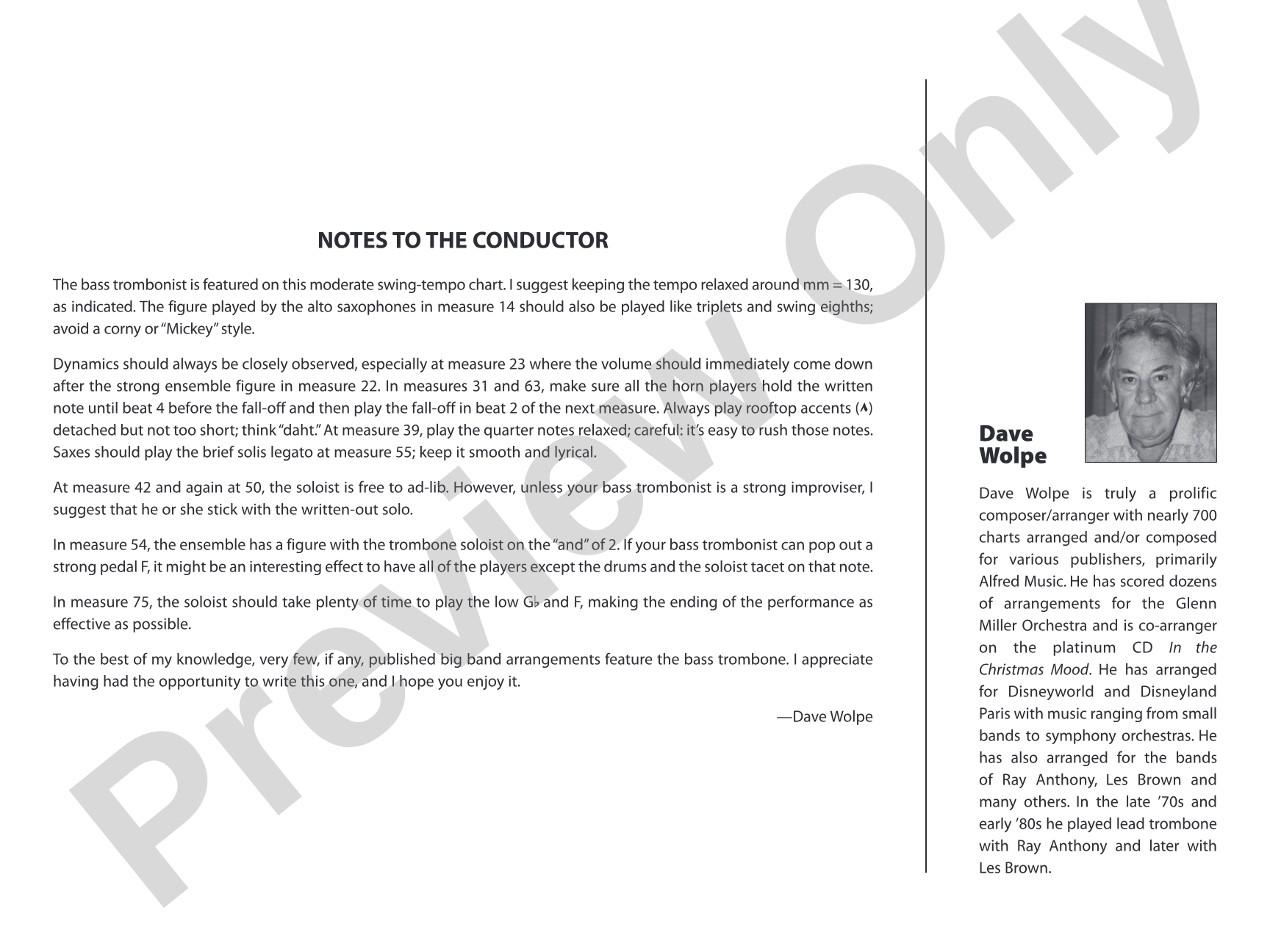
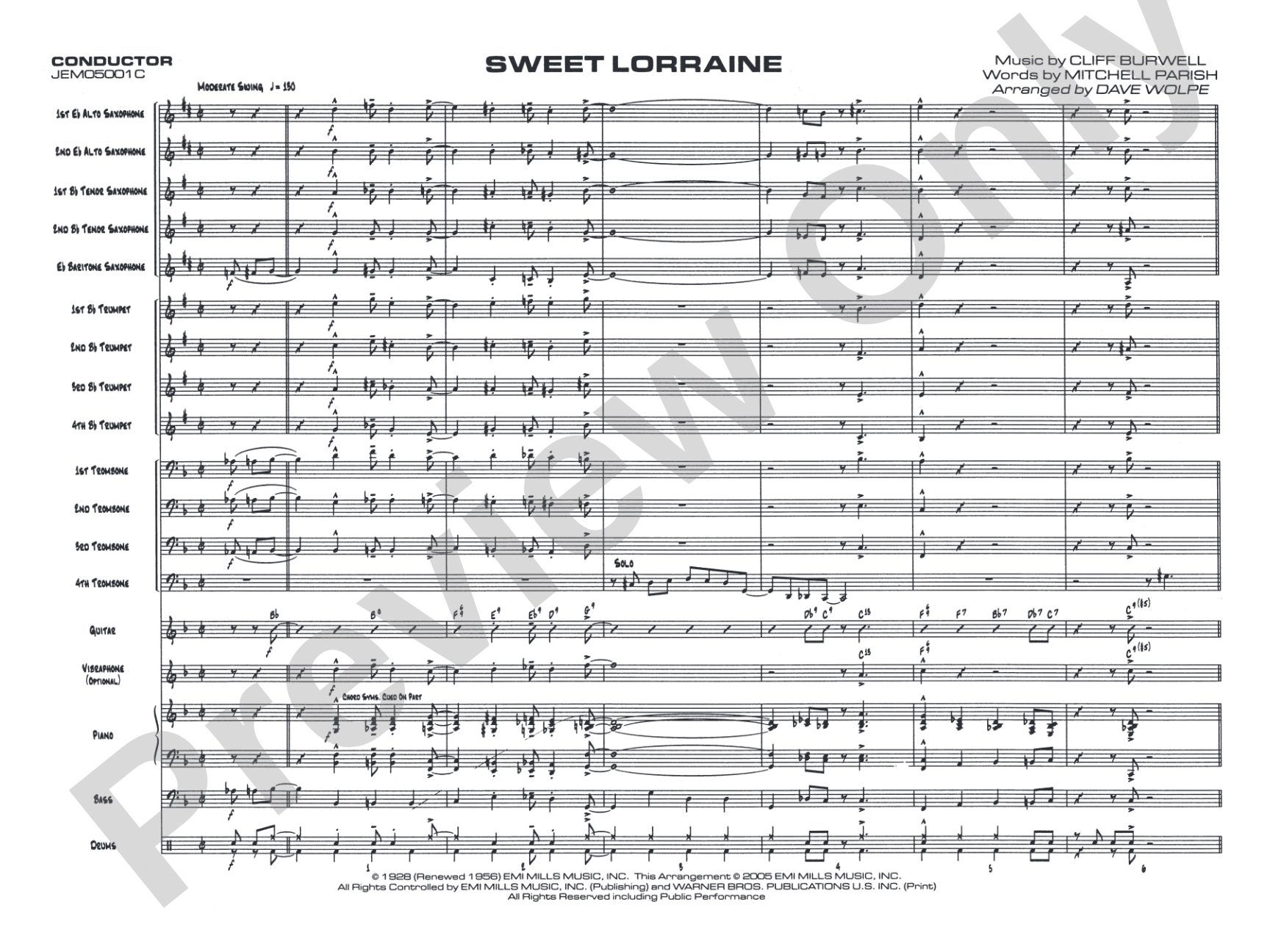
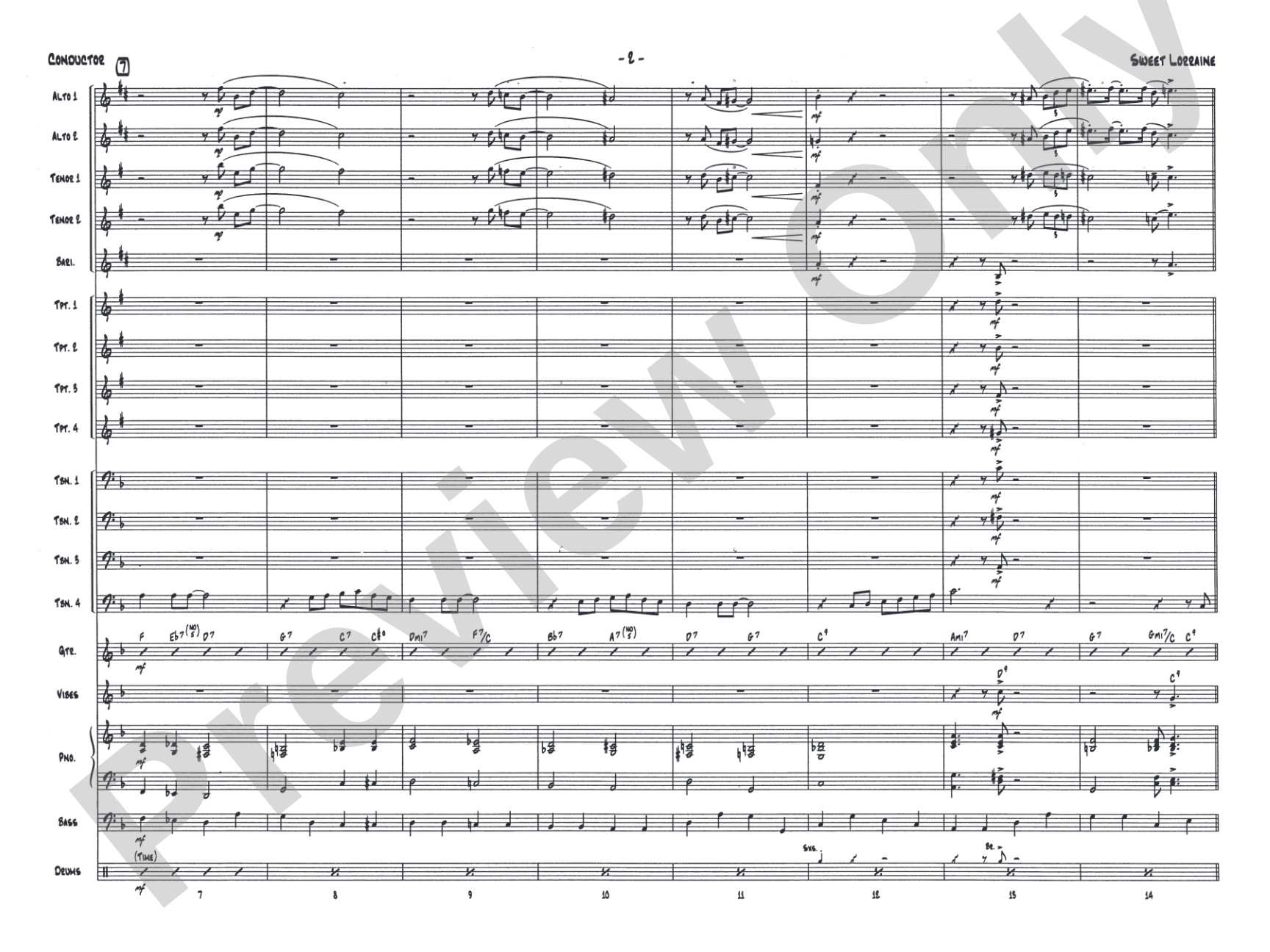
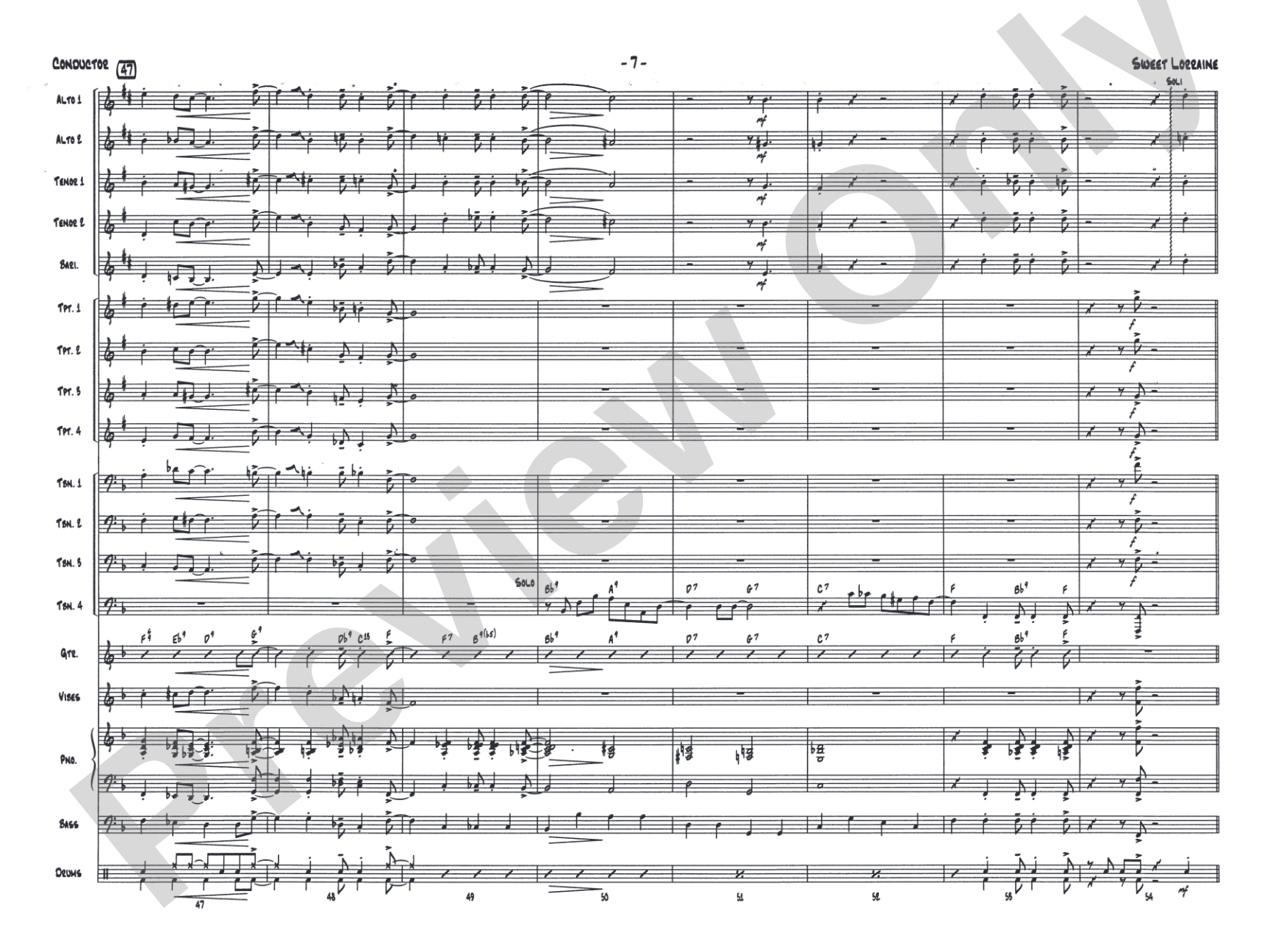
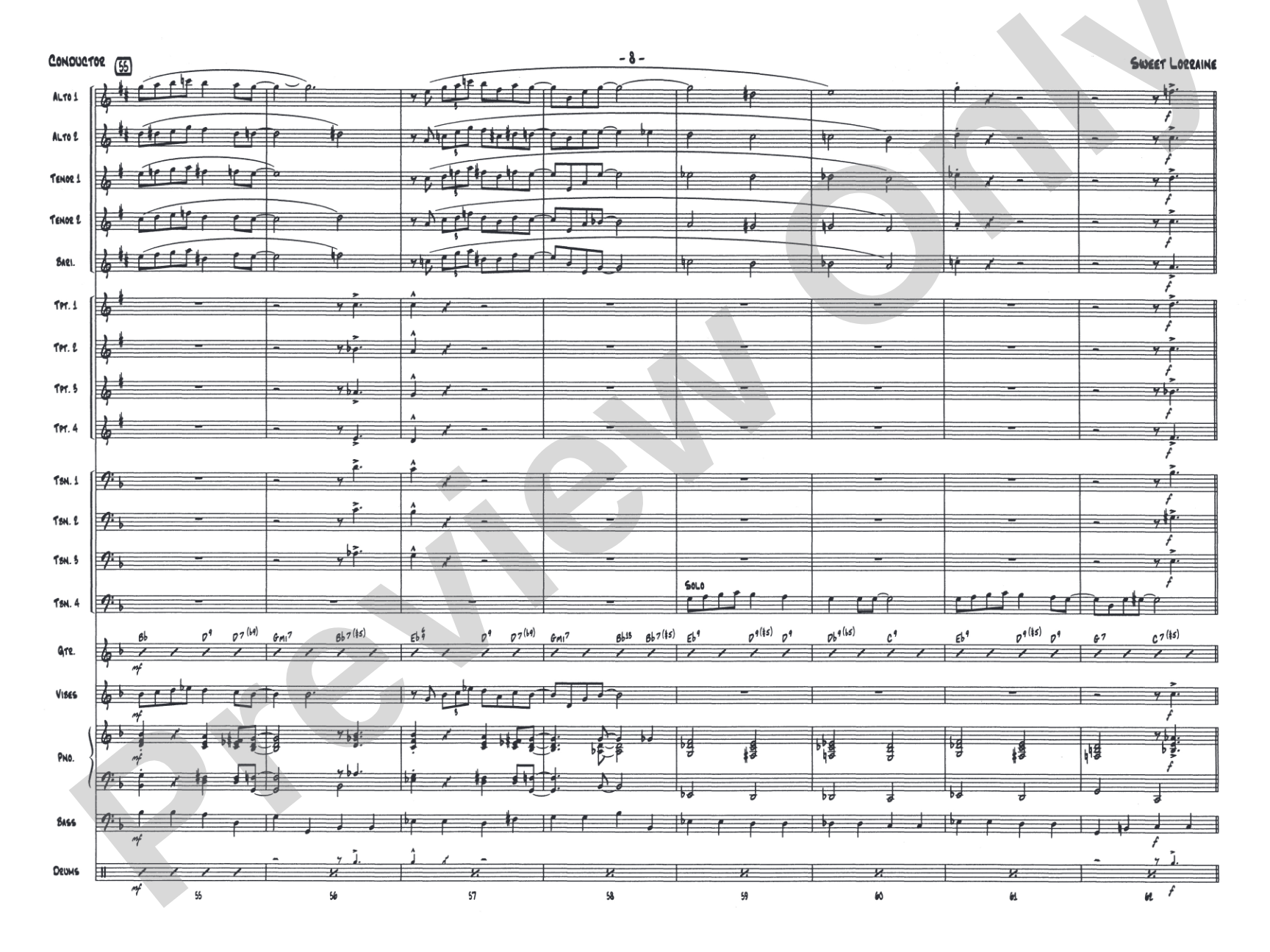
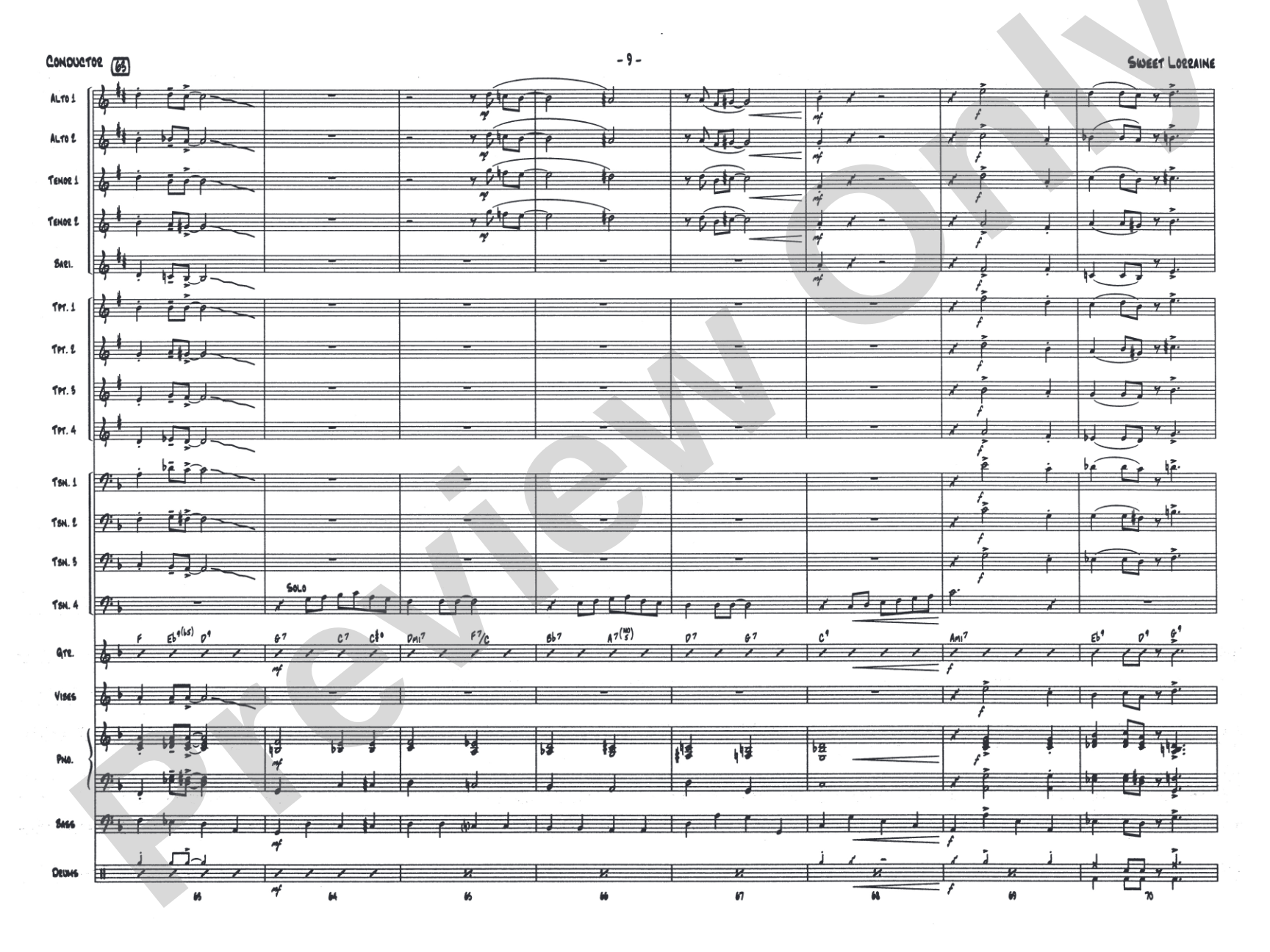
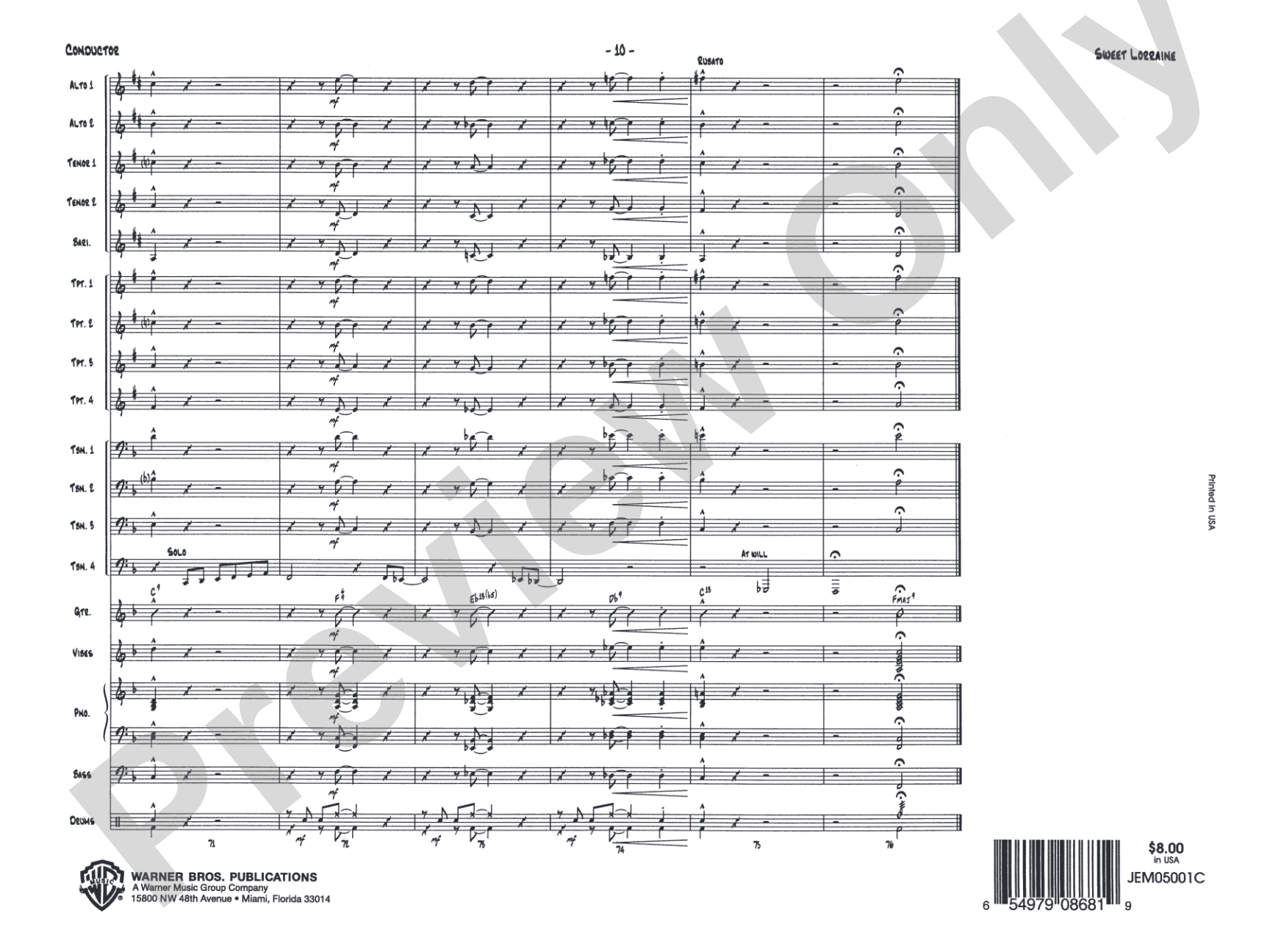
Show off the bass bone player! Featuring the bass trombone, master arranger Dave Wolpe has tailored this great tune to fit the grade 3 level for the band and the soloist while offering the challenges of a meaty chart. A written out solo is provided for the bass bone soloist and the lead trumpet range is written to G on top of the staff. Great chart! (2:40)


Don't just read it, hear it, play along with it, and watch your students grow with it. In MakeMusic Cloud, Sweet Lorraine: Score comes alive with professional accompaniment, adjustable tempo, and built-in practice tools that turn solo practice into real progress.
Open in the Player
Jump straight in and assign it today.
Start Your Free Trial
Open this title and explore the full library in minutes.
Sample Audio
1
Audio File
--:--
0:00
0:00
Sample Video
No sample videos found.
Additional Details
Series:
Jazz Band Series
Publisher:
Alfred Music
SKU:
00-PR-0005556
More about this title
About the Composer: Cliff Burwell
Cliff Burwell (1883-1960) composed for theater, film, and popular song during the golden age of American entertainment. Though less celebrated today than some contemporaries, his melodies demonstrated the craftsmanship expected of professional composers working in the 1920s and 1930s, with clean harmonic language and memorable hooks that made his work ideal for arrangers.
Burwell's compositions have endured in educational and jazz contexts precisely because they offer strong melodic material without excessive harmonic complexity. "Sweet Lorraine," one of his best-known works, remains a teaching standard in jazz ensembles because it rewards both ensemble clarity and featured soloists.
Why we love this
Dave Wolpe's arrangement strips away nothing essential while keeping Grade 3 readers engaged. The bass trombone solo is genuinely substantial—not a token feature—which means your bass bone player gets real exposure and responsibility. The added detail of a capped lead trumpet range shows respect for trumpet pedagogy at this level, balancing accessibility with honest jazz writing.
What to expect
Warm, approachable swing with genuine jazz flavor. The melody sits in a comfortable zone where it feels familiar the moment the band enters, then the bass trombone solo brings character and personality that reflects the instrument's voice rather than fighting against it.
Who it's for
Jazz ensembles at Grade 3 looking to feature their bass trombone section. Any director building a program where a young bass bone player needs a showcase will find this chart both playable and musically satisfying.
How to get the most out of it
- Balance the bass trombone solo carefully against the section behind it. The melody must project without the rhythm section overplaying; this is a written-out solo that needs room to breathe.
- Lock the rhythm section first. Bass, drums, and piano establish the swing feel before the horns enter; the comping clarity will support the soloists throughout.
- Encourage the bass trombonist to phrase the solo conversationally, not mechanically. Even though it's written out, rubato and dynamic shaping will lift the performance significantly.
How to use it
Program this early in a concert or festival set where it can establish the band's jazz credibility without creating fatigue. Its moderate length (2:40) makes it ideal for a mixed concert that alternates between jazz and concert band literature, or as a showcase feature when you're highlighting individual section members across a performance.
Skills your students will build
- Swing rhythm feel and subdivision
- Jazz soloing over written changes (bass trombone)
- Comping and rhythmic support in a jazz context
- Dynamic contrast between solo and section passages
- Listening to and responding to a featured soloist as an ensemble