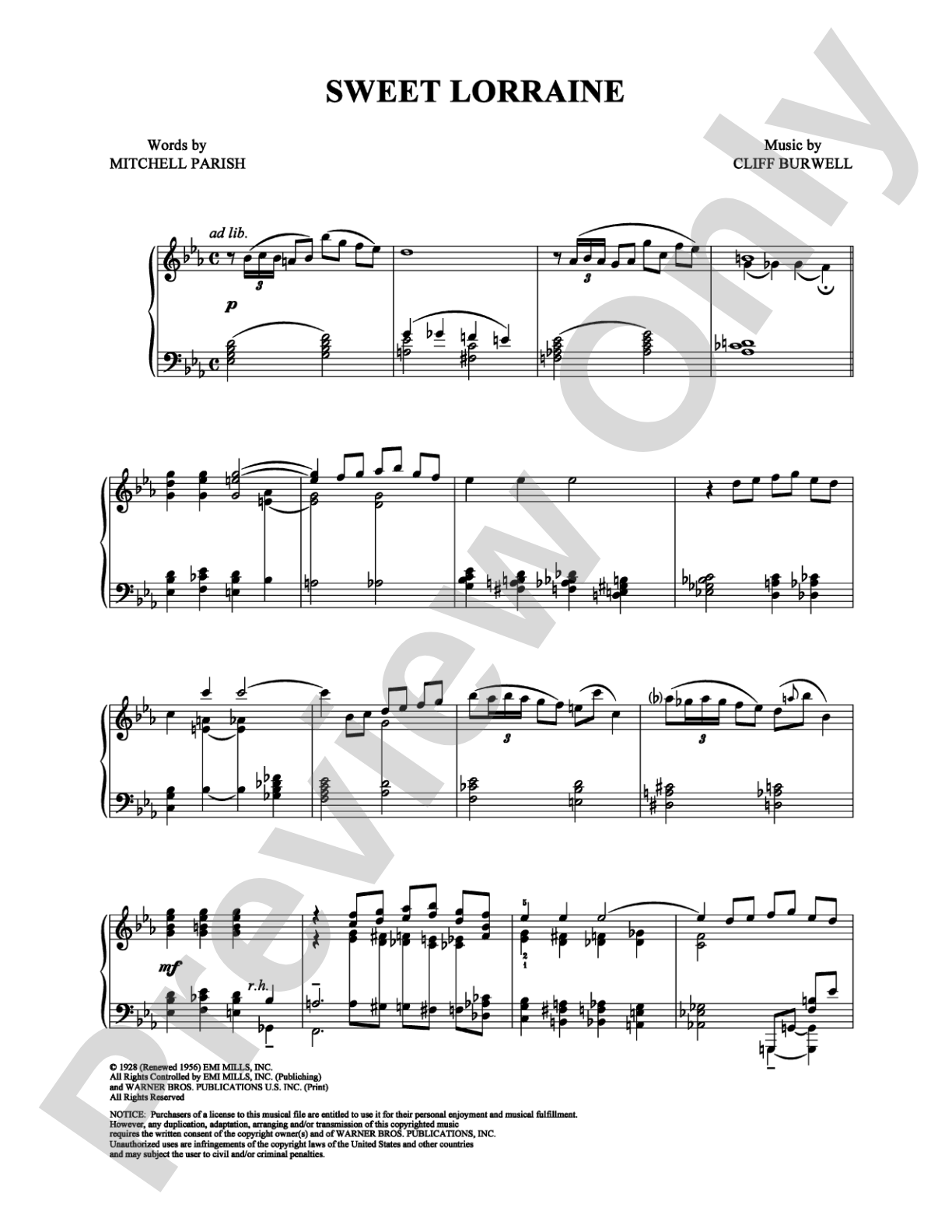
Sweet Lorraine: Piano Digital Sheet Music

Sweet Lorraine: Piano Digital Sheet Music

Cliff Burwell

Item: 00-PS-0002526

Digital Download
$3.99
Description

Sweet Lorraine: Piano Digital Sheet Music isn't in MakeMusic Cloud just yet...but it could be. Let us know you'd like to see it, and you'll help shape what comes next. In the meantime, start a free trial and dive into thousands of interactive titles your students can play along with today.

Sample Audio
No sample audio found.
Sample Video
Additional Details
SKU: 00-PS-0002526

More about this title

Why we love this

Sweet Lorraine sits in that perfect pocket where melody and harmonic sophistication meet accessibility. Jazz standards like this one reward players who dig into the voicings and learn to shape the rubato naturally, making it an ideal recital choice for pianists ready to move beyond classical repertoire.

What to expect

Warm, wistful, and unhurried. Sweet Lorraine unfolds with the ease of a late-night conversation, its melody simple enough to sing but its harmonic landscape rich enough to explore across multiple readings. The standard invites you to settle in and find your own voice within it.

Who it's for

Jazz pianists and classical pianists expanding into standards repertoire will find this a rewarding addition to their recital or practice rotation. The piece works equally well for intermediate to advanced players looking to build comfort with jazz vocabulary and phrasing.

How to get the most out of it

  • Let the melody breathe. The standard's strength lies in its singability, so resist the urge to rush through phrases. Treat it like a vocalist would.
  • Experiment with your left hand voicings. The digital score gives you the foundation, but jazz standards invite reharmonization and personal interpretation.
  • Work with a recorded version of the tune first to absorb its character. Hearing how other pianists interpret the phrasing and tempo will inform your own choices.
  • Balance the melody against your accompaniment. The piano must sing the tune while the chords support it, not compete with it.

How to use it

Pair this with other American standards for a jazz-focused recital set, or use it as a bridge between classical and contemporary styles in a mixed program. It also works beautifully as an encore piece, where its familiar melodic contours and reflective mood create a satisfying closing moment.

Skills your students will build

  • Jazz phrasing and melodic interpretation
  • Voice leading in standard jazz chord progressions
  • Rubato and flexible rhythmic control
  • Reharmonization and improvisation over changes
  • Stylistic listening and transcription from recorded models

You May Also Like