
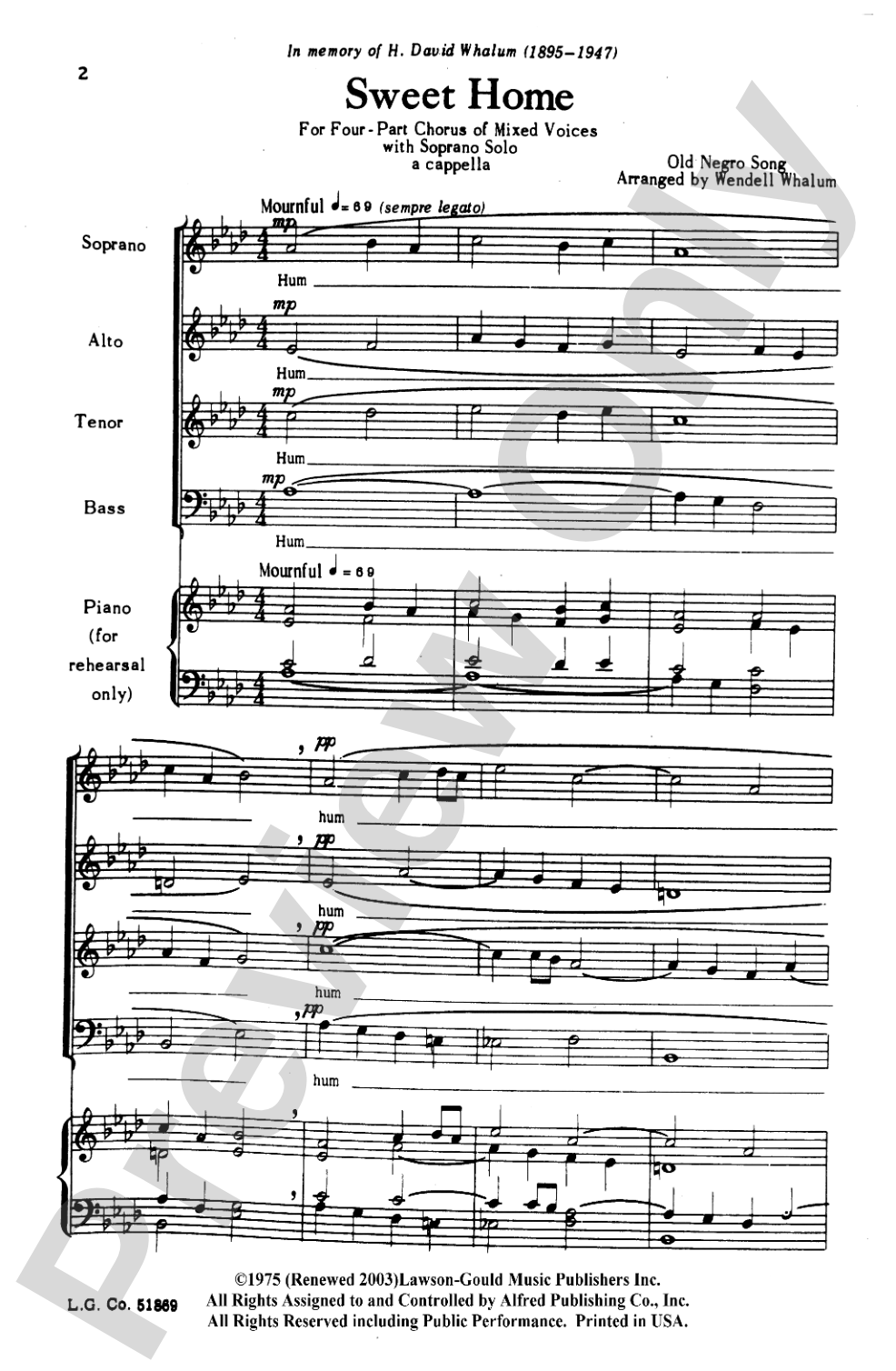
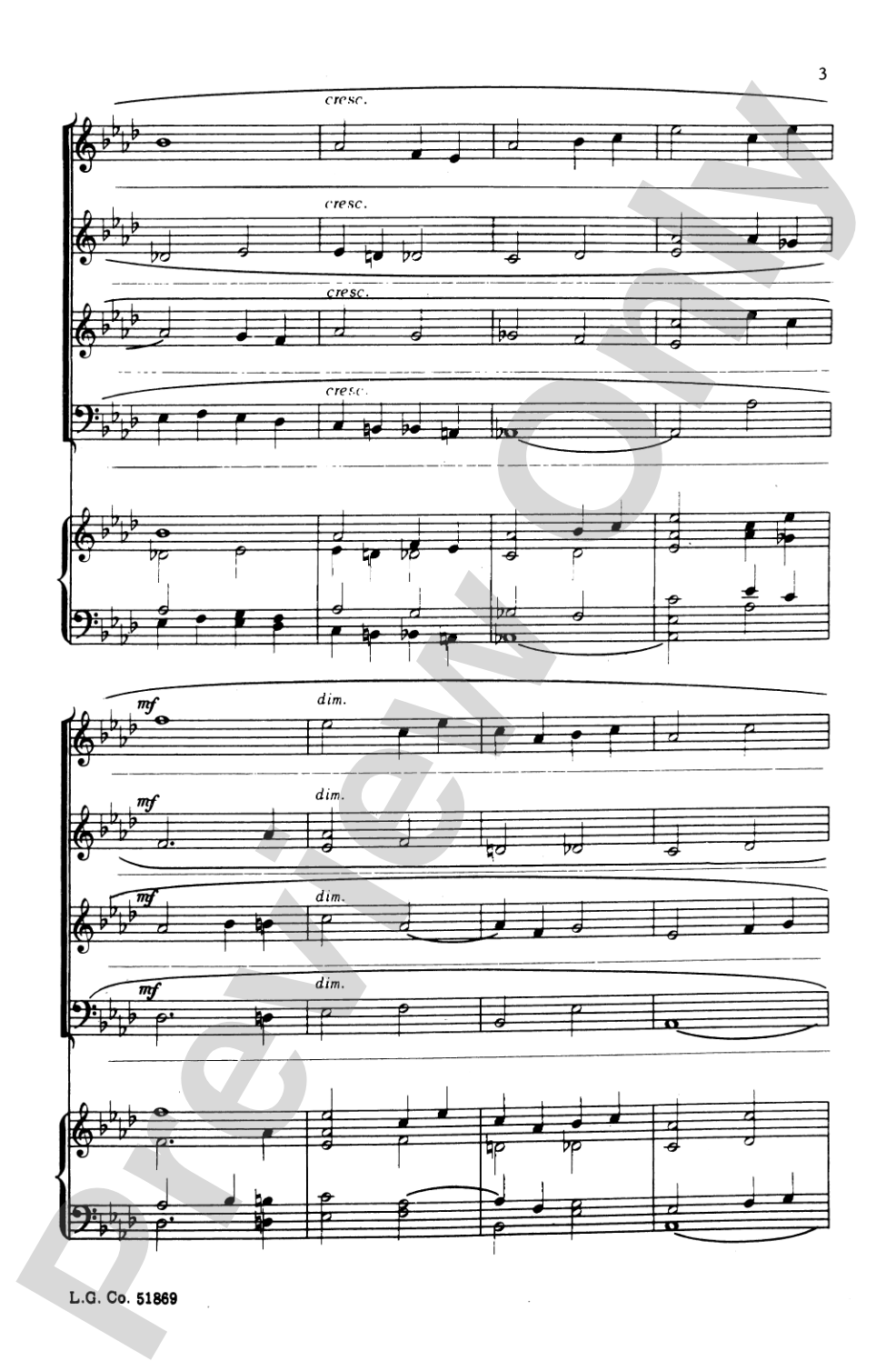

Sweet Home: SATB Choral Octavo
Arr. Wendell Whalum
Item: 00-PO-0002671
$2.25
Minimum order quantity: 20 copies
Pickup currently not available
Related Items
Sweet Home: SATB Choral Octavo |
$2.25
|
View |
Description


Sweet Home: SATB Choral Octavo isn't in MakeMusic Cloud just yet...but it could be. Let us know you'd like to see it, and you'll help shape what comes next. In the meantime, start a free trial and dive into thousands of interactive titles your students can play along with today.
Request This Title
Tell us you want it.
Start Your Free Trial
Explore everything that's ready to play right now.
Sample Audio
No sample audio found.
Sample Video
No sample videos found.
Additional Details
Series:
Alfred Archive Edition: Lawson-Gould Music Publishers
Publisher:
Alfred Music
Page Count:
12
SKU:
00-PO-0002671
More about this title
About the Arranger: Wendell Whalum
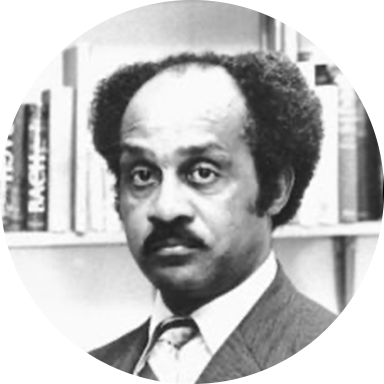
Wendell P. Whalum shaped American choral music through decades of teaching, arranging, and conducting that spanned multiple institutions and genres. After earning his Bachelor of Arts from Morehouse College in Atlanta and his Master of Arts from the University of Iowa, he returned to Morehouse in 1953 to direct the Glee Club, a position from which he championed both classical standards and spirituals with equal artistic rigor. His scholarly contributions earned him recognition from prestigious organizations including Phi Beta Kappa, the American Guild of Organists, and the Music Educators National Conference, while his arrangements made significant repertoire accessible to collegiate and community choirs.
Whalum's work as a musicologist, organist, and composer reflected a deep commitment to preserving and elevating African American musical traditions within the concert choir tradition. The University of Haiti honored him with a Doctor Honoris Causa in 1968, acknowledging his international influence. His legacy rests not only in the arrangements and compositions he left behind, but in the generations of musicians who encountered the depth and accessibility of his vision.
Why we love this
Whalum's arrangement brings warmth and structural clarity to this beloved song, making it singable for mixed choirs at a variety of levels while honoring the emotional core that audiences connect with instantly. The four-part writing sits comfortably in accessible ranges, allowing singers to focus on expression rather than technical struggle. Programming this piece signals to your audience and singers that you value music that resonates emotionally, and it works beautifully on programs where you want a moment of genuine, unironic sincerity.
What to expect
The arrangement settles into a comfortable harmonic language that feels both familiar and enriched. Singers experience a song many know from popular culture transformed into genuine four-part writing, with moments where the architecture of the arrangement reveals depth underneath something they thought they already understood.
Who it's for
Choirs looking for repertoire that connects with singers and audiences on an immediate, human level. This octavo works equally well for community choirs, church choirs, collegiate ensembles seeking programming balance, and high school choirs wanting to include a piece with genuine emotional resonance alongside concert music from other genres.
How to get the most out of it
- Build the arrangement's harmonic richness gradually; resist the urge to oversing the opening phrases. Let the four-part writing reveal itself naturally as voices enter.
- Shape the text with attention to where the melody sits in each voice part. When the tune passes between soprano and lower voices, each section should feel ownership of those moments.
- Balance the parts carefully so the arrangement's inner voices support rather than compete with primary melodic lines. This requires disciplined listening from all sections in rehearsal.
- Consider the emotional arc of the full arrangement before selecting a tempo. A slightly broader pace often honors both the spiritual depth many singers feel and the musical design of the piece.
How to use it
Place this piece on a program where you want to shift the emotional temperature and remind your audience why they came to hear you sing. It pairs naturally with other secular selections and can anchor a thematic program about home, memory, or displacement. Consider programming it where it can stand alone without introduction, letting the music speak directly.
Skills your students will build
- Singing sustained lines with clear harmonic function across four parts
- Shaping text expressively while maintaining ensemble blend and balance
- Reading SATB voicing and understanding how melody distributes across voice parts
- Connecting with music that carries cultural resonance and emotional authenticity