
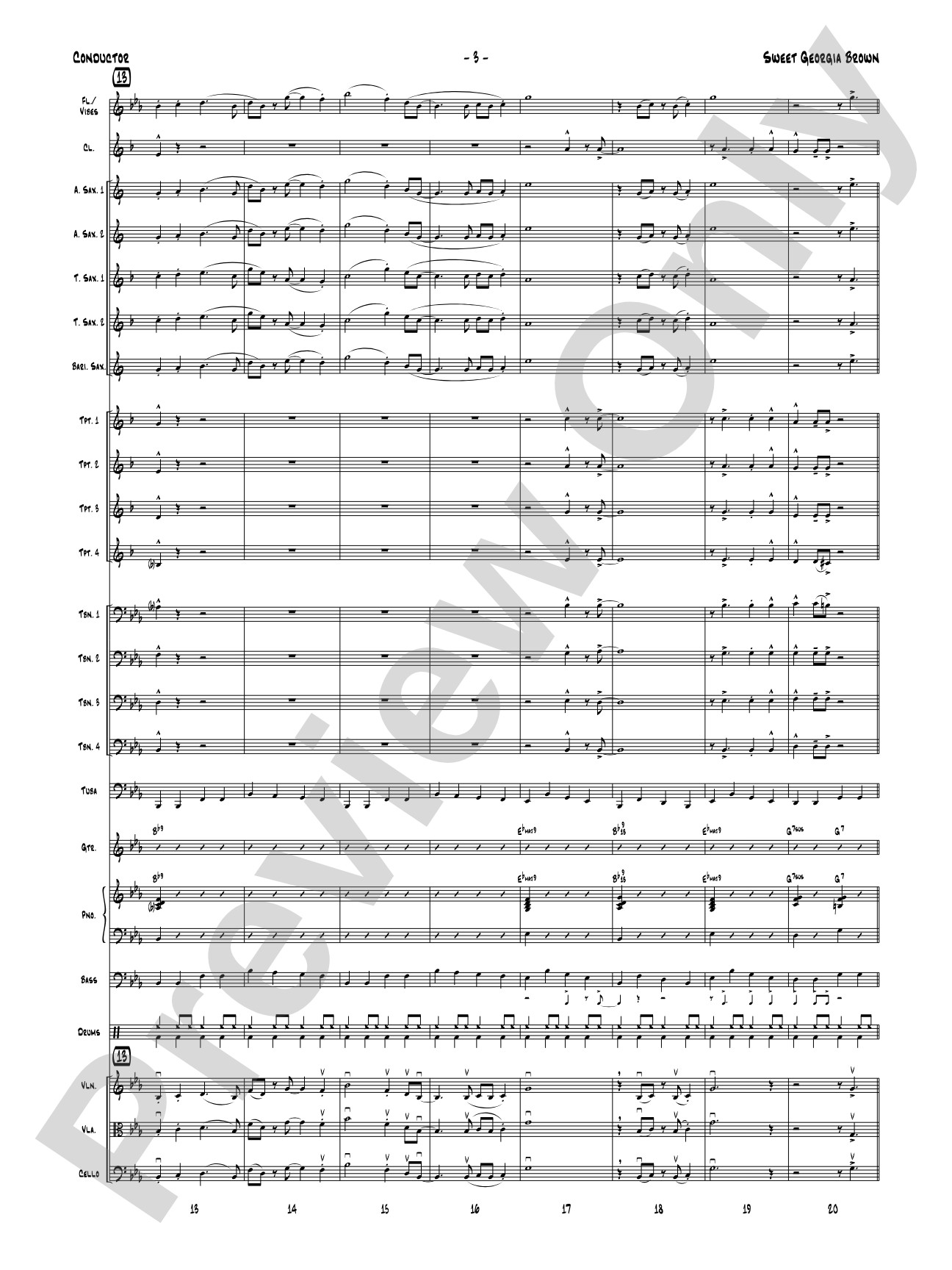
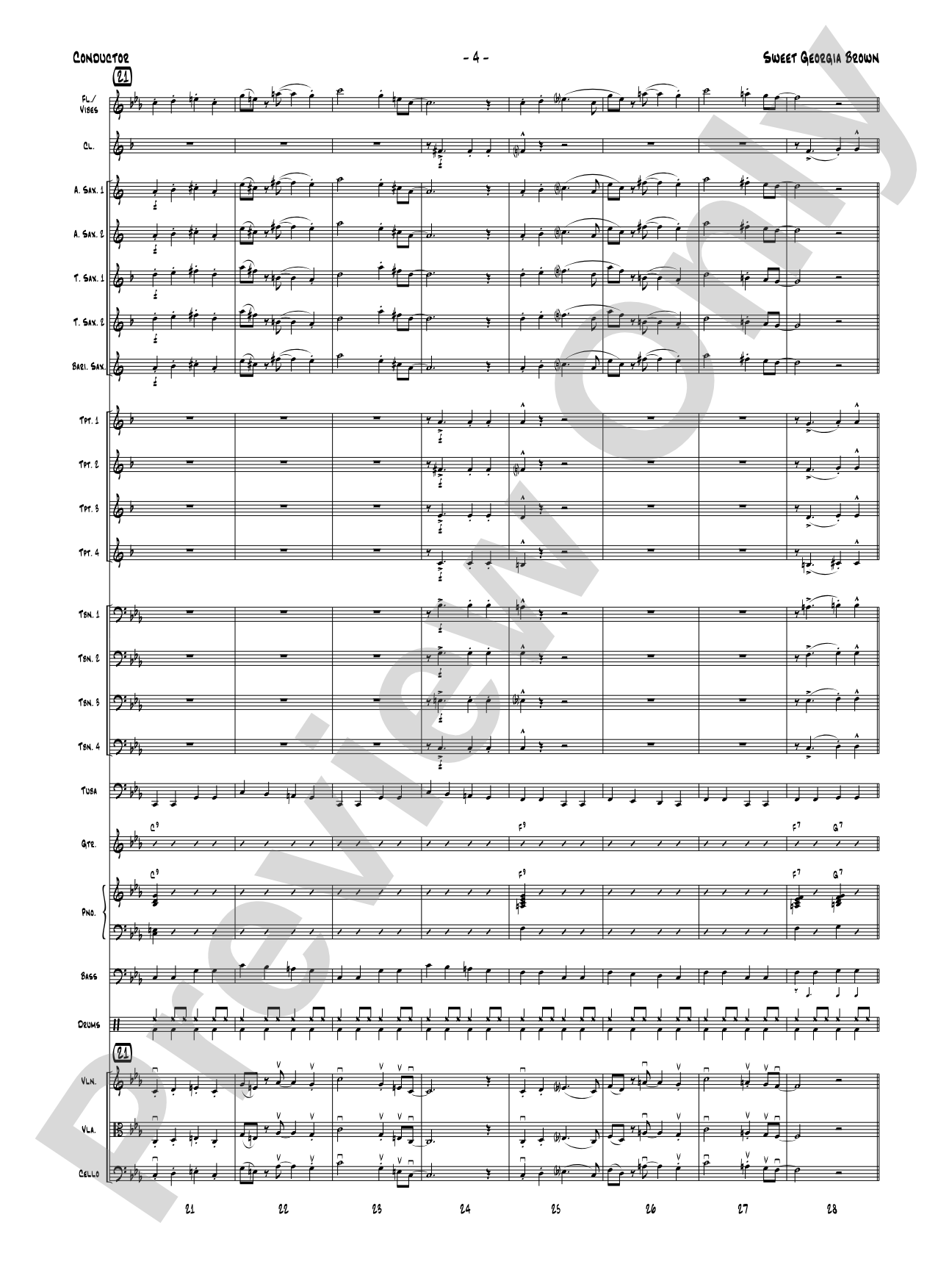
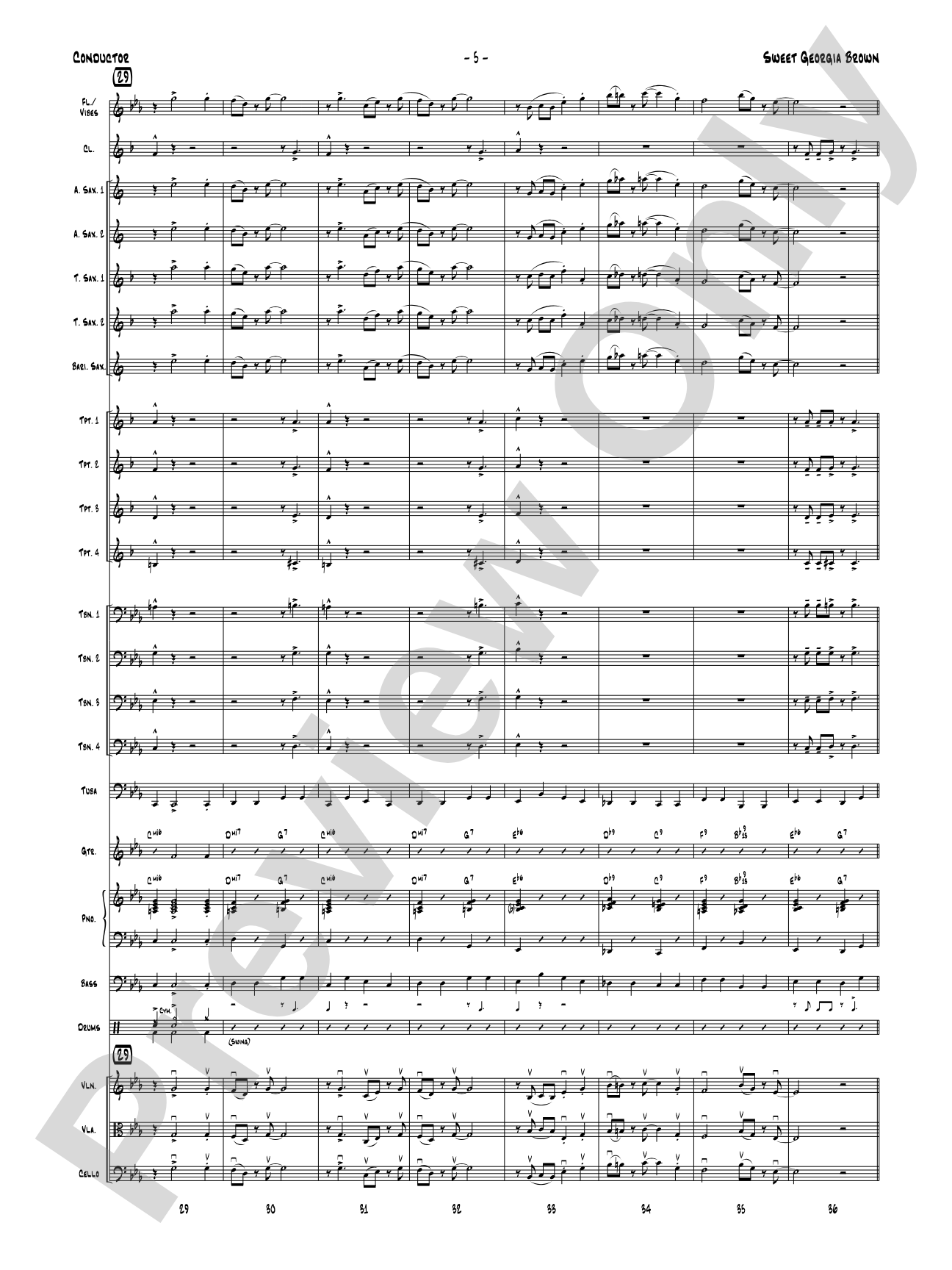
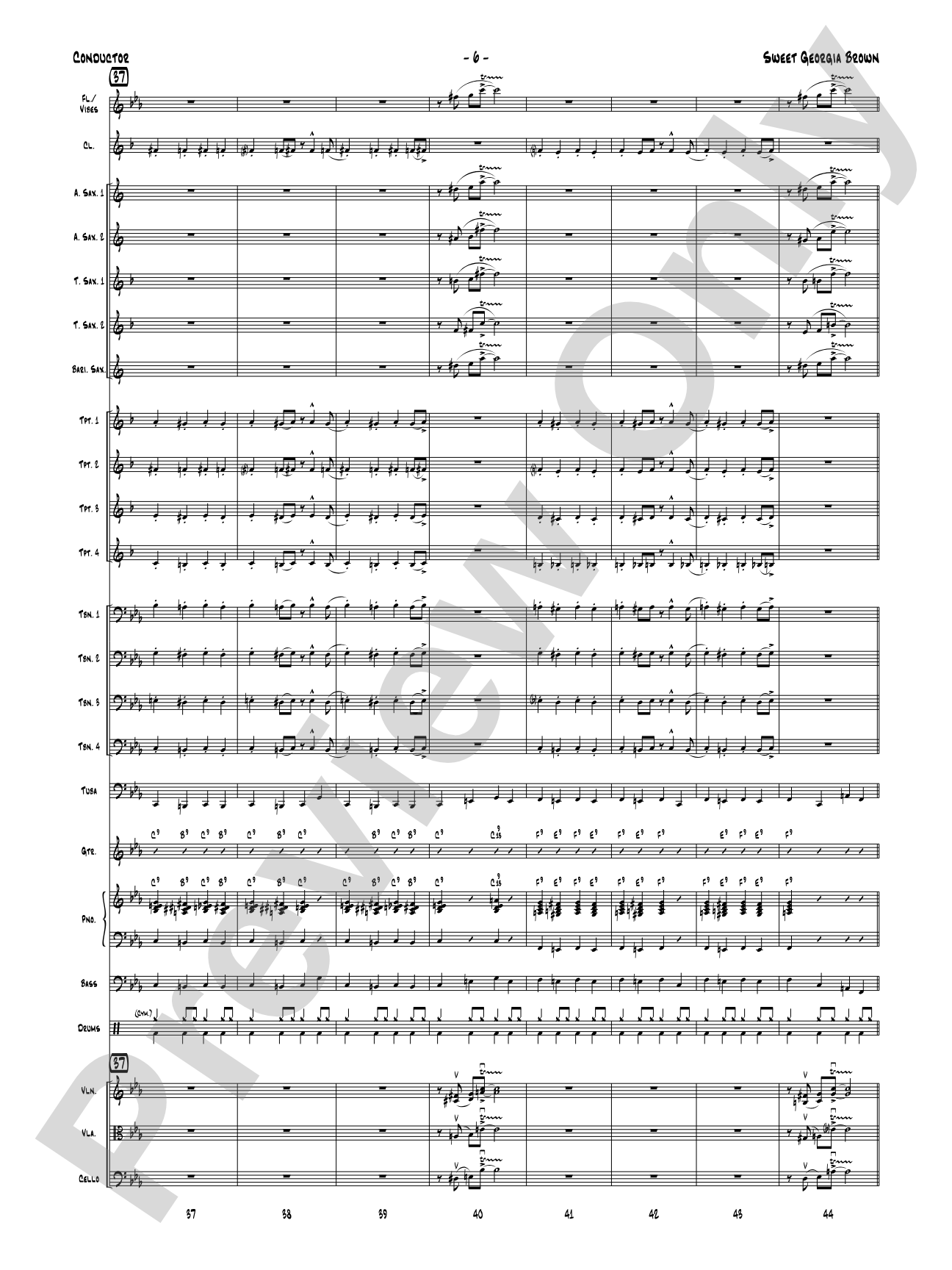
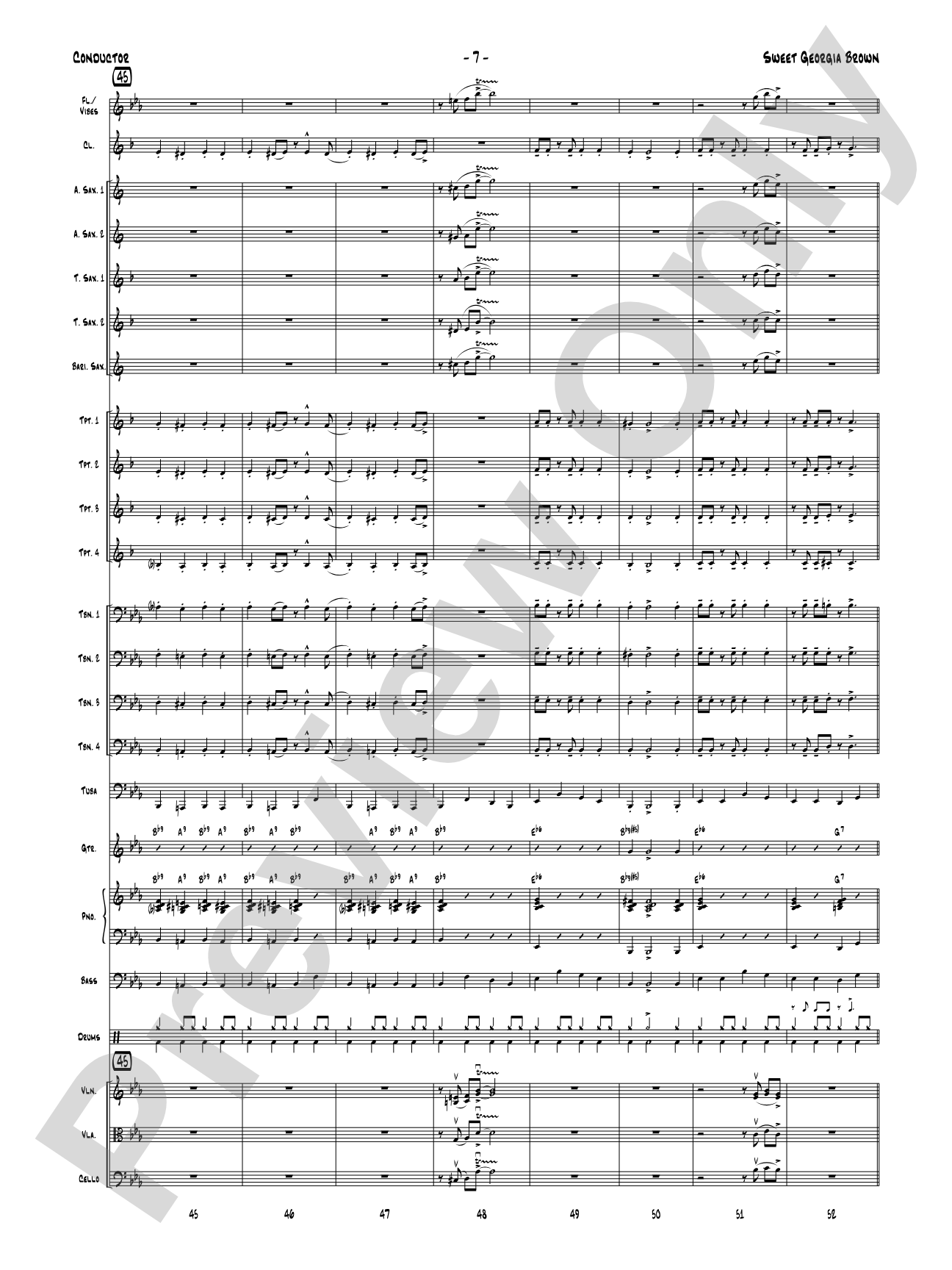
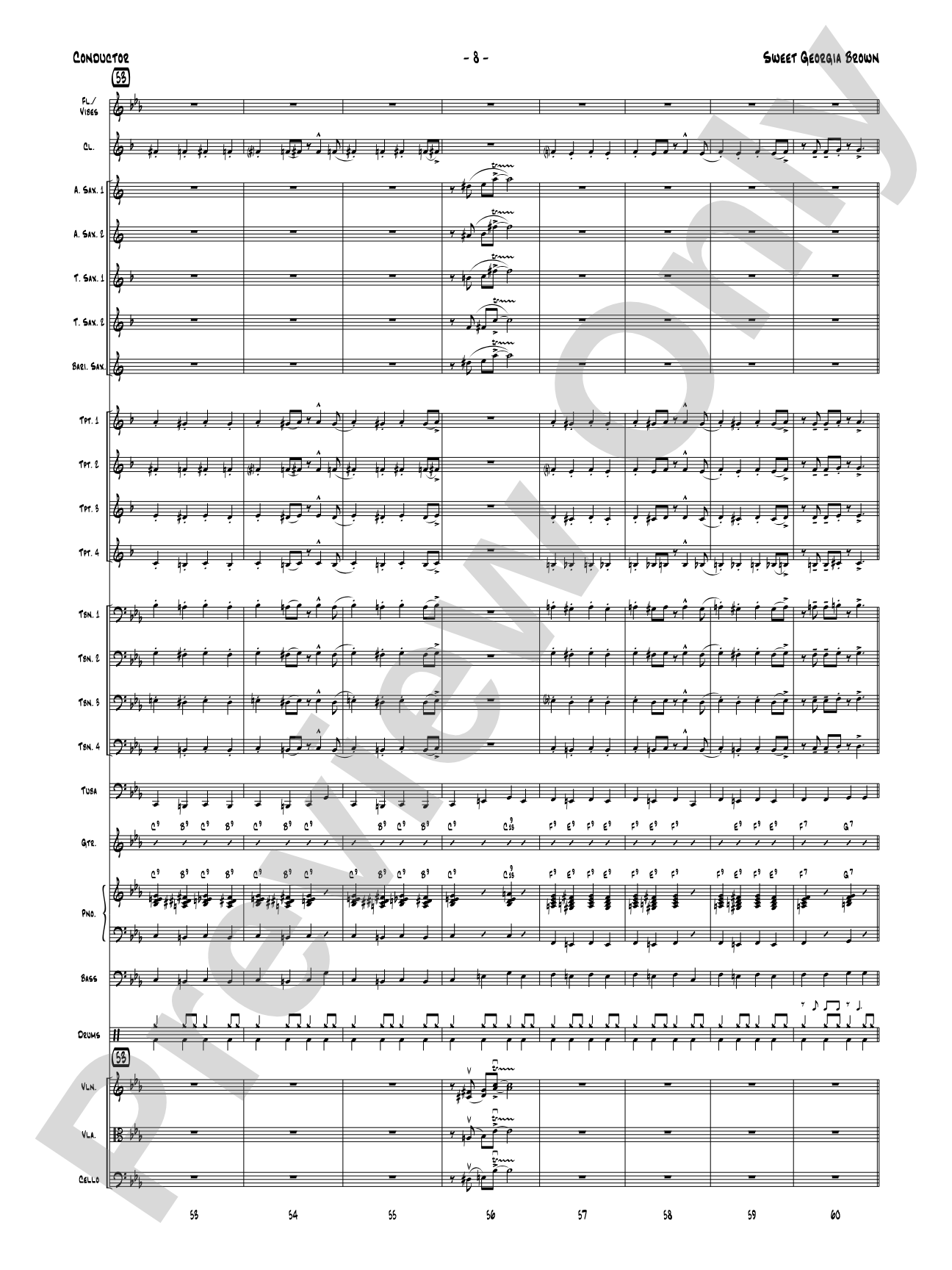
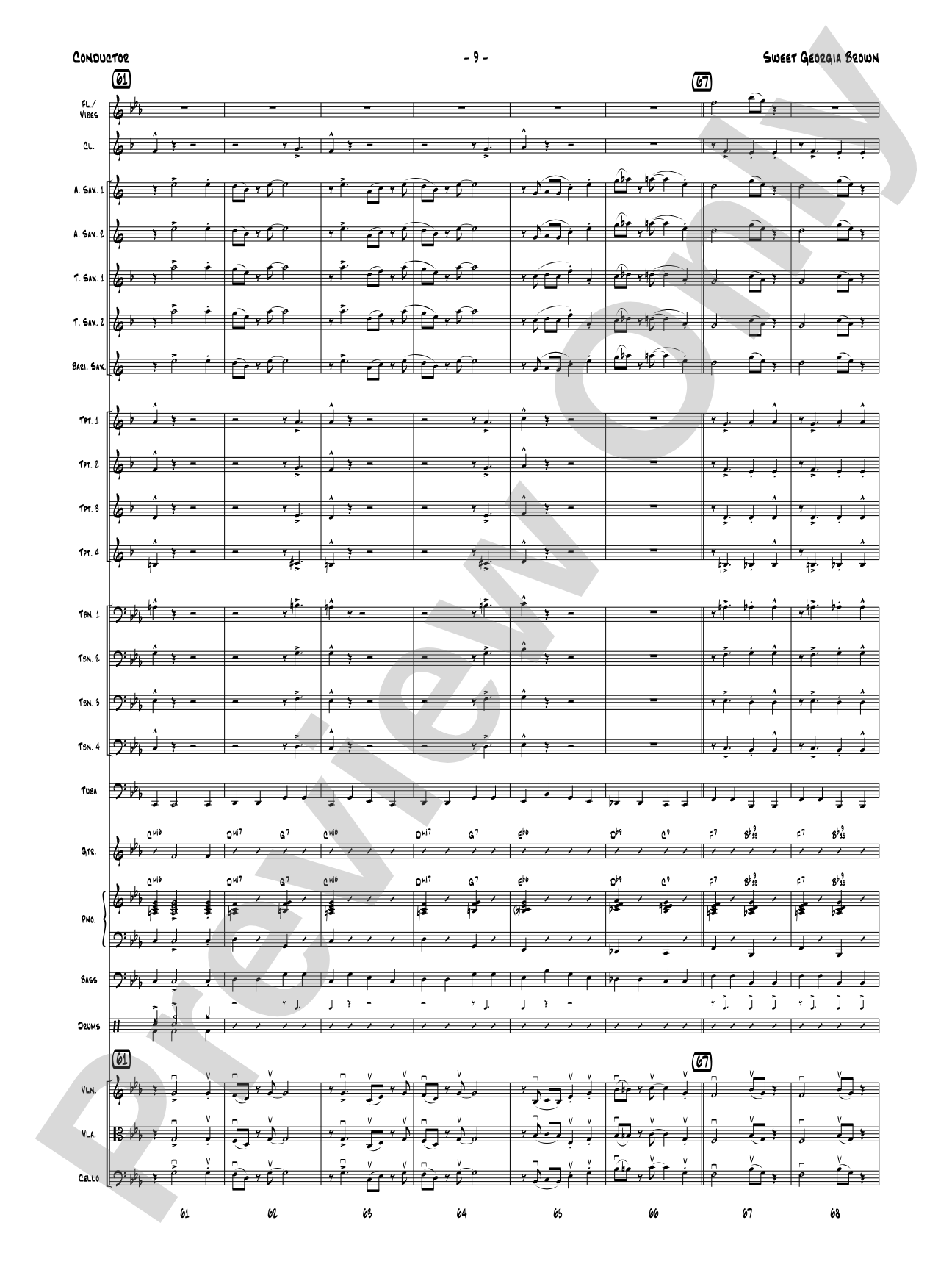
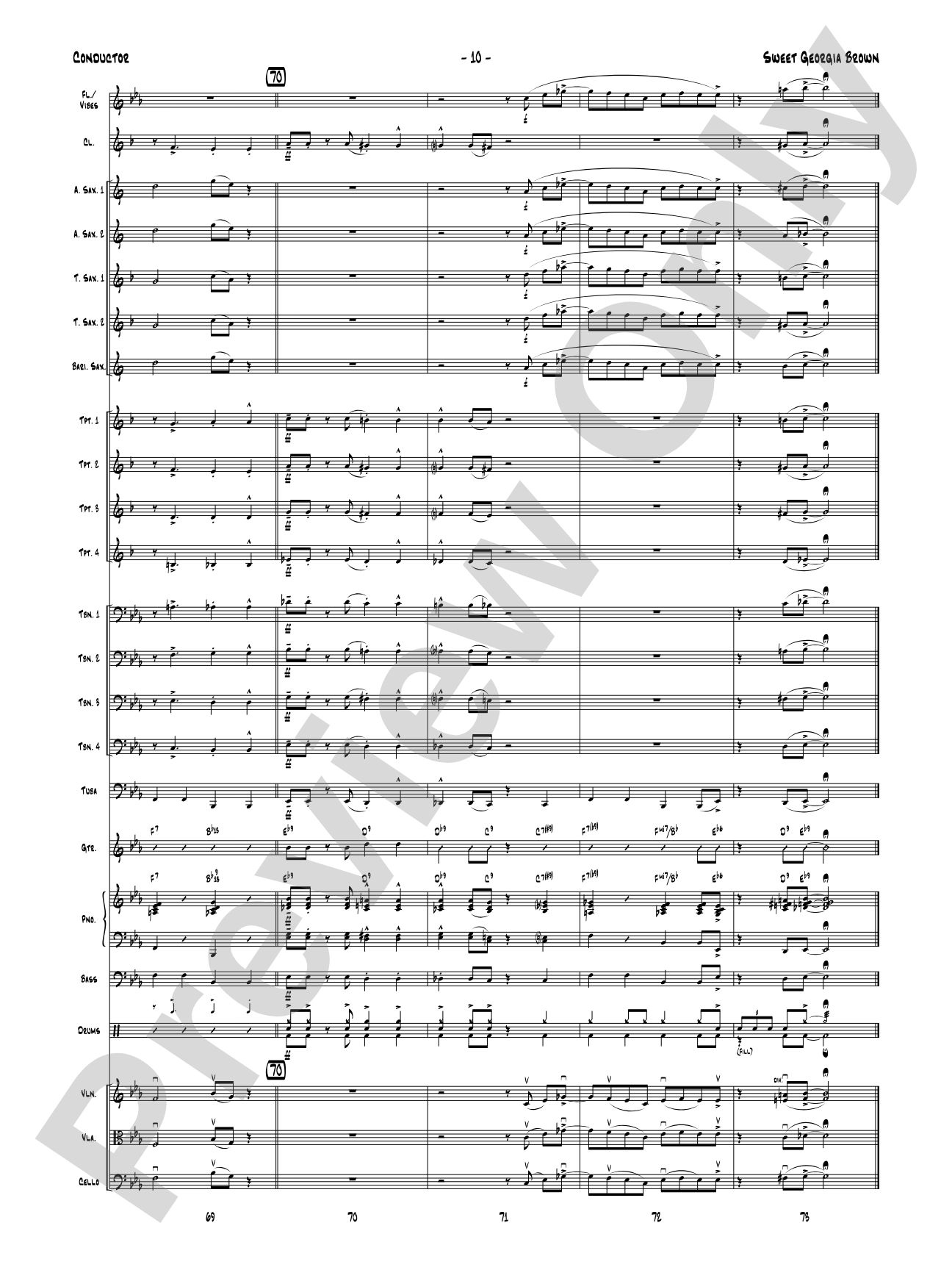

Sweet Georgia Brown: Score
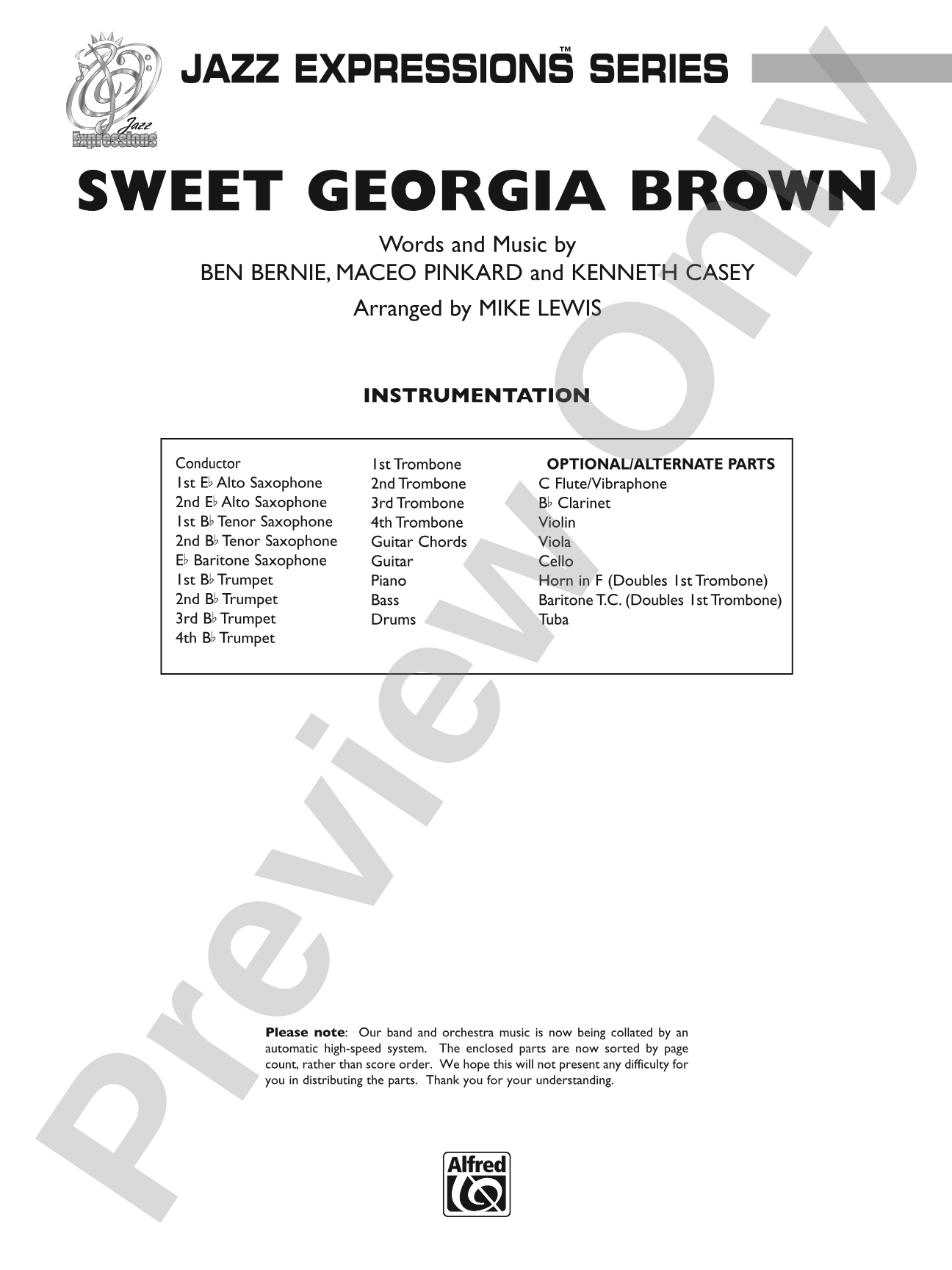
Words and music by Ben Bernie, Maceo Pinkard, and Kenneth Casey / arr. Mike Lewis
Grade: 1 (Easy)
Item: 00-PR-0003934
$7.00
Pickup currently not available
Description
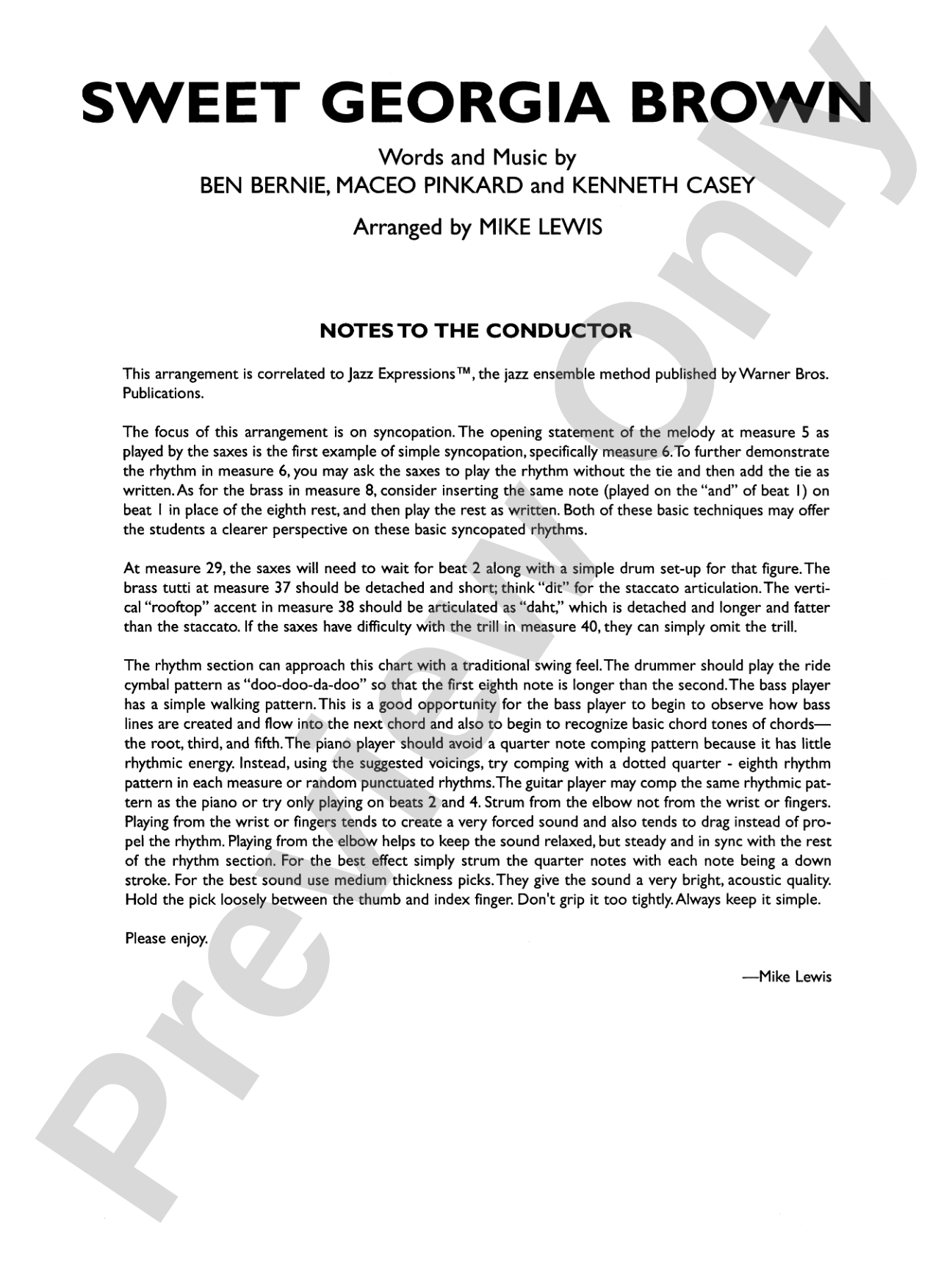
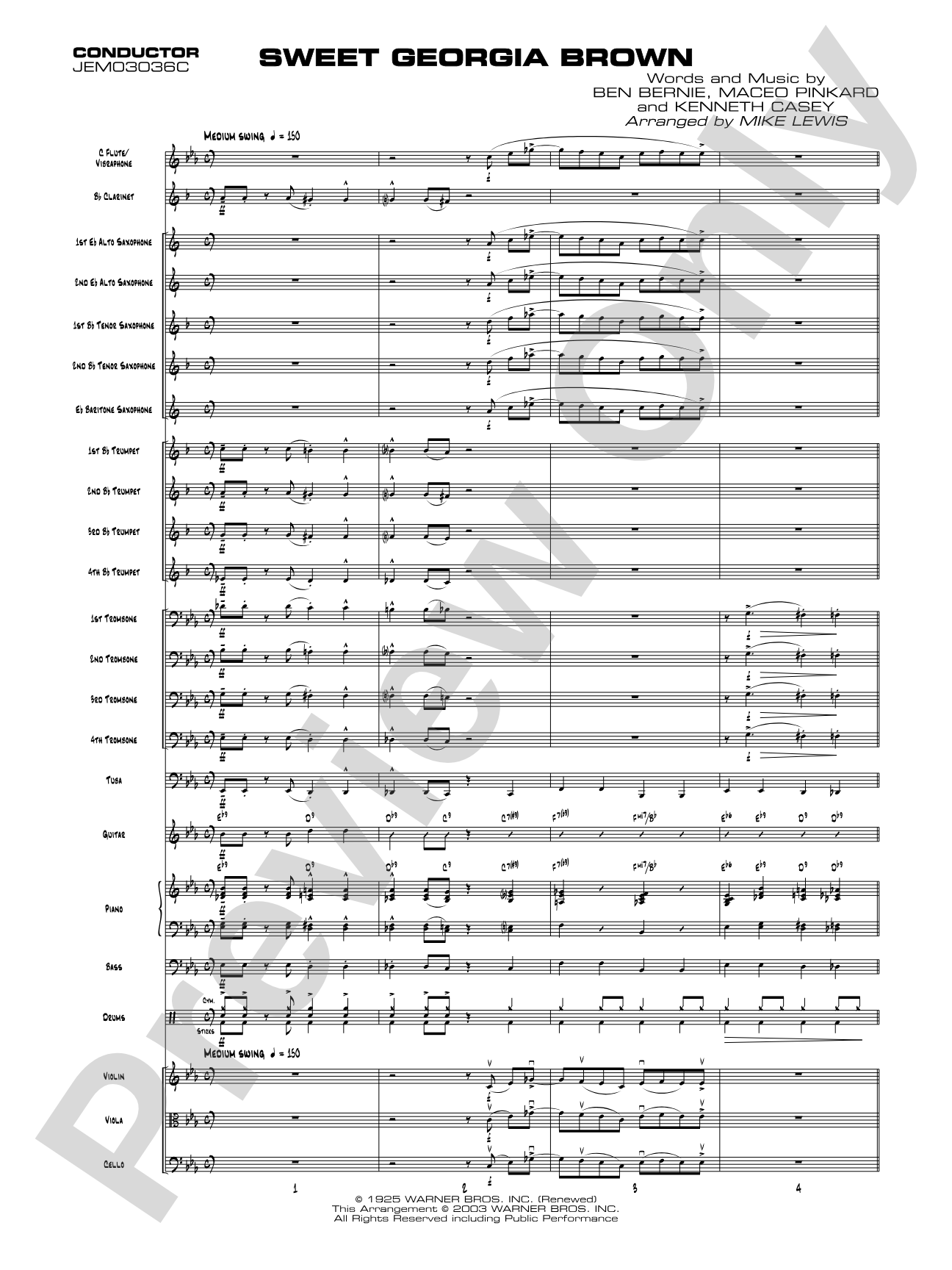
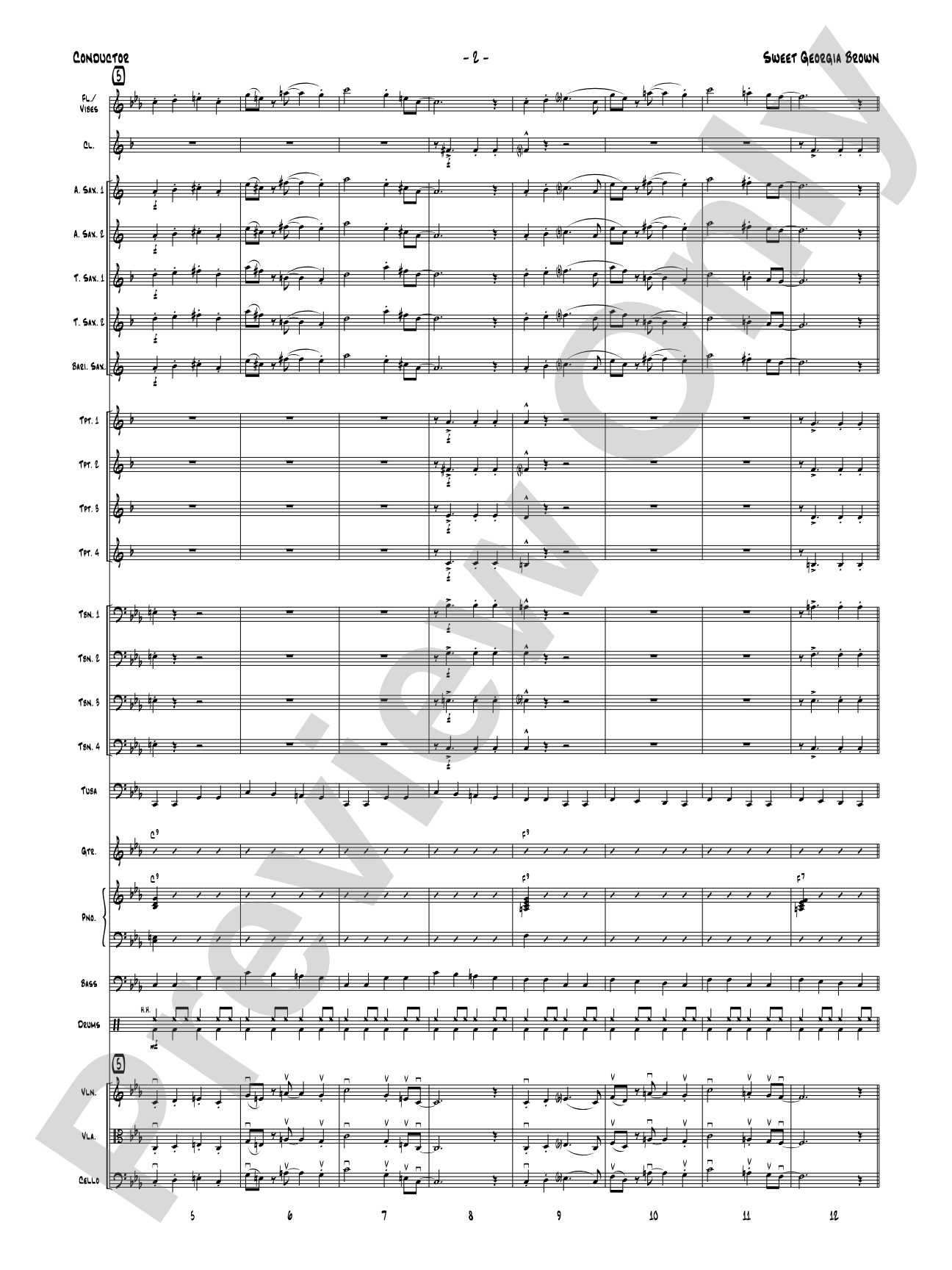
Correlated to Unit 5 of Jazz Expressions™, Sweet Georgia Brown is a great jazz classic arranged by Mike Lewis at the easy level. The focus in this chart is on syncopation using easy rhythms, modest ranges, and clear articulation to provide an effective and consistent foundation for learning jazz. No improvised solos, only ensemble and section work in a traditional swing setting. Optional parts for flute, clarinet, horn, baritone horn, tuba, AND STRINGS - violin (2), viola, and cello. Wow!


Don't just read it, hear it, play along with it, and watch your students grow with it. In MakeMusic Cloud, Sweet Georgia Brown: Score comes alive with professional accompaniment, adjustable tempo, and built-in practice tools that turn solo practice into real progress.
Open in the Player
Jump straight in and assign it today.
Start Your Free Trial
Open this title and explore the full library in minutes.
Sample Audio
1
Audio File
--:--
0:00
0:00
Sample Video
No sample videos found.
Additional Details
Series:
Jazz Expressions
Publisher:
Alfred Music
Page Count:
102
SKU:
00-PR-0003934
More about this title
About the Composer: Ben Bernie
Ben Bernie (1891-1976) was an American bandleader, violinist, and composer who became a prominent figure in dance band and early jazz radio broadcasting during the 1920s and 1930s. His compositions, including the enduring jazz standard Sweet Georgia Brown, showcased his gift for crafting memorable melodies that remain central to jazz repertoire and music education today.
Why we love this
Mike Lewis's arrangement strips away complexity without sacrificing swing feel, making this standard accessible to ensembles still building their jazz vocabulary. The optional string parts expand your instrumentation possibilities and open the door to interesting mixed-ensemble experiments. Students encounter a genuine jazz classic while learning fundamental articulation and rhythmic precision in a supportive, ensemble-focused setting.
What to expect
Sweet Georgia Brown swings with the relaxed confidence of a seasoned dance band, propelled by steady rhythmic grooves and warm ensemble voicing. The syncopated figures feel playful and accessible rather than virtuosic, letting every section contribute to an unfussy, good-natured swing that invites the listener in.
Who it's for
Jazz ensemble directors teaching Unit 5 of Jazz Expressions will find a ready-made, educationally intentional arrangement that reinforces syncopation without overwhelming developing musicians. This works equally well for mixed-instrumentation ensembles and traditional jazz bands seeking a swing-era standard that doesn't demand improvisation or high range demands.
How to get the most out of it
- Build the swing eighth-note feel gradually in sectionals before full ensemble rehearsals; without a steady swing reference, tuning and rhythmic alignment will suffer.
- Mark the syncopated hits in each section part during the first read-through so players see the anticipated accents and can lock them together.
- Check balance between melody, harmony, and rhythm section; easy charts often expose thin lower voices if the tuba and bass parts aren't supported by section listening.
- Use the optional strings strategically: they work best when doubling the ensemble for full-ensemble hits rather than playing throughout, which can muddy the jazz articulation.
How to use it
Schedule this alongside other Jazz Expressions material to scaffold your ensemble's understanding of swing style across multiple contexts. Its straightforward energy and recognizable melody make it a natural opener on a jazz concert or a bridge piece when transitioning between classical and jazz programming.
Skills your students will build
- Reading and executing syncopated rhythms in a swing style
- Swing articulation and phrasing in ensemble sections
- Balanced voicing and blend across jazz ensemble instrumentation
- Listening and locking rhythmic coordination with rhythm section
- Stylistic interpretation of a jazz standard