
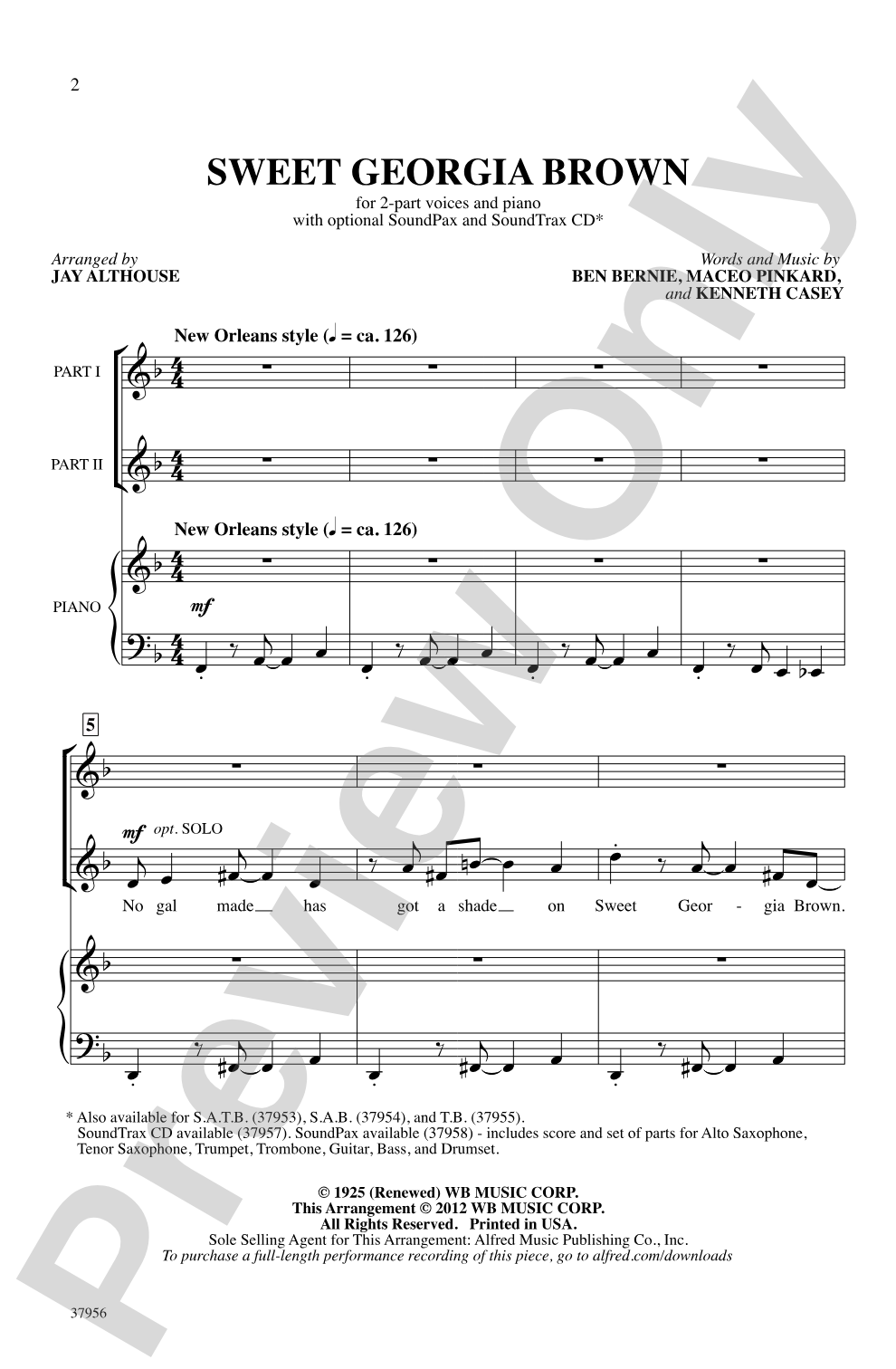
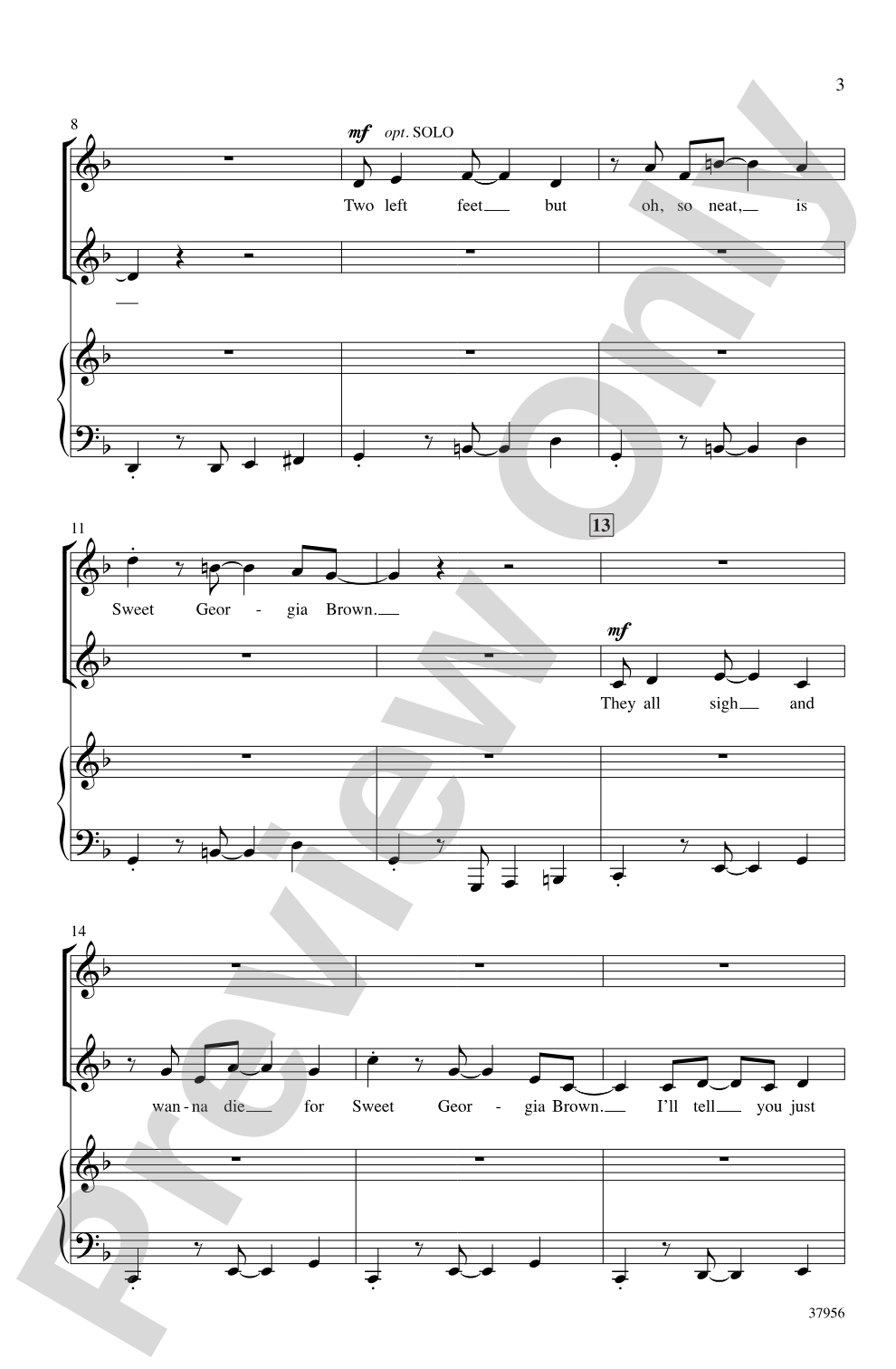
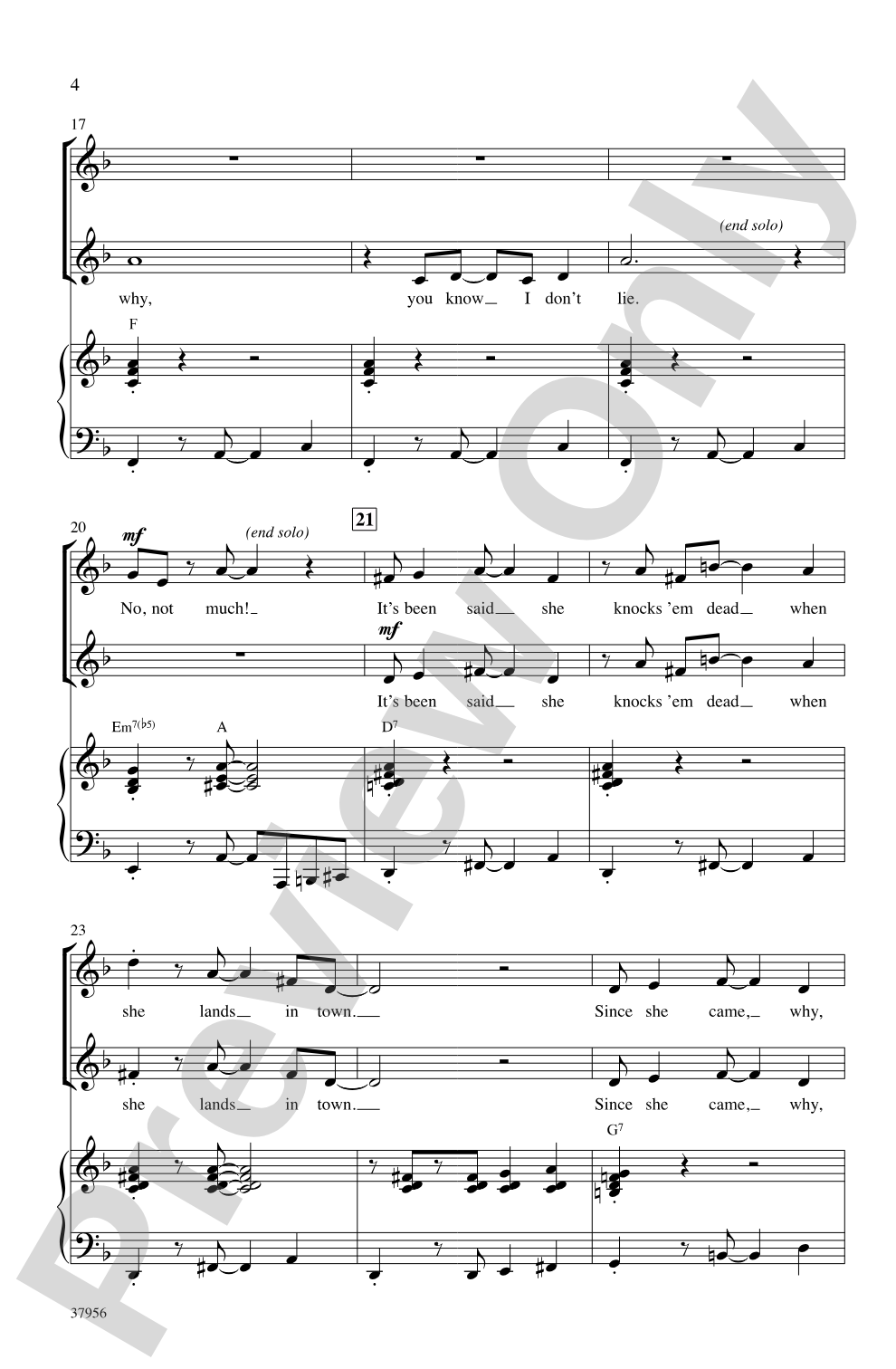

Sweet Georgia Brown: 2-Part Choral Octavo
Words and music by Ben Bernie, Maceo Pinkard, and Kenneth Casey / arr. Jay Althouse
Item: 00-PO-0001297
$1.90
Minimum order quantity: 20 copies
One moment…
Related Items
Sweet Georgia Brown: SoundTrax Digital Audio Download |
$26.99
|
View | |
Sweet Georgia Brown: SATB Choral Octavo |
$1.90
|
View | |
Sweet Georgia Brown: SAB Choral Octavo |
$1.90
|
View | |
Sweet Georgia Brown: TB Choral Octavo |
$1.90
|
View | |
Sweet Georgia Brown: Choral SoundPax |
$35.00
|
View | |
Sweet Georgia Brown: SATB Choral Octavo |
$1.90
|
View | |
Sweet Georgia Brown: SAB Choral Octavo |
$1.90
|
View | |
Sweet Georgia Brown: TB Choral Octavo |
$1.90
|
View | |
Sweet Georgia Brown: 2-Part Choral Octavo |
$1.90
|
View | |
Sweet Georgia Brown: Choral Octavo SoundTrax CD |
$26.99
|
View |
Description
Picture yourself walking the streets of New Orleans as you perform the first half of this popular jazz standard from the 1920s. Then listen as Jay's arrangement rocks to the end!


Sweet Georgia Brown: 2-Part Choral Octavo isn't in MakeMusic Cloud just yet...but it could be. Let us know you'd like to see it, and you'll help shape what comes next. In the meantime, start a free trial and dive into thousands of interactive titles your students can play along with today.
Request This Title
Tell us you want it.
Start Your Free Trial
Explore everything that's ready to play right now.
Sample Audio
1
Audio File
--:--
0:00
0:00
Sample Video
No sample videos found.
Additional Details
Series:
Alfred Pop Choral Series
Publisher:
Alfred Music
Page Count:
12
SKU:
00-PO-0001297
More about this title
About the Composer: Ben Bernie
Ben Bernie was a bandleader, violinist, and composer who became one of the most recognizable voices in American jazz during the 1920s and 1930s. Known for his smooth delivery and ear for popular melody, Bernie contributed "Sweet Georgia Brown" to the Great American Songbook, a composition that would outlive its era to become a jazz standard performed by countless artists across generations.
Beyond his work as a performer, Bernie's compositional instinct for singable, memorable lines made his music accessible to both professional musicians and community ensembles. His legacy in jazz standards education remains strong, particularly through pieces like this one that introduce young singers to authentic jazz idiom without requiring advanced harmonic sophistication.
Why we love this
Jay Althouse's arrangement captures the essence of a 1920s New Orleans walk in the first half, then pivots into a contemporary rock treatment that keeps singers engaged and audiences delighted. The 2-part voicing makes this accessible for mixed-age or developing choirs while maintaining the jazz character that makes the tune immediately recognizable. It's the kind of piece that teaches jazz style without demanding years of vocal jazz training.
What to expect
The piece opens with the atmospheric charm of a New Orleans street scene, all laid-back sophistication and vintage swagger. Then it transforms, catching energy and attitude as it rocks toward the finish, turning a nostalgic moment into something that lands in the present tense with style.
Who it's for
Developing and intermediate choirs looking to add jazz standards to their repertoire without sacrificing musical substance. This works well for mixed-age ensembles, community groups, and school choirs at middle school through early high school levels where singers benefit from accessible 2-part writing and strong melodic content.
How to get the most out of it
- Shape phrases with the syncopated rhythms of the melody rather than singing through them straight; let the jazz phrasing breathe and sit slightly behind the beat in places where the arrangement suggests it.
- Balance the two parts so neither dominates; in jazz voicings, blend matters as much as blend in classical music, but the quality should feel looser and more conversational.
- Use the recorded accompaniment to lock in the groove and hear how Althouse's arrangement shifts tone between the first and second halves.
- Articulate the consonants cleanly on syncopated figures to keep the rhythm crisp and maintain the swing feel, especially in the rock section.
How to use it
Program this as a bridge between your classical repertoire and contemporary work, or pair it with other jazz standards to build a suite showing how American songwriting has evolved. It also makes an excellent closing number for a casual concert or holiday program where you want to leave audiences with something upbeat and familiar.
Skills your students will build
- Jazz phrasing and swing feel
- Syncopated rhythm reading and performance
- 2-part blend and balance in jazz idiom
- Style interpretation and contrast between sections
- Intonation in modal and contemporary harmonic contexts