
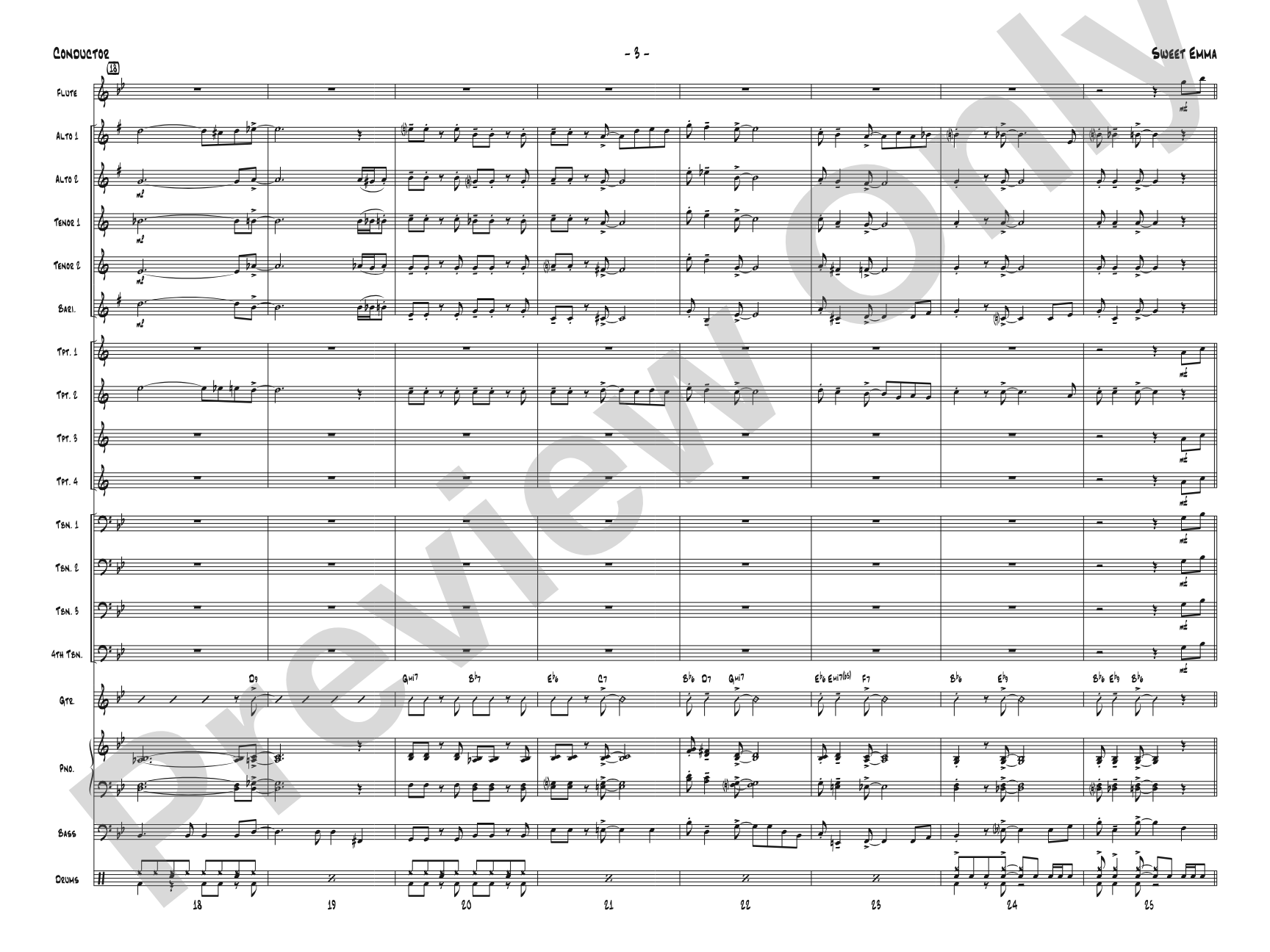
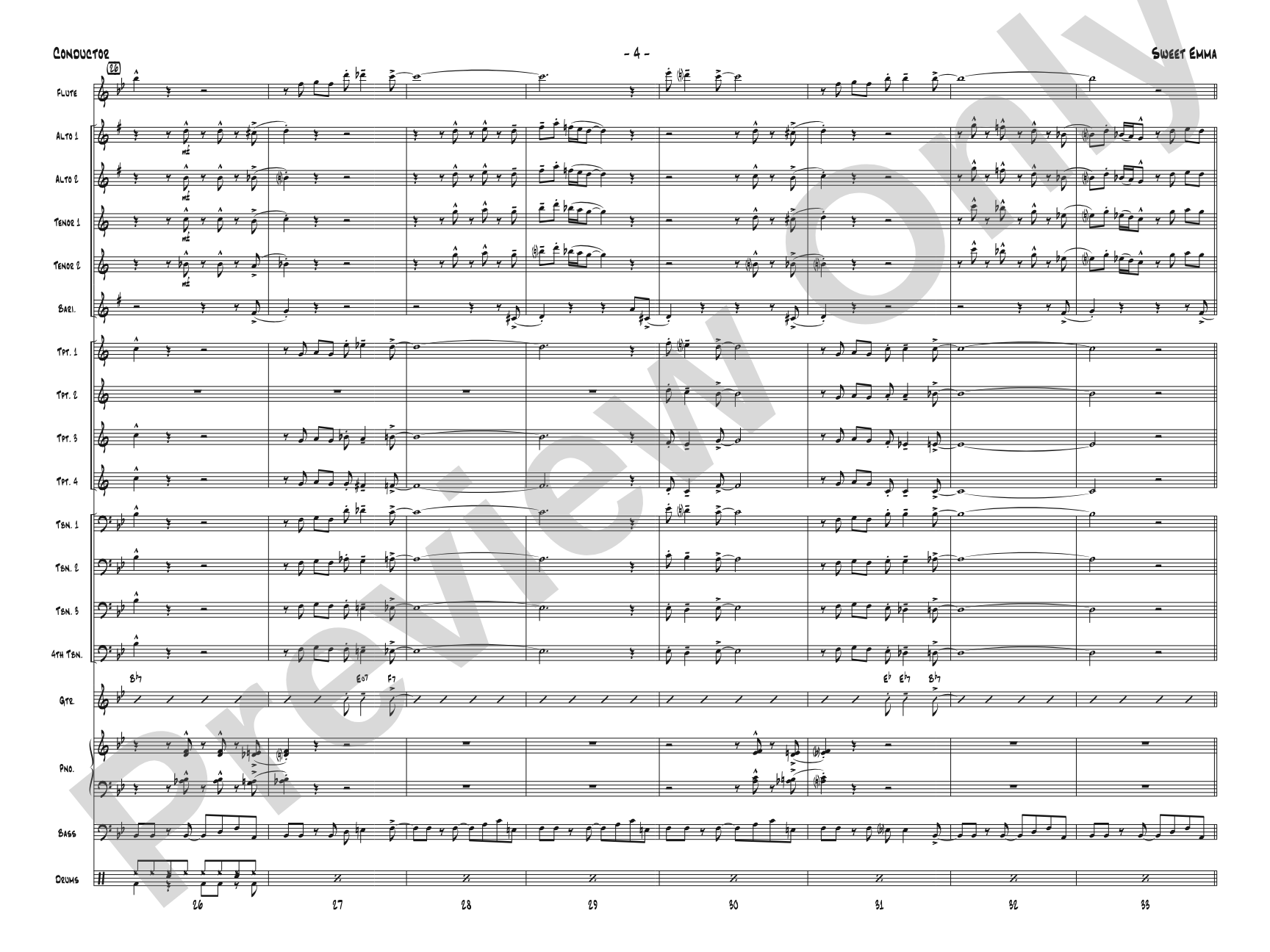
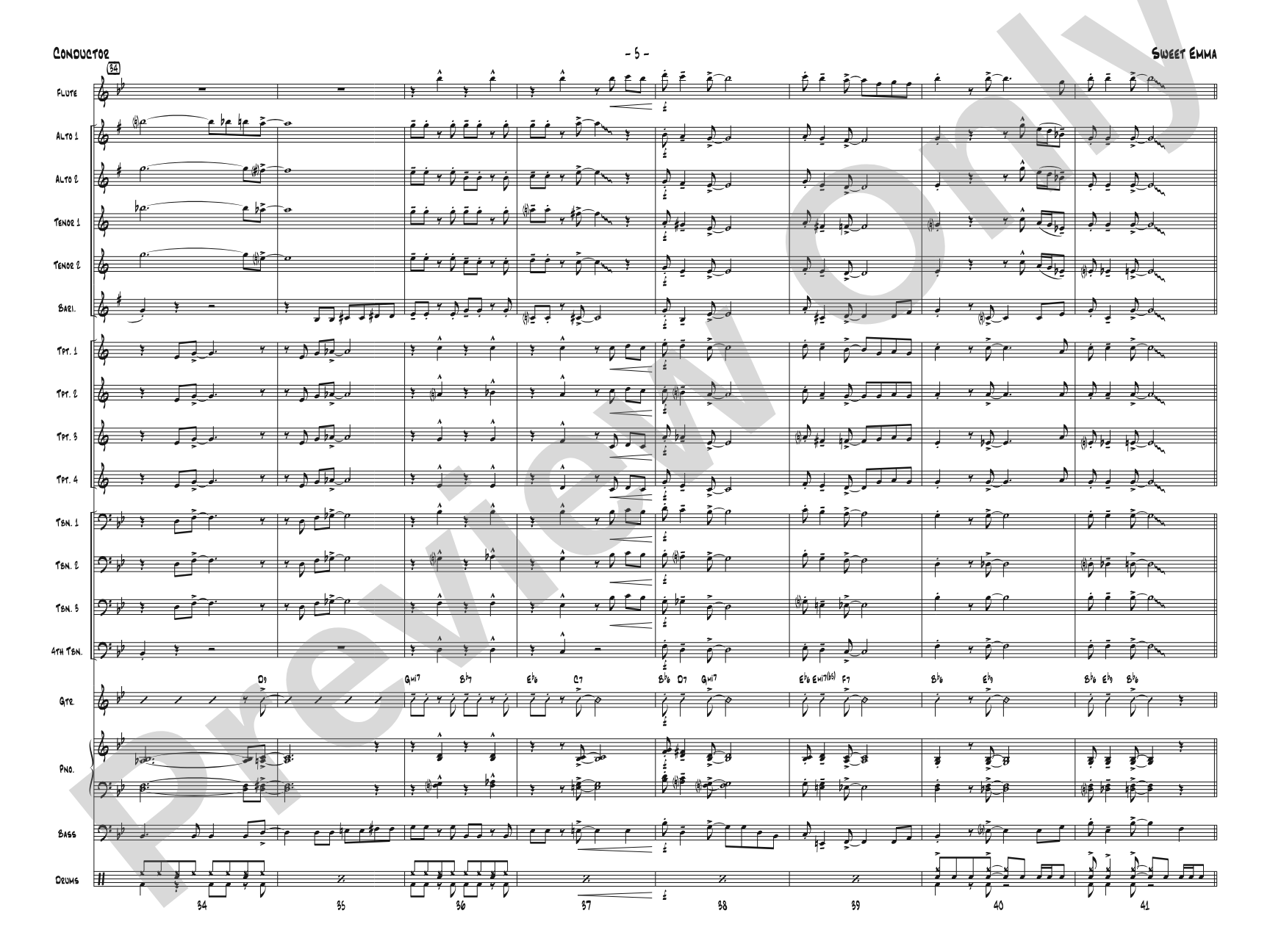
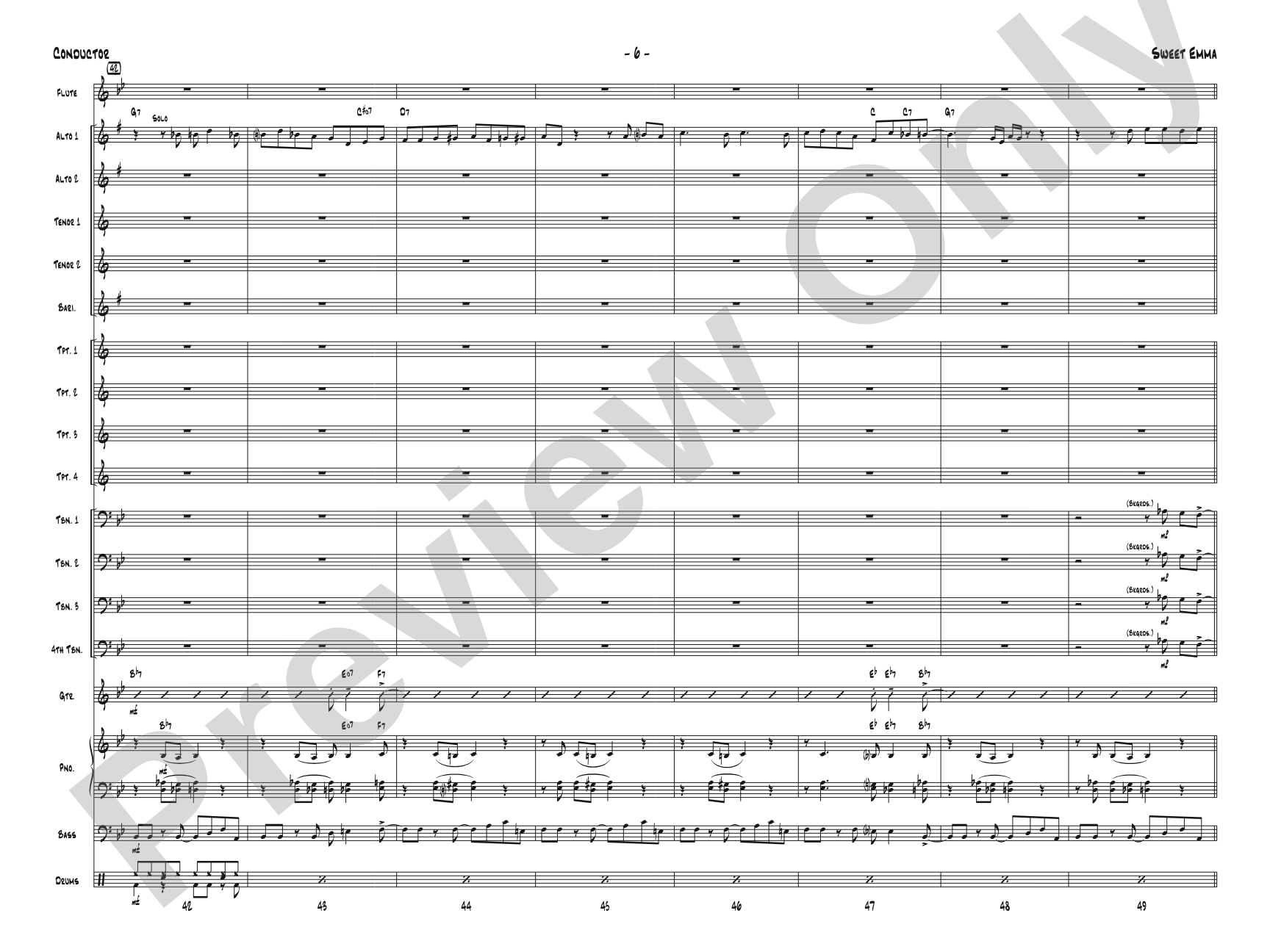

Sweet Emma: Jazz Ensemble Conductor Score & Parts
By Nat Adderley / arr. Mike Kamuf
Grade: 2.5
Item: 00-PK-0008879

$52.00
One moment…
Related Items
Sweet Emma: Jazz Ensemble Conductor Score & Parts |
$52.00
|
View |
Description
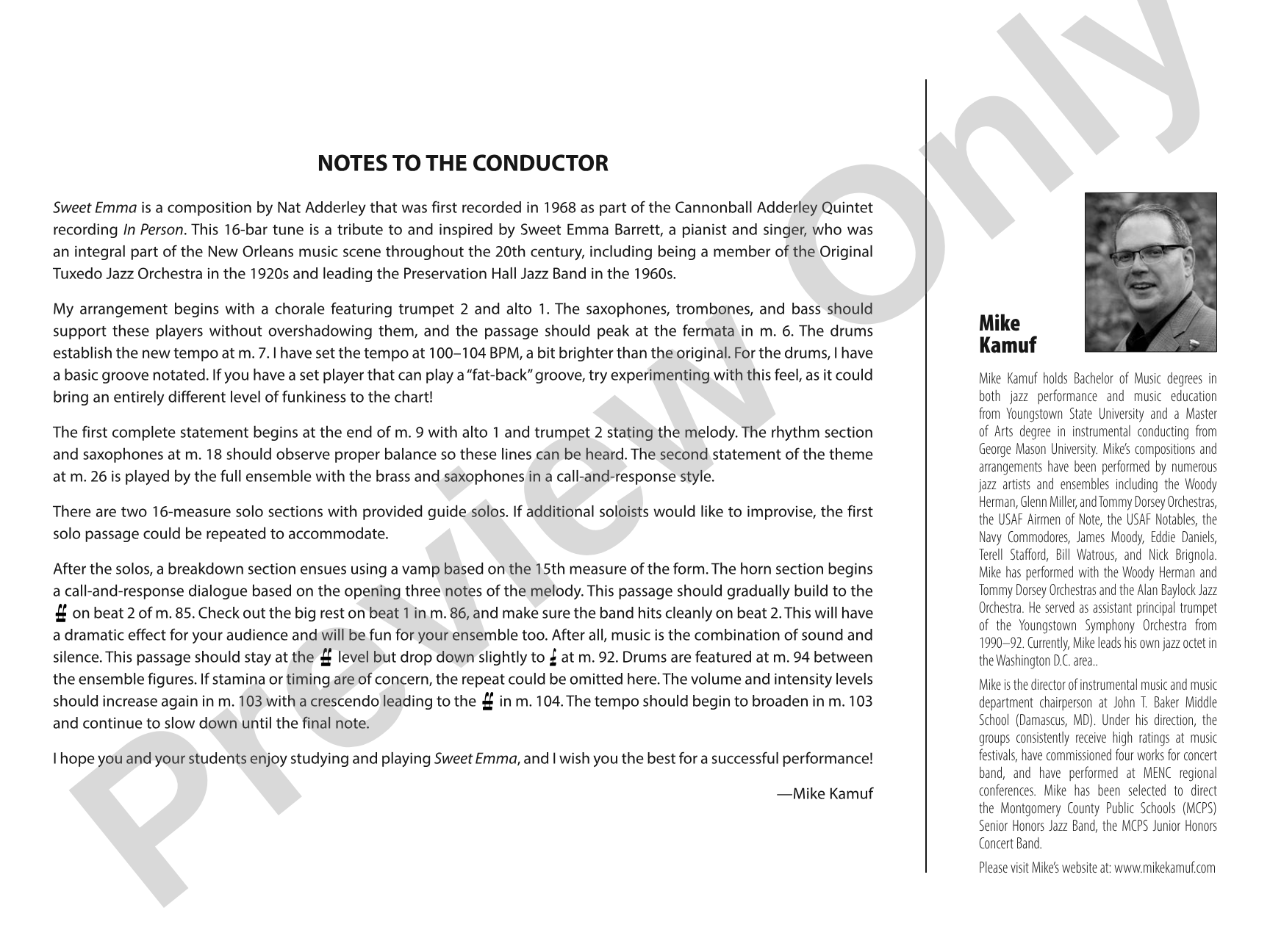
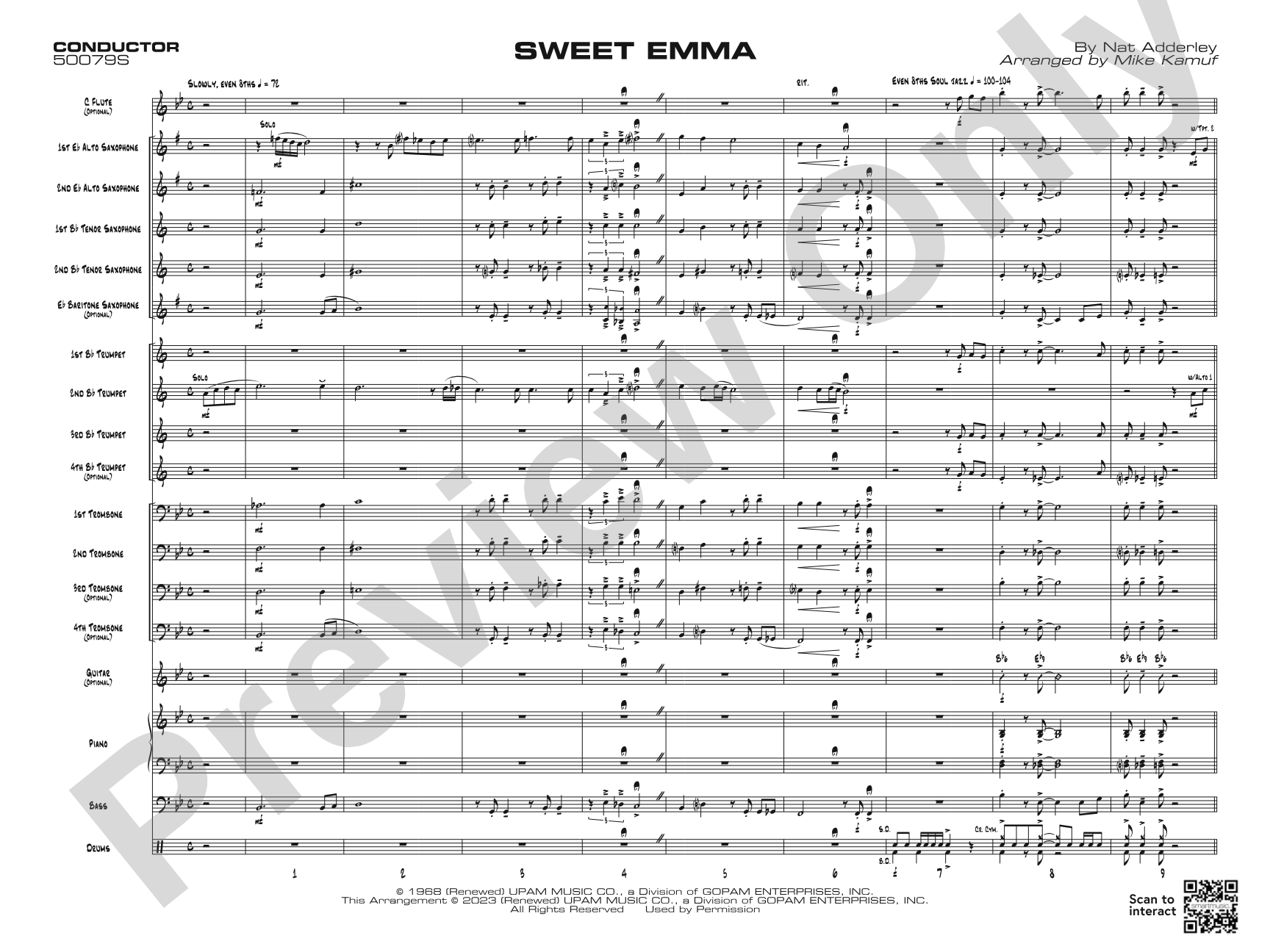
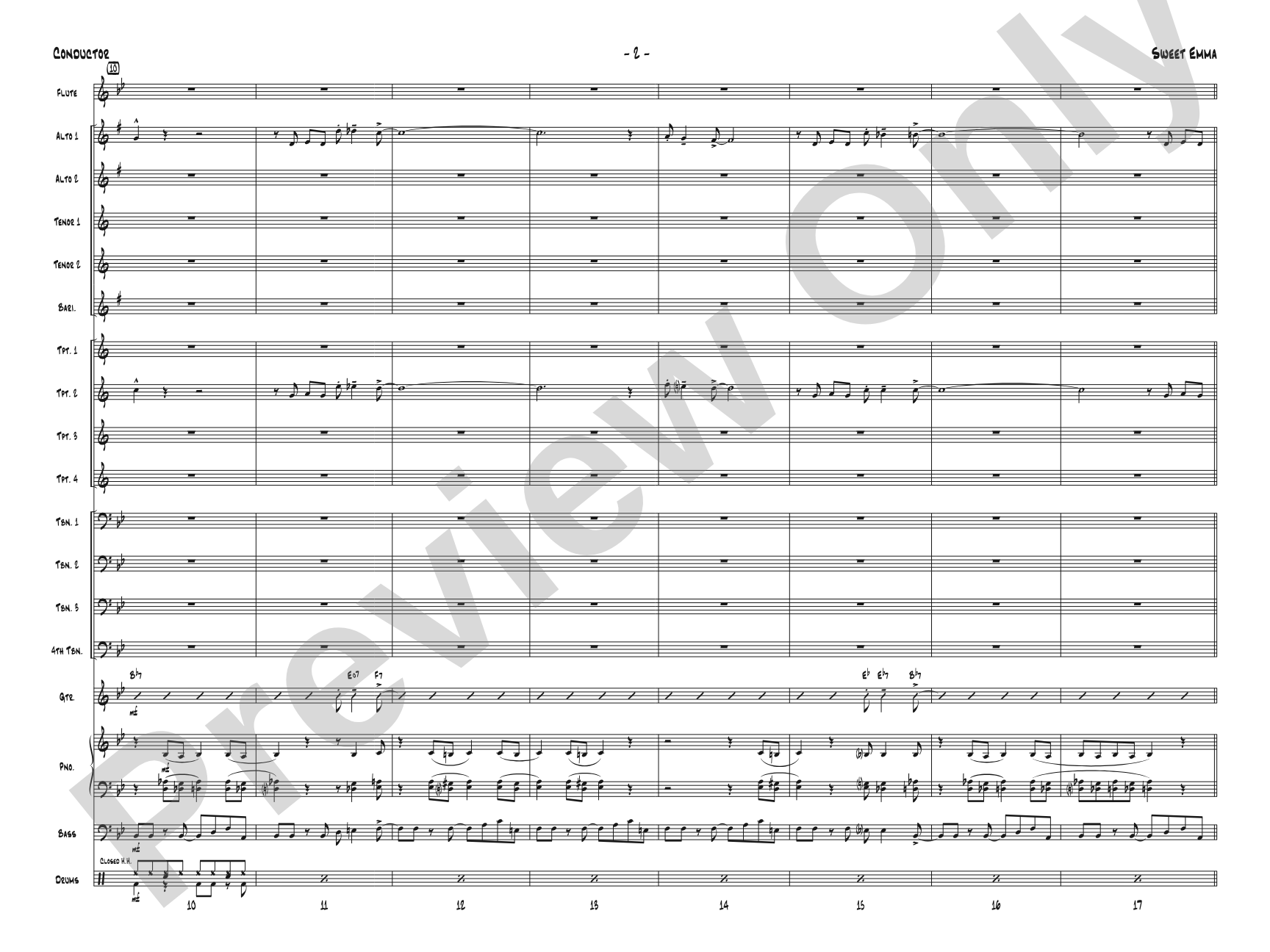
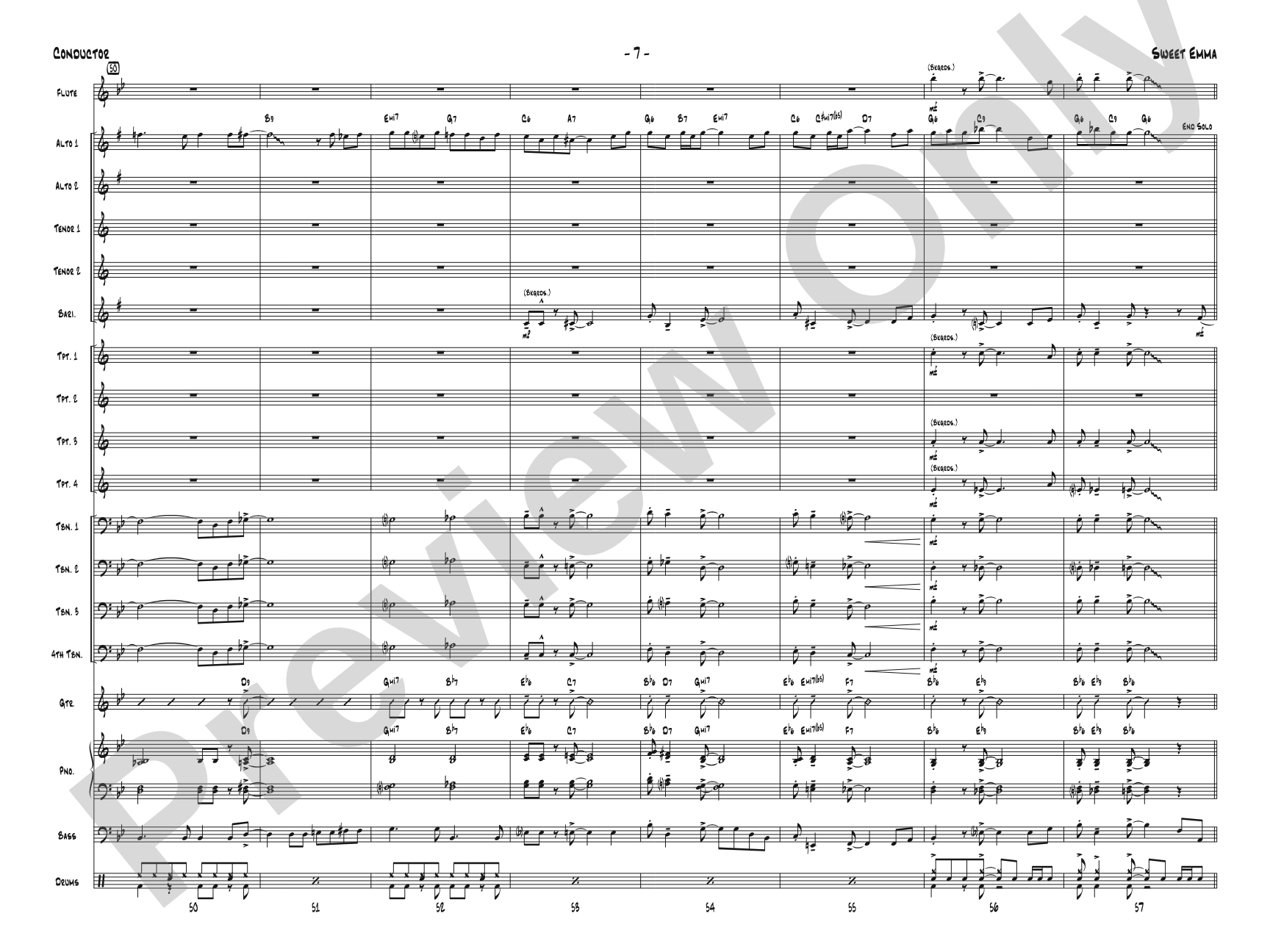
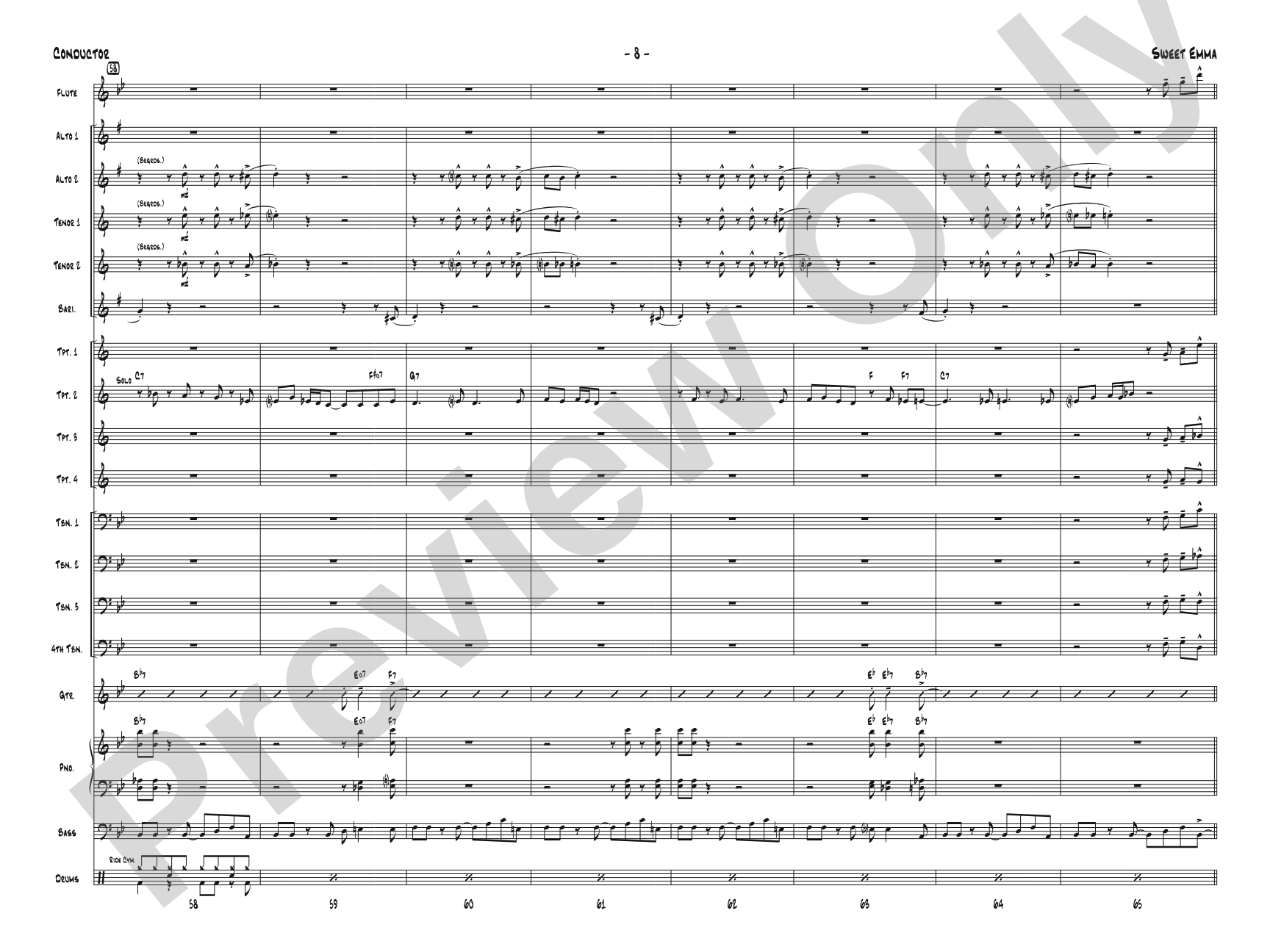
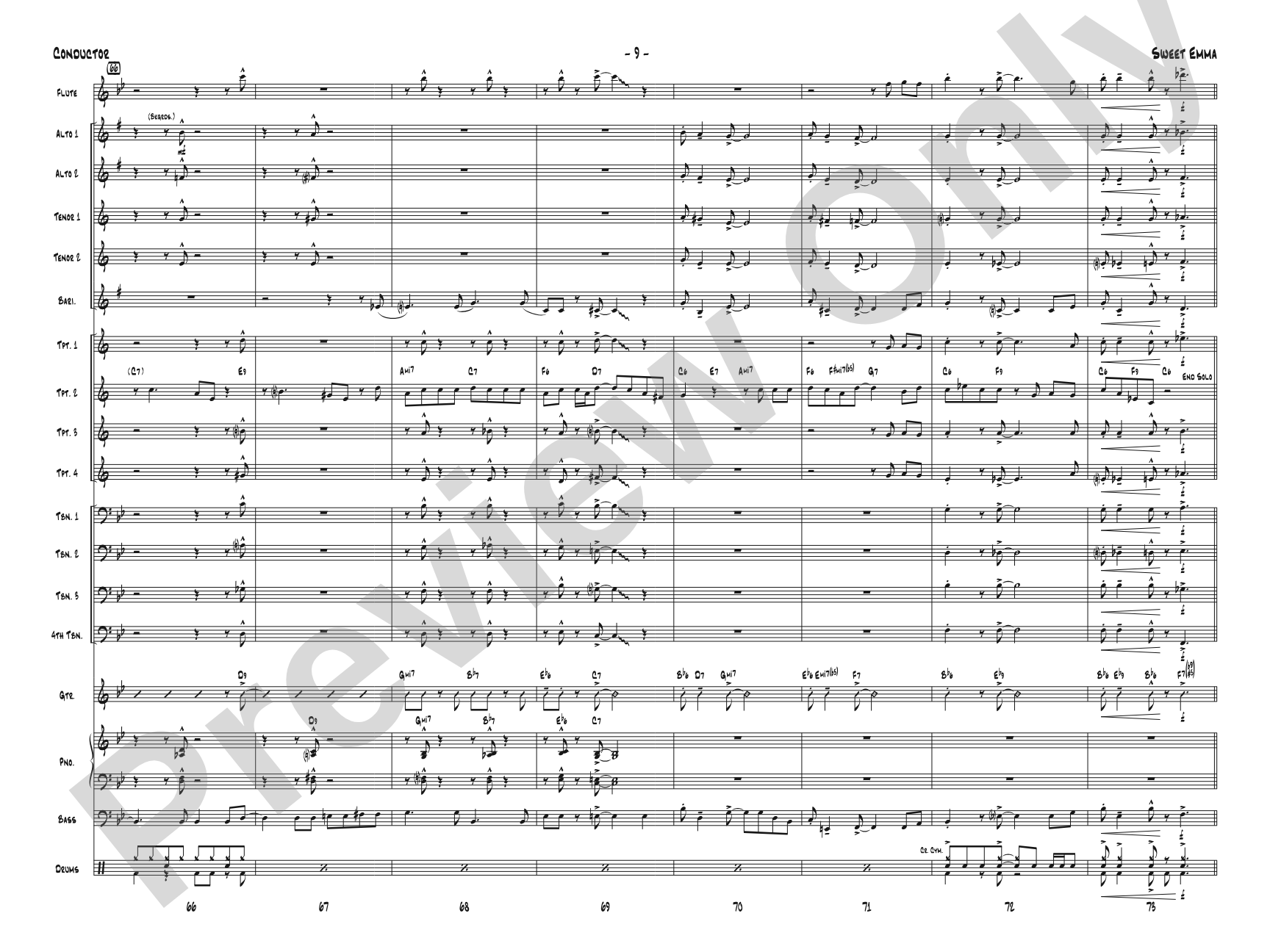
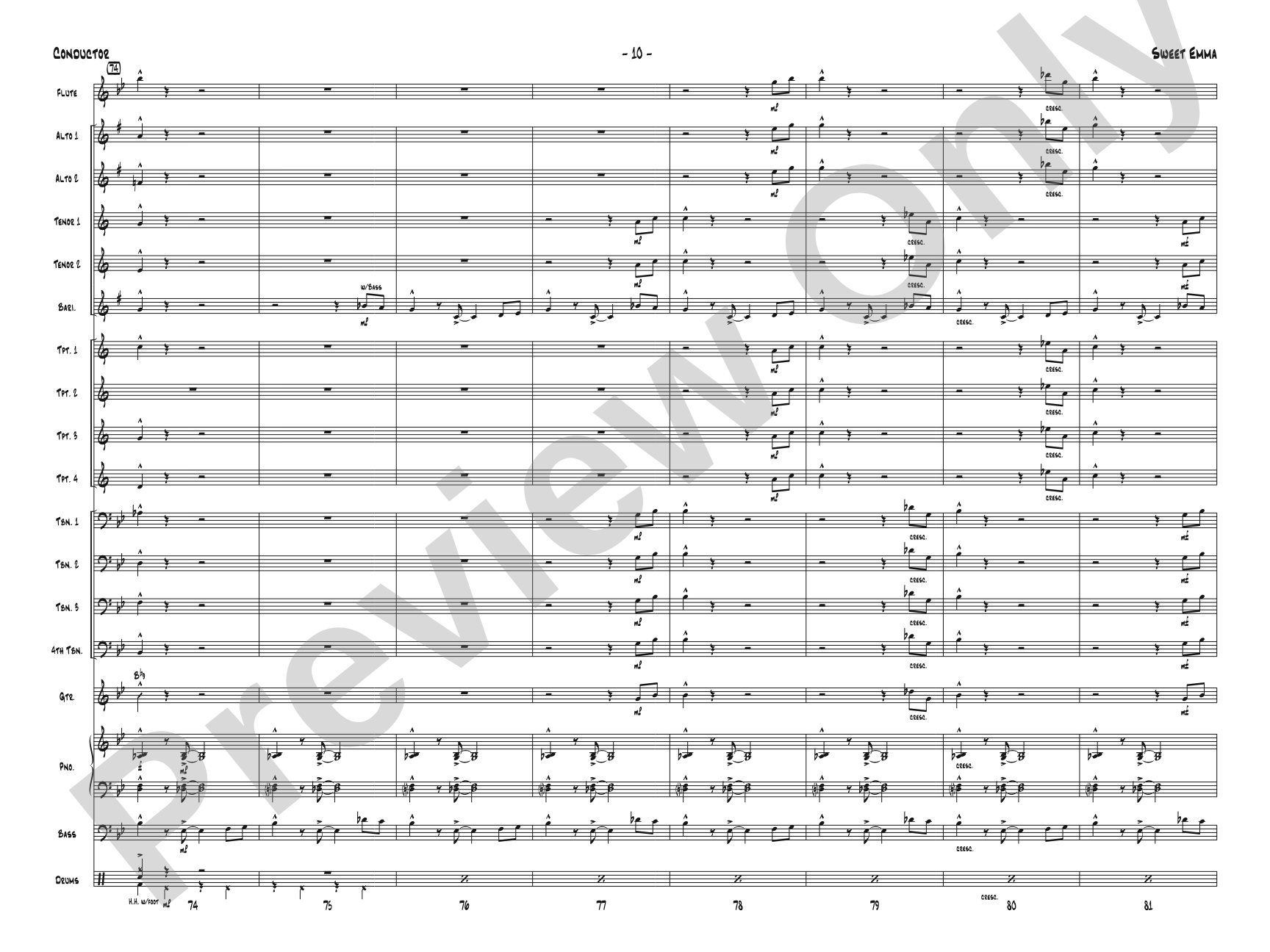
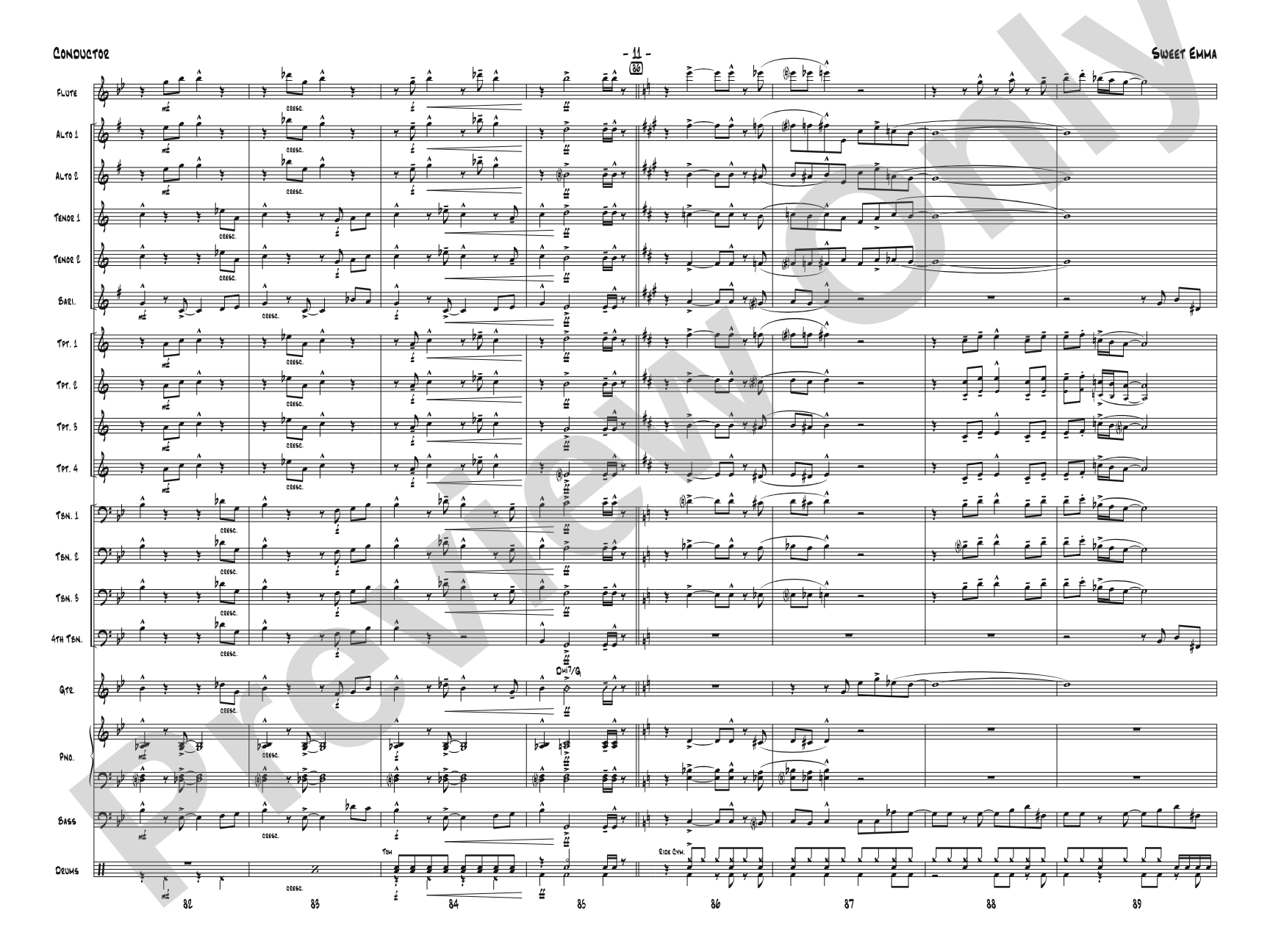
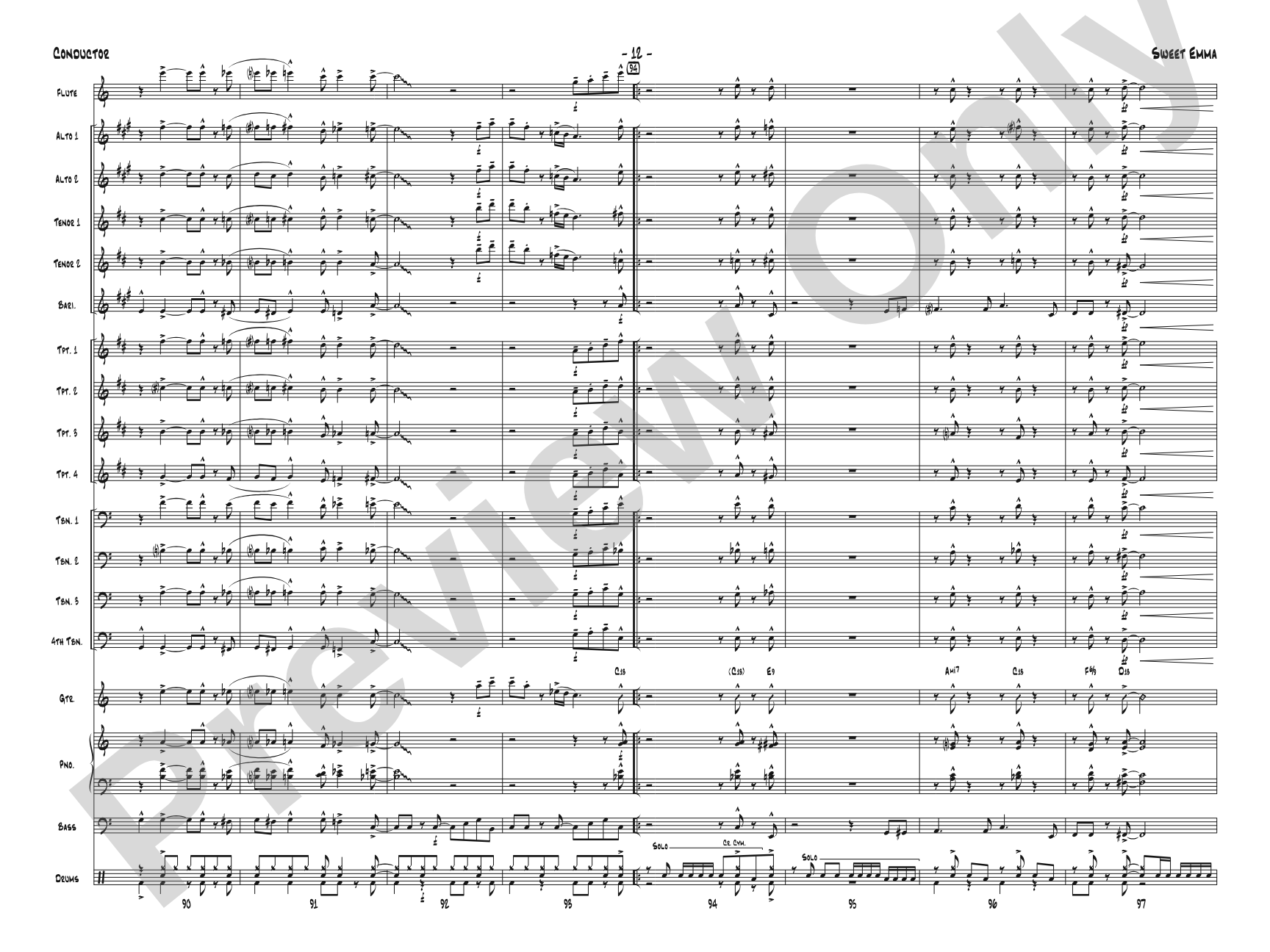
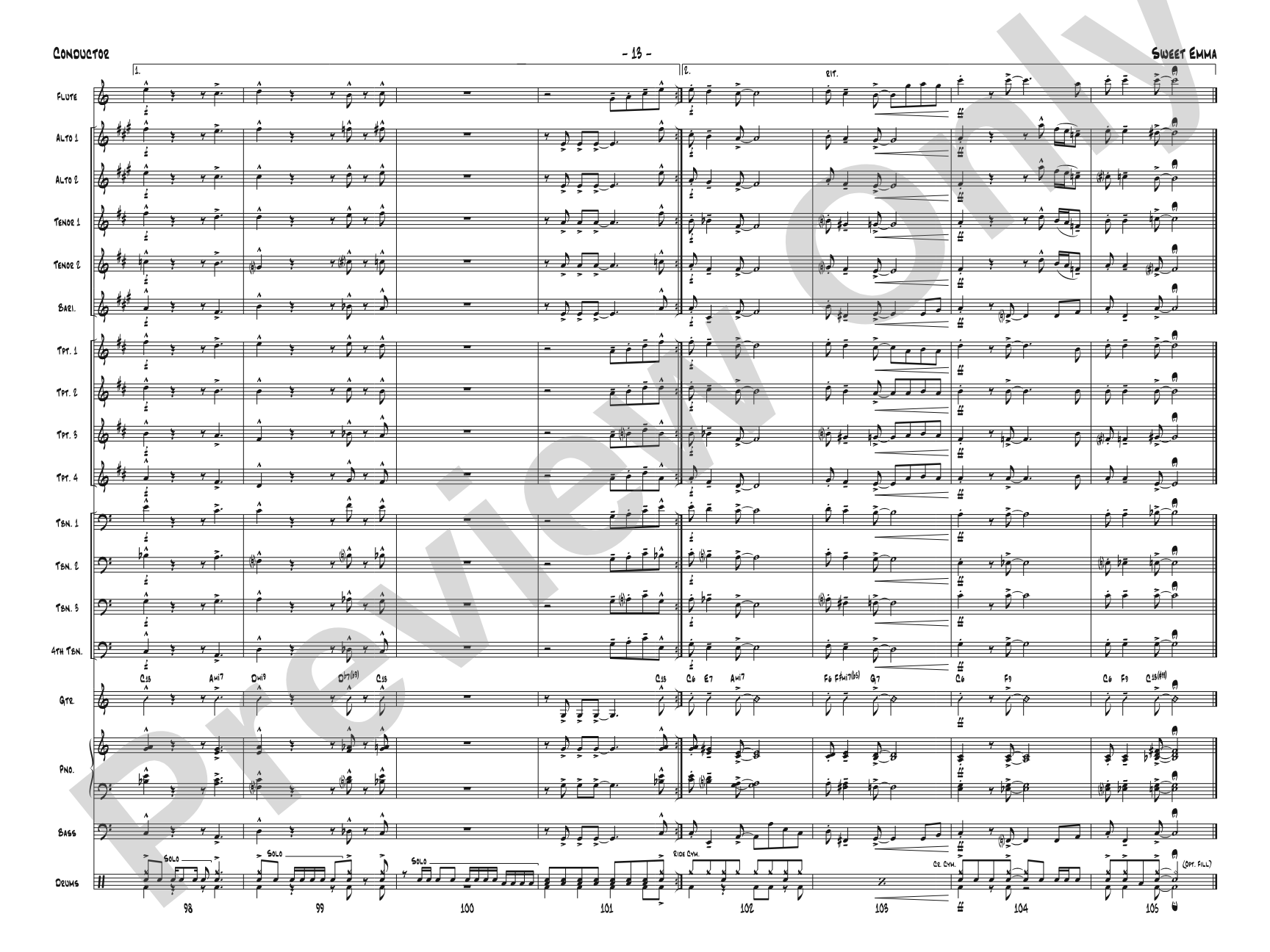
Beginning with a brief chorale, the gospel-inspired groove kicks in at 104 BPM. Alto 1 and trumpet 2 state the melody, with suggested written solos for both. Trumpet 1 range is to written F-sharp top line. There's a sweet shout chorus at the modulation with some drum fills intertwined. A funky chart that will please the band and the audience for sure! (4:35)


Don't just read it, hear it, play along with it, and watch your students grow with it. In MakeMusic Cloud, Sweet Emma: Jazz Ensemble Conductor Score & Parts comes alive with professional accompaniment, adjustable tempo, and built-in practice tools that turn solo practice into real progress.
Open in the Player
Jump straight in and assign it today.
Start Your Free Trial
Open this title and explore the full library in minutes.
Sample Audio
1
Audio File
--:--
0:00
0:00
Sample Video
Additional Details
Series:
Young Jazz Ensemble
Publisher:
Alfred Music
SKU:
00-PK-0008879
More about this title
About the Composer: Nat Adderley
Nat Adderley was a cornet and trumpet player whose warm, soulful sound defined the hard bop and soul jazz movements of the 1950s and 1960s. Brother of the more widely recognized Cannonball Adderley, Nat brought a lyrical sensibility to his playing and composing, drawing deeply from gospel and blues idioms. His compositions remain staples in jazz education because they balance accessibility with genuine musical substance.
Why we love this
This chart delivers genuine groove at Grade 2.5 without sacrificing musicality. The gospel foundation and funky pocket make it energizing for young players to learn from, while the shout chorus and written solo opportunities give students real moments to shine and develop their jazz voice.
What to expect
A Sunday morning groove meets the jazz club. The arrangement opens with quiet reverence before the band locks into a funky, propulsive pocket that feels utterly natural at 104 BPM. There's joy in the shout chorus and an infectious energy that makes audiences respond instantly.
Who it's for
Beginning to intermediate jazz ensembles ready to explore gospel-influenced swing and funkier textures. Trumpet players will appreciate the written range (to F-sharp) as a stretch goal without overextending younger players, and soloists at this level can handle the Alto 1 and Trumpet 2 featured sections.
How to get the most out of it
- Lock the groove at 104 BPM before adding any embellishment; the rhythm section's pocket drives everything else.
- Balance Alto 1 and Trumpet 2 on the melody statement so both voices cut through equally, then let the soloists have their moment with full support underneath.
- Shape the shout chorus with dynamic clarity through the modulation; the excitement builds because of control, not volume alone.
- Integrate the drum fills as rhythmic punctuation rather than intrusion; they accent the arrangement's structure.
How to use it
Program this as a concert closer or as part of a mid-year jazz showcase where you want to highlight rhythm section development and solo confidence. Its four-and-a-half minute length and high energy make it especially effective after a ballad or before intermission.
Skills your students will build
- Gospel-influenced swing phrasing and articulation
- Reading and executing written jazz solos with ensemble support
- Balancing melody clarity against supportive harmonic voices
- Locking into a funk groove while maintaining jazz sensibility
- Dynamic control through modulation and shout chorus sections