Sweet Dreams Sheet Music Preview

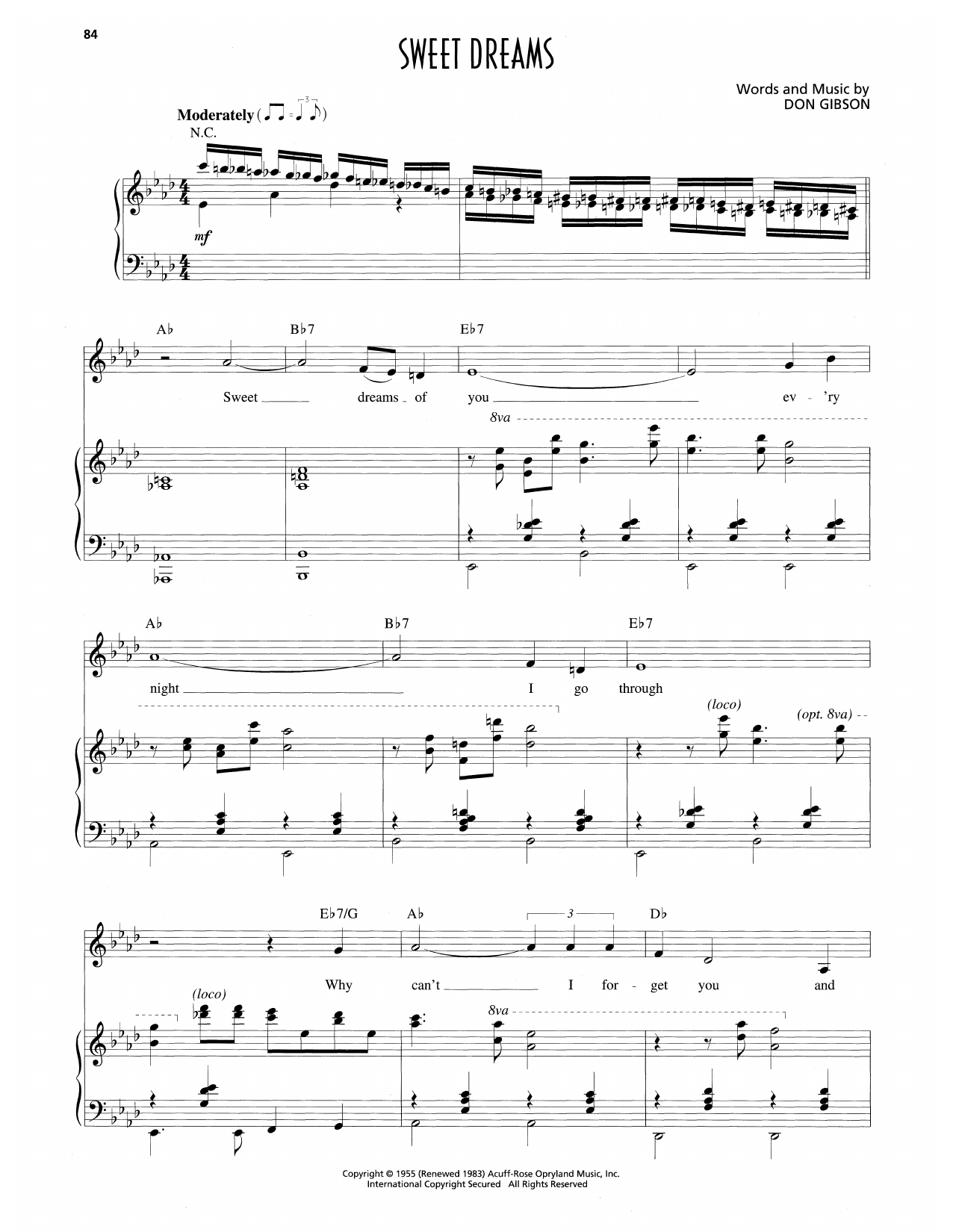
Sweet Dreams: Piano Vocal

As performed by Patsy Cline

Item: 35-DS01812872

Digital Download
$5.99
Description

Sweet Dreams: Piano Vocal isn't in MakeMusic Cloud just yet...but it could be. Let us know you'd like to see it, and you'll help shape what comes next. In the meantime, start a free trial and dive into thousands of interactive titles your students can play along with today.

Sample Audio
No sample audio found.
Sample Video
Additional Details
Publisher: Hal Leonard
Page Count: 4
SKU: 35-DS01812872

More about this title

About the Artist: Patsy Cline

Patsy Cline (1932-1963) became one of country music's most influential vocalists by refusing to stay confined to any single genre. Her career bridged the gap between traditional country and pop, earning her a devoted following across both audiences and pioneering a crossover approach that shaped popular music for decades.

Cline's vocal control, emotional depth, and interpretive choices made her a study in how to deliver a lyric with maximum impact. She remains essential listening for singers seeking to understand phrasing, emotional authenticity, and the power of restraint in performance.

Why we love this

This arrangement captures the intimate vulnerability that makes the song endure. Singers get to work with a melody that sits naturally in the voice while the piano part provides enough harmonic color to stay interesting without ever overwhelming the lyric.

What to expect

Quiet late-night reflection. The arrangement floats on hushed piano chords while the voice carries a melody that feels both fragile and determined, creating space for genuine emotion rather than showiness.

Who it's for

Singers working on stylistic control and emotional communication will find this accessible yet rewarding. It suits students who want to explore how jazz-inflected phrasing works in a country-pop context.

How to get the most out of it

  • Treat the piano as a conversation partner, not accompaniment. The two voices should breathe together and respond to each other's phrasing rather than lock into metronomic time.
  • Shape the melody with intentionality around consonants and vowels. The emotional weight of this song lives in how carefully you articulate the text.
  • Let the accompaniment set a gentle, unhurried tempo. Rushing pulls away from the introspective quality that makes this arrangement effective.

How to use it

Slot this into vocal recitals where you're mixing genres and eras, or use it as a bridge piece between classical art song and contemporary repertoire. Its introspective quality makes it especially fitting for themed concerts exploring heartbreak, memory, or loss.

Skills your students will build

  • Emotional phrasing and lyrical interpretation
  • Responding to piano accompaniment with flexibility rather than rigidity
  • Sustaining vulnerability across longer phrases
  • Navigating the style conventions of mid-century pop-country vocal production

You May Also Like