

Sweet and Low: SSA Choral Octavo
Words by Alfred, Lord Tennyson, music by John Leavitt
Item: 00-PO-0005491
$1.90
Minimum order quantity: 20 copies
Pickup currently not available
Description
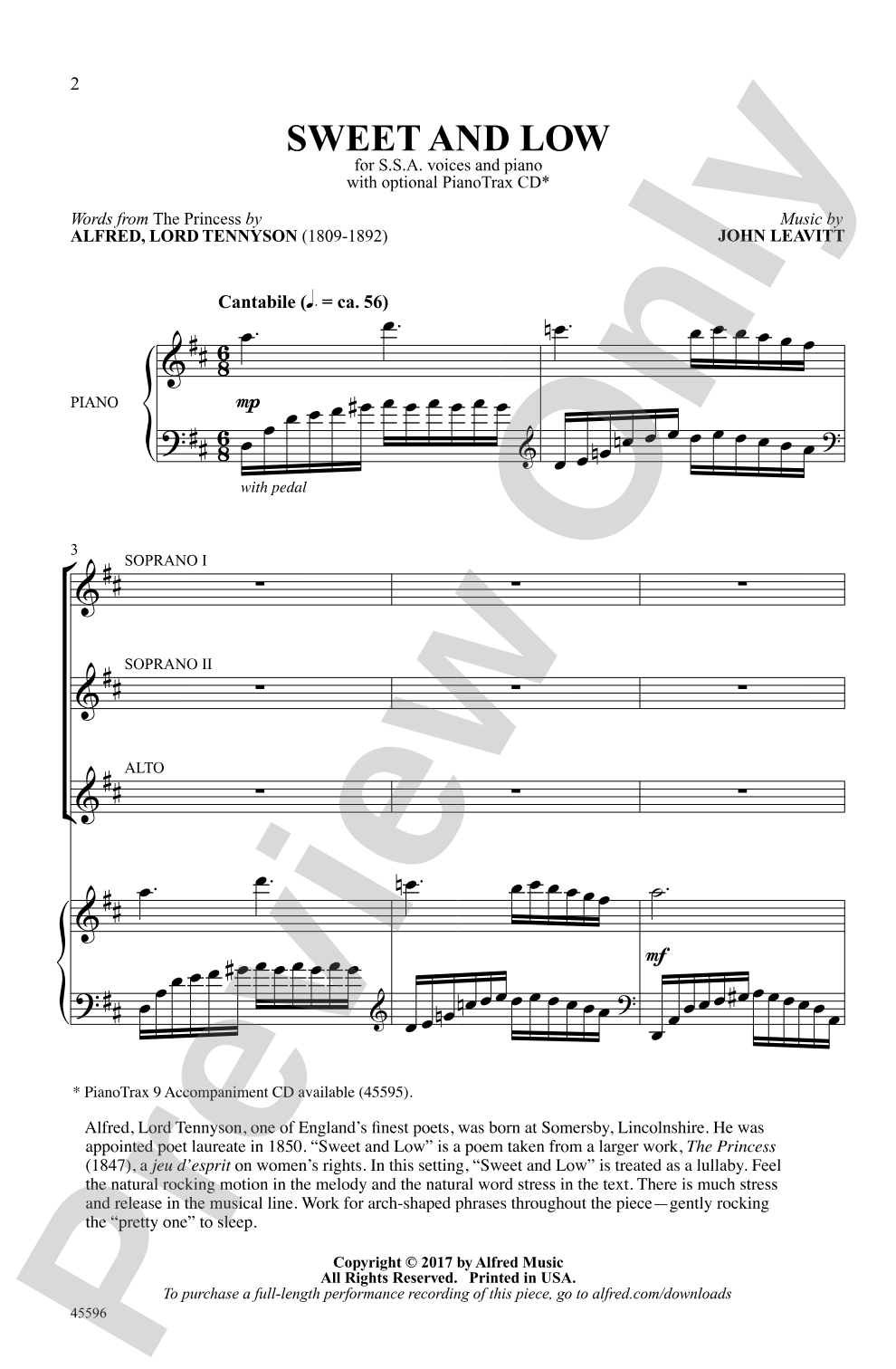
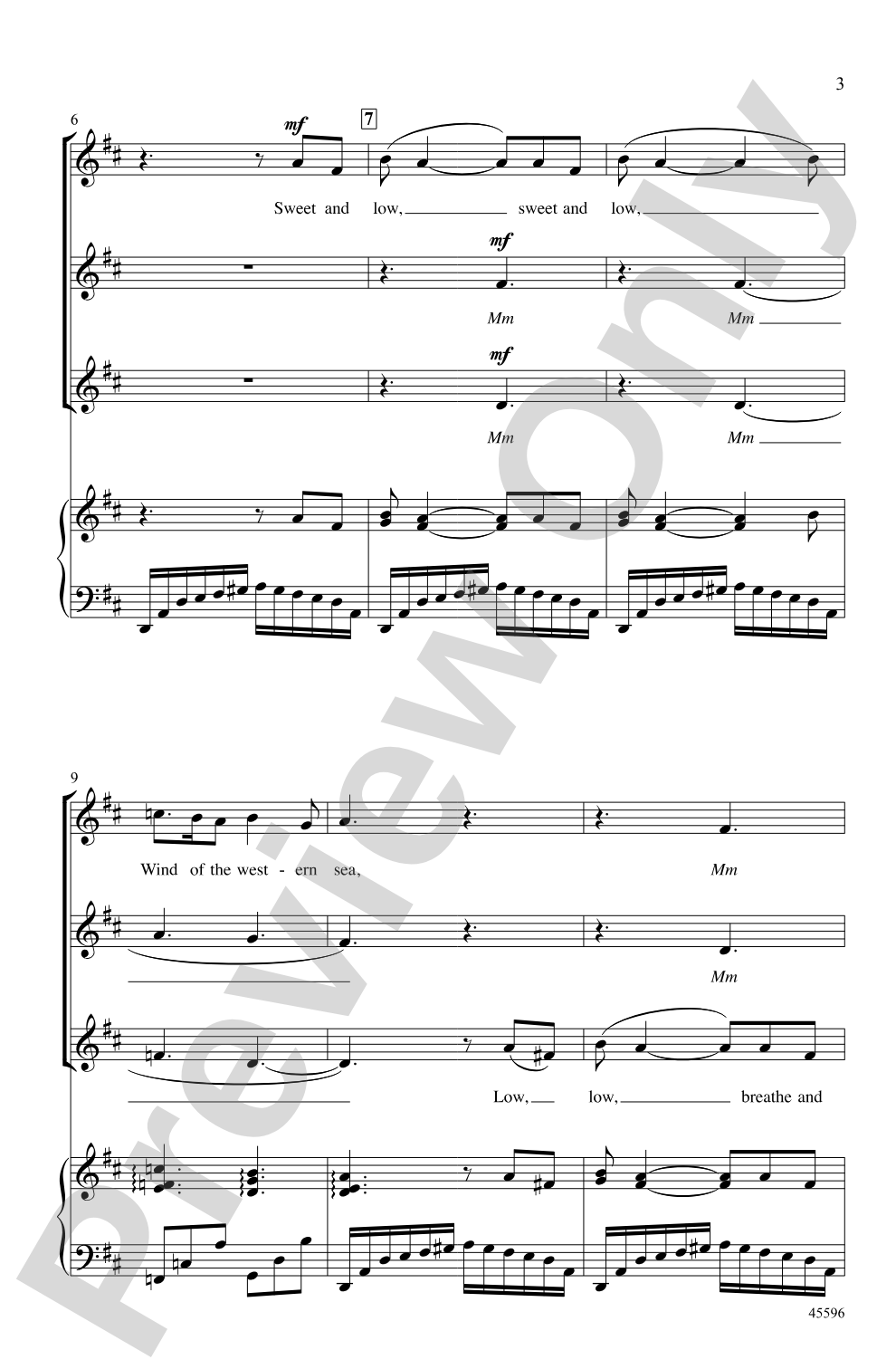
Alfred, Lord Tennyson's comforting text is beautifully set as a lullaby for SSA voices. The natural rocking motion suggests not only cradling the little one, but also the waters of the western sea, from which father may one day return. Arch-shaped phrases and carefully tuned cadences will highlight the stress and release of the musical line.


Sweet and Low: SSA Choral Octavo isn't in MakeMusic Cloud just yet...but it could be. Let us know you'd like to see it, and you'll help shape what comes next. In the meantime, start a free trial and dive into thousands of interactive titles your students can play along with today.
Request This Title
Tell us you want it.
Start Your Free Trial
Explore everything that's ready to play right now.
Sample Audio
1
Audio File
--:--
0:00
0:00
Sample Video
Additional Details
Series:
Alfred Choral Designs
Publisher:
Alfred Music
Page Count:
12
SKU:
00-PO-0005491
More about this title
About the Composer: John Leavitt
John Leavitt is a prolific composer of choral music whose arrangements and original works span classical, sacred, and secular repertoire. His compositions consistently balance accessibility with musical substance, making them favorites in high school and community choir settings across North America.
Why we love this
Leavitt's setting honors Tennyson's tender text without overshadowing it. The arch-shaped phrases create genuine musical architecture—voices rise and fall in ways that feel organic to the poem itself—and the careful attention to tuning at cadences gives your singers something concrete to listen for and adjust. This is the kind of piece that rewards detailed rehearsal and sounds significantly better the more your ensemble refines it.
What to expect
Intimate and gently rocking, like a slow tide moving in and out. There's both tenderness and a subtle undertow of longing in the harmonic language; the piece feels warm without being saccharine, and contemplative without becoming heavy.
Who it's for
SSA choirs seeking a serious yet accessible lullaby with literary depth. This works for high school ensembles with solid intonation skills and for community and church choirs wanting repertoire that bridges emotional maturity with technical achievability.
How to get the most out of it
- Shape each arch phrase as a single gesture rather than breaking it into smaller sections. Think about the entire rise and fall as one breath, even if singers need to breathe within it.
- Lock in the tuning at cadences by rehearsing them separately, isolating the final chord and listening for resonance before moving on.
- Explore the dynamic relationship between parts. The rocking motion works best when the ensemble commits to the swell and release as a unified entity, not as individual voice parts moving independently.
- Consider the text painting around the "waters of the western sea"—allow the musical line to feel both cradling and vast, which requires clarity on when voices move together and when they shift.
How to use it
Program this in a concert of art songs or poetry-inspired choral works, where it can sit alongside other settings of classic texts. It also serves as a strong closer for a concert focused on women's voices, offering a moment of quiet reflection that leaves audiences in a thoughtful space.
Skills your students will build
- Singing sustained arch phrases with consistent line and intentional dynamic shape
- Fine-tuning vertical sonority at cadential moments
- Balancing individual voice independence with ensemble blend
- Interpreting text through musical gesture and harmonic color
- Maintaining steady pulse and intonation in slower tempos