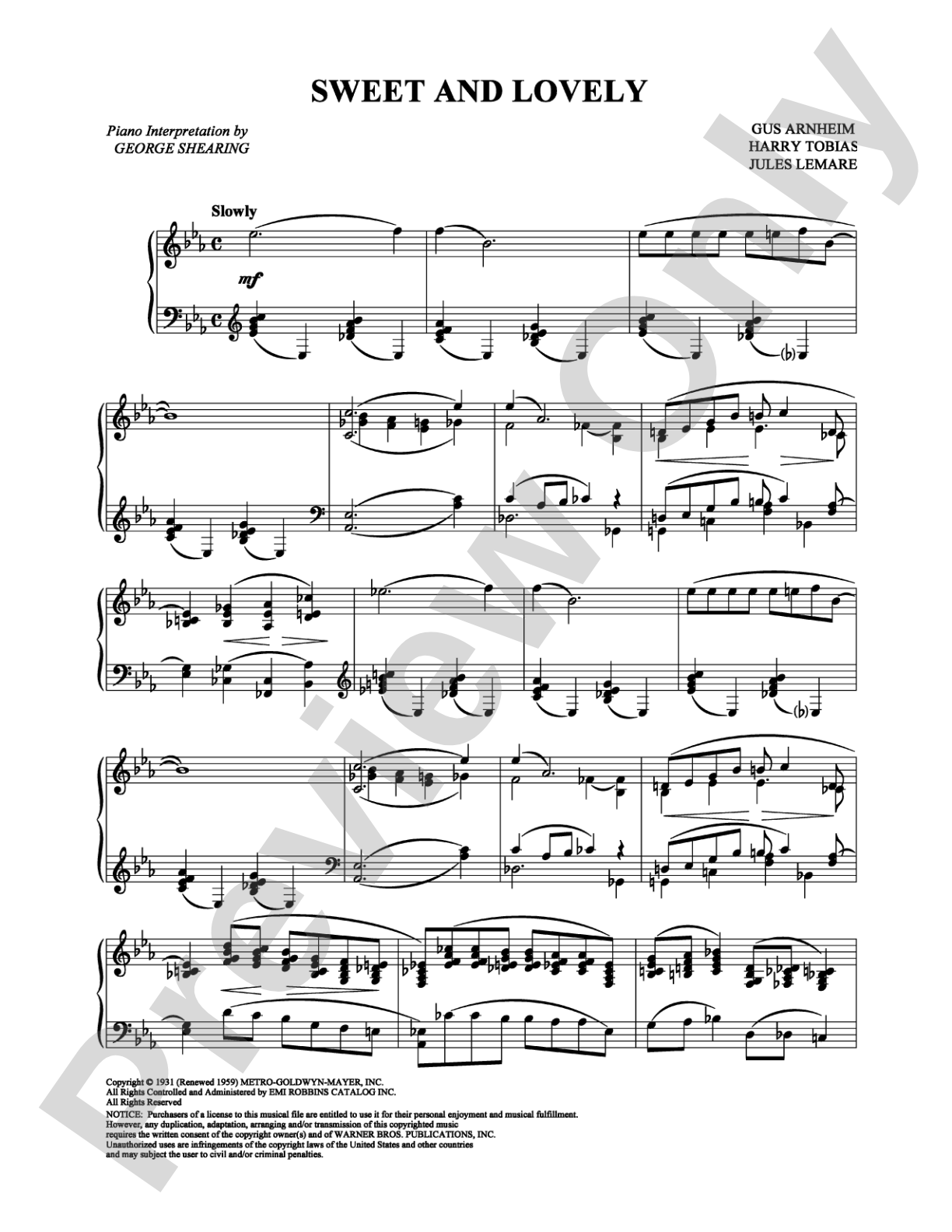
Sweet and Lovely: Piano Digital Sheet Music

Sweet and Lovely: Piano Digital Sheet Music

George Shearing, Gus Arnheim, Harry Tobias, Jules Lemare

Item: 00-PS-0009870

Digital Download
$3.99
Description

Sweet and Lovely: Piano Digital Sheet Music isn't in MakeMusic Cloud just yet...but it could be. Let us know you'd like to see it, and you'll help shape what comes next. In the meantime, start a free trial and dive into thousands of interactive titles your students can play along with today.

Sample Audio
No sample audio found.
Sample Video
Additional Details
SKU: 00-PS-0009870

More about this title

About the Artist: George Shearing

George Shearing was a British jazz pianist and composer whose sophisticated harmonic sensibility and lyrical touch defined the cool jazz sound of the 1950s. Born in 1919, he became one of the most recorded jazz musicians of his era, leading the George Shearing Quintet and composing standards that remain central to the jazz repertoire.

Shearing's approach to the piano emphasized lush voicings, clear melodic phrasing, and an almost classical refinement that made jazz accessible to mainstream audiences without sacrificing depth. His work demonstrates how structured harmonic thinking and technical mastery can serve expressive, song-like playing rather than compete with it.

Why we love this

This standard shows exactly why Shearing's interpretations remain such effective teaching tools. The piece sits comfortably under the hands, the harmonic progressions are clear enough to hear through a single reading, and the melodic line invites students to think about phrasing and rubato in a jazz context without demanding bebop-level velocity.

What to expect

Urbane and intimate at once. The melody floats with genuine warmth over harmonies that feel both completely natural and subtly rich. There's a quality of conversation here rather than display, as if Shearing is sharing the tune with you across the room.

Who it's for

Piano students and jazz pianists ready to explore standard jazz vocabulary with a model who values taste and arrangement over technical fireworks. This works equally well for advanced classical pianists beginning to improvise or for jazz students who want to understand how a sophisticated European sensibility shaped American jazz tradition.

How to get the most out of it

  • Voice the left hand clearly enough that listeners hear the harmonic movement; resist the urge to fill every space with runs when the outline of the changes tells the story.
  • Use the bridge and final A section to explore reharmonization ideas, but let the opening melody stand unadorned so the contrast lands.
  • Listen to Shearing's recorded version to understand how sparsely he actually plays in places; sometimes the most elegant choice is restraint.

How to use it

Pair this with other standards from the Shearing songbook to create a short jazz history program, or use it as a teaching piece alongside other interpretations of the same tune by different pianists to show how arrangement choices reshape a standard. It works particularly well in recital settings where you want jazz repertoire that appeals to classical audiences.

Skills your students will build

  • Playing jazz standards with authentic voicings and phrasing
  • Reading and interpreting lead sheet notation with harmonic sophistication
  • Understanding how rubato and rhythmic flexibility shape jazz melody
  • Building left-hand comping patterns that support rather than overshadow the line
  • Listening to recorded models and translating interpretive choices to their own playing

You May Also Like