Swanee: Easy Piano Digital Sheet Music

Swanee: Easy Piano Digital Sheet Music

George Gershwin

Item: 00-PS-0008642

Digital Download
$3.99
Description

Swanee: Easy Piano Digital Sheet Music isn't in MakeMusic Cloud just yet...but it could be. Let us know you'd like to see it, and you'll help shape what comes next. In the meantime, start a free trial and dive into thousands of interactive titles your students can play along with today.

Sample Audio
No sample audio found.
Sample Video
Additional Details
SKU: 00-PS-0008642

More about this title

About the Creator: George Gershwin

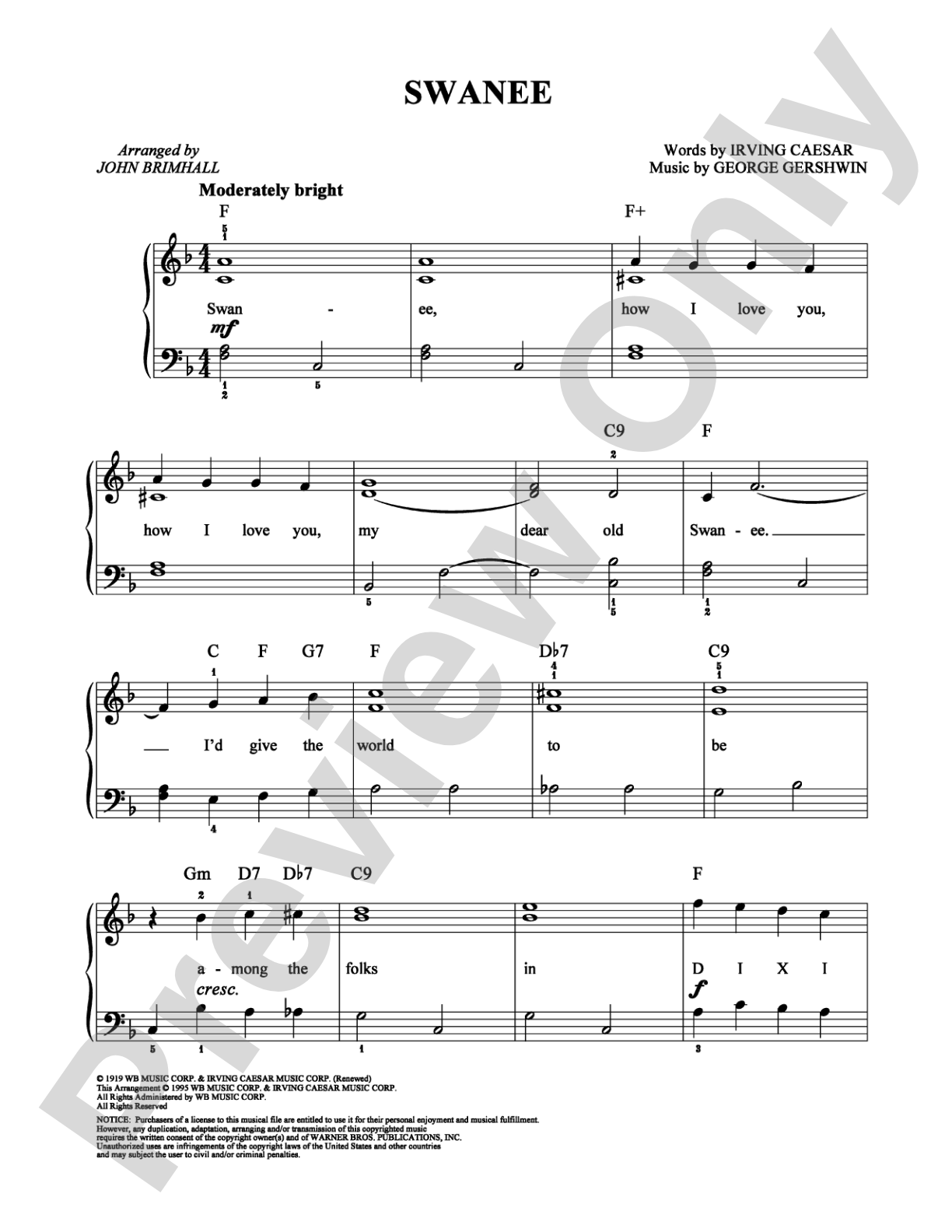
George Gershwin composed "Swanee" in 1919, and the song became an instant sensation when Al Jolson introduced it to audiences. Written early in Gershwin's career, it captures the infectious energy and vernacular spirit that would define much of his output, blending popular song sensibility with genuine melodic charm. The piece remains one of his most recognizable works, a standard that has been recorded countless times across jazz, pop, and classical idioms.

For pianists, "Swanee" represents an accessible entry point into Gershwin's harmonic language and rhythmic vitality. The song's straightforward structure and memorable melody make it an ideal teaching piece, while its historical significance anchors it firmly in American music tradition.

Why we love this

This arrangement strips away nothing essential while staying true to the spirit of Gershwin's original. Students get to experience authentic popular song craft, a melody that sings naturally over jazz-inflected changes, without getting bogged down in technical complexity.

What to expect

Bright, optimistic, and propulsive. The melody hums with early 20th-century American confidence, and the harmonic movement creates subtle forward momentum even at an easy reading level. There's joy in this piece, both in playing it and in hearing it come alive.

Who it's for

Piano students at the early intermediate level who want to tackle a beloved American standard without wrestling with complex harmony or technique. Players preparing a recital program that balances classical study with repertoire that connects to broader popular music history will find this arrangement both accessible and musically gratifying.

How to get the most out of it

  • Let the rhythm breathe with a relaxed swing feel rather than metronomic precision; the groove matters more than rigidity here.
  • Shape the melody with clear articulation and dynamic contrast so the recognizable tune cuts through, especially in the left hand accompaniment.
  • Lean into the character of the piece by experimenting with tempo and rubato; this standard rewards a confident, expressive touch.

How to use it

Pair this with other jazz-influenced standards or American songbook selections to create a themed recital program. It also works well as a palate-cleansing encore or as part of a student showcase where variety and recognizability matter.

Skills your students will build

  • Playing swing rhythms and syncopated accompaniment patterns
  • Balancing melody and accompaniment texture on a single instrument
  • Stylistic interpretation of early twentieth-century popular song
  • Right-hand independence and fluency in moderate tempo passages

You May Also Like