
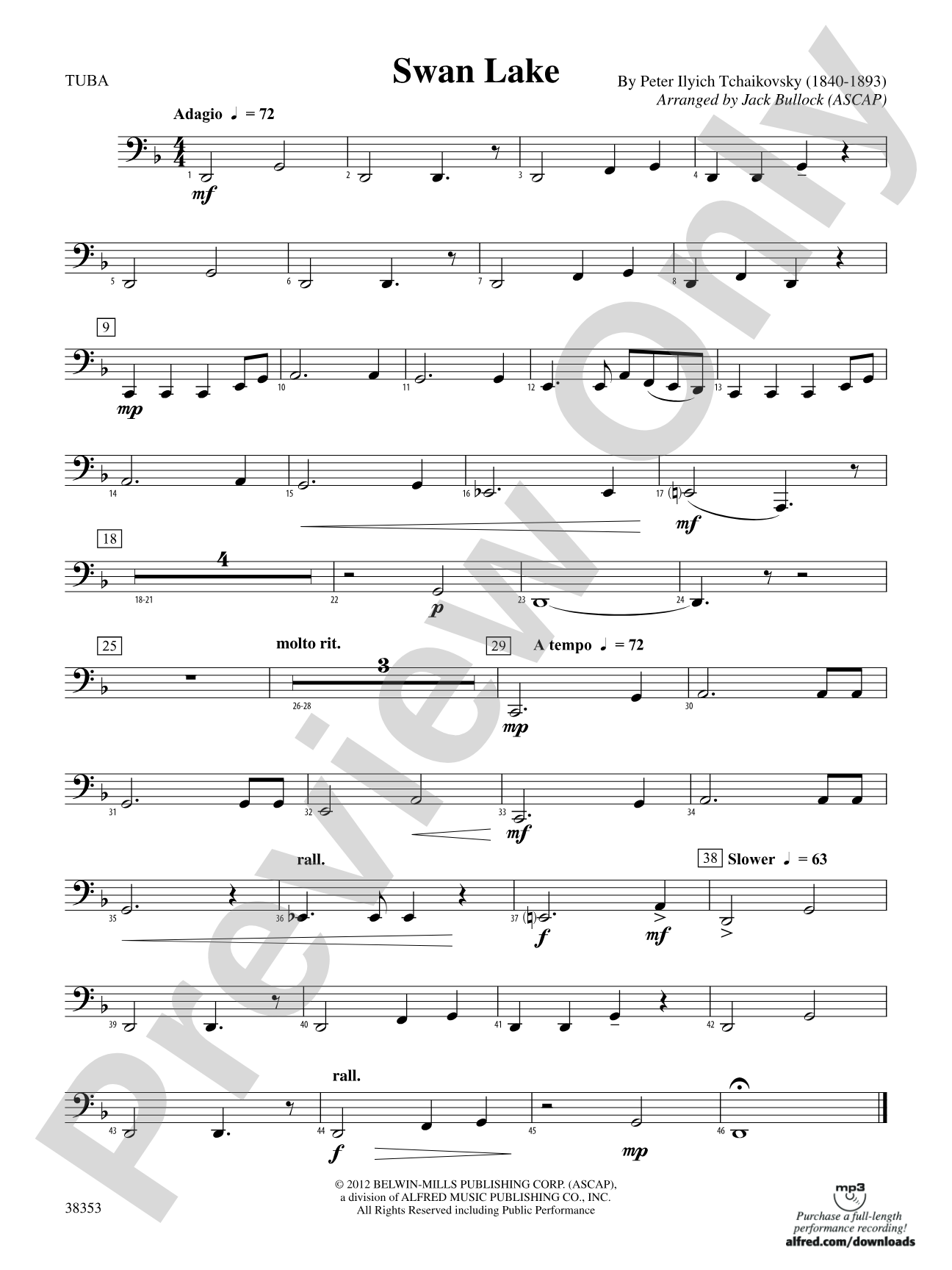

Swan Lake: Tuba
By Peter Ilyich Tchaikovsky / arr. Jack Bullock
Grade: 2 (Easy)
Item: 00-PC-0015439_TB1
$3.00
Pickup currently not available
Description
The haunting, but flowing melody from Tchaikovsky's Swan Lake has been exclaimed by many as a perfect image of the title dancer who is turned into a swan during the ballet. There are few technical challenges in this most musical addition to your young band's repertoire. Bravo! (2:45)


Don't just read it, hear it, play along with it, and watch your students grow with it. In MakeMusic Cloud, Swan Lake: Tuba comes alive with professional accompaniment, adjustable tempo, and built-in practice tools that turn solo practice into real progress.
Open in the Player
Jump straight in and assign it today.
Start Your Free Trial
Open this title and explore the full library in minutes.
Sample Audio
1
Audio File
--:--
0:00
0:00
Sample Video
No sample videos found.
Additional Details
Series:
Belwin Young Band
Publisher:
Alfred Music
Page Count:
118
SKU:
00-PC-0015439_TB1
More about this title
About the Composer: Peter Ilyich Tchaikovsky
Tchaikovsky (1840-1893) stands as one of the most performed composers in the concert repertoire, yet his path to recognition was anything but straightforward. A Russian Romantic whose orchestral works span ballets, symphonies, concertos, and overtures, he possessed an extraordinary gift for melody that could lodge itself in the listener's mind after a single hearing. His three great ballets—Swan Lake, The Sleeping Beauty, and The Nutcracker—remain cornerstones of both dance and musical culture worldwide.
For young musicians, Tchaikovsky offers an unparalleled education in orchestration, phrasing, and the connection between music and narrative. His melodies sing naturally on any instrument, making his works ideal for developing musicianship without requiring advanced technical facility. The emotional directness of his writing rewards both careful listening and thoughtful interpretation.
Why we love this
Jack Bullock's arrangement captures the lyric beauty of this iconic melody while keeping the technical demands accessible for a developing ensemble. The 2:45 runtime makes it an ideal concert closer or festival selection that lands firmly and leaves a strong impression. Young musicians immediately recognize this melody, which generates genuine motivation to perform it well.
What to expect
The Swan Lake melody emerges as something serene and contemplative, flowing with the unhurried grace of the transformed dancer. There is nobility in the line without artifice, and a quiet dignity that invites sensitive musical response rather than technical display. The piece envelops listeners in a familiar, emotionally resonant moment from classical ballet.
Who it's for
Grade 2 bands with developing musicianship who benefit from playing an immediately recognizable work that doesn't demand advanced technical skill. Conductors seeking a masterwork arrangement that builds confidence and demonstrates how great melody transcends instrumental arrangement. Any ensemble wanting a concert piece that showcases lyricism and ensemble balance.
How to get the most out of it
- Shape the melody through subtle dynamic changes rather than sudden swells. The line wants to breathe gently, mirroring the swan's graceful movement across the stage.
- Balance the accompaniment so it supports without overshadowing the primary voice. Too much weight in the background parts obscures what makes this arrangement sing.
- Resist rushing the flowing passage work. Confidence and steadiness in the supporting lines allow the melody to float naturally above them.
- Listen for the architecture of the whole line across the 2:45 span. Mark your crescendi and diminuendi strategically so the piece builds and releases rather than staying at one dynamic level.
How to use it
This works beautifully as a concert finale that sends the audience home with a beloved melody they'll carry with them. It pairs naturally on a program alongside other Romantic-era masterwork arrangements or as a contrast to more contemporary or energetic selections. The familiar material makes it an excellent choice for community concerts where audience connection matters as much as technical demonstration.
Skills your students will build
- Sustaining long melodic lines with musical shape and direction
- Balancing lyrical top voices against accompaniment parts
- Reading a full score as a conductor or section leader
- Interpreting a well-known work through the lens of a new arrangement
- Maintaining steady tempo and phrasing through flowing accompaniment patterns