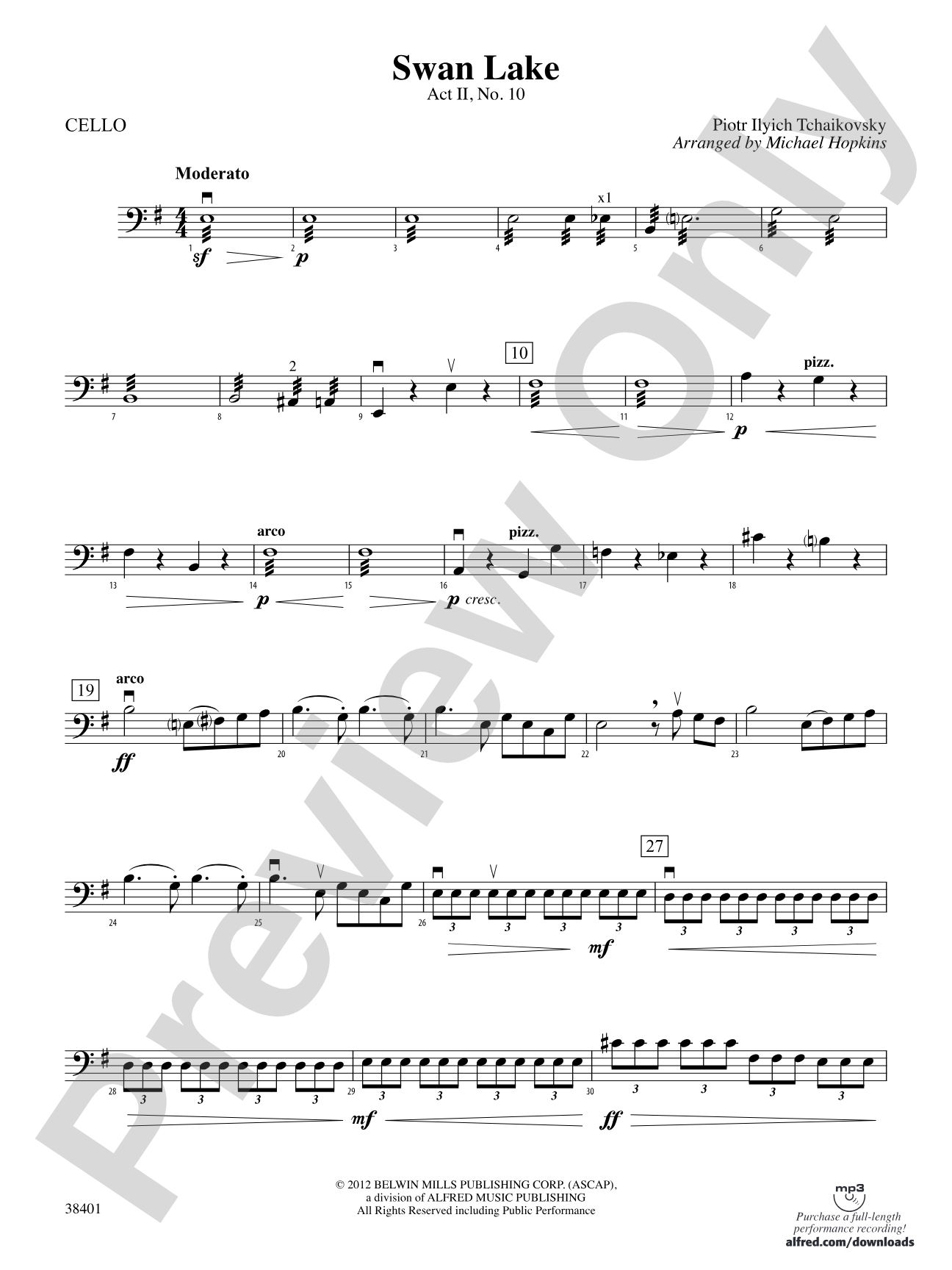
Swan Lake: Cello
Act II, No. 10
By Piotr Ilyich Tchaikovsky [Peter Ilyich Tchaikovsky] / arr. Michael Hopkins
Grade: 2.5
Item: 00-PC-0015469_VC1
Pickup currently not available
Description
Don't just read it, hear it, play along with it, and watch your students grow with it. In MakeMusic Cloud, Swan Lake: Cello comes alive with professional accompaniment, adjustable tempo, and built-in practice tools that turn solo practice into real progress.
Jump straight in and assign it today.
Open this title and explore the full library in minutes.
Sample Audio
Sample Video
Additional Details
More about this title
About the Composer: Peter Ilyich Tchaikovsky
Peter Ilyich Tchaikovsky (1840-1893) stands as one of the most performed composers in the concert world, known for his gift for melody and his ability to blend Russian musical tradition with Western European forms. His ballets, particularly Swan Lake and The Nutcracker, remain cornerstones of both the ballet and orchestral repertoire, prized for their emotional directness and instrumental color.
Tchaikovsky's orchestrations are models of clarity and orchestral writing. For string orchestra directors, his works offer unparalleled opportunities to teach expressive phrasing, dynamic control, and the full range of bowing techniques within music that engages students immediately.
Why we love this
This arrangement captures the unmistakable beauty of Swan Lake's most famous theme while keeping it within reach for developing string orchestras. Michael Hopkins has preserved the harmonic richness and melodic elegance of the original while transposing to E minor and keeping all parts in first position, making the musical payoff immediate and the technical demands manageable.
What to expect
Graceful and soaring. The opening melody unfolds with a lyrical quality that draws listeners in immediately, supported by gentle harmonic movement and warm string textures. There is elegance here without grandeur, making it feel accessible while maintaining the emotional dignity of Tchaikovsky's original conception.
Who it's for
String orchestra directors at the intermediate level (Grade 2-3) who want to teach expressive string writing and bowing technique through a work students will recognize and love. This is ideal for ensembles ready to move beyond simple rhythms and single-color passages but still building foundational skills.
How to get the most out of it
- Shape the opening melody with a warm, singing tone. Think of this as a vocal line that should breathe naturally, not as a purely instrumental passage. Allow slight timing flexibility during the phrase peaks to emphasize the emotional arc.
- Execute the tremolo passages with consistent speed and pressure so the effect supports the legato melody above rather than competing with it. Balance is essential; the tremolo should add texture, not distract.
- Pay close attention to the triplet rhythms and ensure they sit evenly within the broader pulse. Inconsistent triplet rhythms will undermine the piece's elegance, so drill these sections separately.
- Control tempo transitions carefully during accelerando and ritardardo sections. Use these as tools for phrasing and emotional shape, not as mere technical displays. Your leadership from the podium is critical here.
How to use it
Program this as a concert centerpiece or festival showcase piece. Its recognizable melody and manageable technical demands make it an excellent choice for a young string orchestra to demonstrate growth in tone quality and expressive playing. It pairs well with shorter Baroque or Classical works and lighter contemporary pieces.
Skills your students will build
- Legato bowing with phrase shaping
- Tremolo technique with dynamic control
- Reading and executing triplet rhythms
- Accelerando and ritardardo within musical context
- Balancing soloistic melody with supporting harmonic voices
- First-position note reading on all strings