
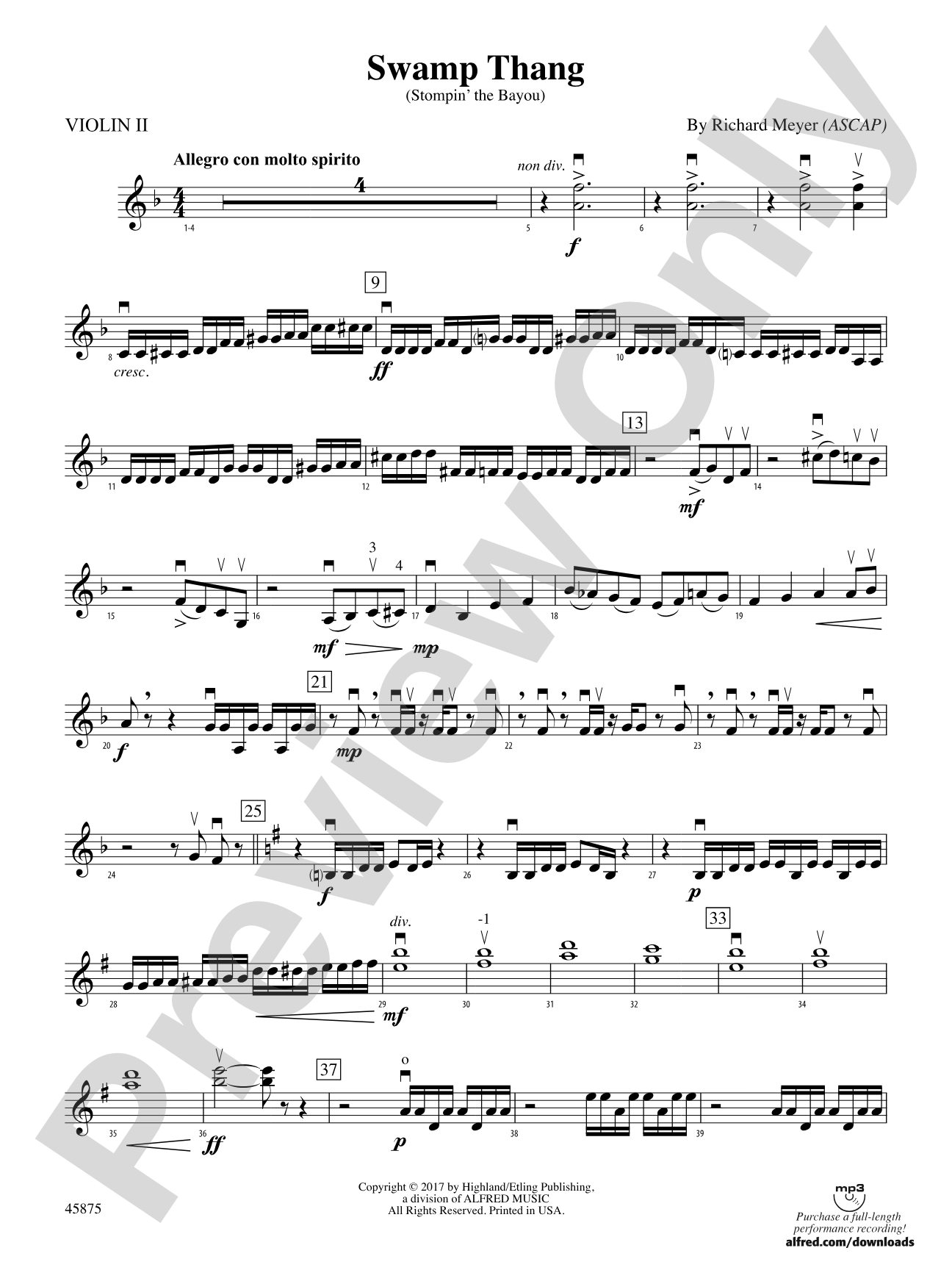

Swamp Thang: 2nd Violin
Stompin' the Bayou
By Richard Meyer
Grade: 4
Item: 00-PC-0017673_VN2
$5.99
Pickup currently not available
Description
Hotter than a Cajun barbecue, this tour-de-force for the advanced string orchestra is a workout for all of your students (and their conductor!). Conjuring up images of the Deep South, this jazzy rondo never lets up from start to finish, featuring the most sumptuous syncopations and intriguing instrumentation to hit the student stage in a long time. A great closer or encore number for any concert! (4:00)


Don't just read it, hear it, play along with it, and watch your students grow with it. In MakeMusic Cloud, Swamp Thang: 2nd Violin comes alive with professional accompaniment, adjustable tempo, and built-in practice tools that turn solo practice into real progress.
Open in the Player
Jump straight in and assign it today.
Start Your Free Trial
Open this title and explore the full library in minutes.
Sample Audio
1
Audio File
--:--
0:00
0:00
Sample Video
Additional Details
Series:
Highland/Etling String Orchestra
Publisher:
Alfred Music
Page Count:
124
SKU:
00-PC-0017673_VN2
More about this title
About the Composer: Richard Meyer

Richard Meyer has shaped string programs across Southern California for over three decades, directing orchestras at the middle and high school levels while simultaneously building one of the most respected youth orchestras in the nation. Beyond the rehearsal room, he has become known for innovative educational initiatives, including the "Giving Bach" program, which uses interactive concerts to reach special needs and underserved student populations. His work as a clinician at major conferences and his 16 years as string editor for Alfred Publishing have cemented his influence on music education curricula.
As a composer and arranger, Meyer has published nearly 200 works and co-authored several foundational string method texts. His dual expertise in pedagogy and composition means his pieces are written by someone who understands exactly what students need to develop as musicians. He and his wife live in California and remain active in the music education community.
Why we love this
Meyer writes with an ear for what energizes an advanced ensemble without requiring virtuosic soloists. The syncopated rhythms and jazzy language sit comfortably under the fingers while demanding real rhythmic precision and ensemble cohesion from every section. It's the kind of piece that makes your rehearsals feel productive and your concerts feel fresh.
What to expect
Walking into a humid Southern evening where the energy is infectious and the groove is undeniable. The piece pulses with syncopated vitality, layering jazzy harmonies and interlocking rhythms that create forward momentum from the first measure to the final burst.
Who it's for
Advanced high school string orchestras and intermediate-to-advanced college ensembles ready to tackle contemporary jazz idioms with sophistication. Directors seeking a showstopper that combines technical challenge with accessibility will find this piece demands serious musicianship without requiring soloistic virtuosity from individual players.
How to get the most out of it
- Lock the syncopation early. The rhythmic foundation drives the entire piece, so isolate the syncopated figures in your lower strings and piano accompaniment before adding the melodic lines.
- Shape the phrases dynamically to follow the "never lets up" energy. Resist the urge to settle into a comfortable level; keep forward momentum even during quieter moments.
- Balance the jazz articulations carefully. Marcato, staccato, and tenuto should feel intentional and distinct, not muddy. Spend rehearsal time comparing articulation styles across the ensemble.
- Trust the rondo structure. The piece cycles through familiar material, so once you've nailed the main themes, the returns will feel satisfying and the climaxes will land harder.
How to use it
Reserve this for your closing number or encore slot when you want to send the audience home buzzed with energy and leaving on a high. The four-minute runtime and high-impact arrangement make it ideal for concert finales, competition closing selections, or community performances where you need an immediate crowd response.
Skills your students will build
- Reading and executing syncopated rhythmic figures across multiple instrument groups
- Sustaining precise articulation and dynamic control in a jazz idiom
- Balancing ensemble sound when sections carry different rhythmic roles simultaneously
- Responding to rondo structure and returning themes with intentionality and freshness