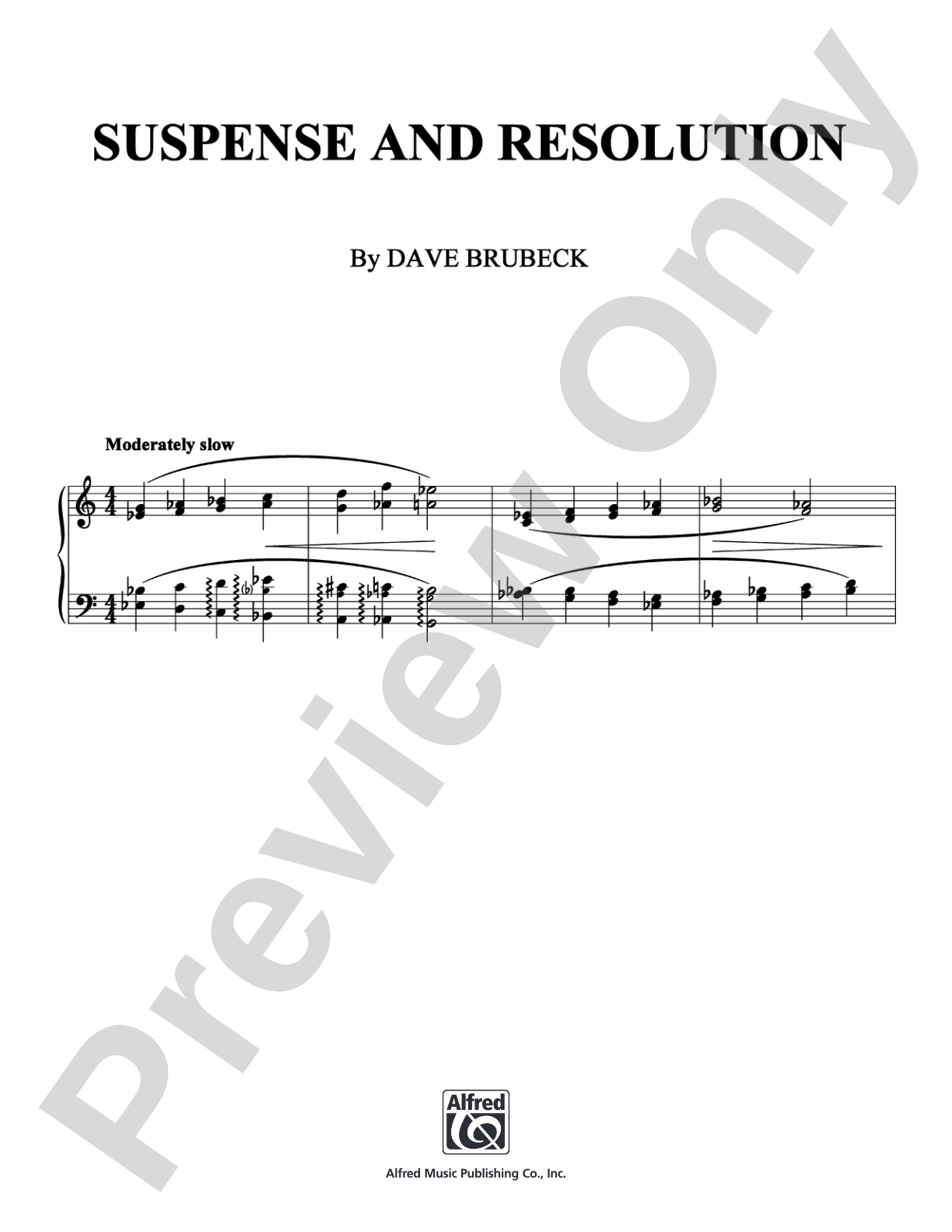
Suspense and Resolution: Piano Digital Sheet Music

Suspense and Resolution: Piano Digital Sheet Music

Dave Brubeck

Item: 00-PS-0001006

Digital Download
$3.99
Description

Suspense and Resolution: Piano Digital Sheet Music isn't in MakeMusic Cloud just yet...but it could be. Let us know you'd like to see it, and you'll help shape what comes next. In the meantime, start a free trial and dive into thousands of interactive titles your students can play along with today.

Sample Audio
No sample audio found.
Sample Video
Additional Details
SKU: 00-PS-0001006

More about this title

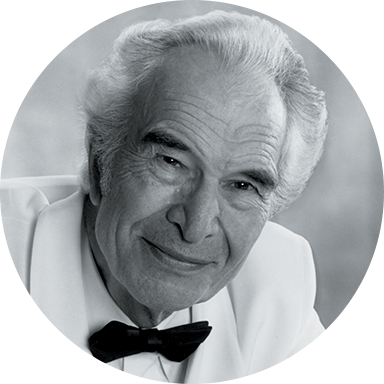
About the Artist: Dave Brubeck

Dave Brubeck

Dave Brubeck's career bridged jazz improvisation and classical composition in ways few musicians achieved. After studying with Darius Milhaud at Mills College following World War II, he integrated jazz languages into formally structured works spanning orchestral pieces, chamber music, choral compositions, and solo repertoire. His landmark album "Time Out" became the first jazz recording to sell over a million copies, while his composition "Take Five" remains iconic in jazz history.

Beyond his musical innovations, Brubeck was a racial integration pioneer in mid-twentieth-century jazz. His honors reflect the breadth of his contributions: a Grammy Lifetime Achievement Award for jazz, the Presidential Medal of the Arts from President Clinton, a lifetime achievement award from the London Symphony Orchestra, and induction into the American Classical Music Hall of Fame in 2003. Major choral and orchestral works like "To Hope!" and "Pange Lingua Variations" have been performed and recorded internationally by leading ensembles.

Why we love this

Brubeck's notation captures the sophistication of his improvisational mind in written form, giving pianists access to the harmonic and rhythmic thinking of one of jazz's most inventive voices. This piece demonstrates his ability to build tension through harmonic movement and strategic voicing, then resolve it with the clarity and logic that made his compositions work in both jazz and classical contexts. Programming this signals to audiences that you value jazz composition as serious musical literature.

What to expect

The piece creates genuine dramatic tension through harmonic movement and strategic silence, then releases it cleanly. You'll feel the architecture of Brubeck's thinking—how he withholds resolution, layers complexity, then strips away to clarity. It's intellectually engaging without being cold; there's human feeling in the suspended moments.

Who it's for

Pianists at the intermediate-advanced level who want to explore Brubeck's compositional voice beyond his most famous works. This piece works well for students developing jazz literacy and understanding how improvisation and formal composition intersect. It's equally valuable for recital performers seeking substantial jazz repertoire with emotional depth.

How to get the most out of it

  • Honor the harmonic colors Brubeck composed into the voicings; resist the urge to simplify or reharmonize. His chord choices are integral to the emotional arc.
  • Shape the tension section with dynamic control and slight rhythmic flexibility rather than rushing; the resolution lands harder when you've truly sustained the suspense.
  • Balance precision in the notated material with the interpretive freedom jazz tradition allows, particularly in how you voice repeated figures or approach resolution passages.

How to use it

Place this in a recital where you're mixing classical and jazz repertoire; it demonstrates mastery of both languages simultaneously. It also works beautifully as a concert opener or closer because its emotional arc is complete and contained. Consider pairing it with other Brubeck solo works to create a focused segment exploring his approach to form and harmony.

Skills your students will build

  • Interpreting jazz harmonies and voice leading from notation
  • Building and releasing tension through harmonic rhythm and phrasing
  • Balancing rhythmic precision with expressive flexibility in jazz contexts
  • Understanding how compositional structure creates emotional impact

You May Also Like