
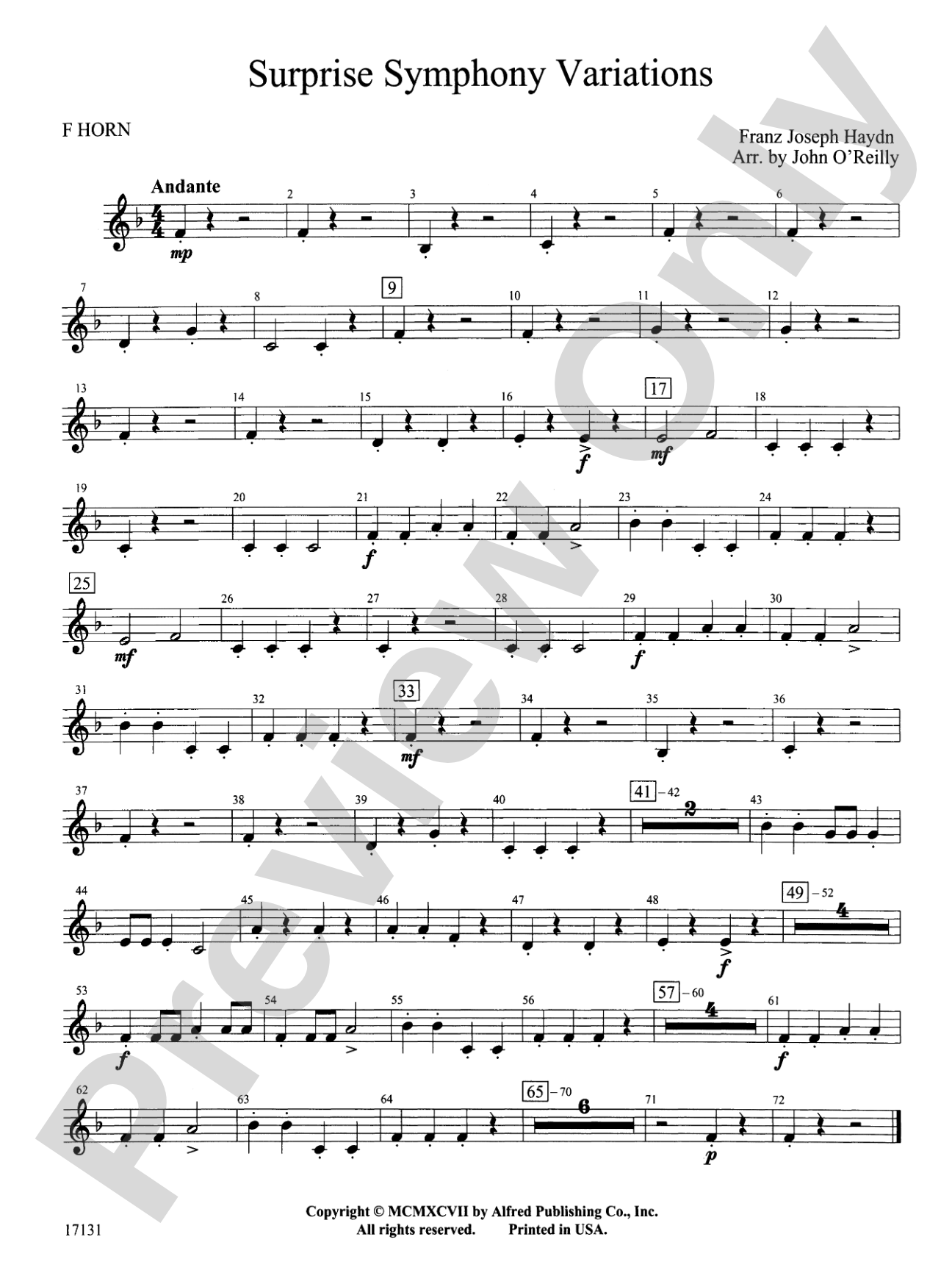

Surprise Symphony Variations: 1st F Horn
By Franz Joseph Haydn / arr. John O'Reilly
Grade: 1 (Very Easy)
Item: 00-PC-0000212_H1
$5.99
Pickup currently not available
Description
After a traditional scoring of this perennial favorite, a set of variations featuring various sections of the band is presented. The rhythmic and melodic variations provide an effective tool for teaching variation form. Correlated with Accent on Achievement, Book 1, page 24.


Don't just read it, hear it, play along with it, and watch your students grow with it. In MakeMusic Cloud, Surprise Symphony Variations: 1st F Horn comes alive with professional accompaniment, adjustable tempo, and built-in practice tools that turn solo practice into real progress.
Open in the Player
Jump straight in and assign it today.
Start Your Free Trial
Open this title and explore the full library in minutes.
Sample Audio
1
Audio File
--:--
0:00
0:00
Sample Video
No sample videos found.
Additional Details
Series:
Accent on Achievement
Publisher:
Alfred Music
Page Count:
116
SKU:
00-PC-0000212_H1
More about this title
About the Composer: Franz Joseph Haydn
Franz Joseph Haydn (1732-1809) shaped the symphony into one of music's most enduring forms. Working across a 60-year career, he developed the classical structures that Mozart and Beethoven would later inherit, earning him the title "Father of the Symphony." His prolific output and constant formal experimentation made him the most influential instrumental composer of the late 18th century.
Haydn's gift for melody and wit appear throughout his work, particularly in pieces like the Surprise Symphony, where he delighted audiences with unexpected harmonic turns and orchestral effects. His music remains a cornerstone of music education because it combines structural clarity with genuine musical personality, offering students a direct path into understanding how classical form actually works.
Why we love this
This arrangement captures what makes the Surprise Symphony so effective for teaching: a familiar, engaging tune that students recognize immediately, followed by clear variations that demonstrate form without overwhelming a young ensemble. The sectional variations let different parts of the band take the spotlight, building confidence across your sections while keeping the musical logic transparent. At Grade 1, students play a genuine Haydn masterwork rather than a diluted substitute.
What to expect
The opening has warmth and familiar grace; when the variations enter, the piece becomes a game of discovery as woodwinds, brass, and rhythm sections each reveal their own take on the theme. There's lightness here, never heaviness. The cumulative effect builds ensemble sound without demanding advanced technique, creating genuine musical satisfaction from a young band.
Who it's for
Beginning concert bands playing Grade 1 literature will find a structurally sound introduction to how composers develop ideas. Students who have studied the traditional Surprise Symphony theme in their method books gain the reward of hearing it reimagined across different instrumental combinations. Band directors looking for a teaching tool that works alongside Accent on Achievement Book 1 have a ready-made correlation that reinforces their curriculum.
How to get the most out of it
- Balance the melody prominently during the traditional opening statement so students hear what each variation grows from.
- Keep the tempo steady across variations; rhythmic clarity matters more than expressive rubato at this level.
- Give featured sections time to rehearse their variations independently before combining with full band.
- Attend to the dynamic shape within each variation section; even a Grade 1 arrangement benefits from subtle phrasing that prevents section solos from sounding isolated.
How to use it
Program this as a concert opener or a second-week performance piece; it settles a young ensemble and gives the audience immediate delight. It pairs well on a concert of classical miniatures or as a bridge between method book material and more ambitious arrangements. The direct Accent on Achievement correlation makes it ideal for demonstrating to students and parents how daily practice leads to full concert repertoire.
Skills your students will build
- Recognizing and performing melodic and rhythmic variations of a single theme
- Maintaining steady tempo and ensemble cohesion across sectional changes
- Identifying and balancing structural voice leading in classical forms
- Executing clear phrasing within Grade 1 technical limitations
- Reading full concert band score format (conductor and parts)