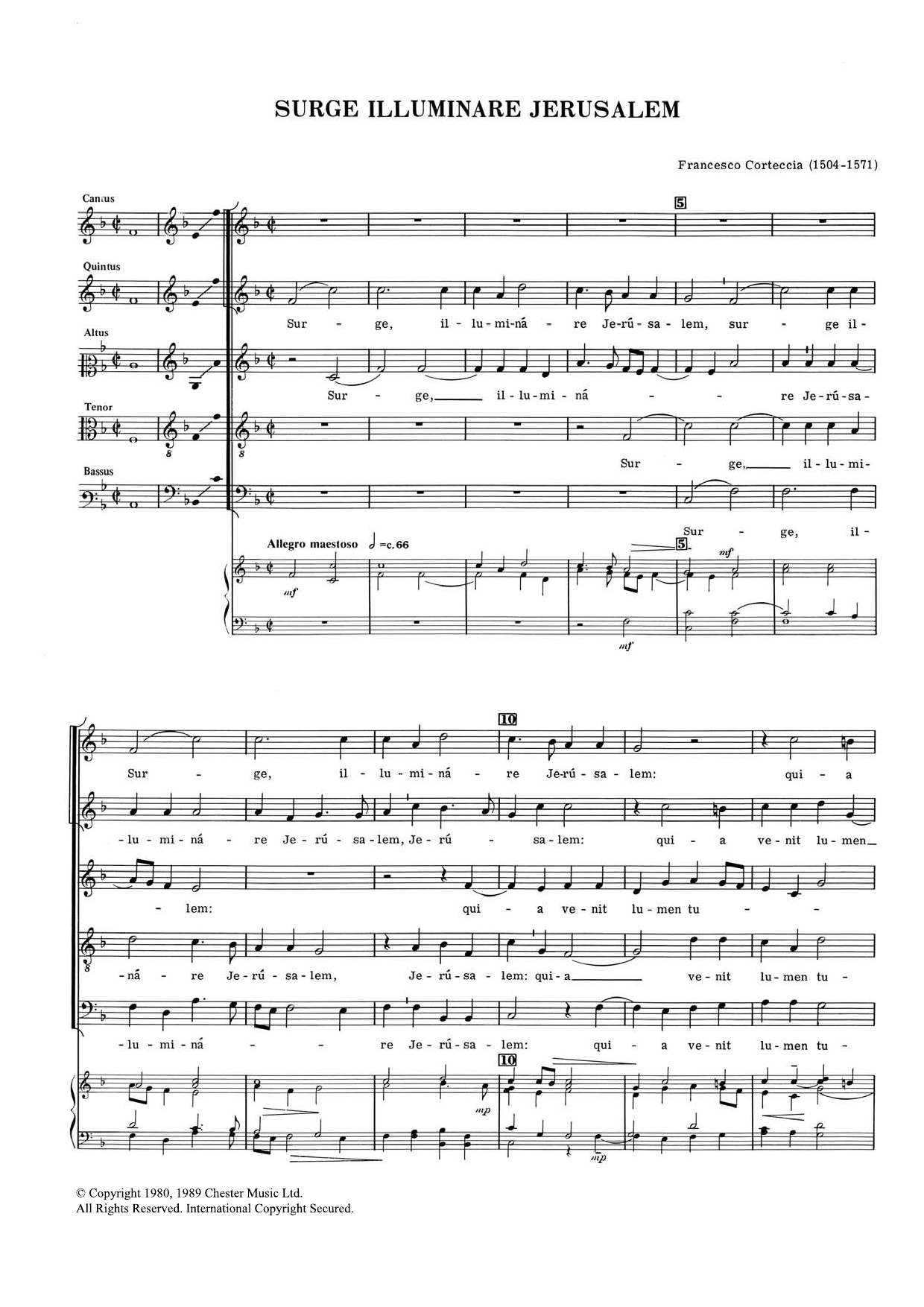
Francesco Corteccia (1502–1575) was among the most prolific and respected composers of the Italian Renaissance, working primarily in Florence and Rome. His output spanned sacred and secular vocal music, motets, and madrigals; he served as maestro di cappella at the Florence Cathedral and later at the Papal Chapel, positions that reflected his standing among the musical elite of his era.
Corteccia's compositional approach balances technical sophistication with direct emotional communication. His choral writing emphasizes clear text declamation and harmonic control, making his works accessible teaching tools while preserving the architectural beauty of Renaissance polyphony. For educators, his music offers a window into how composers of his time merged spiritual depth with compositional craft.