
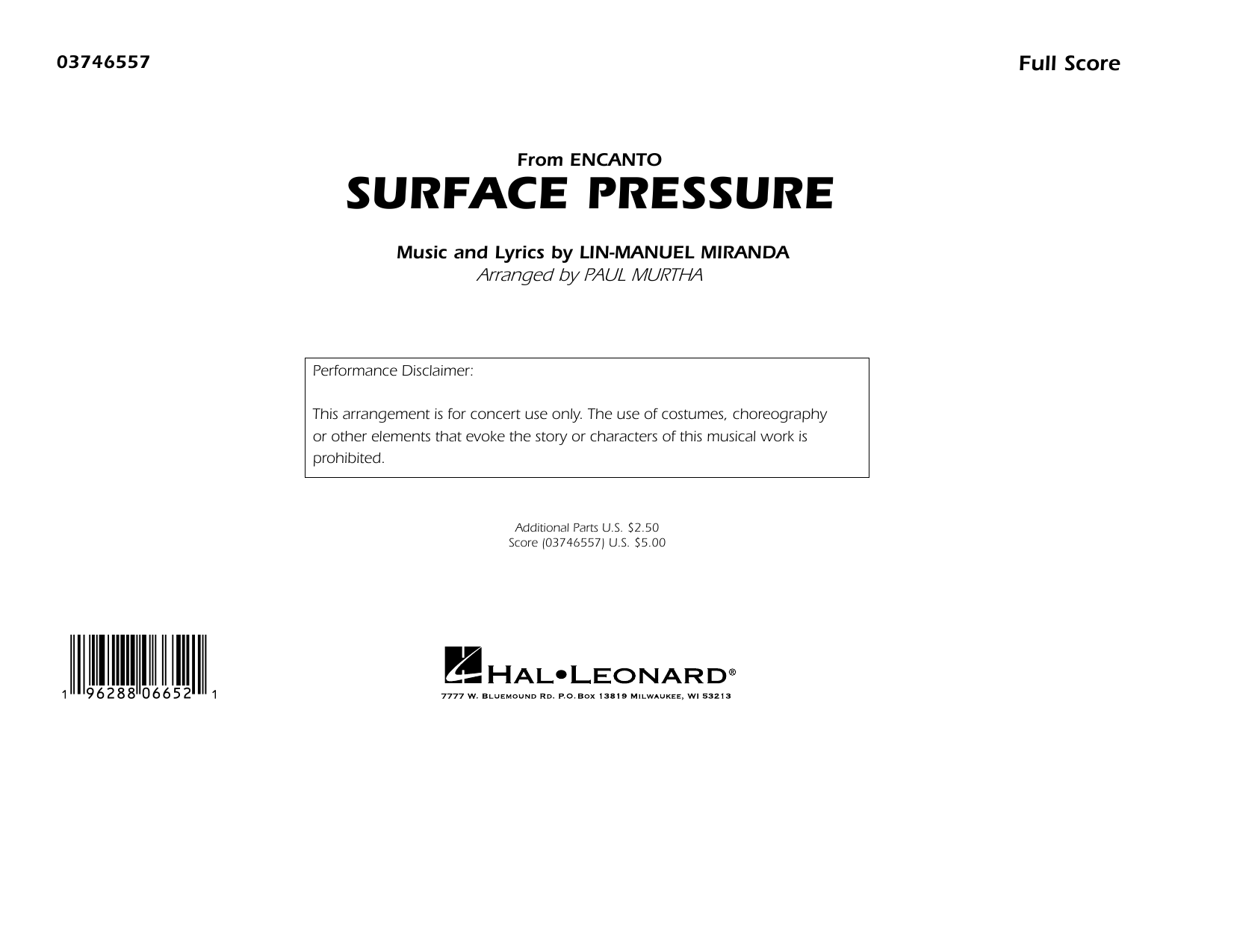

Surface Pressure (from Encanto) (arr. Paul Murtha): Marching Band Conductor Score & Parts
By Lin-Manuel Miranda / Arranged by Paul Murtha
Item: 35-PK00903248
$60.00
Pickup currently not available
Buy Extra Parts (Digital PDF Download)
Parts Added to Cart!
Description
From Disney's "Encanto", the hit song "Surface Pressure" features the trombone section on the main melody. Paul's chart also has plenty of rhythmic grit and an energetic groove throughout.


Surface Pressure (from Encanto) (arr. Paul Murtha): Marching Band Conductor Score & Parts isn't in MakeMusic Cloud just yet...but it could be. Let us know you'd like to see it, and you'll help shape what comes next. In the meantime, start a free trial and dive into thousands of interactive titles your students can play along with today.
Request This Title
Tell us you want it.
Start Your Free Trial
Explore everything that's ready to play right now.
Sample Audio
No sample audio found.
Sample Video
No sample videos found.
Additional Details
Publisher:
Hal Leonard
SKU:
35-PK00903248
More about this title
About the Composer: Lin-Manuel Miranda
Lin-Manuel Miranda is a composer and lyricist whose work spans Broadway musicals, film scores, and cultural phenomena. His gift for crafting melodies that lodge themselves in listeners' ears while carrying substantive emotional weight has made his music accessible to diverse audiences, from young students to seasoned performers.
Why we love this
Paul Murtha's arrangement captures the infectious rhythmic drive of the original while centering the trombones in a way that gives your low brass real agency and visibility. The chart balances contemporary groove with marching band instrumentation naturally, making it feel neither oversimplified nor forced.
What to expect
Propulsive and purposeful. The arrangement channels the original's sense of urgent, unstoppable momentum while the trombone voice adds warmth and character to what could be a purely rhythmic experience. There's a built-in energy that drives the ensemble forward.
Who it's for
Marching bands seeking contemporary repertoire that connects with students and audiences alike. The trombone feature makes this particularly valuable for programs wanting to showcase their brass section while programming recognizable music.
How to get the most out of it
- Lock the rhythmic figures in the low brass and percussion first. The groove depends on these voices hitting together with precision, so isolate these sections before integrating the full ensemble.
- Shape the trombone melody with intentional phrasing rather than playing it as written rhythmically. Listen to the original recording to hear where Miranda places emphasis and breath, then adapt those ideas to your brass section's capabilities.
- Balance the inner voices so the accompaniment doesn't overshadow the trombone line. This arrangement has layers, and clarity comes from voices knowing their relative importance in each moment.
- Pay attention to dynamics marked in the chart. A track with this much rhythmic energy can feel loud throughout without deliberate dynamic contrast. Use softer passages to reset the listener's ear.
How to use it
This works well as a mid-set opener or closer on a concert designed around contemporary music and film themes. Its immediate recognizability gives audiences an entry point, while the marching band context transforms it into something fresh.
Skills your students will build
- Maintaining consistent rhythmic subdivision in syncopated passages
- Balancing featured melody against rhythmic accompaniment
- Interpreting contemporary music idioms within a traditional ensemble format
- Executing articulation that serves groove rather than strict precision
- Reading and responding to dynamic layering in arrangements