
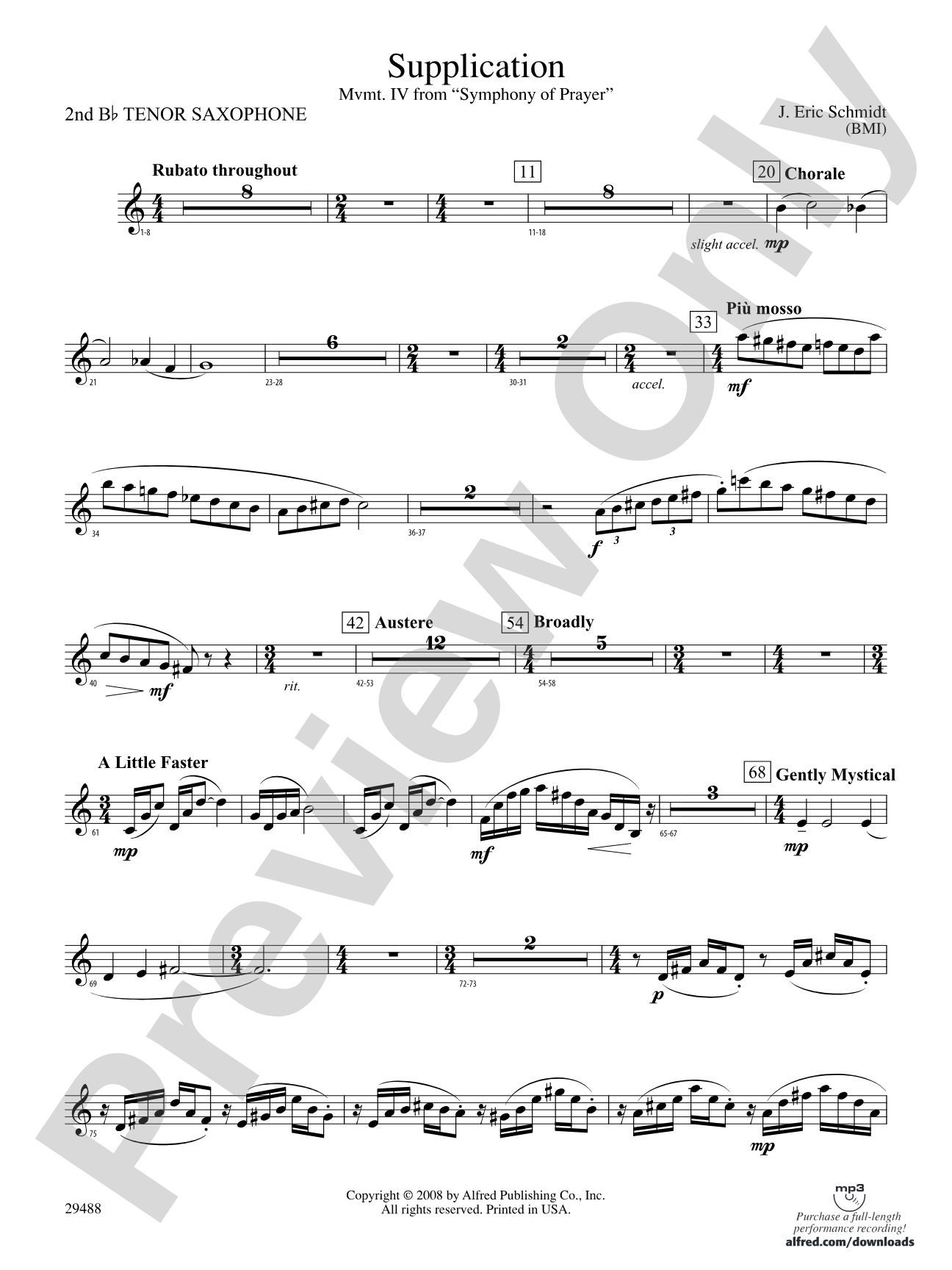

Supplication: 2nd B-flat Tenor Saxophone
By J. Eric Schmidt
Grade: 4 (Medium Difficult)
Item: 00-PC-0001444_TX2
$3.00
Pickup currently not available
Description
This final movement from Eric Schmidt's monumental Symphony of Prayer ebbs and flows from moments of quiet and gentle prayerful entreaty to expressions of a bold and powerful faith. The music balances the humbleness of prayer with the knowledge of the great strength which prayer possesses. (8:50)


Don't just read it, hear it, play along with it, and watch your students grow with it. In MakeMusic Cloud, Supplication: 2nd B-flat Tenor Saxophone comes alive with professional accompaniment, adjustable tempo, and built-in practice tools that turn solo practice into real progress.
Open in the Player
Jump straight in and assign it today.
Start Your Free Trial
Open this title and explore the full library in minutes.
Sample Audio
1
Audio File
--:--
0:00
0:00
Sample Video
No sample videos found.
Additional Details
Series:
Alfred Concert Band
Publisher:
Alfred Music
Page Count:
228
SKU:
00-PC-0001444_TX2
More about this title
About the Composer: J. Eric Schmidt
J. Eric Schmidt is a composer whose sacred band music has become central to the repertoire of high school and university ensembles across North America. His works are known for their ability to balance lyrical expressiveness with technical craft, creating pieces that challenge musicians while remaining deeply musical and emotionally accessible.
Schmidt's compositions for concert band frequently draw on spiritual and reflective themes, exploring how instrumental music can convey profound emotional and philosophical content. His Symphony of Prayer stands as one of his most substantial contributions to the band canon, with movements that grow from intimate prayer to declarations of faith and strength.
Why we love this
Supplication captures something rare in Grade 4 band literature: genuine emotional depth without resorting to bombast or oversimplification. The movement architecture creates a satisfying arc for both performers and listeners, moving organically from contemplative vulnerability to powerful conviction while maintaining musical coherence throughout. Directors will appreciate how Schmidt distributes the thematic material across the ensemble, giving meaningful moments to all sections and allowing students to feel genuinely invested in shaping the music's emotional trajectory.
What to expect
The music unfolds like an intimate conversation about faith and resilience. Soft, questioning passages give way to moments of affirmation without losing the meditative quality that defines the piece. The orchestration supports this emotional arc, moving from sparse, exposed writing to fuller, more confident textures that feel earned rather than imposed.
Who it's for
Concert bands at the high school and early university level seeking repertoire with genuine artistic substance. This movement works equally well for groups building performance skills as for those preparing contest or festival repertoire.
How to get the most out of it
- Establish the soft opening passages with clarity and focus from the beginning; the quality of sound in quiet prayer moments sets the listener's emotional engagement for everything that follows.
- Balance the transition between gentle and powerful sections by respecting the tempo relationships Schmidt indicates rather than forcing artificial contrast through exaggerated dynamics.
- Attend carefully to how the composer voices each thematic statement, since the same material often appears in different instrumental combinations; highlight these orchestrational choices through subtle balance adjustments.
- Allow younger sections (particularly first-year players) adequate preparation time with the conductor on their specific entries, as the piece relies on precision and confidence in the ensemble sound rather than aggressive playing.
How to use it
Program Supplication as the centerpiece of a concert exploring spiritual themes in instrumental music, pairing it with contrasting sacred works in different styles. Its eight-minute-fifty-second duration makes it substantial enough to anchor a set without overwhelming the program, and the movement's introspective character provides a natural moment of reflection within a larger concert structure.
Skills your students will build
- Sustaining soft, focused tone quality in extended passages
- Responding to subtle dynamic and tempo modifications
- Balancing individual voices within full ensemble texture
- Shaping longer phrases across multiple systems
- Managing the physical and emotional demands of extended playing through contrasting material