Superman Returns, Concert Selections from: 2nd B-flat Trumpet Sheet Music Preview

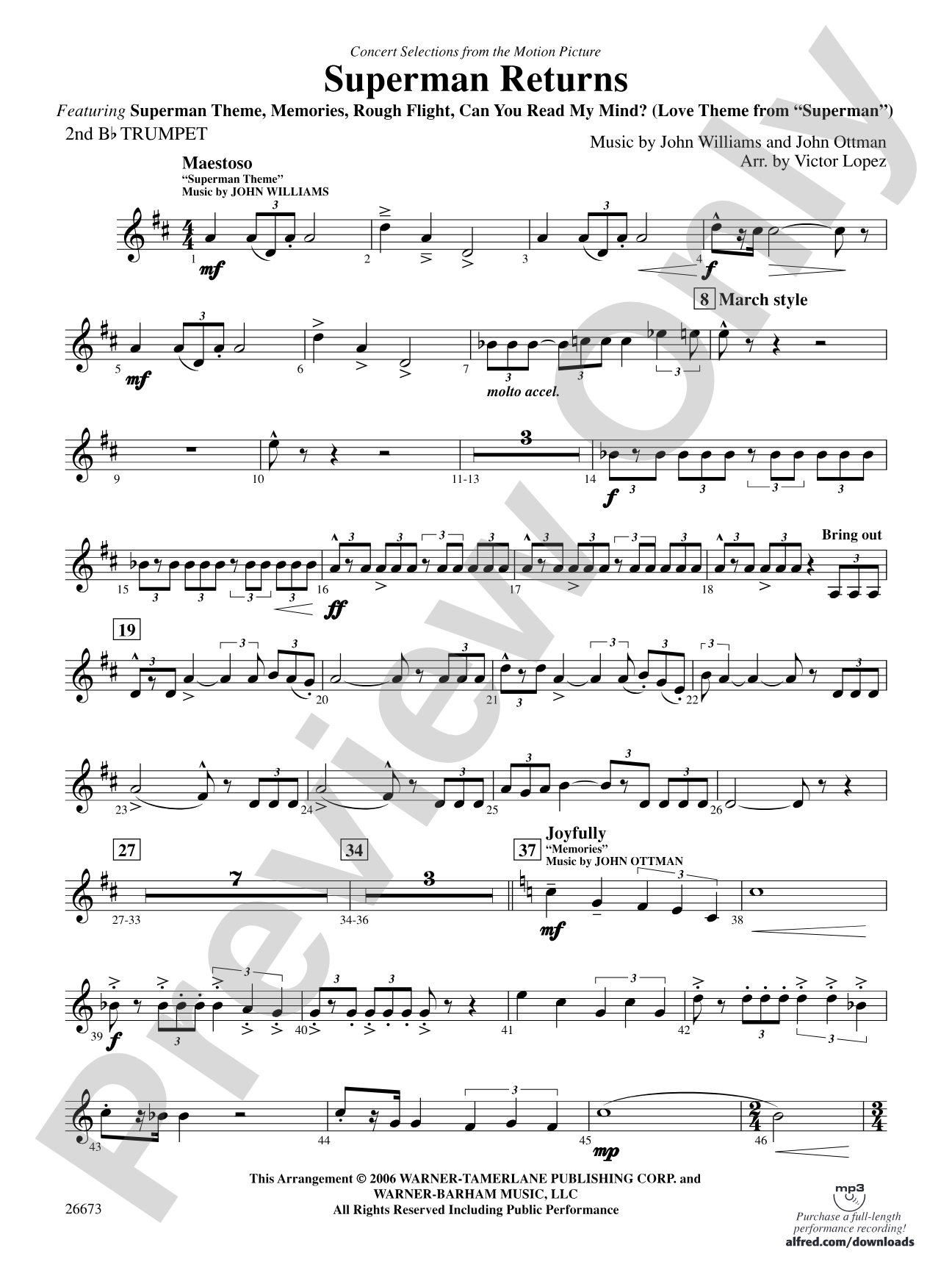
Superman Returns, Concert Selections from: 2nd B-flat Trumpet

By John Williams and John Ottman / arr. Victor López

Grade: 4

Item: 00-PC-0015675_T2

Digital Download
$3.00
Description
Your ensemble will be flying high with Superman in this spectacular medley from the hit movie! The full screen effect is magically reproduced for your full orchestra. This title is available in MakeMusic Cloud.

Don't just read it, hear it, play along with it, and watch your students grow with it. In MakeMusic Cloud, Superman Returns, Concert Selections from: 2nd B-flat Trumpet comes alive with professional accompaniment, adjustable tempo, and built-in practice tools that turn solo practice into real progress.

Sample Audio
0:00
0:00
Sample Video
Additional Details
Series: Pop Concert Full Orchestra
Publisher: Alfred Music
Page Count: 240
SKU: 00-PC-0015675_T2

More about this title

About the Composer: John Williams

John Williams stands as one of the most consequential film composers of the past fifty years. His work across Star Wars, Jaws, Indiana Jones, Schindler's List, and dozens of other landmark films has shaped how entire generations experience music in cinema. Williams brings orchestral sophistication and memorable melodic writing to every project; his scores balance accessibility with genuine compositional depth, making them ideal for educational ensembles that want to engage serious musical material.

Why we love this

This medley captures the soaring heroism and cinematic sweep that define Williams' Superman Returns score without requiring virtuosic technical demands from every section. Victor Lopez's arrangement allows full orchestra students to experience film music composition at its most direct and emotionally effective, building ensemble unity around a single, instantly recognizable musical identity.

What to expect

Expect soaring brass lines that lift the entire ensemble, sweeping string writing that carries the emotional weight of heroic action, and the kind of memorable melody that students will find themselves humming long after rehearsal ends. The medley structure moves between moments of grand, full-orchestra impact and leaner textures that showcase individual sections.

Who it's for

Orchestra directors working with Grade 4 ensembles who want accessible concert repertoire with genuine musical substance. High school and advanced middle school orchestras benefit most from material that allows them to experience film scoring without sacrificing orchestration quality or ensemble development.

How to get the most out of it

  • Balance the brass section carefully during the main theme statement; the melody should sing above the harmonic foundation rather than compete with it.
  • Shape the dynamic arc across larger sections rather than playing individual phrases in isolation. The medley works best when conductors guide students to hear long musical lines that extend well beyond phrase marks.
  • Attend to articulation consistency in the string section, particularly during fanfare passages. Unified attacks and releases on staccato figures enhance the heroic character.
  • Use the recorded accompaniment to lock ensemble tempo and entrances, especially in sections where the full orchestra joins after extended solos or smaller groupings.

How to use it

Program this as a concert centerpiece or finale that capitalizes on student investment in recognizable, culturally significant music. Pair it with other film or contemporary concert selections to create a themed program, or use it early in the concert season to build ensemble confidence and enthusiasm before tackling more demanding classical repertoire.

Skills your students will build

  • Balancing melodic lines with harmonic accompaniment in large ensemble textures
  • Executing heroic, sustained articulation in fanfare passages
  • Reading and executing film music scoring conventions (sectional writing, dynamic layering, tempo continuity)
  • Responding to longer musical phrases and arc-based conducting rather than measure-by-measure conducting

You May Also Like