
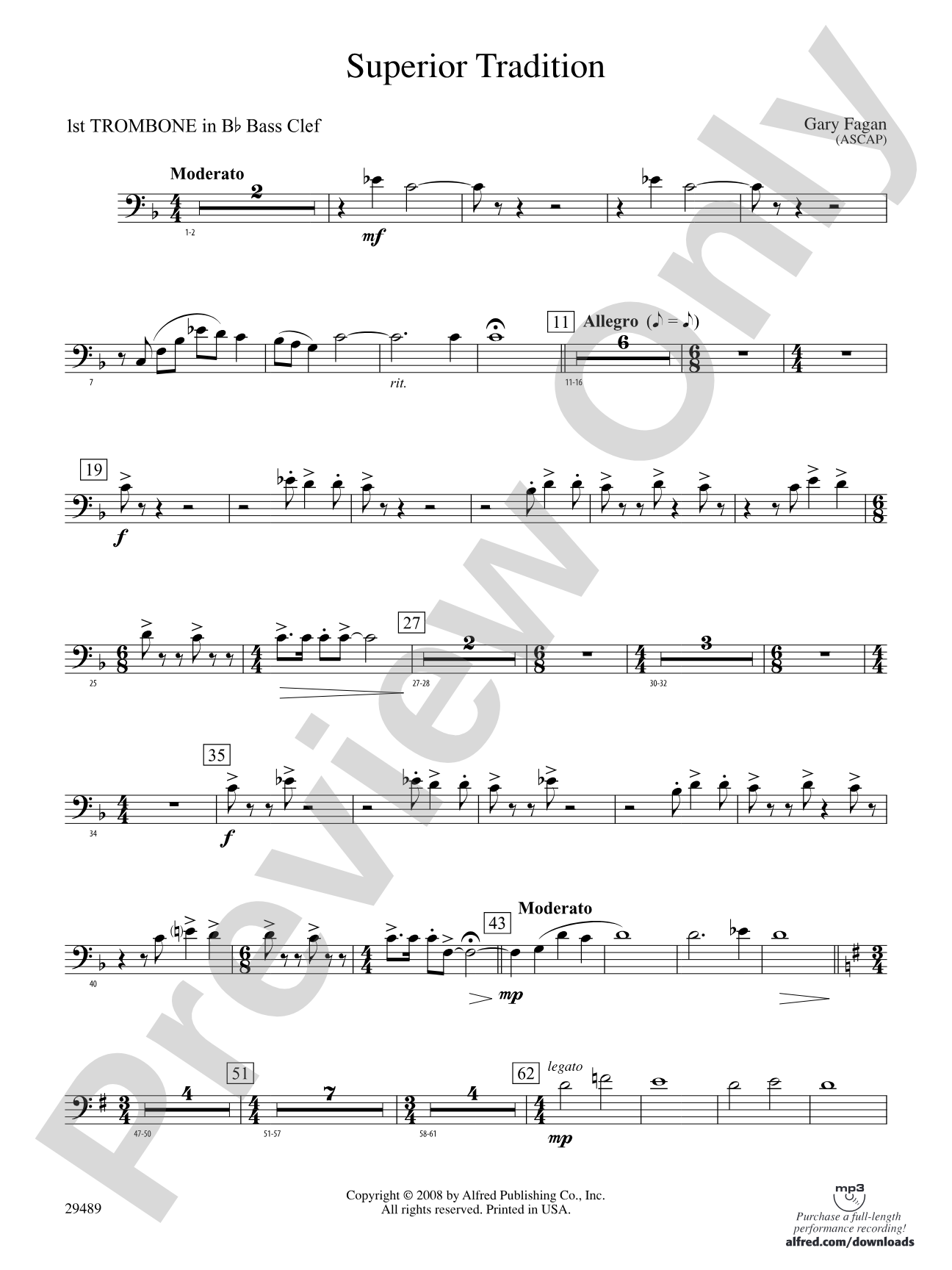
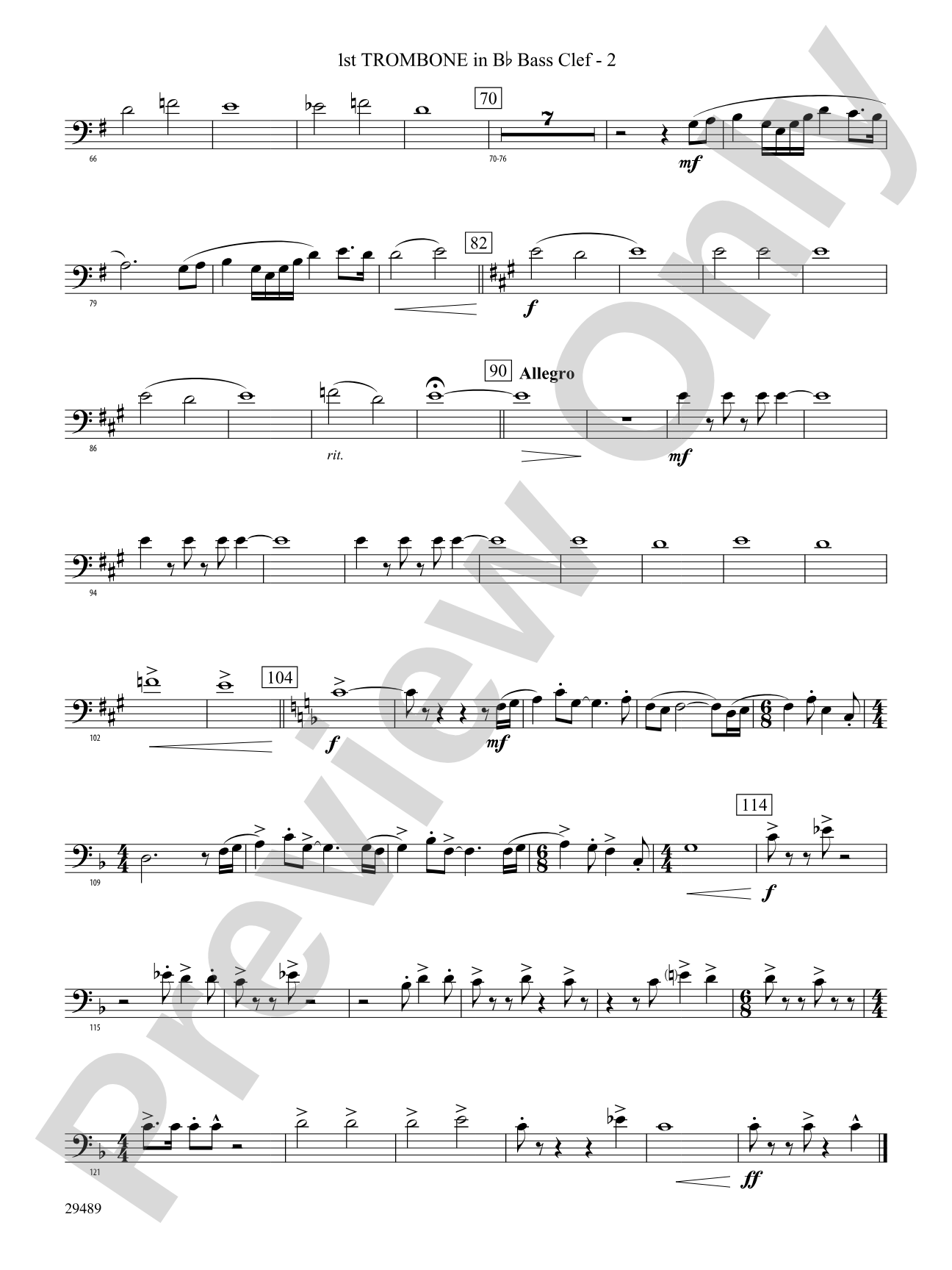

Superior Tradition: (wp) 1st B-flat Trombone B.C.
By Gary Fagan
Grade: 3 (Medium)
Item: 00-PC-0001445_wpTN1BC
$5.99
Pickup currently not available
Description
Superior Tradition takes your band on a rhythmic ride full of syncopation and energy. A contrasting lyrical theme provides moments of beauty and dignity to this outstanding composition. (5:00)


Don't just read it, hear it, play along with it, and watch your students grow with it. In MakeMusic Cloud, Superior Tradition: (wp) 1st B-flat Trombone B.C. comes alive with professional accompaniment, adjustable tempo, and built-in practice tools that turn solo practice into real progress.
Open in the Player
Jump straight in and assign it today.
Start Your Free Trial
Open this title and explore the full library in minutes.
Sample Audio
1
Audio File
--:--
0:00
0:00
Sample Video
No sample videos found.
Additional Details
Series:
Alfred Concert Band
Publisher:
Alfred Music
Page Count:
282
SKU:
00-PC-0001445_wpTN1BC
More about this title
About the Composer: Gary Fagan

Gary Fagan brings decades of practical band direction experience to his compositions. A Maryland native educated at Bridgewater College and James Madison University, he spent 36 years leading bands in Albemarle County before transitioning to university supervision and adjunct teaching in arranging at JMU. His work has reached national stages, from the Midwest Band and Orchestra Clinic to the White House and Virginia gubernatorial events.
Fagan's contributions to music education extend well beyond the concert hall. He has been recognized as Central Virginia's Outstanding Middle School Teacher by the University of Virginia's Phi Delta Kappa chapter, received honors from the Virginia Governor's School for the Visual and Performing Arts, and earned distinction from the Piedmont Council of the Arts. Active as a clinician, adjudicator, and percussionist with the Charlottesville Band, he remains engaged with MENC, the Virginia Band and Orchestra Directors Association, and the National Band Association.
Why we love this
Superior Tradition captures what makes a Grade 3 piece memorable: infectious rhythmic drive married to genuine lyricism. Fagan's syncopated passages feel natural rather than forced, and the contrasting theme gives your ensemble room to demonstrate musicality without technical overwhelm. It's the kind of piece that energizes a rehearsal and translates beautifully in concert, rewarding solid fundamentals with satisfying results.
What to expect
Superior Tradition launches with rhythmic energy and propulsive syncopation that keeps momentum alive and the audience engaged. When the lyrical theme arrives, the piece shifts gears entirely, revealing moments of genuine beauty and stateliness that provide welcome contrast and allow the band to breathe with dignity.
Who it's for
Directors programming a Grade 3 concert band repertoire will find Superior Tradition ideal for ensembles ready to tackle syncopation and dynamic contrast without excessive technical demands. The five-minute duration and approachable instrumentation suit developing bands that want to showcase growth and musicianship at a concert or festival.
How to get the most out of it
- Keep the syncopated passages clean and precise by isolating the rhythmic figures in full-section rehearsals before adding harmonic texture. Lock the pulse in your rhythm section first, then layer in the melodic parts.
- Shape the lyrical theme with dynamic contrast and careful phrasing; even at Grade 3 level, this passage responds well to rubato and expressive breath marks that elevate the writing's inherent dignity.
- Balance the brightness of the syncopated sections against the warmth needed for the lyrical material by adjusting articulation and dynamic weight rather than tempo shifts.
How to use it
This piece works equally well as a concert opener that sets an upbeat tone or as a mid-program number that showcases your band's range. Its length and moderate demands make it a natural fit for festivals and competitions, and the balance of rhythmic energy and lyricism pairs nicely alongside both lighter novelty selections and more serious classical fare.
Skills your students will build
- Sight-reading syncopated rhythmic figures in multiple parts simultaneously
- Balancing articulation and tone across contrasting sections (staccato energy versus legato phrasing)
- Dynamic control and expression within a single piece
- Part independence and rhythmic precision in ensemble settings