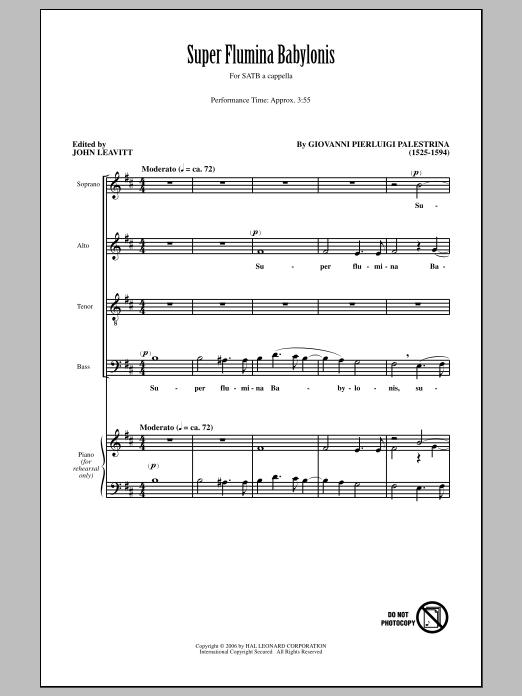
Giovanni Palestrina (1525-1594) stands as one of the Renaissance's most influential composers, with a catalog of nearly 100 masses, over 250 motets, and numerous other sacred works that defined the sound of 16th-century Catholic liturgical music. His mastery of counterpoint and gift for seamless voice leading set the standard for generations of composers and remain a cornerstone of choral pedagogy. In music education, his works exemplify how technical sophistication and emotional depth need not be at odds; studying Palestrina teaches singers the architecture of Renaissance polyphony while revealing how restraint and clarity can move listeners profoundly.
Palestrina's influence on choral writing extends far beyond his own era. His approach to harmonic progression, text underlay, and the balance of independence among voices became foundational principles that choral arrangers and composers still teach and employ today.