
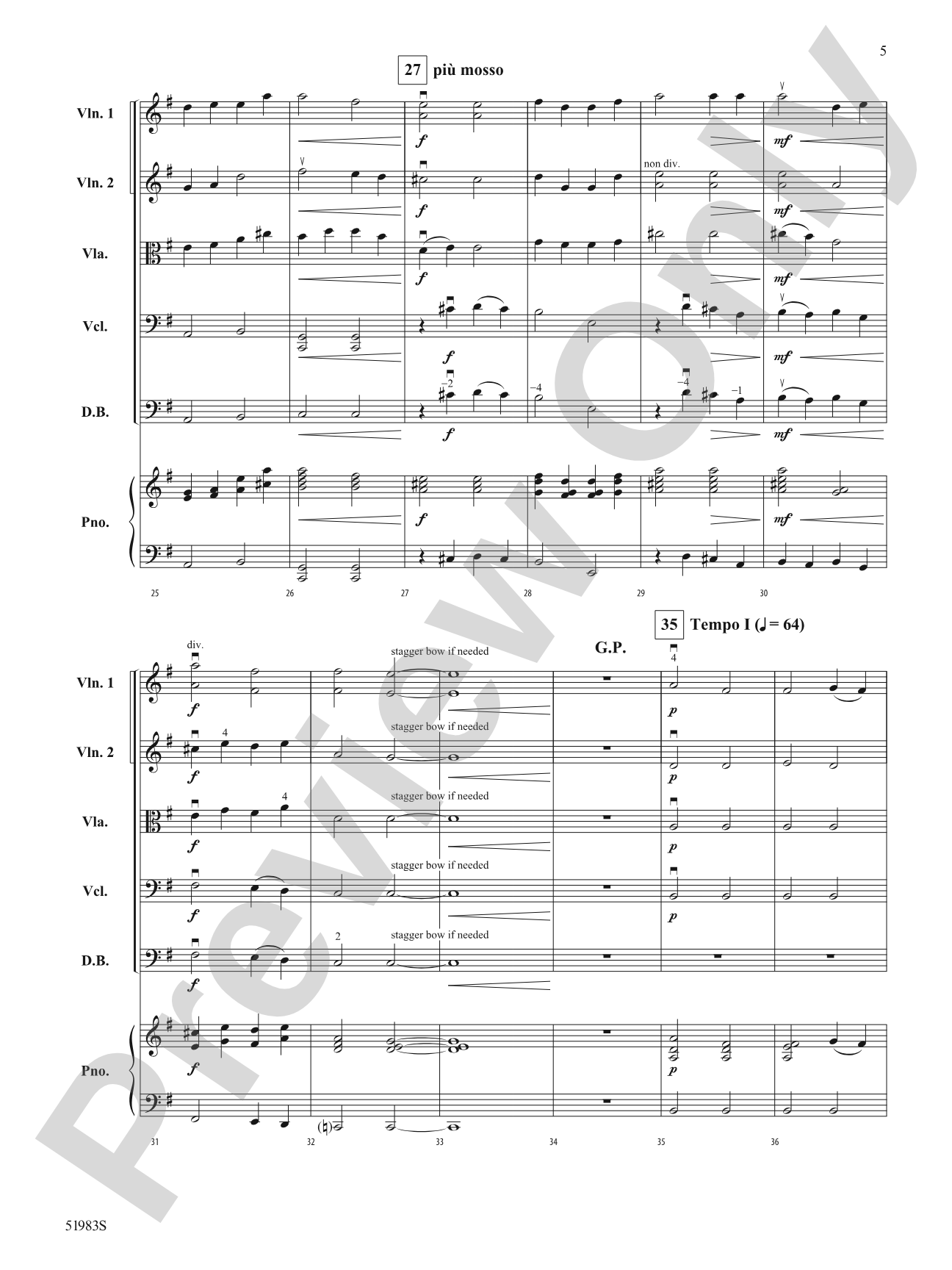
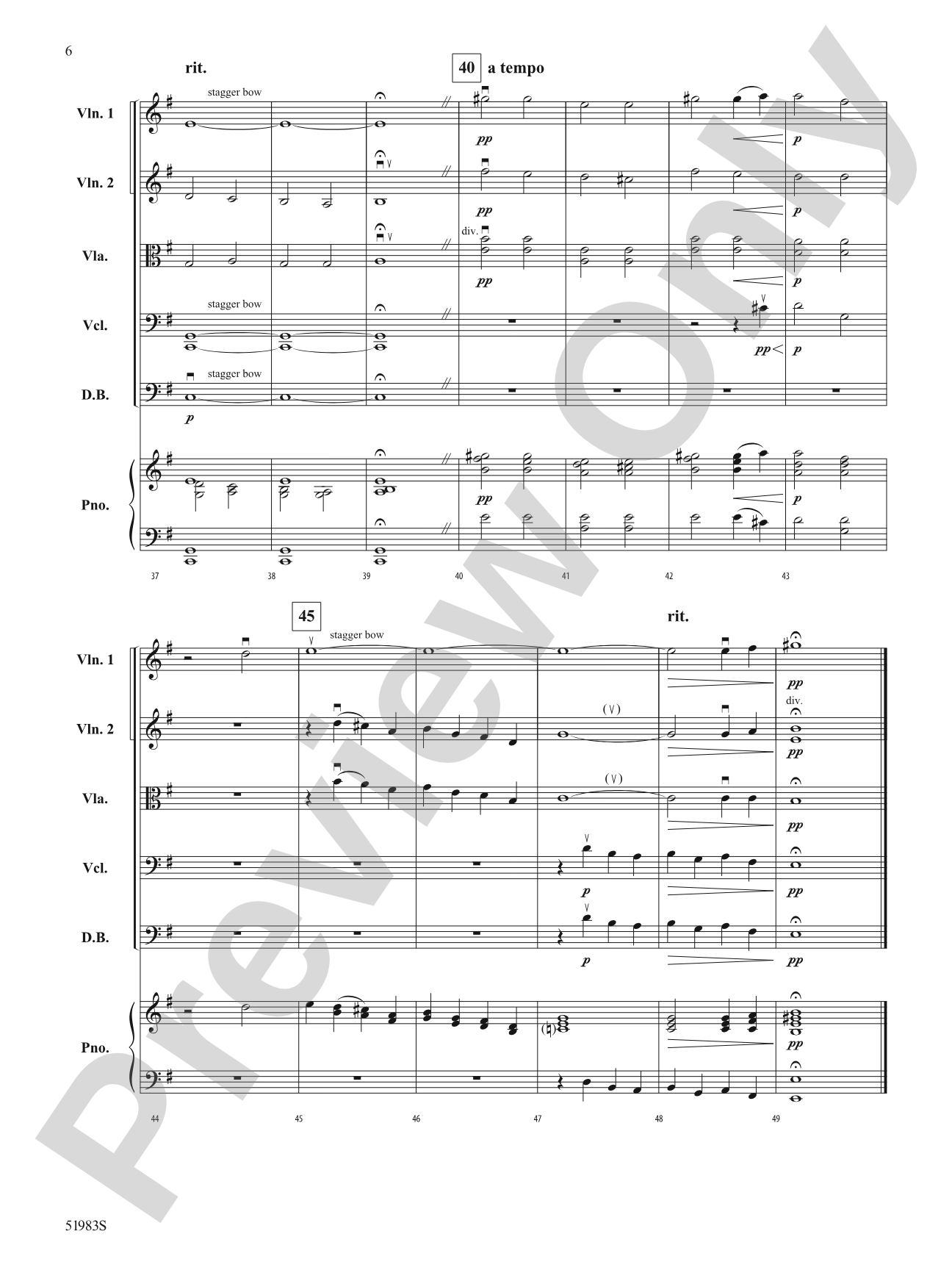

Sunset Suspended: Score
By Brian Balmages
Grade: 1.5
Item: 00-PR-0007693
$10.00
Pickup currently not available
Description
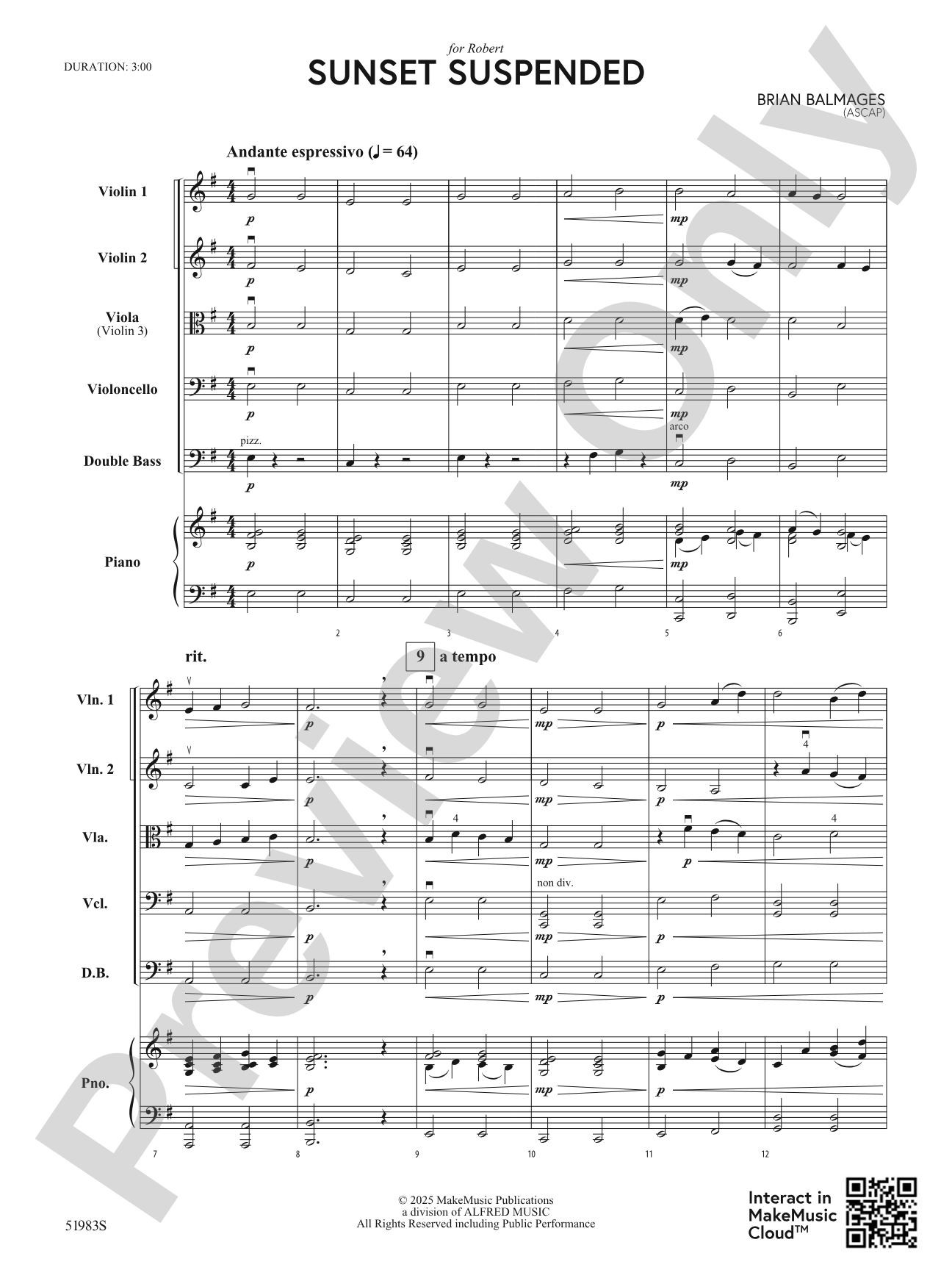
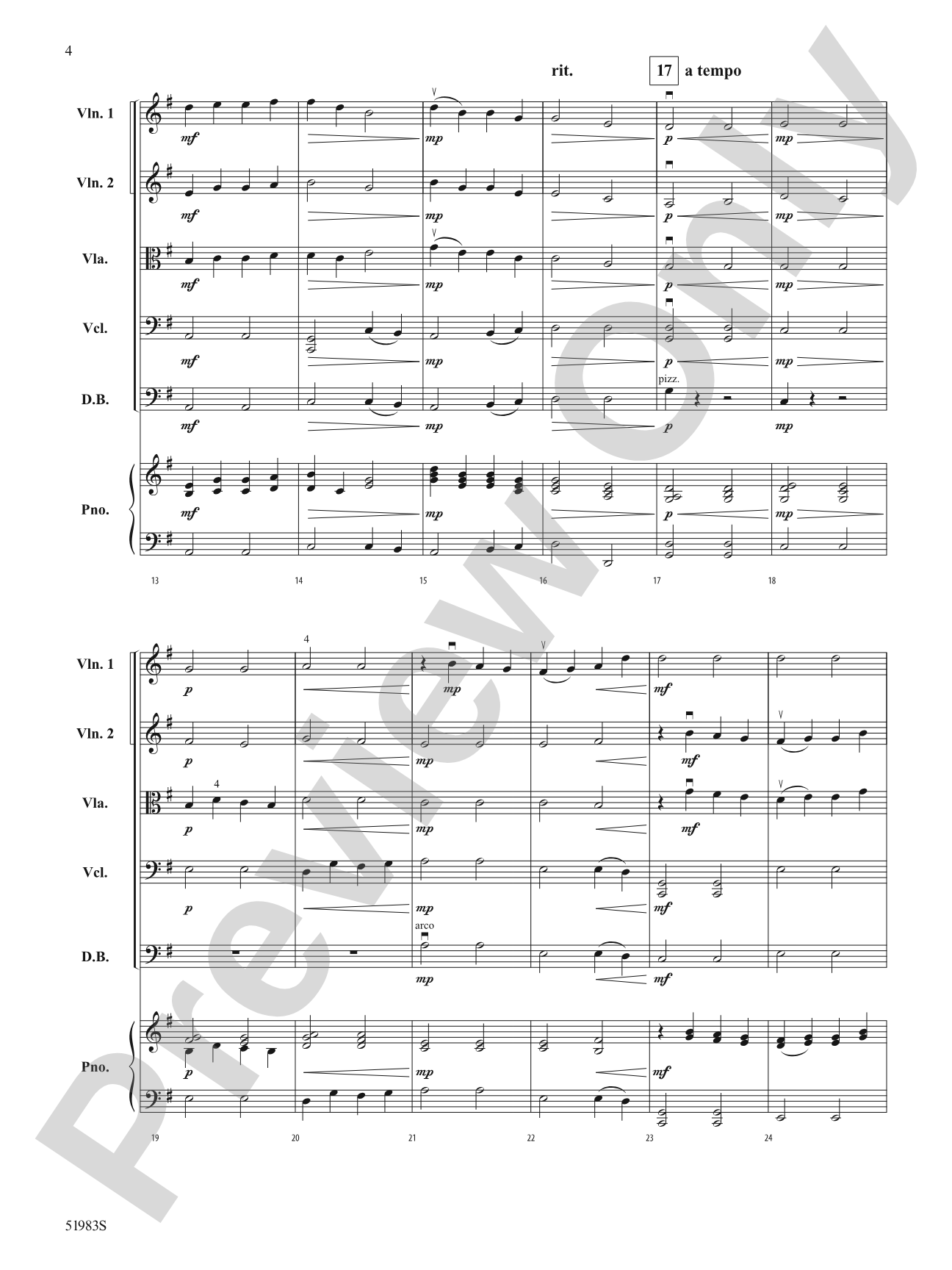
This incredibly powerful lyrical work by Brian Balmages draws its DNA from a series of suspended harmonies that constantly flow throughout the ensemble. Designed to expand the artistic norms often associated with younger ensembles, Sunset Suspended is equally appropriate for intermediate or advanced orchestras. Stunning. (3:00)


Don't just read it, hear it, play along with it, and watch your students grow with it. In MakeMusic Cloud, Sunset Suspended: Score comes alive with professional accompaniment, adjustable tempo, and built-in practice tools that turn solo practice into real progress.
Open in the Player
Jump straight in and assign it today.
Start Your Free Trial
Open this title and explore the full library in minutes.
Sample Audio
1
Audio File
--:--
0:00
0:00
Sample Video
Additional Details
Series:
MakeMusic Developing Strings
Publisher:
MakeMusic Publications
SKU:
00-PR-0007693
More about this title
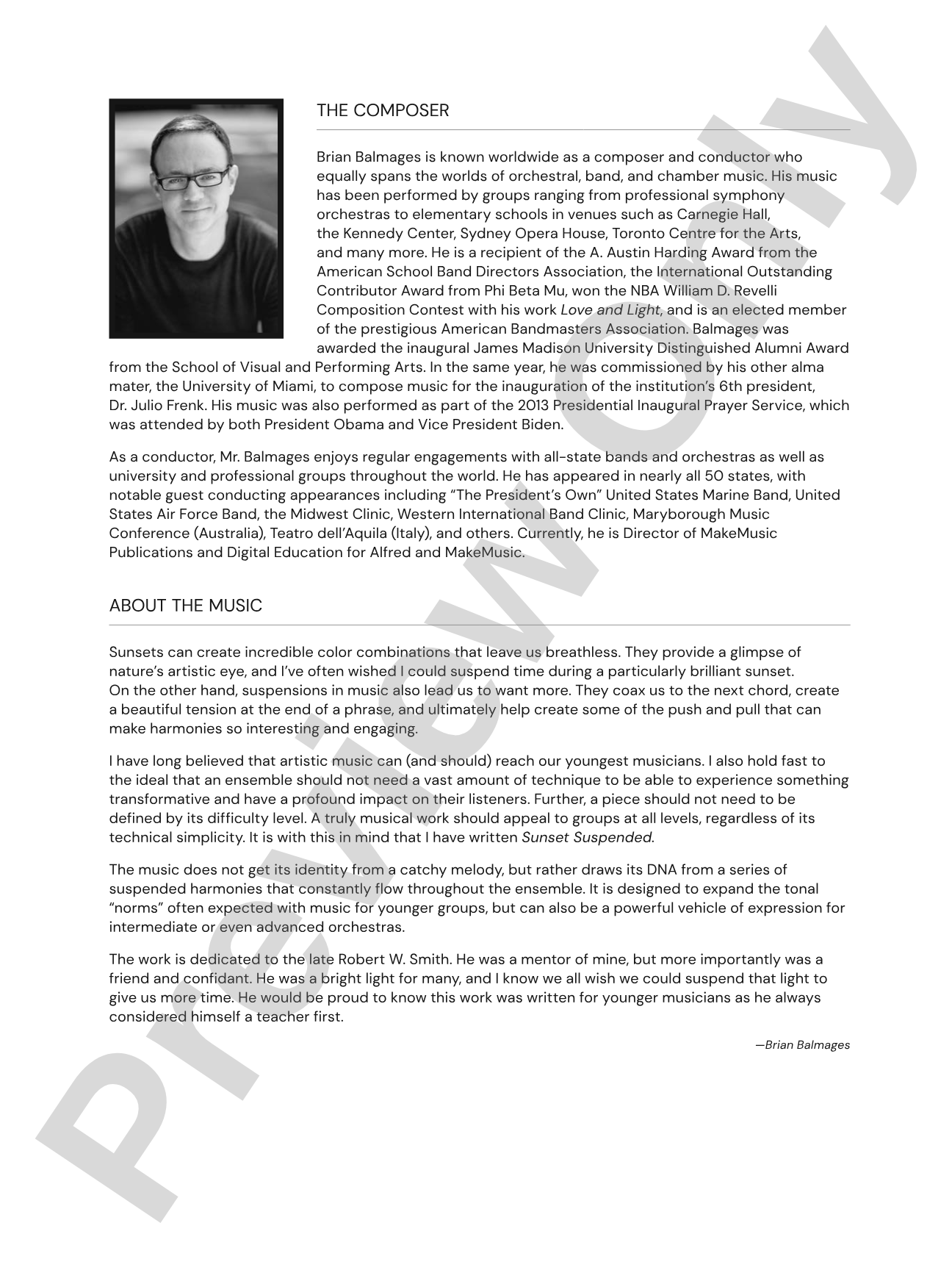
About the Composer: Brian Balmages

Brian Balmages composes across orchestral, band, and chamber idioms with work performed by ensembles ranging from professional symphony orchestras to school groups in spaces like Carnegie Hall, the Kennedy Center, and the Sydney Opera House. His honors include the A. Austin Harding Award from the American School Band Directors Association, the 2020 NBA William D. Revelli Composition Contest for Love and Light, and election to the American Bandmasters Association.
Balmages holds degrees from James Madison University and the University of Miami, institutions that have recognized his contributions with distinguished alumni and commissioning honors. His music has appeared in significant national contexts, including the 2013 Presidential Inaugural Prayer Service. As a conductor, he regularly leads all-state, regional, university, and professional ensembles worldwide and currently serves as Director of MakeMusic Publications and Digital Education for Alfred and MakeMusic.
Why we love this
Balmages constructs this work around a compositional device (suspended harmonies) that becomes the foundation for genuine artistic growth rather than mere technical display. Young orchestras often get pieces that showcase their abilities; this one asks them to sustain and shape something genuinely lyrical, which builds musicianship in ways that single-technique studies cannot. The three-minute duration fits festival and concert contexts perfectly without feeling like a padding piece.
What to expect
The suspended harmonies create a floating, contemplative quality that mirrors the title. The piece sustains emotional weight without bombast, asking listeners and players alike to sit with harmonic tension and resolution as a form of musical storytelling. The three-minute arc feels complete and purposeful, a moment of genuine beauty rather than a sketch.
Who it's for
String orchestras at Grade 1.5 level and above, including intermediate and advanced ensembles seeking repertoire with genuine lyrical substance rather than technical scaffolding. Directors preparing festival or contest submissions will find a piece that impresses adjudicators through artistic vision rather than surface difficulty.
How to get the most out of it
- Shape each suspended harmony as a phrase rather than a static sonority. The shift between chord voicings should feel intentional and deliberate, not accidental.
- Pay particular attention to bow alignment across the sections. When suspended harmonies involve multiple string parts, slight bowing delays or pressure imbalances will muddy the sonority.
- Let the ensemble breathe where the harmonic motion naturally slows. This piece rewards conducting that acknowledges the architecture of suspensions and releases rather than a metronomic approach.
- Record rehearsals and listen back to hear how the harmonic progressions register at performance tempo. Suspended chords can sound thinner than expected until the full ensemble finds proper balance.
How to use it
Program this as a centerpiece for a concert that builds toward larger or more rhythmically active works. Its meditative quality makes it ideal for opening a second half or creating a moment of repose between contrasting selections. It also serves well as a festival or contest piece where artistic maturity and tonal control earn recognition.
Skills your students will build
- Sustaining and shaping harmonic tension through suspended chords
- Balancing multiple string parts to create unified harmonic sonority
- Conducting and playing with phrase awareness rather than beat awareness
- Responding to subtle harmonic movement and voice leading
- Developing sensitivity to intonation within complex vertical structures