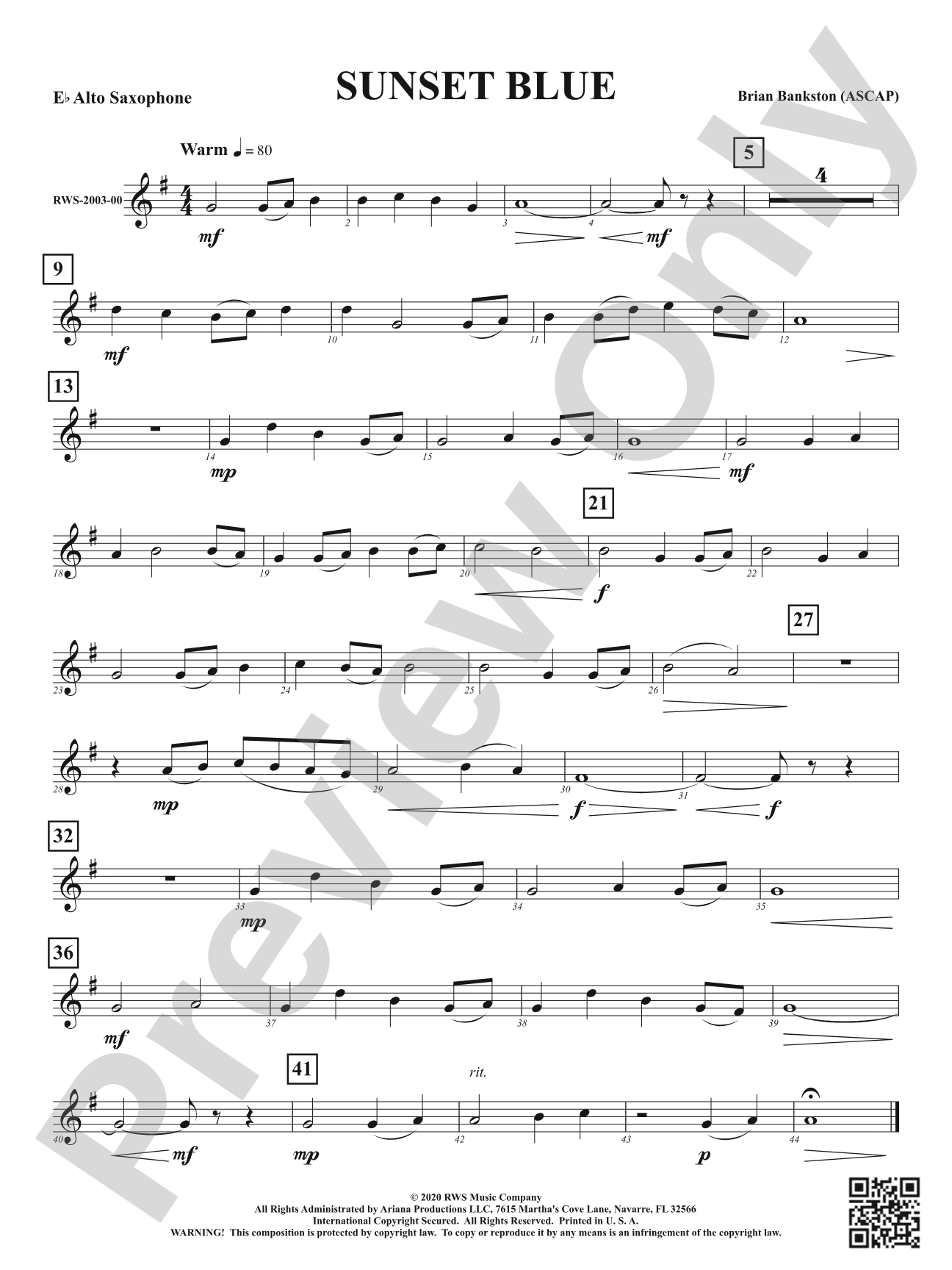
Sunset Blue: 1st E-flat Alto Saxophone Sheet Music Preview

Sunset Blue: 1st E-flat Alto Saxophone

By Brian Bankston

Grade: 2

Item: 98-PC-RWS2003_AX1

Digital Download
$3.99
Description
Add some tonal color to your next performance with this breathtaking lyrical work. This expressive work features short canonic rounds along with lush harmonic colors and calming melodic lines. Teaching opportunities include legato style, balance and dynamics. Warm the hearts of your next audience with Sunset Blue.

Original Item#: RWS-2003-00

Sunset Blue: 1st E-flat Alto Saxophone isn't in MakeMusic Cloud just yet...but it could be. Let us know you'd like to see it, and you'll help shape what comes next. In the meantime, start a free trial and dive into thousands of interactive titles your students can play along with today.

Sample Audio
0:00
0:00
Sample Video
Additional Details
Series: RWS - Developing Band
Publisher: RWS Music Company
SKU: 98-PC-RWS2003_AX1

More about this title

About the Composer: Brian Bankston

Brian Bankston brings a gift for accessible, musically substantive writing to the developing band repertoire. His works balance pedagogical clarity with genuine artistic expression, creating pieces that engage students without oversimplifying the musical ideas.

Why we love this

Bankston gives Grade 2 bands real musical substance here. The canonic writing teaches ensemble listening and independence without overwhelming students, while the harmonic language is sophisticated enough to make your band sound polished and intentional.

What to expect

Sunset Blue unfolds with quiet contemplation and warm orchestration. The canonic writing creates intimacy and conversation between voices, while the harmonic backdrop deepens the emotional landscape into something contemplative and serene.

Who it's for

Grade 2 concert bands looking for repertoire that balances accessibility with genuine musical interest. This works well for developing ensembles that have secure fundamentals and are ready to explore legato expression and harmonic awareness.

How to get the most out of it

  • Shape the legato lines with genuine phrase direction rather than note-to-note evenness. Even at this level, melodic contour should breathe and move toward structural goals.
  • Balance the canonic rounds carefully during rehearsal by isolating individual voices, then bringing them together gradually so students hear how their part fits into the larger texture.
  • Let the lush harmonies ring by controlling dynamic contrasts precisely. The expressive impact depends on restraint in quiet passages and controlled intensity in fuller moments.
  • Use the conductor score to map out all dynamic and harmonic shifts before rehearsal so you can give clear, specific feedback about tone color and blend.

How to use it

This pairs naturally in a concert focused on lyrical, introspective work. It works beautifully as a set closer that leaves the audience in a reflective mood, or as a contrasting piece alongside more energetic fare to showcase your band's expressive range.

Skills your students will build

  • Legato phrasing and sustained tone production
  • Canonic part independence and ensemble listening
  • Dynamic control and contrast
  • Balance and blend in harmonic textures
  • Melodic shape and phrase direction

You May Also Like