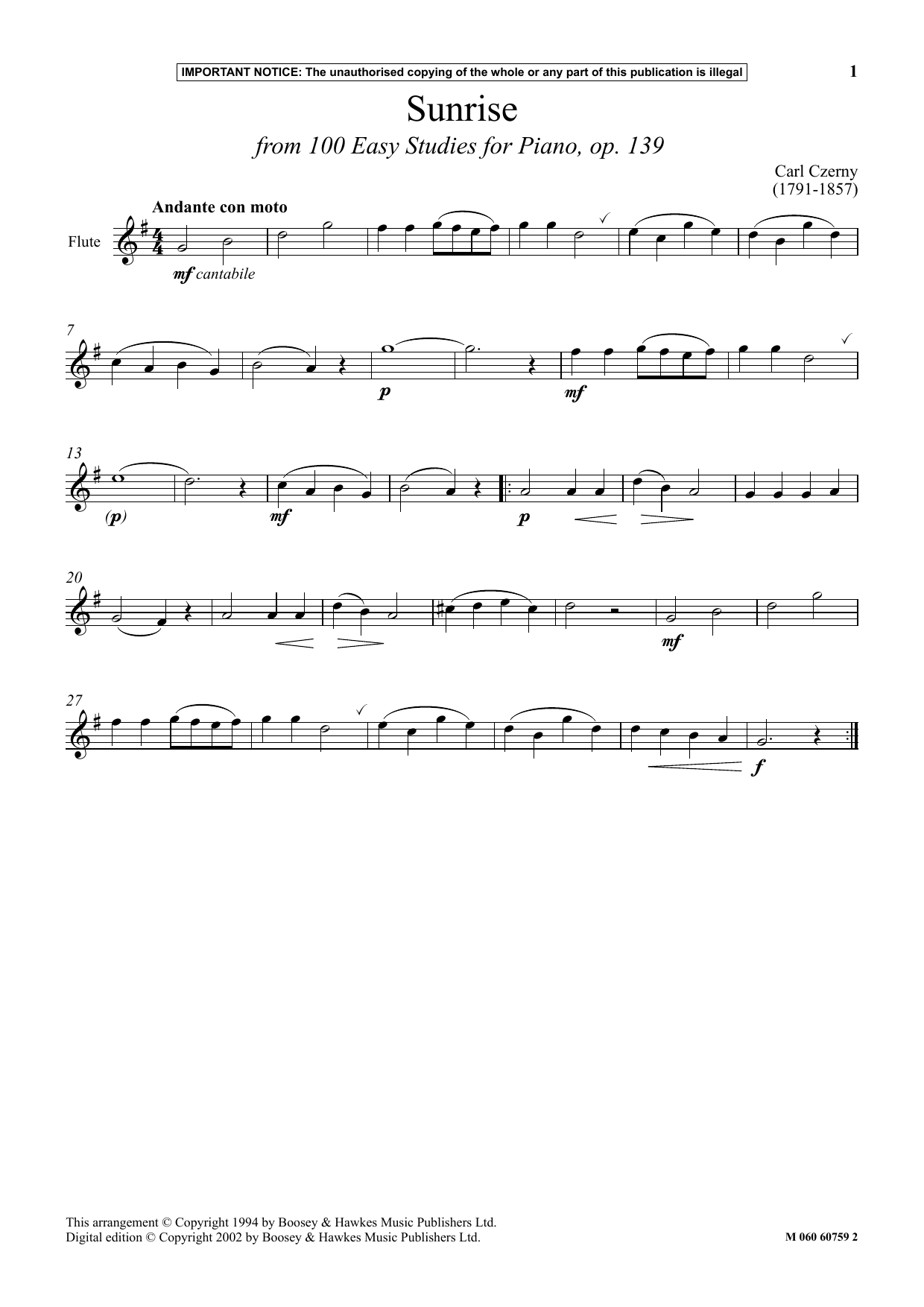
Carl Czerny (1791-1857) was an Austrian pianist and pedagogue whose prolific output shaped how generations of students approached the instrument. His technical studies remain cornerstones of piano pedagogy, prized for their musicality alongside their systematic development of finger independence, evenness, and control.
Why we love this
Czerny's Op. 139 collection bridges the gap between pure technique and genuine musicality in a way that doesn't feel like either one has been sacrificed. This piece demonstrates that early piano students can explore lyrical, programmatic writing without abandoning the finger work they need to develop.
What to expect
The piece unfolds with the gradual warmth of dawn breaking, moving from quieter, delicate textures toward brighter passages that suggest gathering light. The writing is transparent and singable, inviting students to think of themselves as translators of a visual story rather than mere technicians.
Who it's for
Students in their second or third year of piano study who are ready to explore lyrical expression within a structured technical framework. Teachers seeking repertoire that rewards thoughtful interpretation while consolidating fundamental skills.
How to get the most out of it
Shape the melodic line with subtle dynamic shaping rather than heavy hand movements; let the contour breathe naturally across the three pages.
Maintain evenness in the accompanying figures so they support without overwhelming the melody's narrative arc.
Balance pedal usage carefully at the dynamic level; light pedal changes will enhance the sunrise imagery without blurring the clarity required for clean execution.
How to use it
Pair this with other programmatic character pieces by Czerny or his contemporaries in a recital focused on the picturesque tradition in early 19th-century keyboard writing. It also works beautifully as a closing solo in a student showcase, offering audiences an accessible yet artistically substantive listening moment.
Skills your students will build
Sustaining melodic phrasing across phrase lengths
Coordinating treble melody with accompanying figures in different rhythmic patterns
Dynamic control and gradual intensity shifts
Pedal awareness and selective use at lower dynamic levels
You May Also Like
Scan to Complete Your Purchase
Use your phone's camera to scan the code below
You'll log in on your phone and the order will be added to your account