

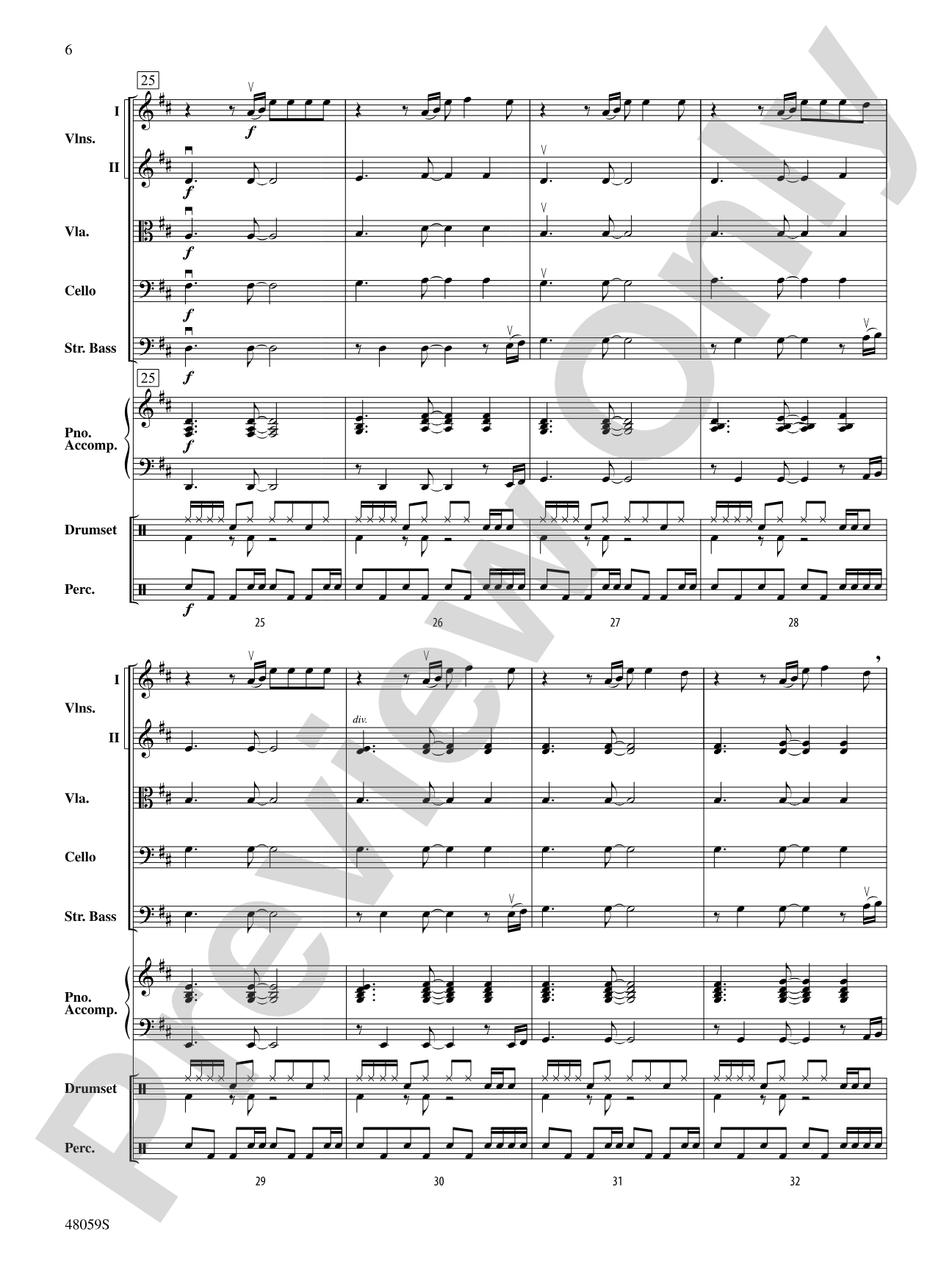
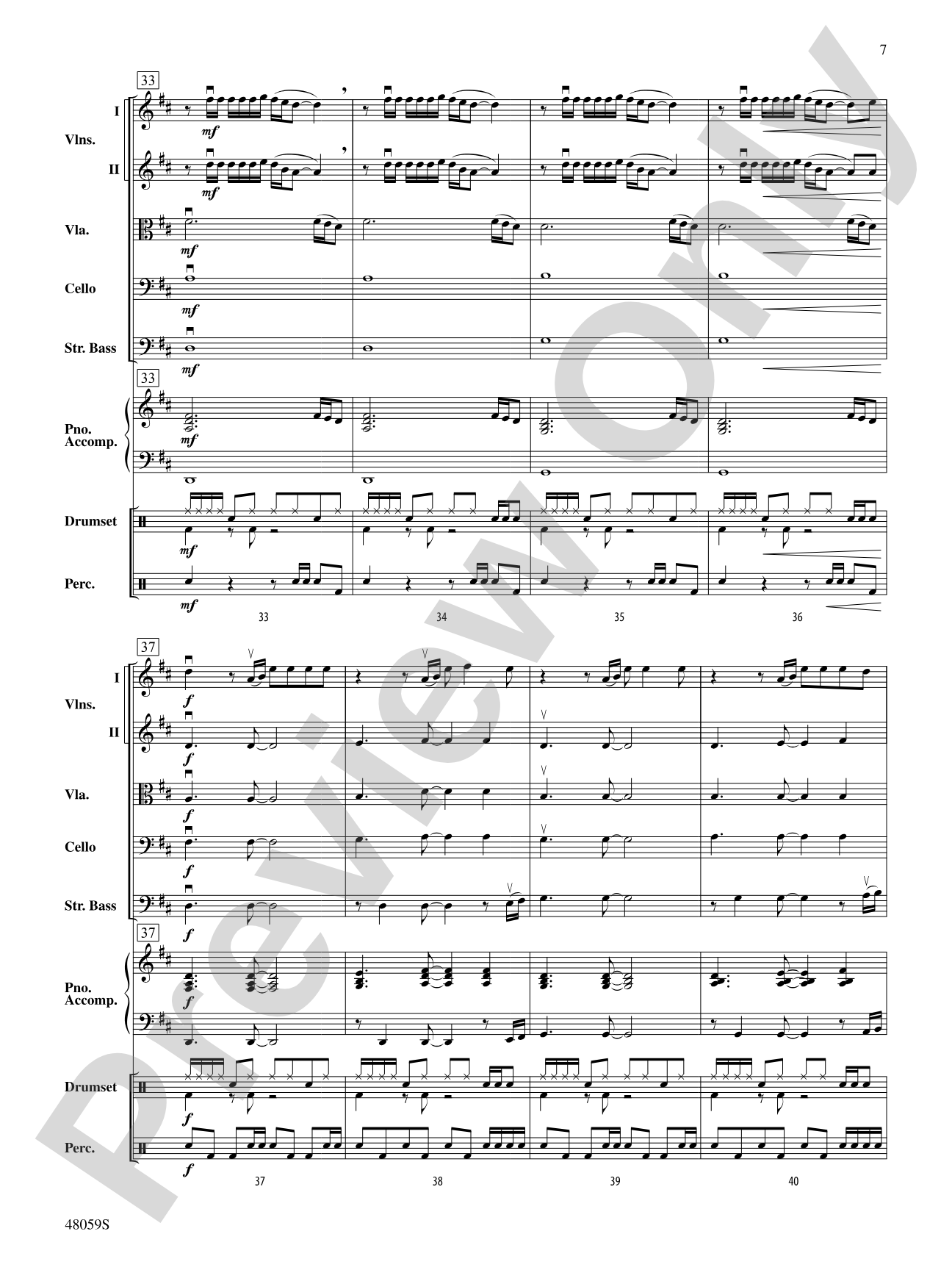
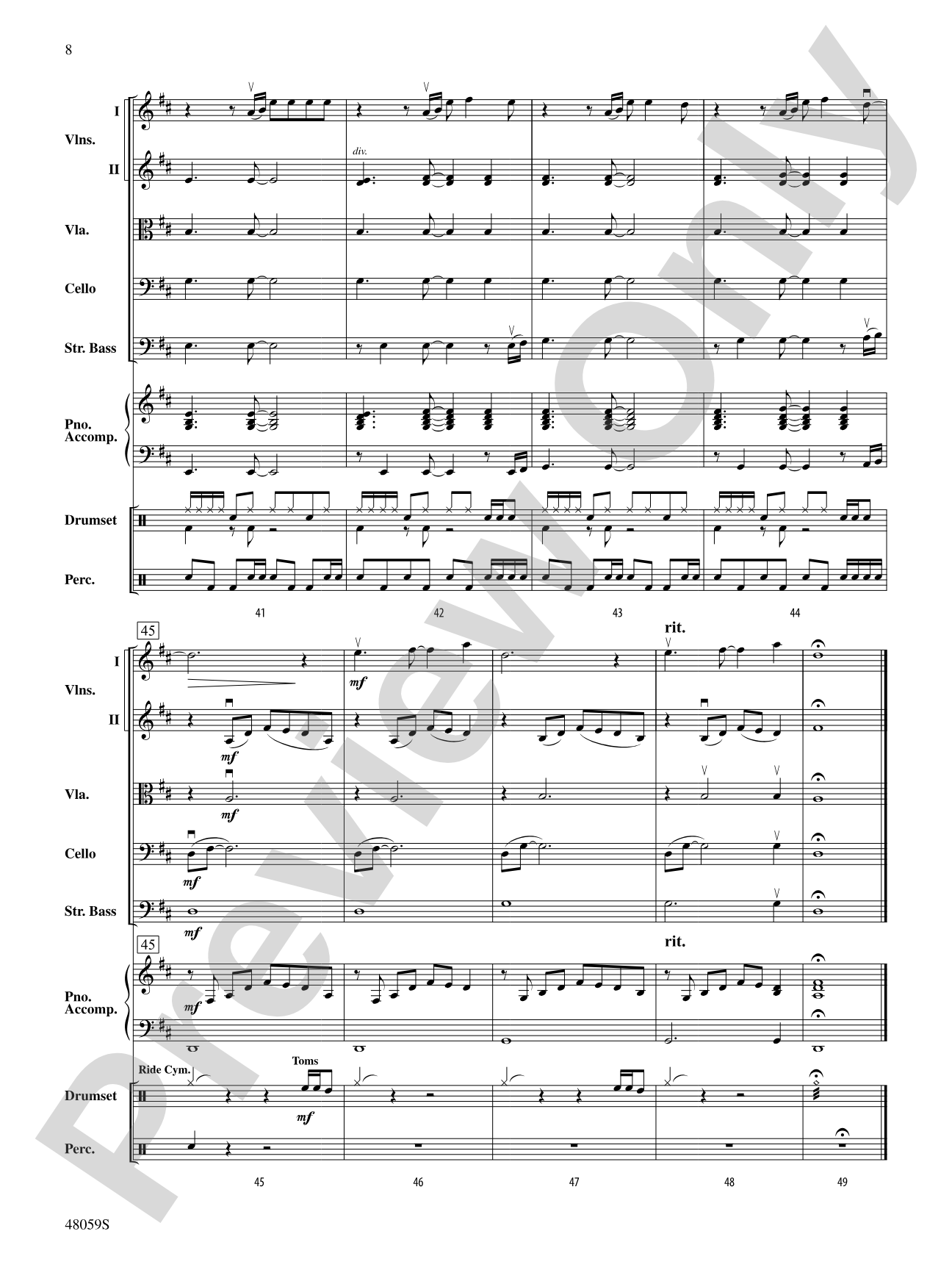

Sunflower: String Orchestra Conductor Score & Parts
As Performed by Post Malone and Swae Lee
Words and music by Austin Richard Post, Carter Lang, Louis Bell, Khalif Brown, Billy Walsh and Carl Rosen / arr. Michael Story
Grade: 3
Item: 00-PK-0008098

$65.00
One moment…
Description
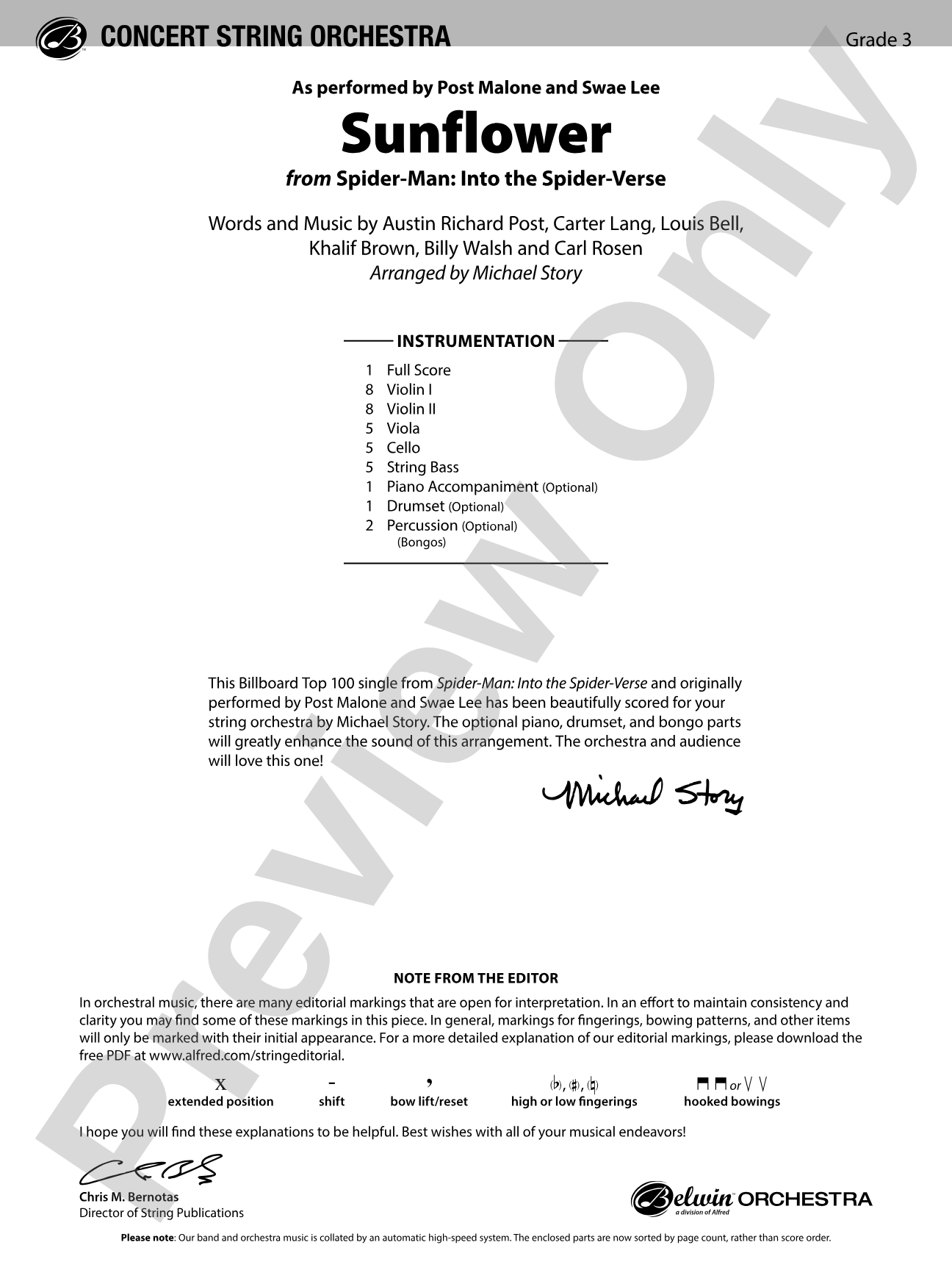
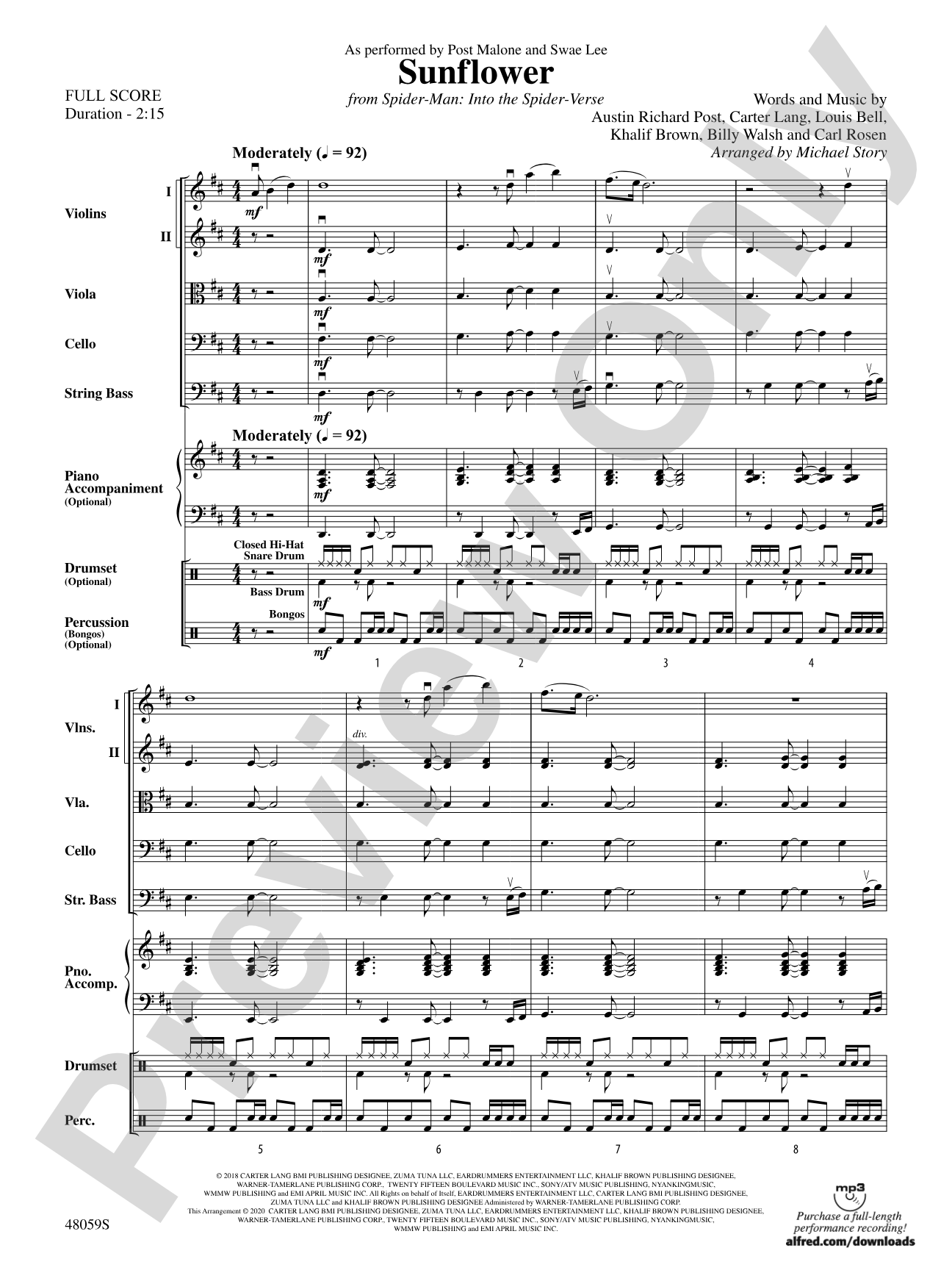
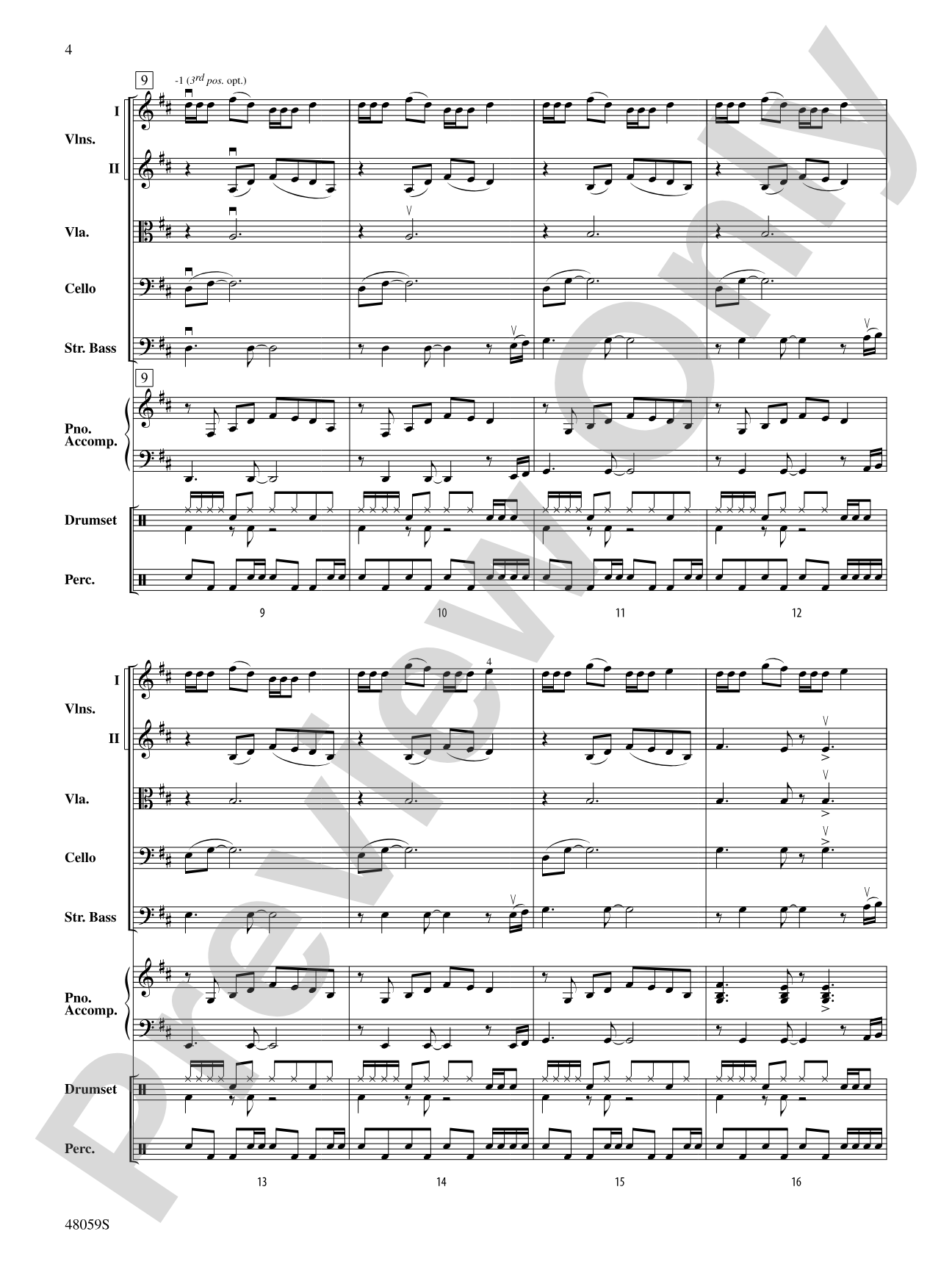
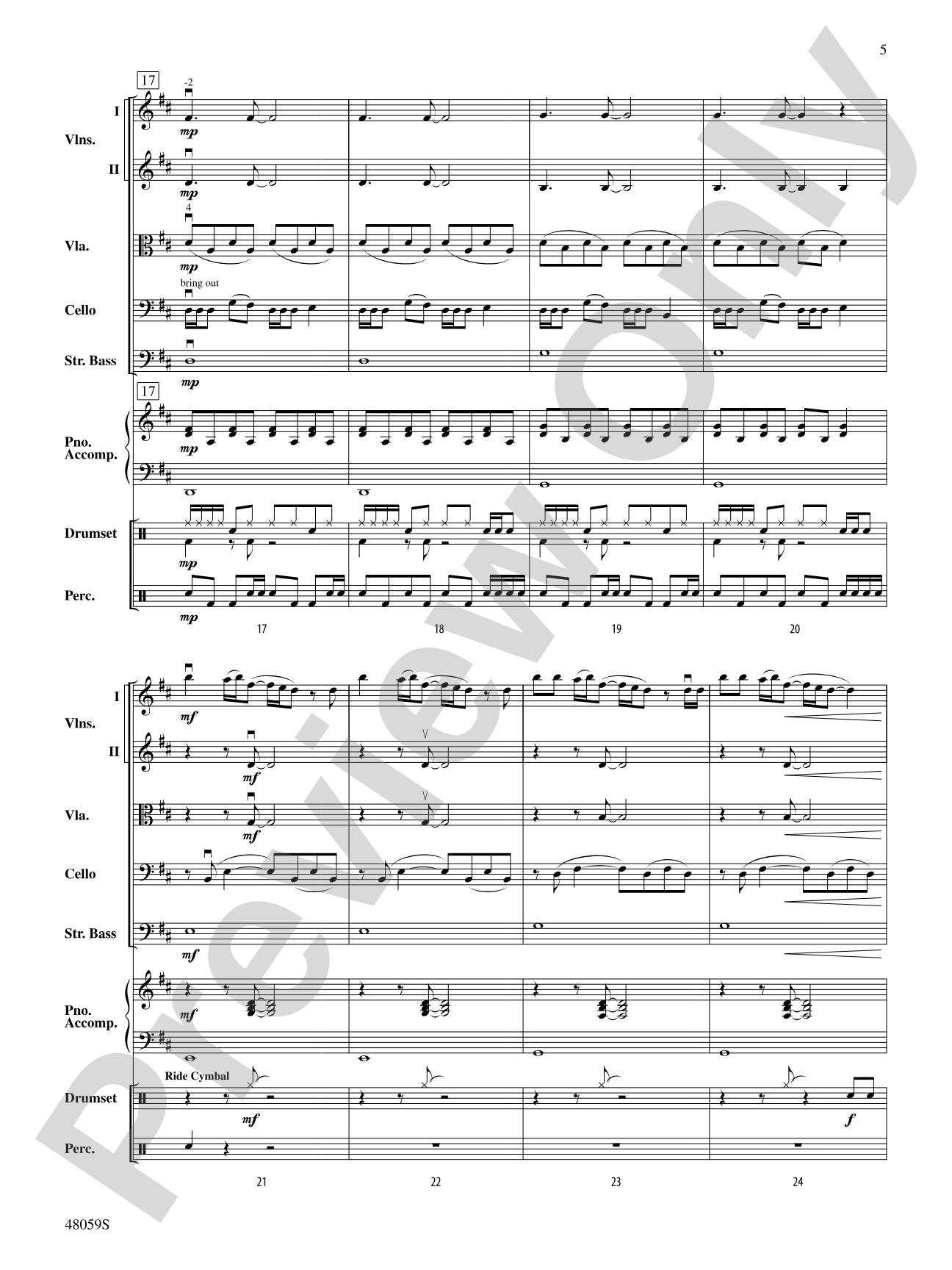
Sunflower, a Billboard Top 100 single from Spider-Man: Into the Spider-Verse and originally performed by Post Malone and Swae Lee has been beautifully scored for your string orchestra by Michael Story. The optional piano, drumset, and bongo parts will greatly enhance the sound of this arrangement. The orchestra and audience will love this one! (2:15) This title is available in MakeMusic Cloud.


Don't just read it, hear it, play along with it, and watch your students grow with it. In MakeMusic Cloud, Sunflower: String Orchestra Conductor Score & Parts comes alive with professional accompaniment, adjustable tempo, and built-in practice tools that turn solo practice into real progress.
Open in the Player
Jump straight in and assign it today.
Start Your Free Trial
Open this title and explore the full library in minutes.
Sample Audio
1
Audio File
--:--
0:00
0:00
Sample Video
Additional Details
Series:
Pop Concert String Orchestra
Publisher:
Alfred Music
Page Count:
72
SKU:
00-PK-0008098
More about this title
About the Composer: Austin Richard Post
Austin Richard Post, known professionally as Post Malone, emerged as one of the defining voices of contemporary pop music in the 2010s. His genre-blending approach to songwriting and production has earned him multiple Grammy nominations and Billboard chart dominance, with "Sunflower" standing as one of his most recognized tracks.
For music educators, Post Malone's work represents the contemporary songwriting landscape that resonates with today's students. His collaborations with producers like Louis Bell and Billy Walsh showcase how modern pop tracks are constructed with careful attention to melodic hooks and harmonic development, qualities that translate effectively to ensemble arrangements.
Why we love this
Michael Story's arrangement captures the infectious energy of "Sunflower" without sacrificing the sophisticated harmonic movement that makes the original compelling. The optional percussion parts give you flexibility to scale the arrangement to your ensemble's strengths, while the core string writing remains accessible at Grade 3 without sounding thin or simplistic.
What to expect
Sunflower pulses with the dreamy, laid-back charm of its original while maintaining the momentum that made it a chart fixture. The string orchestration wraps the familiar melody in lush harmonies that feel both modern and orchestral, inviting listeners to hear a familiar song with fresh ears.
Who it's for
String orchestras at the middle school through early high school level who want contemporary repertoire that engages student musicians and audiences alike. Directors programming concert or pops performances will find this arrangement strikes the right balance between accessibility and musical substance.
How to get the most out of it
- Balance the melodic line across your first violins and violas; the main hook benefits from warm, singing tone rather than bright articulation. Check that second violins and cellos provide a cushioned harmonic foundation underneath.
- If you include the optional piano, drumset, and bongo parts, use rehearsals to lock the groove before adding the string parts. The rhythmic pocket is essential to how this arrangement breathes.
- Pay attention to the 2:15 timing by mapping rehearsal marks and practicing transitions between sections. Modern pop arrangements often hinge on clean section changes rather than traditional orchestral ritards.
- Shape the dynamic arc across the full arrangement rather than playing it flat. This piece gains momentum through careful crescendos and releases that mirror the original recording's energy.
How to use it
This works beautifully in a pops concert or film music themed program, where it pairs naturally with other contemporary arrangements. It also serves as an excellent programming choice to close a concert with something the audience immediately recognizes and enjoys.
Skills your students will build
- Playing contemporary pop melodies with orchestral sensibility
- Balancing harmonic accompaniment figures while maintaining rhythmic precision
- Responding to optional percussion parts and ensemble coordination across multiple instrumental groups
- Shaping longer phrases through dynamic control rather than sudden articulation changes
- Reading and executing Grade 3 string parts with modern rhythmic figures