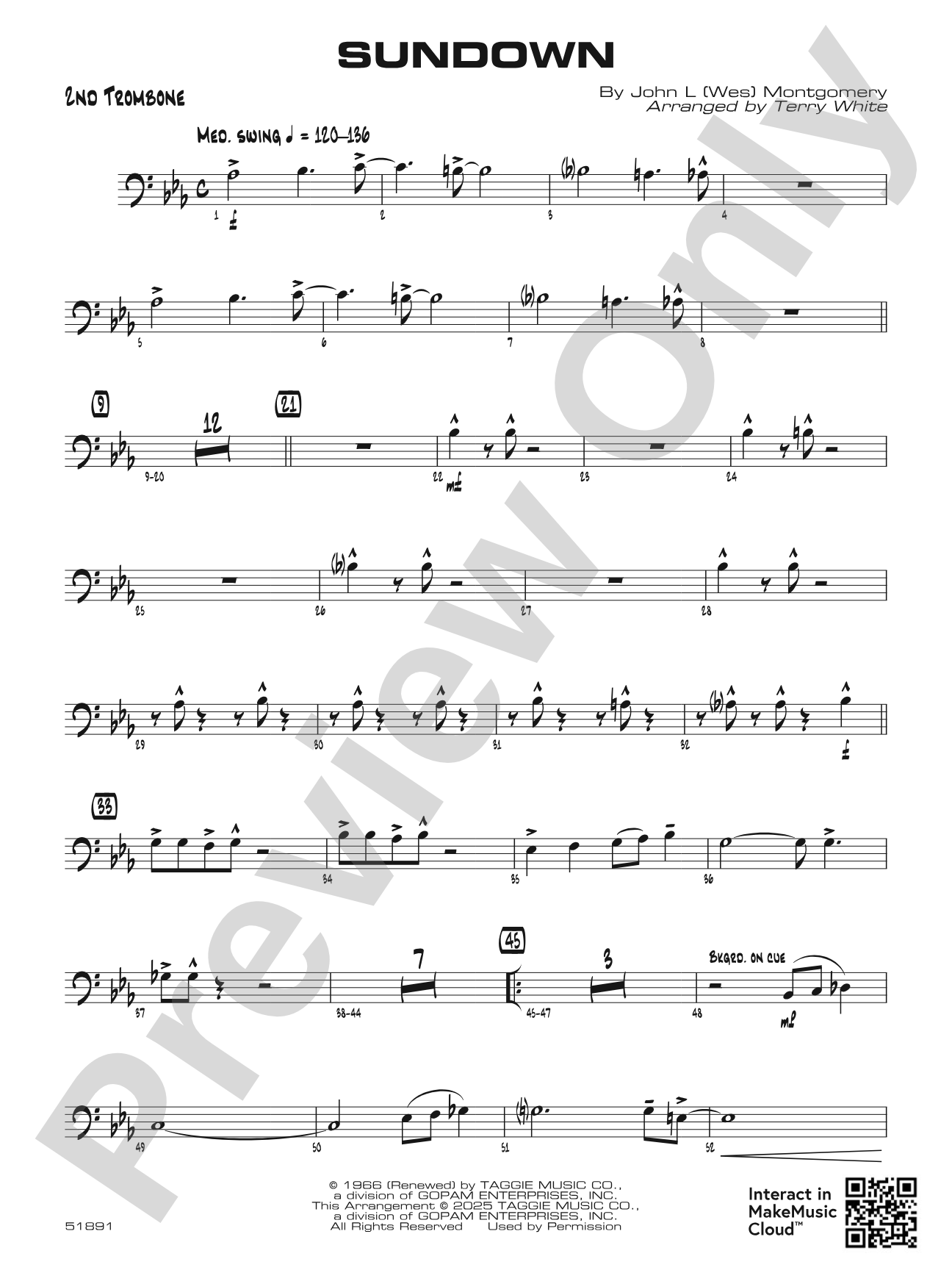
Here's a nice straight-ahead swing chart perfect for the grade 1 level. Suggested solos are written for trumpet 1, alto 1, and trombone 1. Rhythm-section parts are well-notated, and the trumpet 1 range goes up to the written F top line. Add the shout chorus, a brief sax section soli, plus a variety of optional parts---it's all here. Enjoy! (3:50)
Discover MakeMusic Cloud: thousands of interactive titles your students can play along with today.
Wes Montgomery (1923-1968) was a pioneering jazz guitarist whose melodic sensibility and warm tone fundamentally shaped the sound of modern jazz. Though best known for his instrumental recordings and live performances, Montgomery's compositions became standards in the jazz repertoire, recorded by ensembles across every instrumentation and stylistic approach.
Why we love this
Terry White's arrangement captures everything that makes Wes Montgomery's writing so effective for young ensembles: straightforward swing phrasing, accessible solo sections that let your section leaders shine, and intelligent voice-leading that doesn't require advanced harmonic reading. The optional parts mean you can use this whether you're fully staffed or working with a smaller group.
What to expect
Sundown radiates the kind of warm, approachable swing that makes people want to listen. It's not flashy or demanding, but it has real groove and personality. The sax section soli add texture without complexity, and the shout chorus gives the whole ensemble a moment to feel like they're really cooking.
Who it's for
This chart works for grade 1.5 jazz ensembles that have solid fundamentals and are ready for their first real swing experience. Your trumpet, alto, and trombone section leaders get meaningful solo space, and the well-notated rhythm section parts keep everyone accountable.
How to get the most out of it
Lock the rhythm section into a relaxed swing feel before running full section rehearsals; the chart's success hinges on a steady, confident groove from drums and bass.
Balance the shout chorus so it feels like ensemble joy rather than chaos. Articulation and dynamics matter more than volume.
Keep the written solos anchored in the melody. This is a stage for your best players, but the piece never loses sight of its straight-ahead character.
Give trumpet 1 extra time on the high passages around the top line F. The range is accessible, but intonation matters in that register.
How to use it
Program this early in your concert when energy is building but before you hit your most demanding charts. It's ideal as a transition piece between a classical opener and a heavier jazz work, or as a standalone showcase for a rehearsal-length jazz set.
Skills your students will build
Reading and executing swing articulation and feel
Balancing solo lines against ensemble accompaniment
Interpreting jazz notation and rhythmic notation conventions
Listening for and maintaining steady groove in a rhythm section
Playing with intonation control at the upper range of the trumpet staff
You May Also Like
Scan to Complete Your Purchase
Use your phone's camera to scan the code below
You'll log in on your phone and the order will be added to your account