
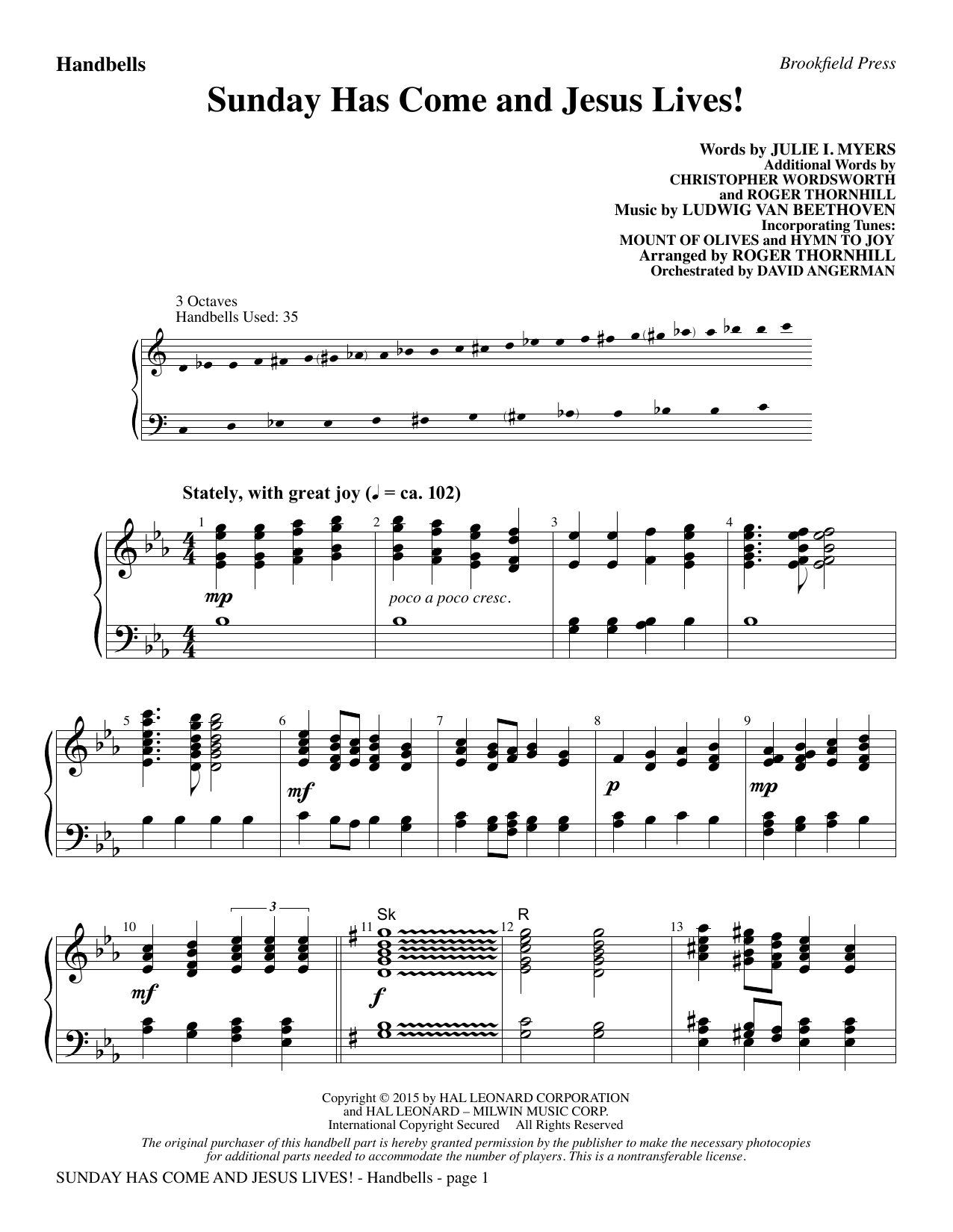

Sunday Has Come and Jesus Lives!: Choral Instrumental Pak
As performed by Beethoven / As performed by Ludwig Van Beethoven / As performed by Christopher Wordsworth / As performed by Julie I. Myers / Arranged by Roger Thornhill
Item: 35-PK00319228
$40.00
Pickup currently not available
Buy Extra Parts (Digital PDF Download)
| Product | Price | Quantity |
|---|---|---|
| Sunday Has Come and Jesus Lives! - Handbells: Choral Instrumental Pak | $7.00 |
Parts Added to Cart!
Description
Uses: Easter, Call to Worship
Scripture: Matthew 28:1-10; John 20:1-10
A unique combining of two masterwork melodies by Beethoven forms the musical scaffold for this jubilant choral flourish for Resurrection Sunday. A fresh perspective is offered by the text as the world awakens to new alleluias. Appropriate when presented as an anthem or call to worship for choir, but when combined with brass, handbells and congregational singing this concertato takes flight.


Sunday Has Come and Jesus Lives!: Choral Instrumental Pak isn't in MakeMusic Cloud just yet...but it could be. Let us know you'd like to see it, and you'll help shape what comes next. In the meantime, start a free trial and dive into thousands of interactive titles your students can play along with today.
Request This Title
Tell us you want it.
Start Your Free Trial
Explore everything that's ready to play right now.
Sample Audio
No sample audio found.
Sample Video
No sample videos found.
Additional Details
Publisher:
Hal Leonard
SKU:
35-PK00319228
More about this title
About the Artist: Beethoven
Ludwig van Beethoven (1770-1827) fundamentally reshaped what symphonic and choral music could express. His late works, composed while deaf, reached toward the transcendent; the Ninth Symphony's choral finale remains one of music's most powerful statements about joy and human connection. For music educators, Beethoven's melodies are pedagogical gold: they sing naturally, build instantly recognizable phrases, and carry emotional weight that engages singers at every level.
Why we love this
Thornhill's arrangement respects Beethoven's melodic architecture while transforming it into something that works for congregational participation and festive instrumental color. The dual-melody approach gives your ensemble ownership of the material rather than just executing someone else's vision; singers hear how Beethoven's genius sits beneath every phrase they learn.
What to expect
Resurrection joy without sentimentality. The melodies sparkle with clarity and lift; there's an almost luminous quality when everything locks together. You hear Beethoven's architectural control underneath the jubilation, keeping the energy focused rather than scattered.
Who it's for
This works best with choirs that have at least basic part independence and access to some brass and handbell musicians. The arrangement scales well: it functions as an anthem for choir alone, but reaches its full impact when you combine voices, handbells, brass, and congregational singing for Easter morning.
How to get the most out of it
- Balance the relationship between choir and congregation carefully during rehearsal. The choir anchors pitch and harmonic structure; the congregation brings volume and ownership. Mark transition points in your score where leadership shifts.
- Coordinate handbells and brass entries with precision even in early rehearsals. These instruments define the piece's jubilant character, and rhythmic clarity in your sectionals prevents the ensemble from dragging or rushing into the fuller textures.
- Shape each appearance of the Beethoven melodies with slight dynamic contour rather than hitting them at full volume. This builds toward the eventual concertato moment and keeps the piece from feeling static across multiple repetitions.
How to use it
Reserve this for Easter Sunday proper or the Resurrection season's opening celebration. It pairs naturally after a congregational hymn and functions equally well as a call to worship that invites full participation or as a concluding anthem that sends people out in renewed conviction. The scriptural grounding (Matthew 28:1-10; John 20:1-10) makes it pedagogically rich when you spend a moment connecting text to music with your singers.
Skills your students will build
- Doubling Beethoven's distinct melodic lines across multiple voice parts
- Balancing vocal independence with instrumental accompaniment
- Navigating participation between choir-led sections and congregational singing
- Responding to dynamic and textural shifts (sparse to full concertato texture)
- Singing with rhythmic precision in syncopated or syncopated-feeling passages common to Beethoven's style